For the European Union the importance of the region is uncontested. It has been so for a very long time, but now the broader geopolitical challenges in the wider neighbourhood are highlighting that importance. We are ever more committed to continuing deep cooperation in bilateral ties, but also specifically regionally. As for the conflict resolution processes, in the Armenia–Azerbaijan context they are bilaterally driven, but there is a lot of space for supporting initiatives in very practical ways, and this is indeed what we're trying to do.
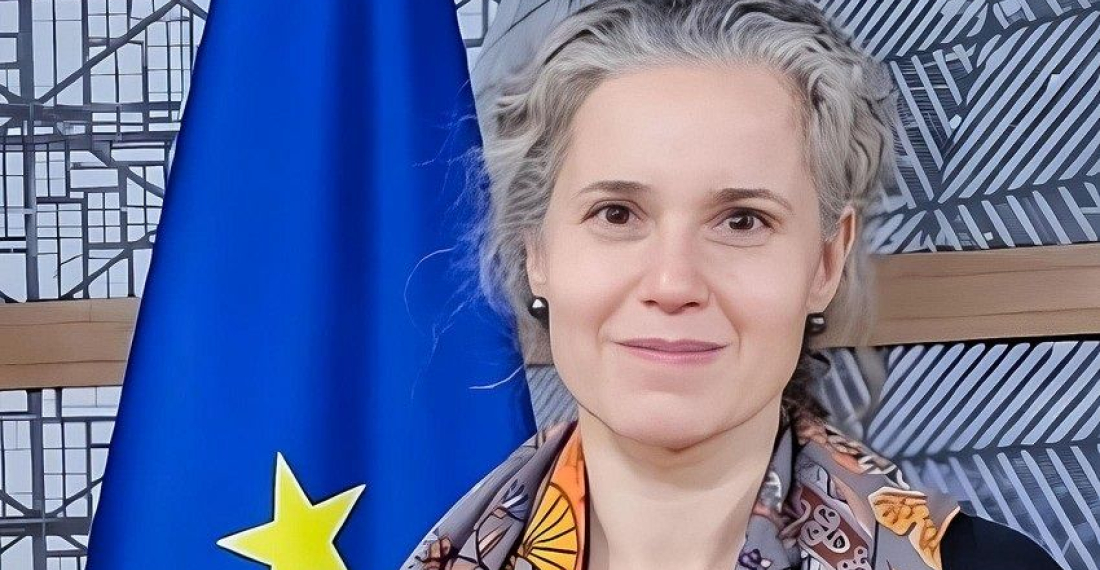
This was stated by the EU Special Representative for the South Caucasus, Ambassador Magdalena Grono at the start of the 3rd South Caucasus Regional Dialogue Forum, on Friday,6 November 2026.
This is her intervention in full:
Good afternoon to everyone. I would of course first like to start by thanking LINKS and, in particular, Dr Sammut for the very kind invitation, but also for the work that you have been doing for so many years for the South Caucasus — for its peaceful conflict resolution efforts, but also its regional cooperation. Dennis, I think we've known each other for perhaps 25 years or so, and I have admired your work for all these years. It's a great pleasure to be here with you in this forum that you have brought together with your colleagues.
I think it is from these fora that we get inspiration for how to deepen the work for those efforts that societies really need, so that they own the peace processes and regional cooperation processes as best as possible. Peace processes don't only concern the political elites; they need to be really owned by the societies on all sides.
I am also delighted to be here together with Deputy Foreign Minister Darsalia. It is a sincere pleasure — we work very closely together on the Geneva International Discussions, among others — and I also want to acknowledge his contribution, not only to conflict resolution efforts, but equally to regional cooperation among the three countries. A very warm welcome to other colleagues as well. I can see that we have a lot of attendees, and I am really delighted to be here with you and to hear your reflections on this momentous opportunity that has opened up in the region over the last year, since the initialling of the peace agreement between Armenia and Azerbaijan.
It is a momentous opportunity for the two countries to put the legacies of conflict behind them, but also to really advance regional cooperation in a regional format — one that looks towards the East and towards the West, not only towards the Caspian and towards Europe; we've also seen important openings, for instance, towards the Middle East. Dennis has already highlighted that the importance of the South Caucasus has been brought to everyone's attention, in particular because it has become a safe space between conflict theatres to the north and north-west, but also to the south.
For the European Union — and I will be brief here — the importance of the region is uncontested. It has been so for a very long time, but now the broader geopolitical challenges in the wider neighbourhood are highlighting that importance. We are ever more committed to continuing deep cooperation in bilateral ties, but also specifically regionally. As for the conflict resolution processes, in the Armenia–Azerbaijan context they are bilaterally driven, but there is a lot of space for supporting initiatives in very practical ways, and this is indeed what we're trying to do.
The last word I wanted to say is that, as I've already alluded to, there are a lot of very specific sectoral areas where advancement has been possible and will still be possible — from delimitation to trade to connectivity. That last element is an important strategic priority for the EU. But no less important is working with societies in a way that they will feel comfortable owning a lasting, just and sustainable peace. This is where I think your forum is an essential contribution, and I am delighted to be here with you. Thank you for the invitation.
Around sixty participants, including Ambassadors, officials, experts and civil society activists from Armenia, Azerbaijan and Georgia, and from the international community, participated in the 3rd South Caucasus Dialogue Forum, held in hybrid form in Yerevan, and on line, on Friday, 6 November 2026. The keynote speaker was the Deputy Foreign Minister of Georgia, Lasha Darsalia. The European Union Special Representative for the South Caucasus, Ambassador Magdalena Grono, also addressed the forum.
Dr Benyamin Poghosyan, Dr Vasif Huseynov, Dr Tornike Sharashenidze, Dr Anar Valiyev and Mr Narek Minasian made substantial interventions in the panel presentations, addressing some of the topics currently facing the region, and answered questions.
The meeting was opened by Dr Stepan Grigoryan, Chairman of the Analytical Centre on Globalization and Regional Cooperation (Yerevan), and Dr Dennis Sammut, Director of LINKS Europe Foundation, the co-organisers of the 3rd Forum, made opening remarks in the event chaired by Alexandra Dumitrescu.
The 3rd Forum built on the success of the 1st Forum held in Kachreti in August 2023, and in Tbilisi, in October 2025, and some of those attending these two events were also present in the 3rd Forum.
Realism, hope, action and vision characterised the discussion and the mood of participants in the 3rd South Caucasus Regional Dialogue Forum. The forum will continue in Tbilisi in early 2027.
source: commonspace.eu with LINKS Europe (The Hague)