Serzh Sargsyan has resigned as prime minister of Armenia ending more than a decade of tight political control over the country and its institutions. Very few people, just a week ago, could foresee that Serzj Sargsyan would not still be Armenia's political strongman this evening, writes Dennis Sammut in this week's Monday Commentary. A week is a long time in politics – in Armenia last week, it felt like a decade
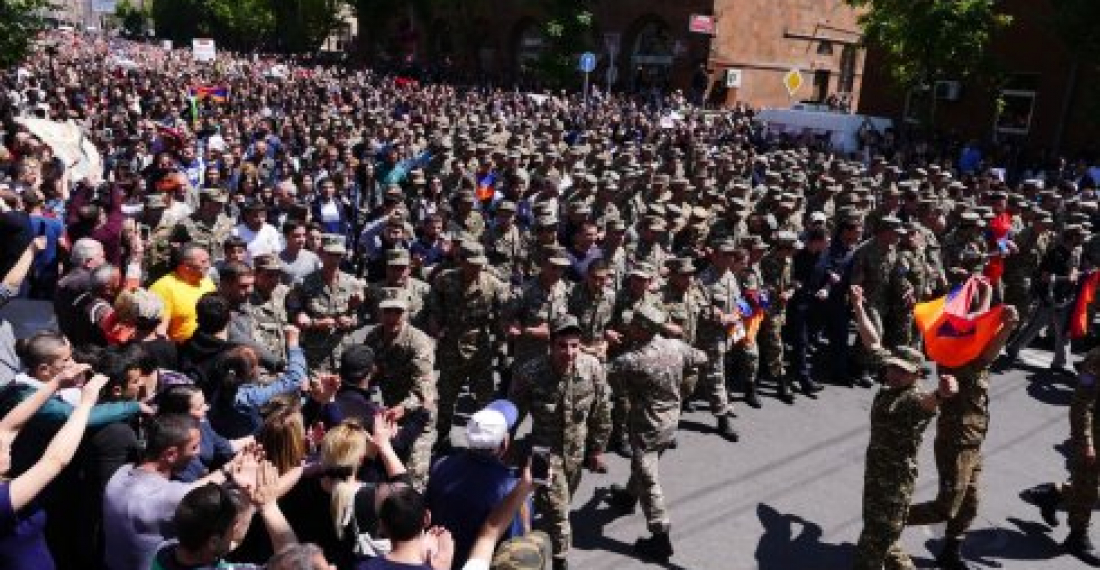
The days and hours before Serzh Sargsyan's resignation could not have been more dramatic and animated. Street protests that started ten days ago were significant not only because of how they gathered momentum by the day and the hour - the crowd mushrooming from a few hundred, to what in Armenia was an extraordinary 100,000 by Sunday evening - but also by how they were distinguished by the sheer young age, energy and discipline of the protestors, who never resorting to violence, marched up and down the streets of Yerevan slowing down traffic and calling on bystanders to join them.
The movement looked spontaneous, and slightly chaotic, but one person emerged as its leader - Nikol Pashinyan, an opposition MP, who astonished everyone by his energy and consistency. By the weekend it became clear that this movement was different from previous attempts at protest in Armenia, and was not going to go away. The government started getting concerned.
On Sunday morning (23 April) Sargsyan went to meet the leader of the popular movement that had been calling for his resignation. The, meeting, lasting only a few minutes, and in the presence of the media could not have seen two men talking more at cross-purposes. Sargsyan tried to bring the conversation to the level he has always been comfortable at as Armenia's strongman in the last decade and more - patronising, tough, but ready to compromise on a detail or two. Pashinyan would have none of it. I am here to take your resignation he told him. Sargsyan angrily stormed out. Within an hour the police swooped in and arrested Pashinyan and several hundred other leaders of the movement. Many thought that that was it, and that leaderless the street movement would evaporate. It was not to be - more and more people came out on the streets, new leaders emerged, equally determined. The police talked tough, sometimes acted tough, but largely hesitated and were restrained. Behind the scenes, Armenia's ruling elite considered its position. The fact that some army personnel decided to join the protests, wearing their uniforms, was considered a very bad omen. No one in the government it seems, had the stomach for a blood bath
By Monday afternoon, Pashinyan was released, and Sargsyan had resigned.
It will take time for the full implications of these developments for Armenia, for the prospect of peace in Karabakh and for the region generally, to be properly assessed. Much will depend on what comes after Sargsyan. The current ruling elite in Armenia may very well re-adjust and rally around another personality. Deputy prime minister Karen Karapetyan has a much better image, especially with the Yerevan public, than Sargsyan has ever had. But Nikol Pashinyan may have other ideas.
There is however one thing which is certain. No Armenian politician can take the Armenian people for granted any more. In the 2017 parliamentary elections tens of thousands of impoverished Armenians literally sold their votes to the government party for a handful of dollars. Many did not consider that a nation that had become so politically exhausted could pull any political surprises. They overlooked the determination of the young Armenians who last week became the heroes of the piece. They were not active in the political shenanigans around elections, but they were not disinterested. Nikol Pashanyan found the right formula to inspire and mobilise them. the result was that the people won against all the odds.
For many Armenians, especially those in Yerevan, Sargsyan was always an outsider. He himself was quite self-conscious of this, and tried to manage the issue in different ways, never satisfactorily. He was a friend of Russia, but Russia may not felt that he was friendly enough. Certainly it has no shortage of "other friends" who can step in.
The resignation of Serzh Sargsyan is the start of a serious political change in Armenia. But the journey remains long and hazardous.
source: Dennis Sammut is the Executive director of LINKS (Dialogue, Analysis and research) His Monday Commentary appears weekly on commonspace.eu
The views expressed in opinion pieces and commentaries do not necessarily reflect the position of commonspace.eu or its partners