Azerbaijan says "no mechanism that prolongs occupation".

Azerbaijan has rejected calls made by the co-Chair of the OSCE Minsk Process to accept an OSCE mechanism to investigate ceasefire violations.  In a statement on Saturday, the co-Chair, representing France, Russia and the United States, said that without such a mechanism, the sides will continue to blame each other for initiating deadly attacks on the Line of Contact and Armenia-Azerbaijan border.  In their statement the co-Chair said that "Armenia has agreed to discuss the details of the mechanism, and we urged Azerbaijan to do the same".

However on Sunday Azerbaijan dismissed the proposal. In a statement to the Azerbaijani State news Agency, AzerTac, Foreign Minister Elmar Mammadyarov said "the establishment of mechanism on investigation of incidents could only be considered when it wouldn’t serve to maintain the current status quo, as the presidents of co-chairs countries called unacceptable, and justify the occupation.

“It is essential to establish the mechanism and plan on withdrawal of military forces of Armenia from the occupied territories of Azerbaijan. The first and foremost reason for the mentioned “incidents” is occupation of territories of Azerbaijan by Armenia and military presence of Armenia in those occupied territories”, the Azerbaijani Foreign Minister said.

In their Saturday statement the OSCE Minsk Group co-Chair referred to the meetings they held separtely and jointly with the Foreign Ministers of Armenia and Azerbaijan in New York on Thursday and Friday "to discuss the immediate need to reduce tensions along the Line of Contact and international border, to advance negotiations on a lasting settlement, and to implement confidence-building measures.  The Ministers agreed to continue preparations with the Co-Chairs on the next presidential summit, which is expected to be held before the end of this year". The Co-Chairs condemned in strong terms the use of artillery that caused additional casualties in the last twenty-four hours. "We extend our deepest condolences to the families of the deceased. An escalation of violence is not in the interest of Azerbaijanis or Armenians, or a negotiated settlement", they said. The Co-Chairs also encouraged the sides to implement people-to-people programs to build trust between societies affected by the conflict. (You can read the full statement of the co-Chair here)

source: commonspace.eu with AzerTac and the website of the OSCE

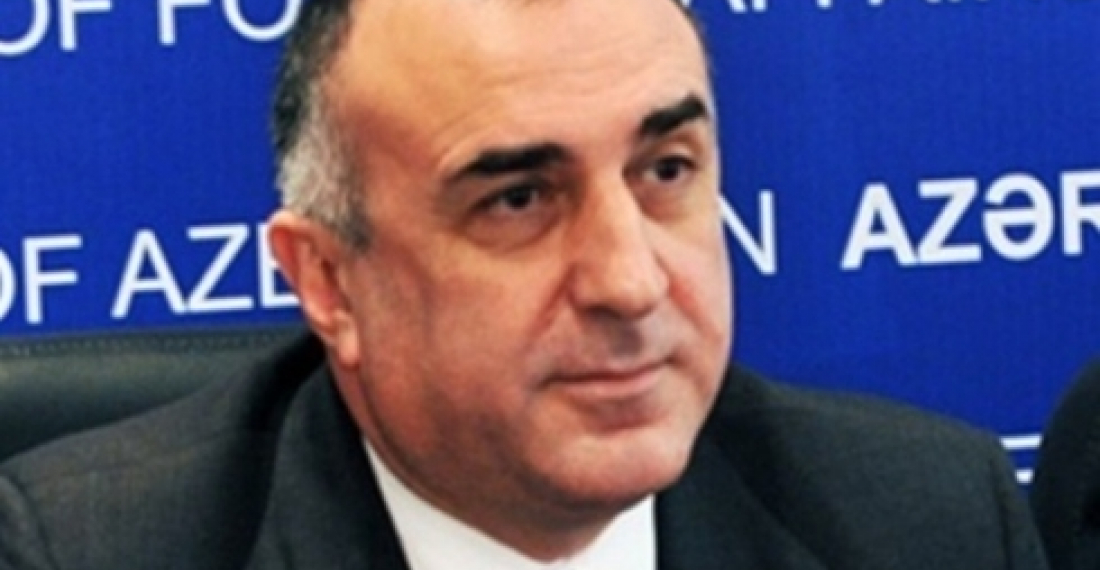
photo: Azerbaijan Foreign Minister Elmar Mammadyarov (archive picture)
 

Related articles

Editor's choice
News
Finland hosts European Arctic Summit

Finland hosts European Arctic Summit

The Arctic summit of European leaders will be held in Rovaniemi, a municipality in Northern Finland on 13–14 September. Prime Minister Petteri Orpo has invited a group of EU leaders to the summit. The aim of the summit is to strengthen the EU’s common strategic approach to the Arctic region as its geopolitical significance continues to grow rapidly. “The Arctic region is an increasingly important part of Europe's security environment. The European Union has direct interests in its stability, security and sustainable development. It is very valuable to be able to discuss these issues together with a comprehensive group of EU leaders,” said Orpo. The summit will be attended by German Chancellor Friedrich Merz, Prime Minister of Poland Donald Tusk, Prime Minister of Denmark Mette Frederiksen, Prime Minister of Estonia Kristen Michal, Prime Minister of Latvia Andris Kulbergs, President of Lithuania Gitanas Nausėda and President of Romania Nicușor Dan. President of the European Council António Costa and High Representative of the Union for Foreign Affairs and Security Policy Kaja Kallas will also take part in the summit. The summit is taking place against an extremely dynamic backdrop. In the face of accelerating climate change and geopolitical tensions in the Strait of Hormuz, the economic importance of the northeast passage is growing. For 2026, more than forty million tonnes of freight are expected to pass through the Northern Sea Route for the first time, primarily due to expanded trade between Russia and China. Furthermore, in August, China launched its first regular container service through the Arctic. Finally, the EU’s Arctic policy itself is set for a reorientation: the Commission intends to present an updated Arctic strategy this autumn, in which security is to play a central role for the first time. Kaja Kallas had already advocated for this at the Arctic Frontiers conference in Tromsø earlier this year, stating that the Arctic needed more attention, more resources, and more hard power. The summit in Rovaniemi can therefore also be seen as a dress rehearsal for the new strategy. Finland brings a unique perspective to this debate: over 95 per cent of Finland’s foreign trade in goods is conducted by sea, and its ports freeze over almost every winter. This structural peculiarity has given rise to a strong export sector in the field of icebreakers: Finnish companies have designed around 80 per cent of all icebreakers worldwide and built around 60 per cent; even the US Coast Guard is having the first vessels of its new Arctic Security Cutter class built in Finland because the domestic alternative could not meet the schedule. The fact that this leverage can also be utilised geopolitically has already been successfully demonstrated. At the end of September 2022, the Finnish Ministry of Foreign Affairs refused to grant an export licence for an LNG icebreaker ordered by the Russian mining group Norilsk Nickel, thereby bringing to an end a project that would have created around 2,100 person-years of employment. (click the image to read more).

Popular

Editor's choice
Interview
Thursday Interview: Murad Muradov

Thursday Interview: Murad Muradov

Today, commonspace.eu starts a new regular weekly series. THURSDAY INTERVIEW, conducted by Lauri Nikulainen, will host  persons who are thinkers, opinion shapers, and implementors in their countries and spheres. We start the series with an interview with Murad Muradov, a leading person in Azerbaijan's think tank community. He is also the first co-chair of the Action Committee for a new Armenian-Azerbaijani Dialogue. Last September he made history by being the first Azerbaijani civil society activist to visit Armenia after the 44 day war, and the start of the peace process. Speaking about this visit Murad Muradov said: "My experience was largely positive. My negative expectations luckily didn’t play out. The discussions were respectful, the panel format bringing together experts from Armenia, Azerbaijan, and Turkey was particularly valuable during the NATO Rose-Roth Seminar in Yerevan, and media coverage, while varied in tone, remained largely constructive. Some media outlets though attempted to represent me as more of a government mouthpiece than an independent expert, which was totally misleading.  Overall, I see these initiatives as important steps in rebuilding trust and normalising professional engagement. The fact that soon a larger Azerbaijani civil society visits to Armenia followed, reinforces the sense that this process is moving in the right direction." (click the image to read the interview in full)