


Officials and experts discuss problems in EU-Azerbaijan relations and the way forward at an unusually frank and open discussion in Brussels.
The European Policy Centre in Brussels and the SAM, the Strategic Studies centre under the Presidential Administration in Azerbaijan hosted a round table discussion in Brussels on Tuesday, 4 March 2013 with the theme "Azerbaijan and the EU: The road ahead". The speakers were Gulshan Pashayeva, SAM's Deputy Director, Ambassador Philippe Lefort, the EU Special Representative for the South Caucasus, Denis Daniiliidis, Desk Officer for Azerbaijan at the European External Action Service and Dennis Sammut, Director of LINKS.
The well attended discussion was marked by unusual frankness and candidness on the part of the speakers who all seemed to agree that relations between the EU and Azerbaijan were at a delicate moment. Whilst the EU had a clear vision of where and how it wanted its relationship with Azerbaijan to develop - in the framework of the Eastern Partnership and through the signing of an Association Agreement, Azerbaijan was reluctant to engage fully with this process, preferred to have the relationship on a bilateral level in a way that would reflect the increasing importance of the country to the EU, especially in the Energy sector.
The discussion identified four main areas in which the EU and Azerbaijan were engaged in discussions at the moment: Political and Institutional relations and frameworks, Energy, the Karabakh Conflict and Democracy and Reform. The panel agreed that striking a balance between the four elements was the key challenge, but there were different views as to how this could be done.
Gulshan Pashaeva (SAM) said that there must be a realistic balance and called for differentiation in the relationship based on Azerbaijan's importance and relevance, as well as its aspirations. She called for more EU involvement in the settlement of the Nagorno-Karabakh conflict saying that the EU had adopted a "wait and see Approach" and that there was a certain amount of ambiguity in its documents on the issue. She praised the EU effort to promote civil society dialogue through the EPNK framework and welcomed the work being done by European civil society organisations in that framework.
Philippe Lefort (EUSR) stressed Azerbaijan's importance for the European Union. Speaking on the Nagorno-Karabakh conflict Ambassador Lefort said that this was not a conflict without a solution. The Madrid principles remain the road map on which the sides need to work to achieve a solution and on two occasions, in Munich in December 2009 and in Kazan in April 2011 they were close to achieving a breakthrough. He said that it was difficult and risky for the two leadership to "pass the thresh-hold" and there was a need for a change of mentality. However this required both a top down and a bottom up approach if it was to succeed. He repeated the EU's readiness to support the process under the auspices of the OSCE Minsk Group through confidence building measures, an area on which the EU had vast experience.
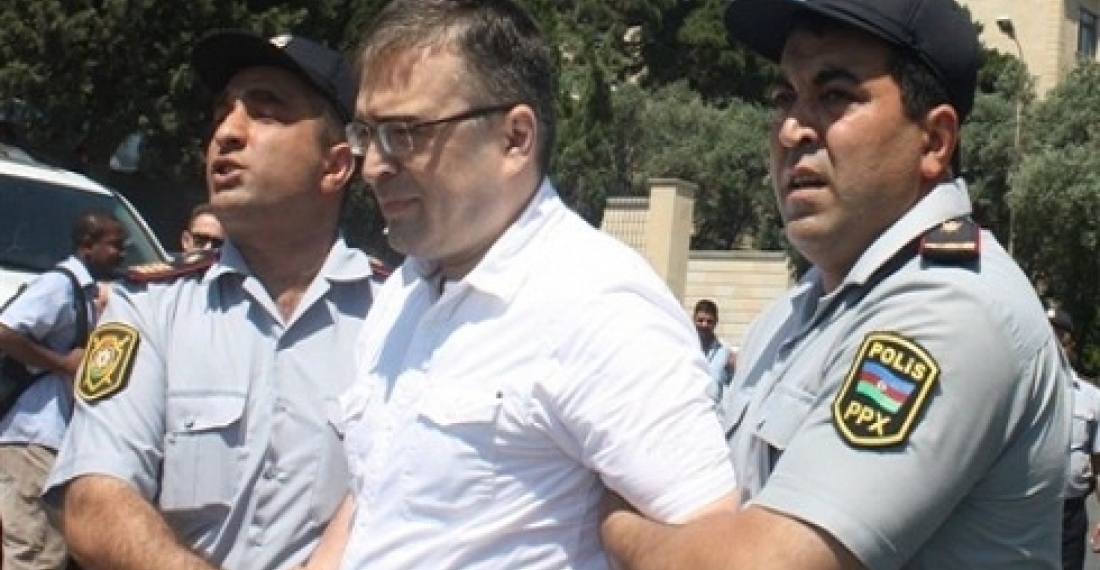
Denis Daniilidis (EEAS) said that the relationship between the EU and Azerbaijan was based on mutual interest but was at the moment characterised by a series of misunderstandings and self illusions from both sides. Baku cannot understand why the EU does not recognise its importance whilst Brussels is surprised that its offer for closer relations is being snubbed. He said there must be a more clear understanding of what the two sides want to do together and that it was important to bring in more realism to the relationship. He said that Azerbaijan must understand that values were important for the EU and that red lines must not be crossed. After the events in February the government had been told that as far as the EU was concerned the lines had been crossed and that this was now a problem. On Karabakh he said that the relations between the EU and Azerbaijan should not become a hostage of this conflict.
Dennis Sammut (LINKS) said that Europe remains a fashionable and popular brand in Azerbaijan, especially amongst the young educated elites both those supporting the government and those opposing it. On the official side however there is hesitation because what Europe is asking for in terms of reforms, especially in the democracy sphere is deemed too high a price to pay. Azerbaijan is failing to understand that it faces a massive crisis of trust in the area of democracy and human rights and that it needs to act on this swiftly and decisively.
Dennis Sammut proposed ten action points on which Europe needs to work: (a) EU should not assume that the Azerbaijani government and people understand why relations with it is good for them. There is a need for more political engagement at various levels and for the EU to sharpen its communication strategy towards the country; (b) The EU's red lines on democracy and human rights need to be spelled out clearly and consistently. European politicians who distort this message by saying or implying that these issues are secondary to other things, such as energy co-operation need to be challenged openly; (c) there needs to be more clarity on the part of the EU of its policies on Karabakh. Even if the formal policy is to support a peaceful solution mediated by the OSCE Minsk Group and based on the Madrid principles there are nuances within this formula that the EU needs to develop in order that its own values are better reflected; (d) the importance of Azerbaijan for EU energy security needs to be based on realistic assessments and not on bloated assumptions and Baku should be encouraged not to overplay its hand; (e) The EU should support political dialogue not political confrontation in Azerbaijan. To be able to do this it itself must engage in proper dialogue with opposition forces, including those outside parliament; (f) The EU should avoid letting the next Presidential election become a crisis point in its relations with Azerbaijan. The discussions with the Azerbaijani government needs to start now because there are some very clear things that the Azerbaijani government needs to do before the election if this process is to have any credibility. The EU should use its clout in the OSCE and the Council of Europe in this regard to the point where if a credible election is not likely the process should not be legitimised with the deployment of an Observation Mission, which would in any case be waste of time and money; (g) opposition activists in Azerbaijan need to be told clearly that we support their right to speak and protest but that does not necessarily mean we support what they are saying. These are two different issues. Human rights is the concern of all but domestic politics is the business of the Azerbaijani people. (i) The EU should pursue a policy of privileged engagement with those sectors of the Azerbaijani government and society that have benefitted from reform in order to consolidate islands of reform. (j) the EU must remain sensitive to the fact Azerbaijan is located in a difficult neighbourhood. In this regard more dialogue between the EU and Turkey on Azerbaijan can be useful; and (j) there is a need for sober dialogue not for bombastic meetings glorifying Azerbaijan as some model modern country or conversely demonising it as a North Korean style dictatorship. Dennis Sammut said that the reality is that in its domestic, as much as in its external politics Azerbaijan is at the crossroads and that the efforts of the EU institutions, governments and civil society need to be channelled at helping the Azerbaijani government and people make the right choice for them and future generations.
The meeting was chaired by Amanda Paul of the European Policy Centre
source: commonspace.eu
photo: The arrest of Ilgar Mammedov, a candidate in next October's Presidential elections in Azerbaijan in February. The EU has told Azerbaijan that red lines have been crossed. (picture courtesy of Radio Free Europe)



