For the Central Asian republic of Kazakhstan, this year has probably been the most difficult one since its independence in 1991. Yet the country has emerged from it stronger. The process of reform initiated by President Kassym Jomart Tokayev appears to be gathering momentum, despite resistance from parts of the ruling elite still associated with the country’s first president Nursultan Nazarbayev.
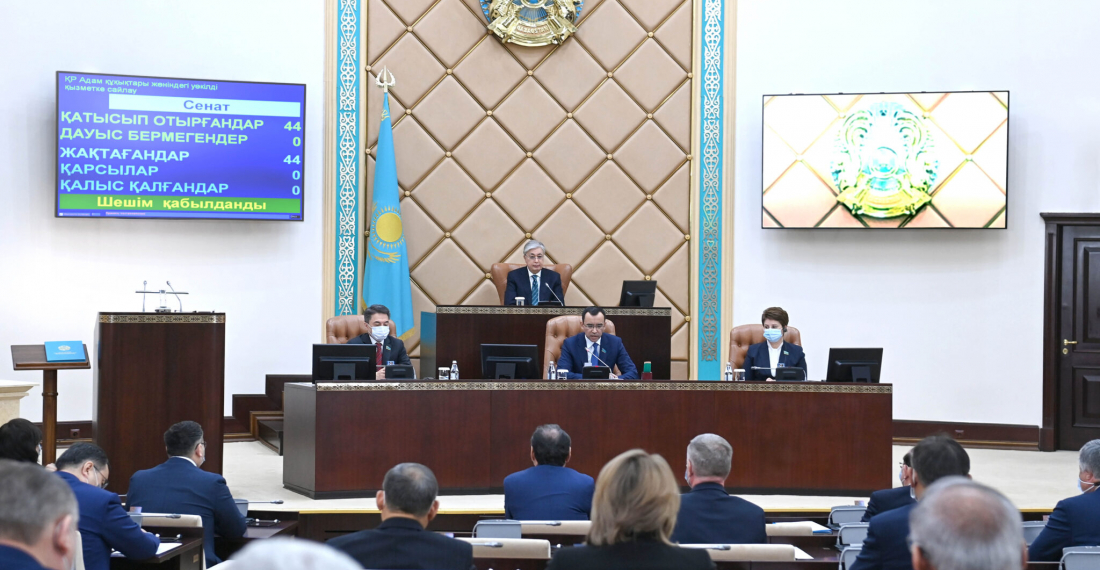
On Thursday, 29 December, Tokayev addressed the Kazakh Senate in the capital, Astana, where he summed up the year’s results.
“This year, the country has been through a lot, but we managed to overcome all difficulties,” said the President.
Tokayev reminded the senators that in 2022 Kazakhstan transitioned to the system of the presidential state with a strong parliament adding that as a result “political processes will become transparent, and the political system will be more stable”. The President added: “Several powers have been transferred from the President to the Parliament, from the centre to the regions. A mixed electoral system has been introduced. The role and status of the parliament have increased. The procedure for registering political parties has been simplified.”
Tokayev addressed the progress in the human rights sphere. The government abolished the death sentence, introduced more stringent punishment for perpetrators of domestic violence, and is reforming its judicial system.
The President highlighted the creation of the Constitutional Court, which will oversee the strict adherence to constitutional norms. He proposed Elmira Azimova for the position of Chair of the Court. He also endorsed Artur Lastayev for the position of Human Rights Commissioner. The Senate approved both postings.
Tokayev paid particular attention to preserving stability and security, and paving the way for the dynamic development of the state is a priority for Kazakhstan. The reforms in all spheres will be continued into the following year.
“This year, the country has been through a lot, but we managed to overcome all difficulties,” said the President.
In early January Kazakhstan faced an unprecedented upheaval, initially triggered by price rises, but which soon got hijacked by elements close to the previous president, Nursultan Nazarbayev, who were unhappy with the reforms being implemented, and most of all with the clampdown on corruption which had started to affect them. At this point Nazarbayev still held control over several leverages of power, including as Head of the Security Council and as President of the ruling party. The disturbances were contained but at considerable human and material costs.
The Kazakh government, although avoiding implicating Nazarbayev personally, moved swiftly to strip him of his powers. Other symbolic moves included renaming the capital city, which had been named Nursultan, back to the previous name, Astana.
This process is still ongoing. This month, the Mazhilis – the first chamber of the Kazakh Parliament – started working on the draft law on declaring the Law on the First President of Kazakhstan invalid.
In many respects the changes have already been made and incorporated in the new constitution adopted after a referendum earlier this year.
“This draft law is designed to implement the changes made to the Constitution following the national referendum. In particular, paragraph four of Article 46 of the Constitution, which establishes that the Constitution and the Constitutional Law determine the status and powers of the First President of Kazakhstan, has been repealed,” said Committee on Legislation and Judicial and Legal Reform Chair Arman Kozhakhmetov.
The law granted the First President, Nursultan Nazarbayev, exclusive rights and privileges, including retention of his and his family’s financial wealth and immunity from actions made while president and after that.
“The law includes numerous provisions regarding the First President. Firstly, as members of the parliament, we think that all former heads of state should have equal rights regardless of how many presidents have preceded them. Secondly, it concerns not only the Law on the First President but also other references in different laws,” said Mazhilis member Aidos Sarym.
Kazakh army prepares for future challenges
2022 was also the year that Kazakhstan finally adopted a path of independent foreign policy. Under the pressure of the war in Ukraine, and a desire not to be embroiled in Russian adventurism, Kazakhstan, together with other Central Asian Republics, has been looking to develop a more balanced foreign policy, which includes, amongst other things, better relations with the EU and the US and continued and improved relations with China. Of course such a policy has its risks since the Kremlin looks at these developments very negatively.
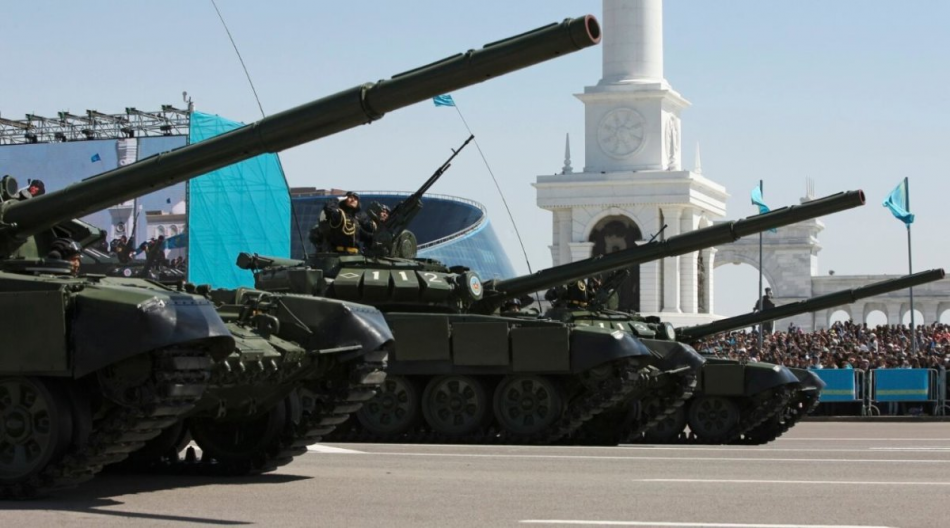
At a press briefing on Thursday (29 December), Deputy Defence Minister, General Sultan Kamaletdinov said the Kazakh Armed Forces trained its troops this year amid possible risks of the geopolitical situation, considering the experience of combat operations in modern armed conflicts. This included 200 exercises and 33,000 live-fire drills.
“When training the troops, the emphasis is on mastering new methods of conducting combat operations, including through the use of unmanned aerial vehicles, new means of electronic warfare, and air defence,” said Kamaletdinov.
He added the Defence Ministry is responsible for working out interaction methods between law enforcement agencies, forming multi departmental groupings of troops under a single command. A unified algorithm of actions of state bodies has been developed. The army will continue digitalizing its conscription, contract recruitment procedures, and other services.
Kamaletdinov also noted that the Armed Forces had prepared more than 60,000 specialists in 2022 in land, air, and water combat. The Defence Ministry has also purchased 110 units of military equipment, including fourth-generation fighter jets, attack and transport helicopters, military transport aircraft, and training aircraft.
In January there was criticism that the Kazakh armed forces had failed to protect the constitutional order. Troops from the Collective Security Treaty Organisation (CSTO) had to be flown in to help restore order. A shake-up of the military command followed soon after order was restored.
source: commonspace.eu with Astana Times and agencies and analysis provided by the editorial team of commonspace.eu