The International Crisis Group has just published a new report on the situation around the Nagorno-Karabakh conflict in which they say that "in the absence of talks, the gulf separating the two sides and societies on each issue is likely to widen. Getting back to the table will be difficult but is the only way Armenia and Azerbaijan can start digging out of their deadlock."
The report adds:
"Armenian and Azerbaijani leaders should capitalise on steps taken since the flare-up of violence on the frontlines in April 2016 to initiate direct talks on the issues underpinning their standoff. A narrow window to do so risks closing.
Disagreement over the fate of these territories adjacent to Nagorno-Karabakh, security provisions for populations living in the conflict zone, and Nagorno-Karabakh's status have always been discussed as a single package. This has blocked progress.
➤ On adjacent territories, both sides should discuss settlements built since the 1992-1994 war. A temporary freeze on settlement expansion in exchange for Azerbaijan's pledge not to pursue legal action or impose new sanctions could create space for talks.
➤ On security arrangements, the parties could empower the OSCE to reinvigorate the High-Level Planning Group to reassess peacekeeping options. Russia's offers to deploy troops have consistently been rebuffed by Armenia, Azerbaijan or both.
➤ On Nagorno-Karabakh's status, the parties remain far apart but semi-formal or informal talks could still be worthwhile and avoid the risk of greater acrimony that may result from the publicity of formal talks.

The report concludes:
"Direct talks between the parties inevitably entail risks. They could highlight the distance between the two sides' positions, thereby fuelling mutual anger and potentially reversing the past months' gains. But years of continued stalemate have put a potential solution further out of reach and isolated Armenians and Azerbaijanis from one another. The more time goes by, the more facts on the ground will be entrenched, the harder they will be to reverse and the graver the risk of war. If talks might make matters worse, their continued absence almost certainly will. Getting back to the table will be difficult but is the only way Armenia and Azerbaijan can start digging out of their deadlock."
You can read the report in full on the International Crisis Group website here
source: commonspace.eu with International Crisis Group
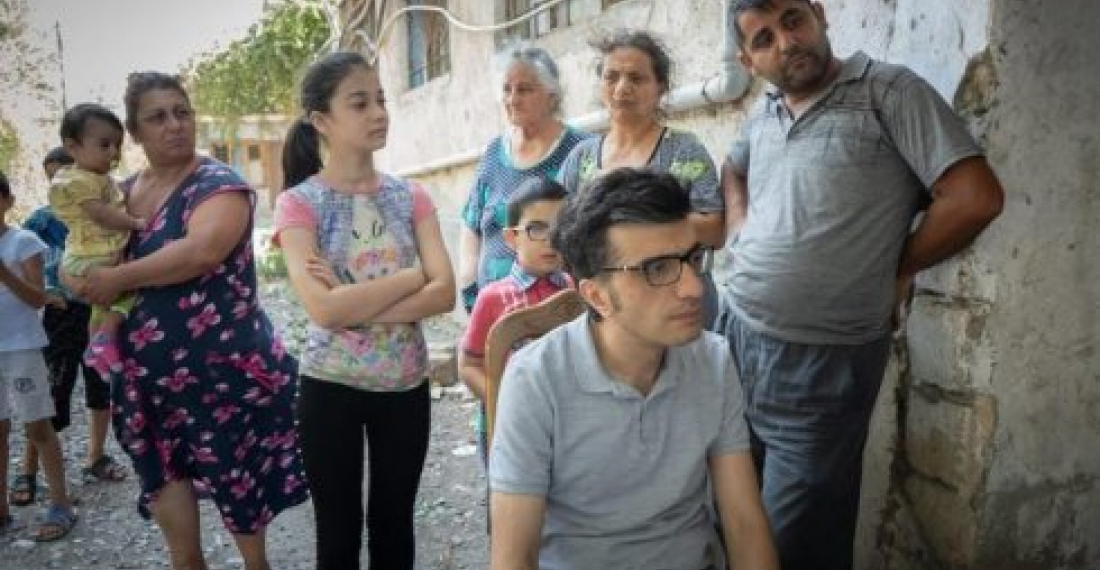
photo 1: Crisis Group's expert Zaur Shiriyev (seated) meets with Azerbaijani IDPs living close to the Line of Contact. Photo courtesy of International Crisis Group)
photo 2: An Armenian villager shows Crisis Group's expert Olesya Vartanyan the positions of the Armenian and Azerbaijani militaries. (photo courtesy of the International Crisis Group).
The opinions expressed in this article do not necessarily reflect the views of commonspace.eu or its partners.