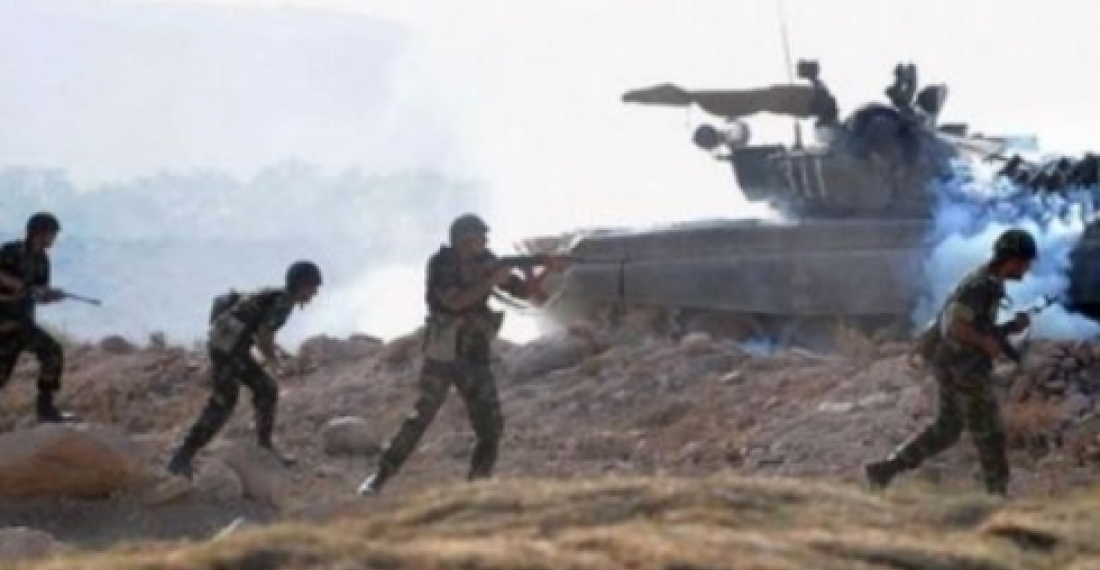
A ceasefire between the sides in the Nagrono-Karabkh conflict that came into effect on 12 May 1994 remains the basis of a fragile existence for hundreds of thousands of people around the conflict region.
Twenty years have passed since the ceasefire arrangement that ended hostilities between Armenian and Azerbaijani forces came into effect for the first time. The conflict of the previous years caused havoc in the region, with tens of thousands of deaths and many more injured, and hundreds of thousands of people displaced. Some consider that the ceasefire was an important and essential step that has ensured peace in the region over the last two decades. The ceasefire is unsupervised. Their are no peacekeeping forces separating the sides, such as in Cyprus and on the Golan Heights, not even rudimentary neutral observation of the process. A handful of OSCE monitors visit the conflict zone occasionally. They are invariably not there when incidents happen. And incidents happen, often. Ceasefire violations claim the lives of dozens of victims killed or injured each year. Victims are both civilian and military. Some argue that the ceasefire has practically frozen the conflict, making it more difficult to solve, but others insist that a bad peace is better than a good war and that the first priority needs to be to safeguard and re-enforce the ceasefire regime since it remains the basis of a fragile existence for hundreds of thousands of people who live around the conflict zone.
On the occasion of the 20th anniversary of the ceasefire, the three co-Chair of the OSCE Minsk Process - the mechanism entrusted by the international community to help resolve the conflict issued an unusally long statement in which they appealed to the sides to to commit to active people to people programs and security confidence building measures to reinforce the peace process.
The statement in full said:
On the twentieth anniversary of the 1994 ceasefire agreement, the OSCE Minsk Group Co-Chairs invite the people of the region to reflect upon the legacy of the past two decades.
That agreement brought an end to outright war, halted the tragic violence of previous years, and laid the groundwork for negotiations that offered the sides a path to peace. Thanks to the resulting truce a new generation of Armenians and Azerbaijanis grew up without experiencing the horrors of war. The sides should do everything possible to protect future generations from such experience.
The ceasefire agreement did not, however, resolve the underlying conflict. It left the territories surrounding Nagorno-Karabakh occupied and failed to provide a path forward on status for Nagorno-Karabakh. The absence of a final settlement has resulted in the ongoing displacement of hundreds of thousands of people, the perpetual threat of escalating violence along the international border and the Line of Contact, and a misconception in some quarters that the status quo can be sustained indefinitely.
The sides have shown little willingness to take advantage of the opportunities presented by the co-chairs countries or make the political decisions necessary for progress in this peace process.
We share a common position on this conflict, and remain firmly committed to helping the sides reach a peaceful settlement as soon as possible based on the core principles of the UN Charter and the Helsinki Final Act, particularly those pertaining to the non-use of force, territorial integrity, and equal rights and self-determination of peoples. A settlement will have to include the elements outlined by the Presidents of the co-chair countries in statements from 2009 to 2013, which include the return of the territories surrounding Nagorno-Karabakh, interim status for Nagorno-Karabakh guaranteeing security and self-governance, a corridor linking Armenia to Nagorno-Karabakh, final status of Nagorno-Karabakh to be determined in the future by a legally-binding expression of will, the right of all internally-displaced persons and refugees to return, and international security guarantees, including a peacekeeping operation. In November we saw a promising renewal of dialogue at the highest levels. We call on the sides to enter into constructive, good-faith negotiations resulting in a peace agreement based on these elements in order to bring about a lasting settlement to the conflict.
Such a settlement will not be possible without a basis of trust and understanding between the Armenian and Azerbaijani people. We call on the sides to commit to active people to people programs and security confidence building measures to reinforce the peace process.
Armenians and Azerbaijanis deserve to live in peace and security, and we stand ready to help. The sides must take the necessary steps towards peace. When they do, it will be with the full support of the OSCE and the international community.
Source: commonspace.eu with OSCE.org