Theme

Domestic Politics

Stories related to the internal politics of states and various domestic issues. 

Editor's choice
Monday Commentary
Monday Commentary: 2025 was a momentous year for the South Caucasus

Monday Commentary: 2025 was a momentous year for the South Caucasus

The year 2025 has ended up being a momentous year for the South Caucasus, writes Dennis Sammut in his Monday Commentary. Armenia-Azerbaijan relations have been redefined, with consequences for the whole region and beyond. That huge development overshadowed key moments in the domestic trajectory of the two countries, which however have deep consequences for the two countries, and even beyond. It has also been a tumultuous year for Georgia too. The country has been gripped in a political crisis throughout 2025, with no obvious end in sight. Whatever the domestic arguments, on the international stage Georgia is today a shadow of what it used to be until recently. It not only has lost the chance of joining the European Union any time soon, but it has also lost its position as the leading South Caucasus country. Today, in the new reality of the region, it lags as a tired third. Important as 2025 was, it ended with a lot of unfinished business. So 2026 will also be crucial for the three countries. Since regaining its statehood in 1991 after the dissolution of the Soviet Union, Armenia-Azerbaijan relations have been defined by war. The two fought open wars, wars of attrition, and propaganda wars, incessantly. Tens of thousands of people lost their lives, and hundreds of thousands were displaced. Many had lost hope that the two could try the alternative – i.e. peaceful co-existence. Yet in 2025 they were proven wrong.
Editor's choice
News
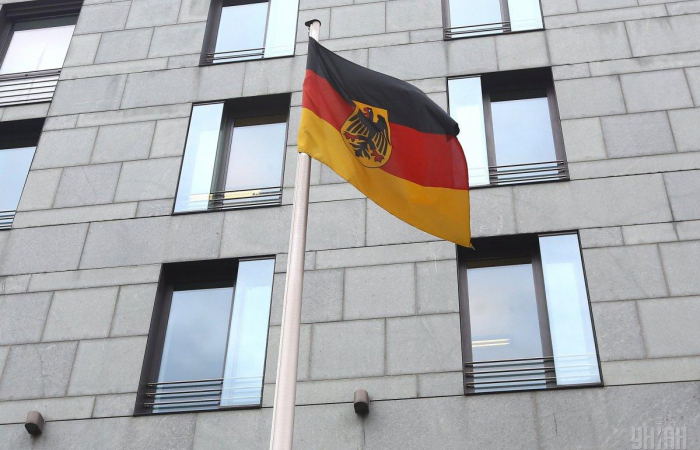
Germany accuses Russia of cyberattacks and disinformation campaign

Germany accuses Russia of cyberattacks and disinformation campaign

The German government holds Russia responsible for a cyberattack on German air traffic control, and for targeted disinformation campaigns before the last federal election. According to the German Foreign Office in Berlin, the incidents could be clearly attributed to the Russian military intelligence service, the GRU. In response, the Russian ambassador to Berlin was summoned to the Foreign Ministry. "We have been observing a massive increase in threatening hybrid activities by Russia for some time now," a spokesperson for the Foreign Ministry stated. These range from disinformation campaigns and espionage to cyberattacks and sabotage attempts. The aim is to divide society, sow distrust, and undermine confidence in democratic institutions. The spokesperson added that with these actions, Russia is "very concretely threatening our security, not only through its war of aggression against Ukraine, but also here in Germany."  The Foreign Ministry spokesperson explained that the cyberattack on air traffic control in August 2024 was clearly attributed to the hacker collective "APT28," known as "Fancy Bear," and to the responsibility of the Russian military intelligence service, the GRU. Furthermore, it could now be "conclusively stated" that Russia had attempted "to influence and destabilize both the last Federal election and the ongoing internal affairs of the Federal Republic of Germany." There was "absolutely irrefutable evidence" for this". The so-called "Storm 1516" campaign, which has been running since 2024, is allegedly backed by "reliable information" that the Moscow-based think tank "Center for Geopolitical Expertise" is behind it. The Center is also said to be supported by Russian military intelligence. Its primary aim is to influence democratic elections in the West. (Click the image to read more).

Filter archive

Publication date
Editor's choice
Commentary
Commentary: What next for Mirziyoyev and for Uzbekistan?

Commentary: What next for Mirziyoyev and for Uzbekistan?

Uzbek president Shovkat Mirzyoyev, re-elected for a second term on Sunday said there is no going back for his country. However it is not clear yet if Uzbekistan is slowly but surely moving out of its autocratic past into a pluralistic political process, because there are contradictory signs.
Editor's choice
News
Kuwait plans to pardon dissidents

Kuwait plans to pardon dissidents

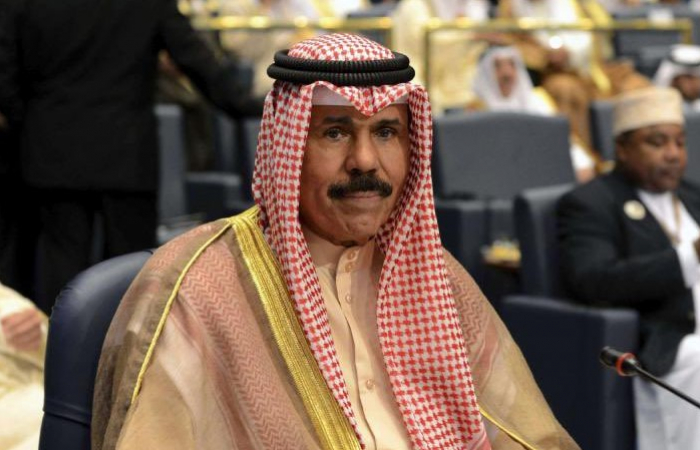
Kuwait’s emir Sheikh Nawaf al-Ahmad al-Sabah has initiated an amnesty process to pardon political dissidents and critics as part of wider political reforms in the country. The amnesty decision is expected to include the self-exiled parliamentarians who fled imprisonment after taking part in the 2011 storming of the parliament over alleged corruption and mismanagement by the government.
Editor's choice
News
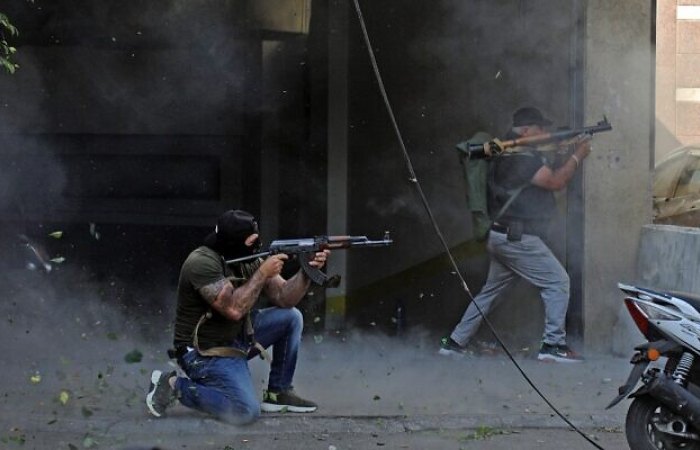
Fears Lebanon is sliding back to civil war after street violence in Beirut on Thursday

Fears Lebanon is sliding back to civil war after street violence in Beirut on Thursday

Lebanon has a history of decades of sectarian strife between Christians and Muslims, and groups within them. Foreign interference since the 1950's has made Lebanon a battle field for Middle East states and groups to fight proxy wars. The latest incidents raise concerns of a further deterioration of what is already for many Lebanese people a very dire situation.
Editor's choice
News
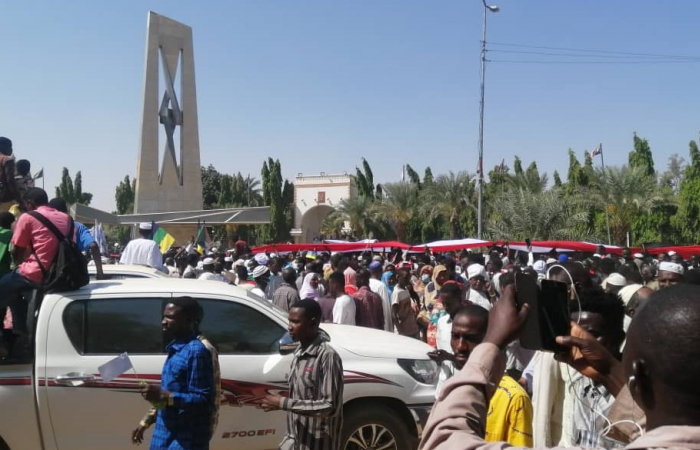
Thousands rally in Tbilisi calling for the release of former president Saakashvili

Thousands rally in Tbilisi calling for the release of former president Saakashvili

Saakashvili remains popular with some segments of Georgian society, particularly in Western Georgia. Thousands travelled to Tbilisi to participate in the rally. However many Georgians have negative memories of Saakashvili's presidency and do not want to see his return to public office.