Theme

Domestic Politics

Stories related to the internal politics of states and various domestic issues. 

Editor's choice
Monday Commentary
Monday Commentary: 2025 was a momentous year for the South Caucasus

Monday Commentary: 2025 was a momentous year for the South Caucasus

The year 2025 has ended up being a momentous year for the South Caucasus, writes Dennis Sammut in his Monday Commentary. Armenia-Azerbaijan relations have been redefined, with consequences for the whole region and beyond. That huge development overshadowed key moments in the domestic trajectory of the two countries, which however have deep consequences for the two countries, and even beyond. It has also been a tumultuous year for Georgia too. The country has been gripped in a political crisis throughout 2025, with no obvious end in sight. Whatever the domestic arguments, on the international stage Georgia is today a shadow of what it used to be until recently. It not only has lost the chance of joining the European Union any time soon, but it has also lost its position as the leading South Caucasus country. Today, in the new reality of the region, it lags as a tired third. Important as 2025 was, it ended with a lot of unfinished business. So 2026 will also be crucial for the three countries. Since regaining its statehood in 1991 after the dissolution of the Soviet Union, Armenia-Azerbaijan relations have been defined by war. The two fought open wars, wars of attrition, and propaganda wars, incessantly. Tens of thousands of people lost their lives, and hundreds of thousands were displaced. Many had lost hope that the two could try the alternative – i.e. peaceful co-existence. Yet in 2025 they were proven wrong.
Editor's choice
News
Germany accuses Russia of cyberattacks and disinformation campaign

Germany accuses Russia of cyberattacks and disinformation campaign

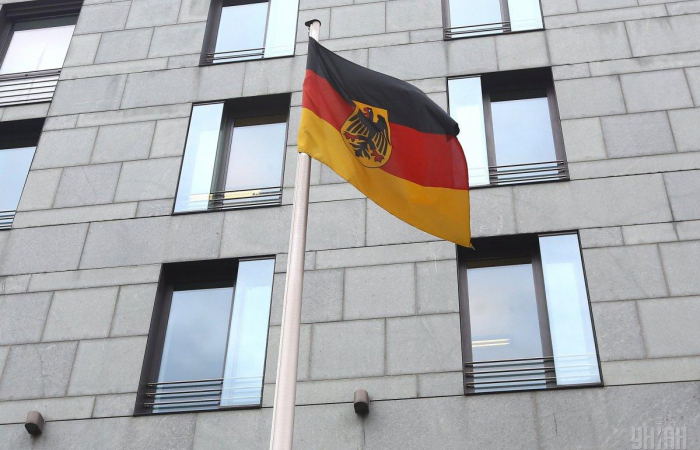
The German government holds Russia responsible for a cyberattack on German air traffic control, and for targeted disinformation campaigns before the last federal election. According to the German Foreign Office in Berlin, the incidents could be clearly attributed to the Russian military intelligence service, the GRU. In response, the Russian ambassador to Berlin was summoned to the Foreign Ministry. "We have been observing a massive increase in threatening hybrid activities by Russia for some time now," a spokesperson for the Foreign Ministry stated. These range from disinformation campaigns and espionage to cyberattacks and sabotage attempts. The aim is to divide society, sow distrust, and undermine confidence in democratic institutions. The spokesperson added that with these actions, Russia is "very concretely threatening our security, not only through its war of aggression against Ukraine, but also here in Germany."  The Foreign Ministry spokesperson explained that the cyberattack on air traffic control in August 2024 was clearly attributed to the hacker collective "APT28," known as "Fancy Bear," and to the responsibility of the Russian military intelligence service, the GRU. Furthermore, it could now be "conclusively stated" that Russia had attempted "to influence and destabilize both the last Federal election and the ongoing internal affairs of the Federal Republic of Germany." There was "absolutely irrefutable evidence" for this". The so-called "Storm 1516" campaign, which has been running since 2024, is allegedly backed by "reliable information" that the Moscow-based think tank "Center for Geopolitical Expertise" is behind it. The Center is also said to be supported by Russian military intelligence. Its primary aim is to influence democratic elections in the West. (Click the image to read more).

Filter archive

Publication date
Editor's choice
News
All power to Xi

All power to Xi

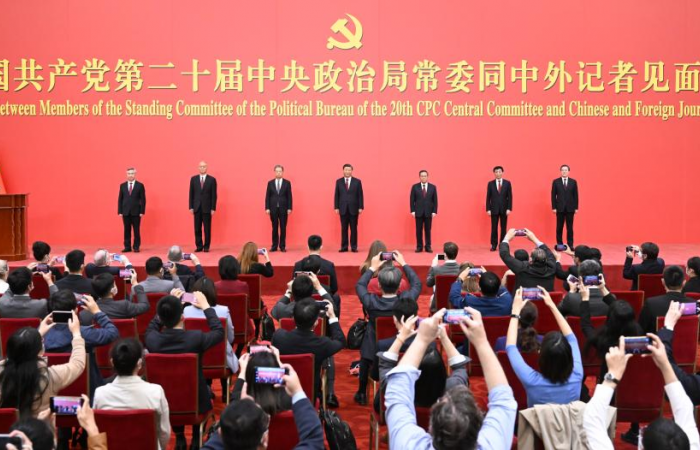
It happened as was planned and expected. On Sunday (23 Ocotber) China's President Xi Jinping, was named to another term as head of the ruling Communist Party in a break with tradition that sees him becoming the paramount leader of China. In the process Xi also promoted allies who support his vision of tighter control over society and the struggling economy. Xi, who took power in 2012 was awarded a third five-year term as general secretary, discarding a custom under which his predecessor left after 10 years. The 69-year-old leader is expected by some to try to stay in power for life. The apex of power in China is the seven member standing committee of the Politburo of the Communist Party. Xi and the other six men who form Standing Committee, appeared for the first time as a group before reporters in the Great Hall of the People, in central Beijing. The lineup appeared to reflect what some commentators called “Maximum Xi,” valuing loyalty over ability. Some new leaders lack national-level experience as vice premier or Cabinet minister that typically is seen as a requirement for the post.
Editor's choice
News
Truss resigns as British prime minister after only 45 days in office

Truss resigns as British prime minister after only 45 days in office

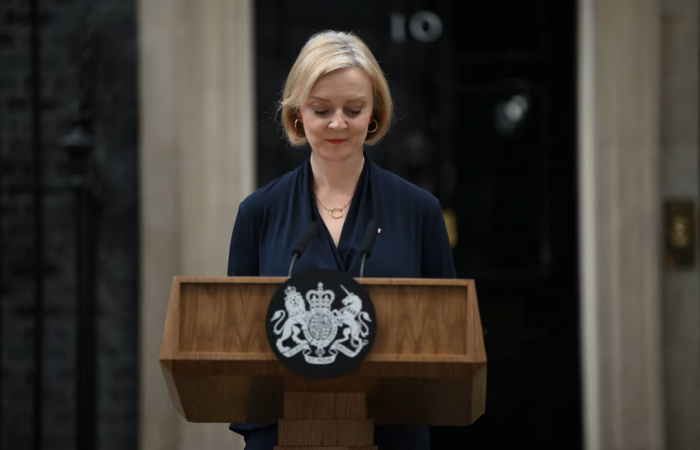
Liz Truss has resigned as UK prime minister and leader of the Conservative Party in a statement outside Downing Street on Thursday afternoon (20 October) She said she could not deliver the mandate on which she was elected as Tory leader and had notified the King that she was resigning A Conservative leadership election will be completed within the next week, she said "I will remain as prime minister until a successor has been chosen," she said Her departure after 45 days in office makes her the shortest-serving PM in UK history Truss's premiership has been in turmoil since her mini-budget last month, which rocked markets and was later scrapped by her new chancellor The resignation of her home secretary on Wednesday and a chaotic vote in the Commons sealed her fate. The appointment of Truss as a prime minister, after a long selection process within the Conservative Party was the last act of Queen Elizabeth II before her death.
Editor's choice
Commentary
Monday Commentary: Comrade Xi's party

Monday Commentary: Comrade Xi's party

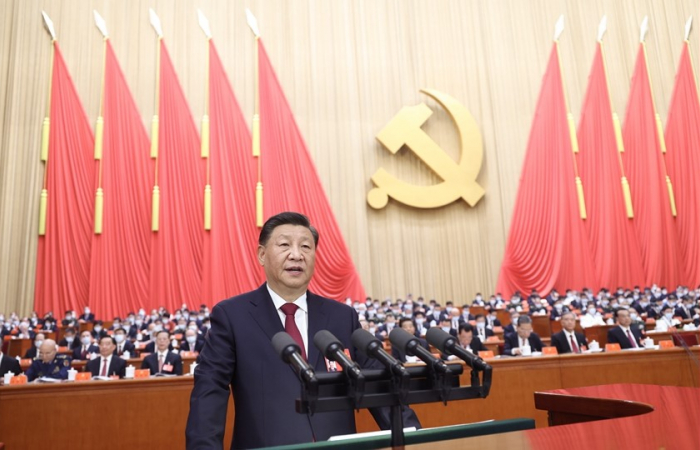
An event on the other side of the world that started on Sunday has huge global importance and will define international politics for decades to come. The 20th Congress of the Communist Party of China (CPC) is perhaps not the most important ever in terms of its impact within China itself, but when it comes to China’s role in the world it certainly is. This is not only because China is today stronger than it has ever been in modern times, but also because the congress gives the seal of approval to a Chinese global posture that is assertive, ambitious and with as yet an undefined end-game. That end-game is being defined by Xi Jinping, who during this congress is expected to be confirmed in his post as  Party leader for an unprecedented third term. President Xi has been making speeches both at the main session of the Congress and at side events. This morning he told a meeting of Communist activists on the fringe of the main event, that Chinese people should stay united as "a piece of hard steel" under the leadership of the Communist Party of China (CPC) and “pull together with one mind to power the giant ship of national rejuvenation through the wind and waves to reach its destination.” In a more formal speech to the Congress plenum a day before Xi had given an indication of what that destination is: “Incomparable glory’ awaits China on world stage”, Xi Jinping told the party congress. By 2049, when the People’s Republic will hold centennial celebrations, China should become a leading power in all aspects, the leader stated So no modesty or lack of ambition here. But what does this mean for the rest of the world?
Editor's choice
News
Taiwanese President reiterates island's sovereignty on national day

Taiwanese President reiterates island's sovereignty on national day

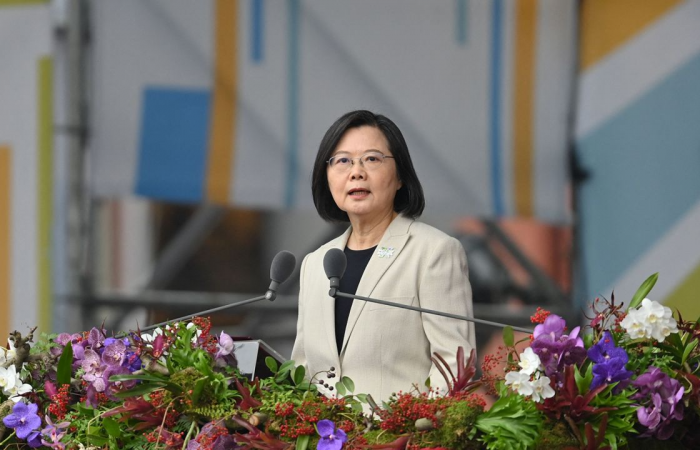
As Taiwan celebrated “Double Ten”, the island’s national day on Monday (10 October), President Tsai Ing-wen reiterated Taiwan’s sovereignty in an address to the people of Taiwan. During a ceremonial speech, President Tsai said that the Taiwanese people “must defend our national sovereignty and our free and democratic way of life. On this point, we have no room for compromise”.  Tsai Ing-wen said it was “regrettable” that China has increased its military and political presence thereby threatening peace and stability in the Taiwan Strait and region. President Tsai continued to say that they would be willing to have talks with Beijing in order to keep the peace, but only if the negotiations were conducted with “rationality, equality and mutuality”. On top of that, she emphasised that Beijing must not think there is any space for compromise in Taiwan’s commitment to democracy and freedom.