Theme

Domestic Politics

Stories related to the internal politics of states and various domestic issues. 

Editor's choice
Monday Commentary
Monday Commentary: 2025 was a momentous year for the South Caucasus

Monday Commentary: 2025 was a momentous year for the South Caucasus

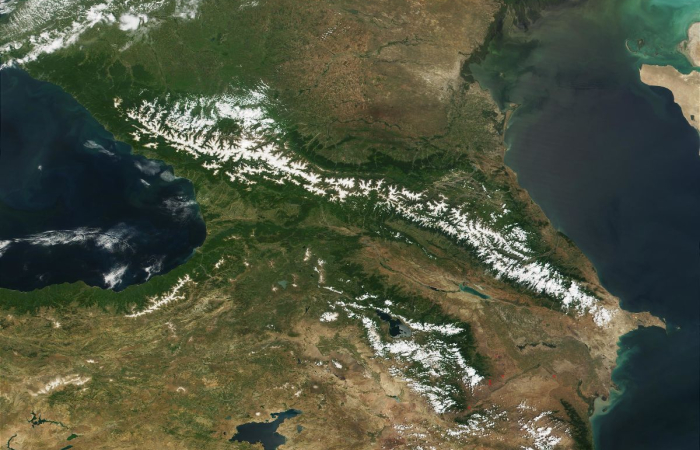
The year 2025 has ended up being a momentous year for the South Caucasus, writes Dennis Sammut in his Monday Commentary. Armenia-Azerbaijan relations have been redefined, with consequences for the whole region and beyond. That huge development overshadowed key moments in the domestic trajectory of the two countries, which however have deep consequences for the two countries, and even beyond. It has also been a tumultuous year for Georgia too. The country has been gripped in a political crisis throughout 2025, with no obvious end in sight. Whatever the domestic arguments, on the international stage Georgia is today a shadow of what it used to be until recently. It not only has lost the chance of joining the European Union any time soon, but it has also lost its position as the leading South Caucasus country. Today, in the new reality of the region, it lags as a tired third. Important as 2025 was, it ended with a lot of unfinished business. So 2026 will also be crucial for the three countries. Since regaining its statehood in 1991 after the dissolution of the Soviet Union, Armenia-Azerbaijan relations have been defined by war. The two fought open wars, wars of attrition, and propaganda wars, incessantly. Tens of thousands of people lost their lives, and hundreds of thousands were displaced. Many had lost hope that the two could try the alternative – i.e. peaceful co-existence. Yet in 2025 they were proven wrong.
Editor's choice
News
Germany accuses Russia of cyberattacks and disinformation campaign

Germany accuses Russia of cyberattacks and disinformation campaign

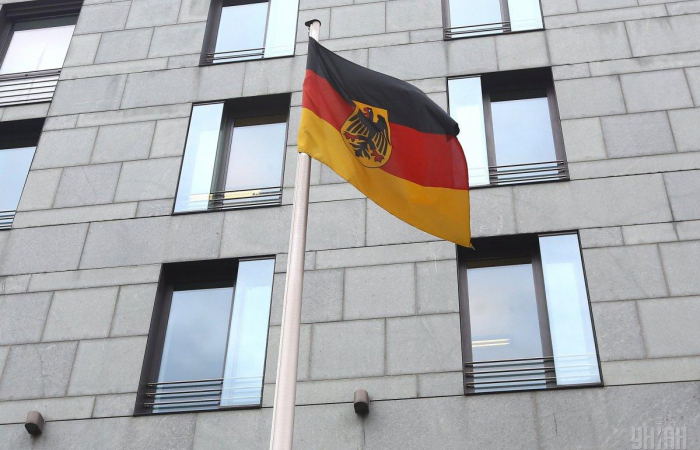
The German government holds Russia responsible for a cyberattack on German air traffic control, and for targeted disinformation campaigns before the last federal election. According to the German Foreign Office in Berlin, the incidents could be clearly attributed to the Russian military intelligence service, the GRU. In response, the Russian ambassador to Berlin was summoned to the Foreign Ministry. "We have been observing a massive increase in threatening hybrid activities by Russia for some time now," a spokesperson for the Foreign Ministry stated. These range from disinformation campaigns and espionage to cyberattacks and sabotage attempts. The aim is to divide society, sow distrust, and undermine confidence in democratic institutions. The spokesperson added that with these actions, Russia is "very concretely threatening our security, not only through its war of aggression against Ukraine, but also here in Germany."  The Foreign Ministry spokesperson explained that the cyberattack on air traffic control in August 2024 was clearly attributed to the hacker collective "APT28," known as "Fancy Bear," and to the responsibility of the Russian military intelligence service, the GRU. Furthermore, it could now be "conclusively stated" that Russia had attempted "to influence and destabilize both the last Federal election and the ongoing internal affairs of the Federal Republic of Germany." There was "absolutely irrefutable evidence" for this". The so-called "Storm 1516" campaign, which has been running since 2024, is allegedly backed by "reliable information" that the Moscow-based think tank "Center for Geopolitical Expertise" is behind it. The Center is also said to be supported by Russian military intelligence. Its primary aim is to influence democratic elections in the West. (Click the image to read more).

Filter archive

Publication date
Editor's choice
Analysis
Analysis: The tale of two elections: Implications for the South Caucasus

Analysis: The tale of two elections: Implications for the South Caucasus

As the US presidential election approaches, many are assessing the implications of a Donald Trump or Kamala Harris administration in different parts of the world. Commentators on the South Caucasus are no exception. The Biden administration established a Washington format to facilitate Armenia–Azerbaijan negotiations and took steps to further US–Armenia relations, making a decision to upgrade the status of a strategic dialogue launched in 2019 to a strategic partnership commission. The Biden administration also invested efforts in thawing relations between Armenia and Turkey, viewing this as essential for regional stability. US officials view normalising Armenia–Turkey relations as crucial for reducing Russian influence and decreasing Armenia’s dependency on Russia.
Editor's choice
News
US Helsinki Commission assesses political situation in South Caucasus

US Helsinki Commission assesses political situation in South Caucasus

The US Helsinki Commission on Tuesday (1 October) published an analysis of Russia's political and economic agenda. The document addresses, among other things, various developments in the South Caucasus. The region is experiencing various political shifts as Russia's material influence wanes due to its focus on its war with Ukraine. On the one hand. Armenia was once one of Russia's strongest allies. However, following the Nagorno Karabakh war in 2020, Armenia has moved away from Moscow and more towards a Western agenda. On the other hand, Azerbaijan has adopted a cooperative approach with Russia, especially given the similarities between the two countries' strong governmental grip.   
Editor's choice
News
Ruben Vardanyan, filed lawsuit in Baku for torture and lack of speedy trial

Ruben Vardanyan, filed lawsuit in Baku for torture and lack of speedy trial

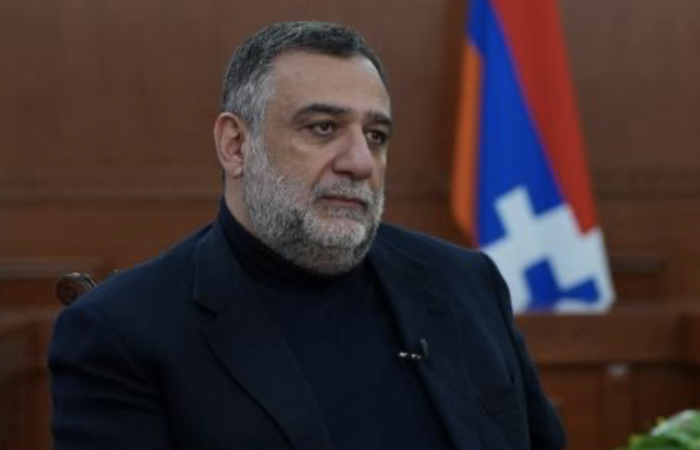
Ruben Vardanyan, an Armenian ex-official of the self-declared Nagorno Karabakh administration, was arrested and imprisoned along with other top Karabakh officials during Baku's recapture of Nagorno Karabakh in September 2023. On Thursday (3 October), Vardanyan's lawyers filed a lawsuit in Baku for alleged torture and denial of a speedy trial. 
Editor's choice
News
Tavush Movement resumes protests against border delimitation in Yerevan 

Tavush Movement resumes protests against border delimitation in Yerevan 

On Wednesday (3 October), the Tavush movement, under the new name of the Holy Struggle, held a political rally in Yerevan's Republic Square. The movement was formed to protest against border delimitation with Azerbaijan, but also to demand the resignation of Armenian Prime Minister Nikol Pashinyan. The newly chosen name, 'Holy Struggle', is a strategic way of attracting support, particularly by exploiting its Christian overtones. 
Editor's choice
News
Rutte visits Ukraine on first working trip as NATO chief

Rutte visits Ukraine on first working trip as NATO chief

NATO's new Secretary General Mark Rutte visited Kyiv on Thursday (3 October). It is Rutte's first working trip since officially taking office earlier this week. Earlier, Rutte announced that Ukraine's NATO membership would be one of the spearheads of his policy.
Editor's choice
News
Armenia to increase military spending 

Armenia to increase military spending 

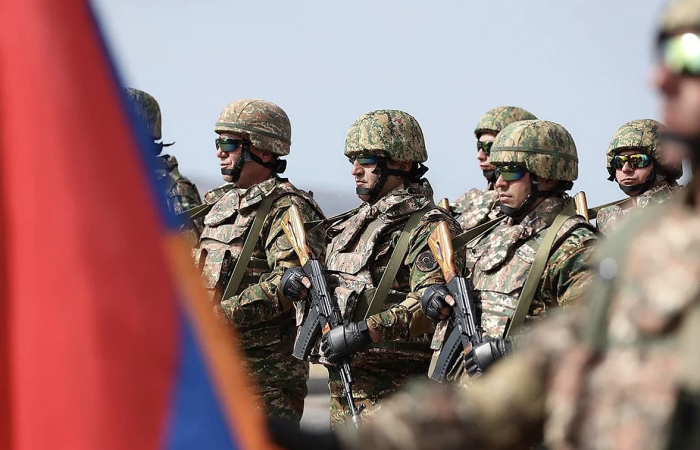
The Armenian government plans to increase military spending by about 20 per cent, equivalent to 110 billion drams (about $286 million). According to the proposed state budget for 2025, the Ministry of Defence will receive 664.6 billion drams (about $1.7 billion). Military expert Leonid Nersisyan, a researcher at the Armenian analytical centre APRI, describes this defence spending as unprecedented. However, he points out that despite the increased budget, Yerevan still lags far behind Baku in terms of military spending. Military spending remains lower than social spending in the state budget. Although the gap in military spending between Armenia and Azerbaijan is narrowing, with Armenia now trailing by a factor of two instead of five or six as it did in 2013, the difference remains significant.
Editor's choice
News
DR Congo faces severe shortages as Mpox spreads

DR Congo faces severe shortages as Mpox spreads

Several patients in a makeshift Mpox isolation ward in the eastern Democratic Republic of Congo are in urgent need of proper medical care as hospital staff struggle with drug shortages and overcrowding. These patients have been diagnosed with Mpox, a virus that was declared a global public health emergency three weeks ago. Reports over the past two weeks suggest that vaccines against the new strain of the virus are expected to arrive soon. In response to the outbreak, Congo's President Felix Tshisekedi has approved a $10 million fund to support containment efforts. However, until these measures are implemented, health workers in parts of the DRC continue to struggle to provide adequate care for patients.
Editor's choice
News
Environmentalists take the European Commission to court

Environmentalists take the European Commission to court

Environmental campaigners announced on Tuesday (27 August) that they have taken the European Commission to court over its 2030 emissions rules. They are seeking a ruling from Europe's second highest court that would force the EU bloc to strengthen its climate policies. The case, filed at the General Court of the Court of Justice of the European Union, is being led by the non-profit organisations Climate Action Network and the Global Legal Action Network (GLAN).