Theme

Domestic Politics

Stories related to the internal politics of states and various domestic issues. 

Editor's choice
Monday Commentary
Monday Commentary: 2025 was a momentous year for the South Caucasus

Monday Commentary: 2025 was a momentous year for the South Caucasus

The year 2025 has ended up being a momentous year for the South Caucasus, writes Dennis Sammut in his Monday Commentary. Armenia-Azerbaijan relations have been redefined, with consequences for the whole region and beyond. That huge development overshadowed key moments in the domestic trajectory of the two countries, which however have deep consequences for the two countries, and even beyond. It has also been a tumultuous year for Georgia too. The country has been gripped in a political crisis throughout 2025, with no obvious end in sight. Whatever the domestic arguments, on the international stage Georgia is today a shadow of what it used to be until recently. It not only has lost the chance of joining the European Union any time soon, but it has also lost its position as the leading South Caucasus country. Today, in the new reality of the region, it lags as a tired third. Important as 2025 was, it ended with a lot of unfinished business. So 2026 will also be crucial for the three countries. Since regaining its statehood in 1991 after the dissolution of the Soviet Union, Armenia-Azerbaijan relations have been defined by war. The two fought open wars, wars of attrition, and propaganda wars, incessantly. Tens of thousands of people lost their lives, and hundreds of thousands were displaced. Many had lost hope that the two could try the alternative – i.e. peaceful co-existence. Yet in 2025 they were proven wrong.
Editor's choice
News
Germany accuses Russia of cyberattacks and disinformation campaign

Germany accuses Russia of cyberattacks and disinformation campaign

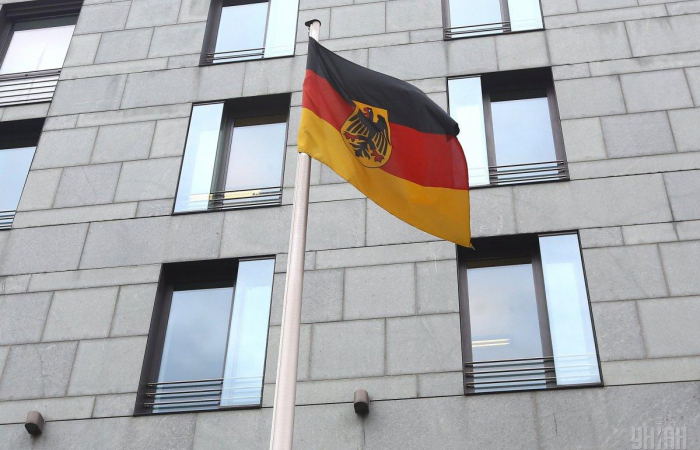
The German government holds Russia responsible for a cyberattack on German air traffic control, and for targeted disinformation campaigns before the last federal election. According to the German Foreign Office in Berlin, the incidents could be clearly attributed to the Russian military intelligence service, the GRU. In response, the Russian ambassador to Berlin was summoned to the Foreign Ministry. "We have been observing a massive increase in threatening hybrid activities by Russia for some time now," a spokesperson for the Foreign Ministry stated. These range from disinformation campaigns and espionage to cyberattacks and sabotage attempts. The aim is to divide society, sow distrust, and undermine confidence in democratic institutions. The spokesperson added that with these actions, Russia is "very concretely threatening our security, not only through its war of aggression against Ukraine, but also here in Germany."  The Foreign Ministry spokesperson explained that the cyberattack on air traffic control in August 2024 was clearly attributed to the hacker collective "APT28," known as "Fancy Bear," and to the responsibility of the Russian military intelligence service, the GRU. Furthermore, it could now be "conclusively stated" that Russia had attempted "to influence and destabilize both the last Federal election and the ongoing internal affairs of the Federal Republic of Germany." There was "absolutely irrefutable evidence" for this". The so-called "Storm 1516" campaign, which has been running since 2024, is allegedly backed by "reliable information" that the Moscow-based think tank "Center for Geopolitical Expertise" is behind it. The Center is also said to be supported by Russian military intelligence. Its primary aim is to influence democratic elections in the West. (Click the image to read more).

Filter archive

Publication date
Editor's choice
News
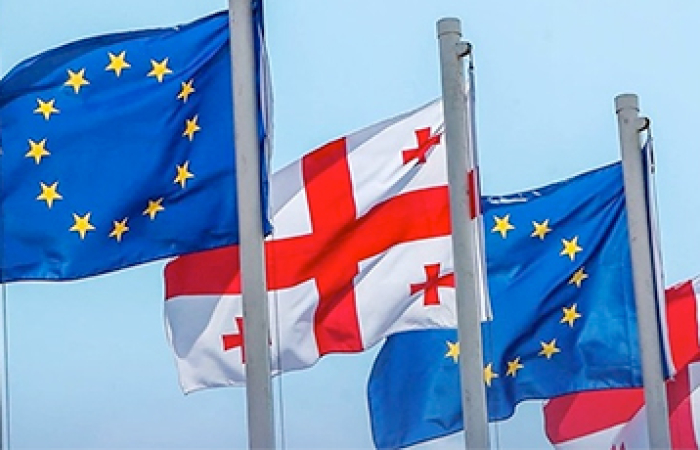
EU is ready for more action against Georgia including sanctions

EU is ready for more action against Georgia including sanctions

The European Union is prepared to take further action against the Georgian government, including sanctions, to hold those responsible for violence against protesters accountable, according to a statement by the EU press service on Wednesday. In the statement, the EU said it has taken into account the decision by the Baltic states to impose sanctions against Georgian Dream on the basis that the ruling party's actions are aimed at violating fundamental rights and freedoms and further reducing the space for civil society to operate.
Editor's choice
News
Majority of Georgians believe EU membership would be positive for Georgian-Abkhaz and Georgian-Ossetian relations

Majority of Georgians believe EU membership would be positive for Georgian-Abkhaz and Georgian-Ossetian relations

61 per cent of Georgians believe that the country’s integration into the European Union would have a positive impact on Georgian-Abkhaz and Georgian-Ossetian relations according to a new study by the Caucasus Research Resource Center on conflicts in Georgia. Additionally, 56 per cent think that NATO membership would also be a positive development. When it comes to Georgia’s rapprochement with Russia, 31 per cent of respondents believe it would have positive consequences. The study, “Conflicts in Georgia: Perceptions, Attitudes, and Expectations”, was commissioned by the Institute for Nationalism and Conflict Studies, the Levan Mikeladze Foundation, and the Caucasian House and conducted by the Caucasus Research Resource Center in 2024.
Editor's choice
News
Badra Gunba elected President in Abkhazia with almost 55 per cent of the second round vote

Badra Gunba elected President in Abkhazia with almost 55 per cent of the second round vote

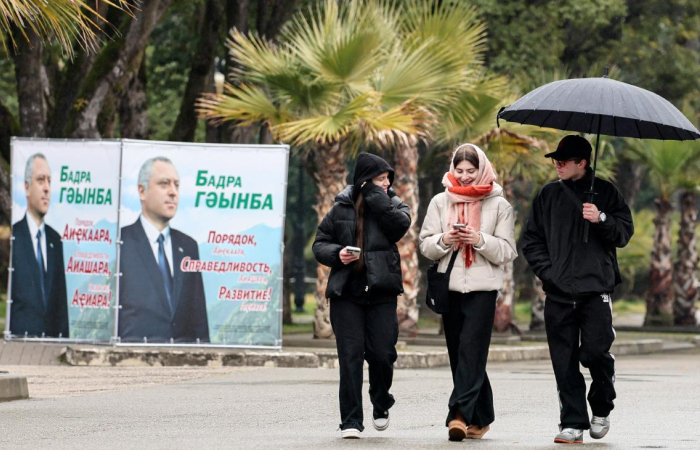
Badra Gunba has won a presidential election in the breakaway Georgian region of Abkhazia, state media said on Sunday, months after his predecessor was driven from office following protests over an investment deal with Russia. Gunba, currently acting President, took almost 55 per cent of the vote in Saturday's election in the Russia-backed territory, ahead of opposition leader Adgur Ardzinba on just under 42 per cent, Abkhazian state news agency Apsnypress reported, citing preliminary results from the electoral commission. Reports indicate that 70 per cent of the population took part in the elections - 100,412 people.
Editor's choice
News
MEP Nils Ušakovs in Armenia: Reforms linked to EU accession will strengthen country

MEP Nils Ušakovs in Armenia: Reforms linked to EU accession will strengthen country

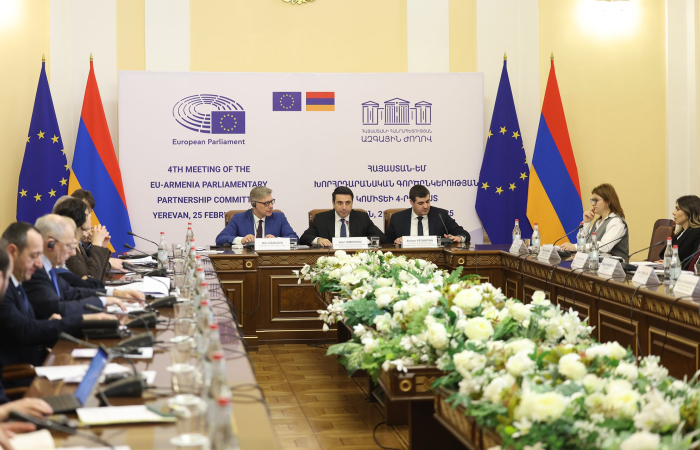
Speaking at a press conference after the 4th Meeting of EU-Armenia Parliamentary Partnership Committee in Yerevan, MEP Nils Ušakovs said that the process of Armenia’s accession to the European Union will require significant reforms over a long time. Ušakovs, co-chair of the committee, said that the reforms will strengthen the country and enable it to make more confident decisions regarding its future.
Editor's choice
Opinion
From Activist to Prime Minister, From Historical to Real Armenia: Pashinyan’s Bold New Gamble

From Activist to Prime Minister, From Historical to Real Armenia: Pashinyan’s Bold New Gamble

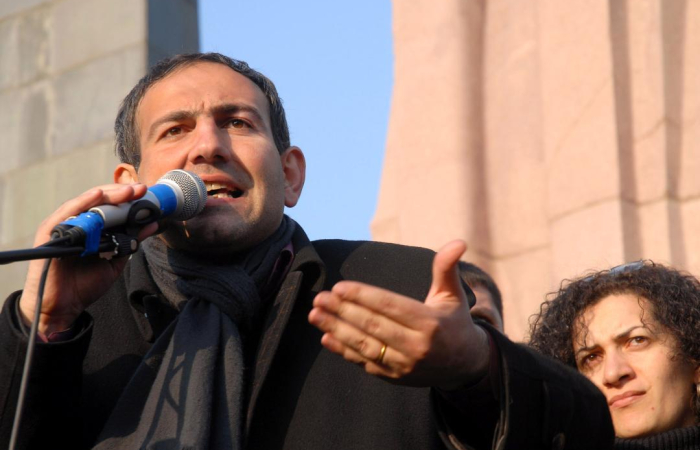
When Nikol Pashinyan embarked on a march from Gyumri to Yerevan at the end of March 2018 to prevent then President Serzh Sargsyan from clinging onto power, few believed he would succeed. Pashinyan was joined by a small group of allies as they made their way to the Armenian capital. Against all odds, Pashinyan’s gambit worked and is the country's premier today. For those that have followed his career to date, that shouldn't have come as a surprise.
Editor's choice
Opinion
BBC and Turan the latest casualties in Azerbaijan's media crackdown.

BBC and Turan the latest casualties in Azerbaijan's media crackdown.

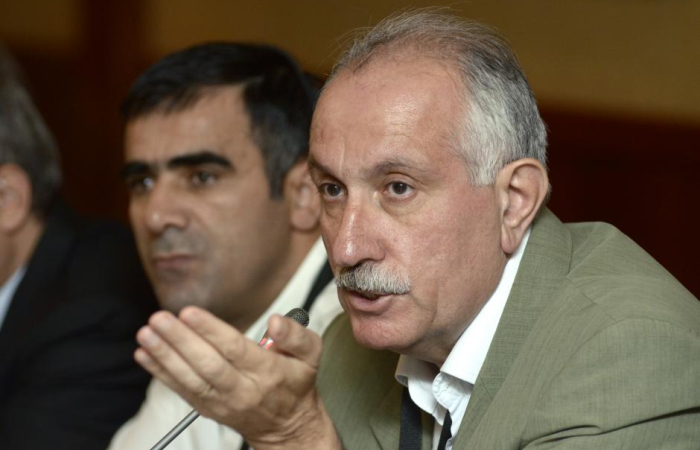
The Azerbaijani government has ordered the suspension of BBC News Azerbaijani operation in Baku whle the influential news agency Turan has been forced to drastically scale down its operations in the country. The BBC said in a statement that it had made the "reluctant decision" to close its office in the country after receiving a verbal instruction from the Ministry of Foreign Affairs. Mehman Aliyev, a prominent journalist and Director of Turan, announced they would be shutting down their offices due to financial problems. Turan was the last independent media outlet that still had offices inside Azerbaijan. Numerous independent journalists have been detained in Azerbaijan while Reporters Without Borders gave the country a highly negative classification on press freedom.  
Editor's choice
Opinion
Opinion: The World Must Know More about the Khojaly Genocide

Opinion: The World Must Know More about the Khojaly Genocide

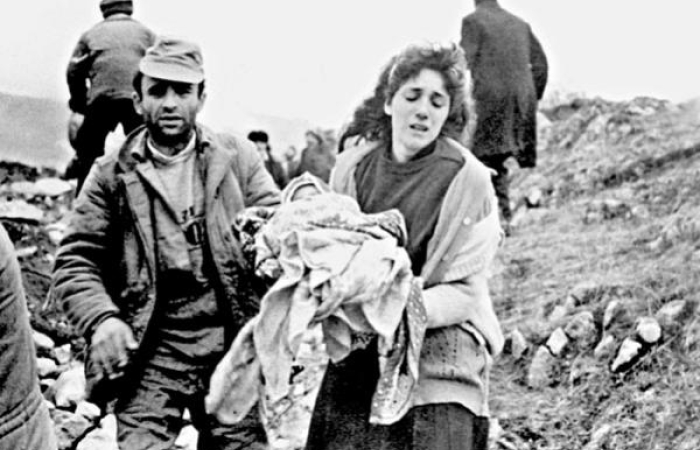
The occupation and ethnic cleansing of Azerbaijan’s Karabakh region and seven surrounding districts in the early 1990s by the armed forces of Armenia involved immeasurable atrocities and extreme violence. Realizing that more than 700,000 people in the region would not easily flee their homes, Armenian leaders resorted to force. The ethnic cleansing carried out by the Armenian armed forces resulted in numerous humanitarian tragedies over the years, but the most devastating was the massacre of civilians in Khojaly, a town in Azerbaijan’s Karabakh region, in the bitterly cold morning of February 26, 1992.
Editor's choice
News
Georgian journalist Mzia Amaglobeli ends hunger strike

Georgian journalist Mzia Amaglobeli ends hunger strike

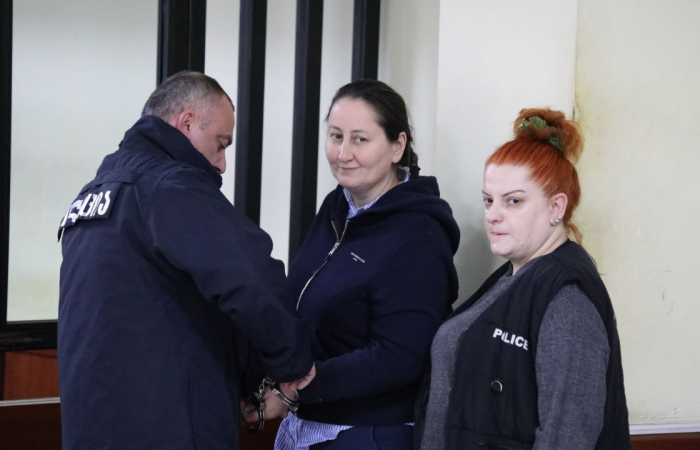
Mzia Amoglobeli, founder of the independent Georgian outlets Netgazeti and Batumelebi, has resumed eating on the 38th day of her hunger strike. She informed her colleagues of her decision in a letter, which was read aloud by Batumelebi‘s editor-in-chief, Eteri Turadze, in the courtyard of the Vivamedi clinic. Mzia Amaglobeli is the first female journalist in Georgia to be recognized as a prisoner of conscience. She was jailed on charges of “assaulting a police officer” and faces a prison sentence of four to seven years. In letters sent from prison, she stressed that her hunger strike was a stand against injustice, not an attempt to secure better conditions for herself.