Theme

Diplomacy

Editor's choice
News
Council of Europe launches new International Claims Commission for Ukraine

Council of Europe launches new International Claims Commission for Ukraine

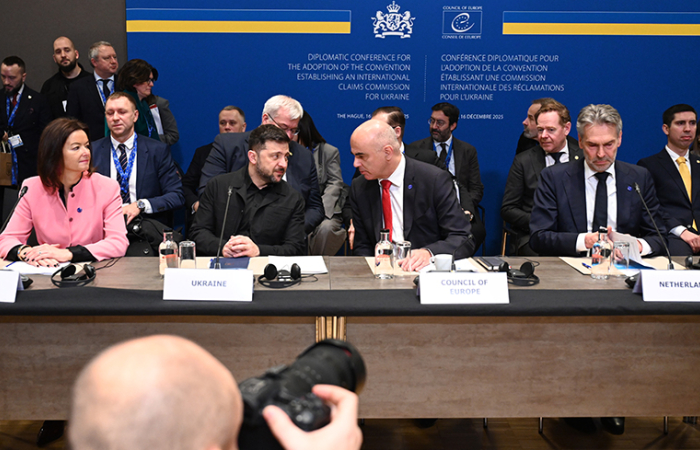
Thirty-four countries and the European Union have signed a new convention establishing an International Claims Commission for Ukraine at a diplomatic conference co-hosted by the 46-nation Council of Europe and the Netherlands in the Hague. The diplomatic conference was attended by leaders and high-level representatives from over 50 states, including the President of Ukraine, Volodymyr Zelenskyy, the President of the Republic of Moldova, Maia Sandu, and the Prime Minister of the Netherlands, Dick Schoof.  “Today marks a major step forward in ensuring accountability for Ukraine. The International Claims Commission represents justice and hope for tens of thousands of victims—our determination that those who have suffered will not be forgotten. I call for quick ratifications so we can get the commission rapidly up and running for the people of Ukraine,” said Council of Europe Secretary General Alain Berset. Ukrainian President Volodymyr Zelenskyy said: “We expect that every mechanism for compensation from the Register of Damage and Claims Commission to the actual payments – will start working and receive strong and sufficient international support, so that people can truly feel that any kind of damage caused by the war can be compensated. This war, and Russia’s responsibility for it, MUST become a clear example – so that others learn not to choose aggression.” “Accountability is about creating the conditions for peace that endures. And therefore, accountability is a condition of security – today and for the future. But accountability is not only about Ukraine. And it is not only about one aggressor and one victim. Accountability is about Europe. About every country in Europe. It is about whether Europe, as a whole, is willing to defend its peace,” said Maia Sandu, President of the Republic of Moldova, which currently holds the Presidency of the Council of Europe’s Committee of Ministers. The Prime Minister of the Netherlands, Dick Schoof, said: “Every day Russia is deliberately bombarding homes, destroying businesses and damaging infrastructure in Ukraine. Russia must compensate Ukraine for the damage caused. That is why we have launched the International Claims Commission for Ukraine and we are honoured to host it.” The International Claims Commission will be the second part of a comprehensive compensation mechanism related to Russia’s war of aggression, building on the existing Register of Damage for Ukraine. The claims commission will be established within the framework of the Council of Europe and will also be open to other countries. The Register of Damage for Ukraine, created in 2023, collects and records compensation claims submitted by individuals, organisations and public bodies in Ukraine. Forty-four states and the European Union have so far joined the Register, which has already received 86,000 claims. The International Claims Commission will review, assess and decide upon claims submitted to the Register of Damage for Ukraine and determine the amount of compensation, if any, which is due in each case. The convention establishing the commission will enter into force once it has been ratified by 25 signatories, as long as sufficient funds have been secured to support its initial work.

Filter archive

Publication date
Editor's choice
News
Work launched on "an ambitious EU-Armenia Partnership Agenda"

Work launched on "an ambitious EU-Armenia Partnership Agenda"

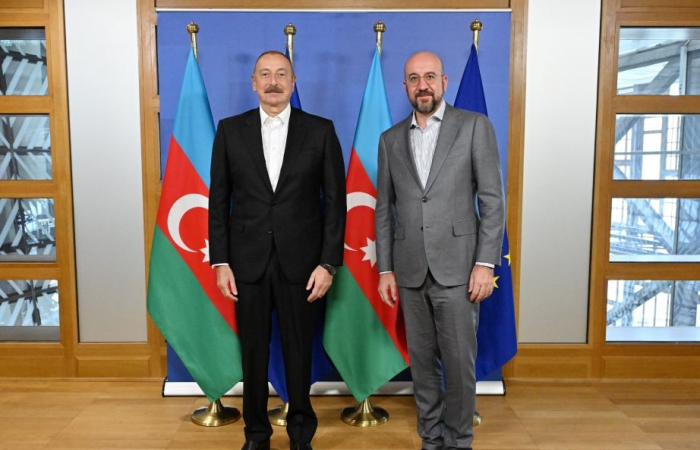
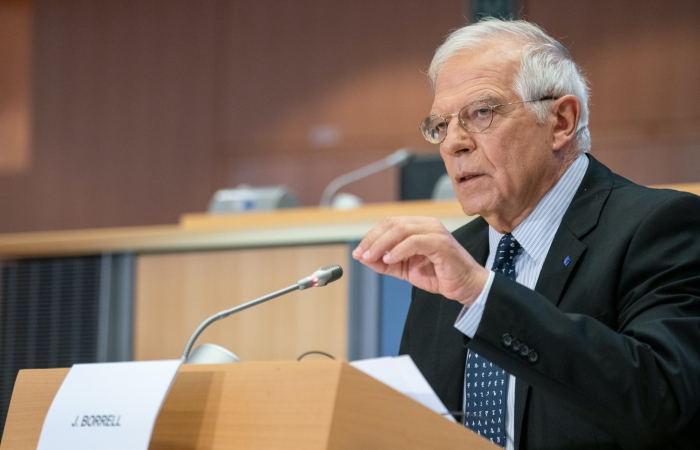
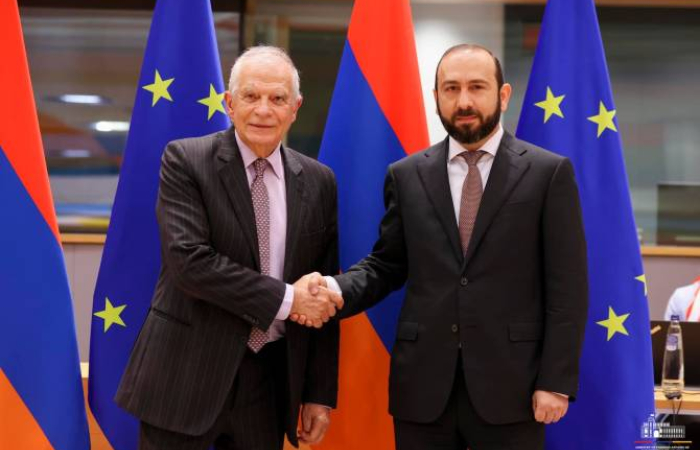
The European Union and Armenia have launched work on a new "ambitious partnership agenda". This was announced by EU High Representative for Foreign and Security Policy, Josep Borrell at the end of a meeting of the EU Armenia Partnership Council. Foreign Minister Ararat Mirzoyan led the Armenian side during the discussions. At the end of the meeting Borrell spoke to the media. Addressing Foreing Minister Mirzoyan, Borrell said: "In October in the European Parliament, your Prime Minister [Nikol Pashinyan] said that Armenia is ready to move closer to the European Union.  In response, last October, the European Council, at the highest political level of the European Union, tasked me and the [European] Commission to explore ways to strengthen our relations - EU-Armenia relations - “in all their dimensions”. In this context, today we decided to launch work on an ambitious new EU-Armenia Partnership Agenda.  This decision sends a strong signal of our mutual interest in a new strategic phase in our relations, and it will provide a clear roadmap and a vision for the way forward.This is about the future. The future starts today".
Editor's choice
News
Opportunistic Russia exploits deepening rifts in West Africa

Opportunistic Russia exploits deepening rifts in West Africa

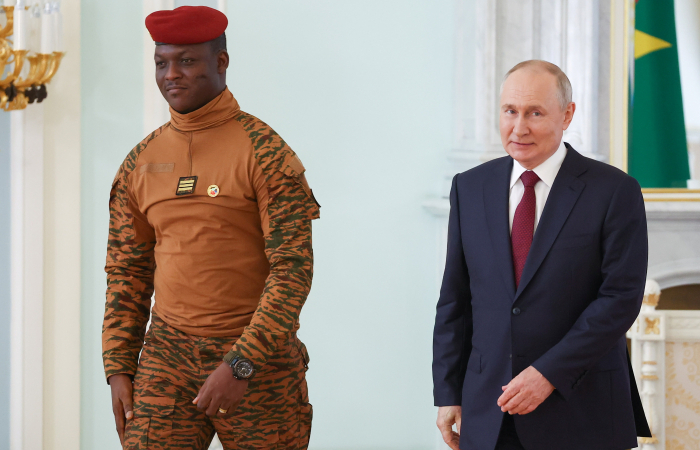
The rift in West Africa became more acute over the weekend after three Sahel countries currently ruled by military juntas announced that they were leaving ECOWAS, the Economic Community of West African States - the regional grouping  of whom the three countries had been founding members in 1975. Mali, Niger and Burkina Faso announced the move in a simultaneous announcement on Sunday. "After 49 years, the valiant peoples of Burkina Faso, Mali, and Niger regretfully and with great disappointment observe that the (ECOWAS) organization has drifted from the ideals of its founding fathers and the spirit of Pan-Africanism," Colonel Amadou Abdramane, Niger junta spokesman, said in a statement. The three countries were suspended from ECOWAS following the coups, and relations between them and the regional bloc have been deteriorating for months. "The organization notably failed to assist these states in their existential fight against terrorism and insecurity," Abdramane added. Meanwhile, in a separate development Burkina Faso says it has received 25,000 tonnes of free wheat from Russia. Confirming the news on Friday, one minister called the delivery a "priceless gift". Ties between Moscow and Ouagadougou have been strengthening since the military took power in two successive coups in 2022. Last month Russia re-opened its embassy in Burkina Faso which had been closed since the collapse of the Soviet Union. Burkina Faso has at the same time been distancing itself from former colonial power France, and last year it ordered its troops to leave.
Editor's choice
News
Pashinyan visits Tbilisi: Armenia and Georgia agree to establish "strategic partnership"

Pashinyan visits Tbilisi: Armenia and Georgia agree to establish "strategic partnership"

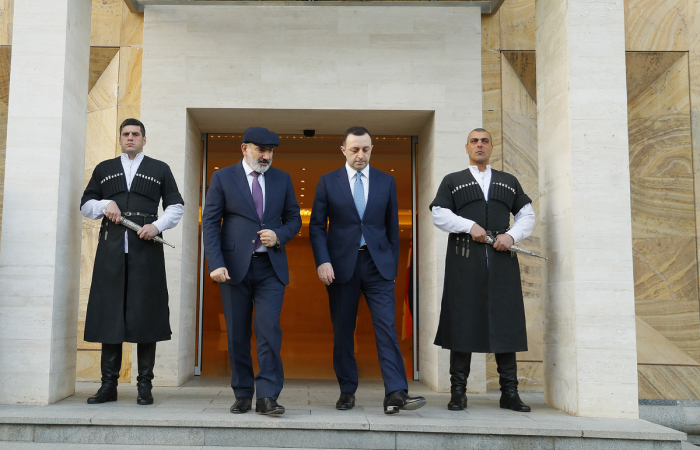
Armenian prime minister Nikol Pashinyan, accompanied by senior ministers, visited Georgia on Friday (26 January) for meetings with prime minister Irakli Garibashvili and senior Georgian officials. Garibashvili and  Pashinyan on Friday discussed the “fruitful” bilateral ties after signing an agreement on upgrading them to a strategic co-operation in Tbilisi earlier during the day. In a face-to-face meeting in Tbilisi before the launch of an Intergovernmental Economic Cooperation Commission session at the Government office, Garibashvili expressed confidence the new deal would strengthen the cooperation, the Georgian Government press office said.  In his remarks, Garibashvili noted the two states had “always been strategic friends and partners”, adding “this reality has officially been signed today”. “We discussed important matters concerning the existing relations, partnership, and cooperation between the two countries in all directions”, he said. We have a very good partnership, relationship, cooperation in all directions and de facto, it can be said that we were already strategic friends and strategic partners. Today, it can be said, this reality has been formalised, and we officially signed a cooperation agreement on strategic partnership” Garibashvili also called Georgia and Armenia “traditionally [and] historically very strong allies” and “friends, not just neighbours”. Security considerations in the region and wider world were among the issues discussed, with the Georgian PM pointing to the significance of “supporting peace and stability” in the South Caucasus, noting such efforts would unlock “fresh opportunities” for the region.
Editor's choice
Opinion
Opinion: Committing to doing what it takes for Ukraine to achieve victory

Opinion: Committing to doing what it takes for Ukraine to achieve victory

2024 started with an unprecedented number of Russian drones and ballistic missiles raining down on Ukraine. In this op-ed published this week on various media outlets, the European Union's High Representative for Foreign and Security Policy, Josep Borrell, argues that Ukraine prevailing against the Russian aggression is the best security guarantee for Europe and that a paradigm shift is needed from supporting Ukraine for 'as long as it takes' to committing to 'what it takes' for Ukraine to achieve victory. Borrell argues that we must intensify our efforts to win the race against time with Putin’s Russia. "We cannot allow him to prevail. Our own security is at stake. Should Putin’s strategy prove successful, it would embolden Russia and other autocracies to pursue their imperialist agendas. We must at any cost prevent a world where might makes right, where powerful countries change borders at will, and the weak fall prey to the strong. Allowing such a scenario would cast a long shadow over our future for decades to come. Ukraine prevailing against the Russian aggression is the best security guarantee for Europe. A Russia that learnt to stay within its borders will lessen pressure on its neighbours, ease Ukraine’s path to EU membership and allow Europe and the world to shift attention to the many other challenges that need solving. With our assistance, Ukraine can consign Russia’s imperial ambitions to the pages of history. This must guide our actions and thinking."
Editor's choice
News
Sweden one step closer to joining NATO

Sweden one step closer to joining NATO

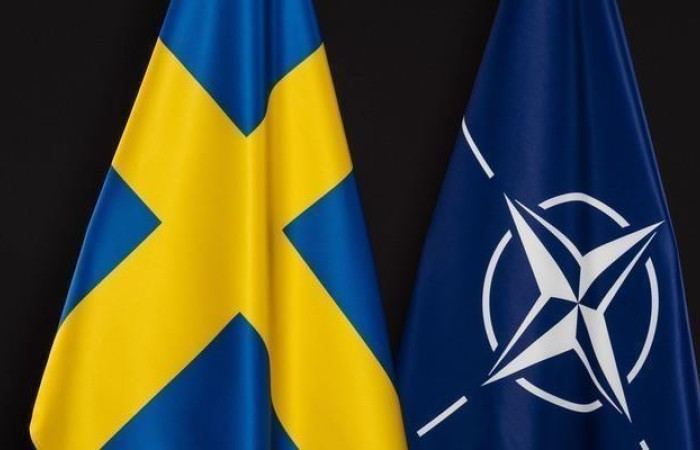
The Turkish Grand National Assembly (Parliament), on Tuesday, 23 January, ratified the agreement on Swedish membership of NATO, bringing the Scandinavian country one step closer to fulfilling its historic decision to abandon its decades-long neutrality and join the military alliance in the face of Russian aggression against Ukraine, and the threat that poses to the European security order. The ratification was adopted by the national assembly in a vote of 287 to 55. President Recep Tayyip Erdoğan is now expected to sign the accession agreement. formalising the process of Turkish ratification. All members of NATO have to approve the addition of new members to the organisation. The only remaining NATO country to finalise the ratification process is Hungary  “Today we are one step closer to becoming a full member of NATO,” tweeted Swedish Prime Minister Ulf Kristersson. On Tuesday, Hungarian Prime Minister Viktor Orbán reached out to Kristersson, asking him to come down to Budapest and negotiate about the NATO bid, an idea swiftly rejected by Swedish Foreign Minister Tobias Billström.
Editor's choice
Analysis
Unblocking the Caspian route for Turkmen gas

Unblocking the Caspian route for Turkmen gas

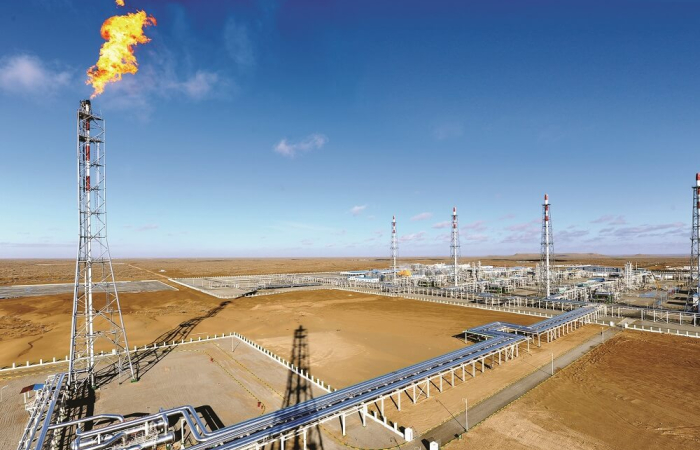
Turkmenistan, for decades considered one of the most closed countries in the world, is moving towards modest attempts at opening up its economy. Western sanctions against Russia which caused a gradual halt to energy supply from Russia to Europe and swelling Russian gas supplies to China, once Turkmenistan’s almost-exclusive client, made Ashgabat face a new reality that challenged its longstanding economic model, resulting in a significant deterioration of living standards and social discontent. Against this background, the country had to start considering options for diversifying its gas export geography and attracting foreign investment, writes Murad Muradov in this analysis prepared for commonspace.eu. The big question remains however whether the long-cherished idea of the Transcaspian pipeline, a link which would bring Turkmenistan’s gas to European markets, will finally come to fruition after many years of aborted attempts and uncertainty. This may be within reach sooner and faster than expected.