Theme

Diplomacy

Editor's choice
News
Germany accuses Russia of cyberattacks and disinformation campaign

Germany accuses Russia of cyberattacks and disinformation campaign

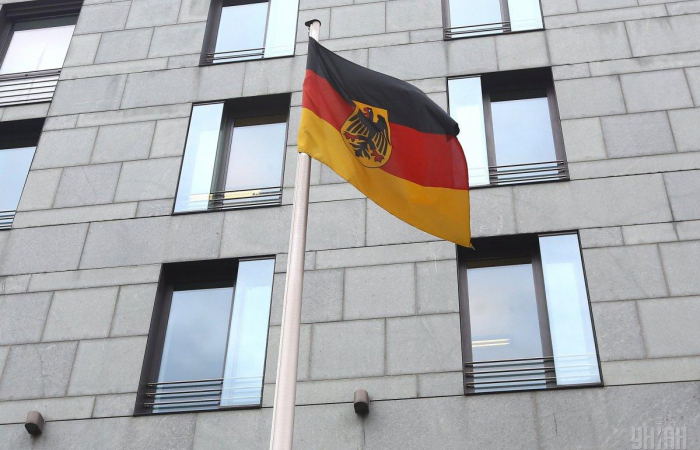
The German government holds Russia responsible for a cyberattack on German air traffic control, and for targeted disinformation campaigns before the last federal election. According to the German Foreign Office in Berlin, the incidents could be clearly attributed to the Russian military intelligence service, the GRU. In response, the Russian ambassador to Berlin was summoned to the Foreign Ministry. "We have been observing a massive increase in threatening hybrid activities by Russia for some time now," a spokesperson for the Foreign Ministry stated. These range from disinformation campaigns and espionage to cyberattacks and sabotage attempts. The aim is to divide society, sow distrust, and undermine confidence in democratic institutions. The spokesperson added that with these actions, Russia is "very concretely threatening our security, not only through its war of aggression against Ukraine, but also here in Germany."  The Foreign Ministry spokesperson explained that the cyberattack on air traffic control in August 2024 was clearly attributed to the hacker collective "APT28," known as "Fancy Bear," and to the responsibility of the Russian military intelligence service, the GRU. Furthermore, it could now be "conclusively stated" that Russia had attempted "to influence and destabilize both the last Federal election and the ongoing internal affairs of the Federal Republic of Germany." There was "absolutely irrefutable evidence" for this". The so-called "Storm 1516" campaign, which has been running since 2024, is allegedly backed by "reliable information" that the Moscow-based think tank "Center for Geopolitical Expertise" is behind it. The Center is also said to be supported by Russian military intelligence. Its primary aim is to influence democratic elections in the West. (Click the image to read more).
Editor's choice
Opinion
Opinion: A sustainable peace requires consistent long-term European involvement

Opinion: A sustainable peace requires consistent long-term European involvement

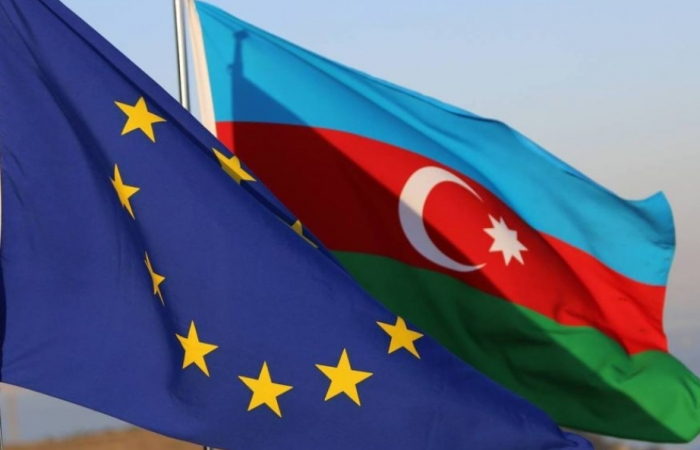
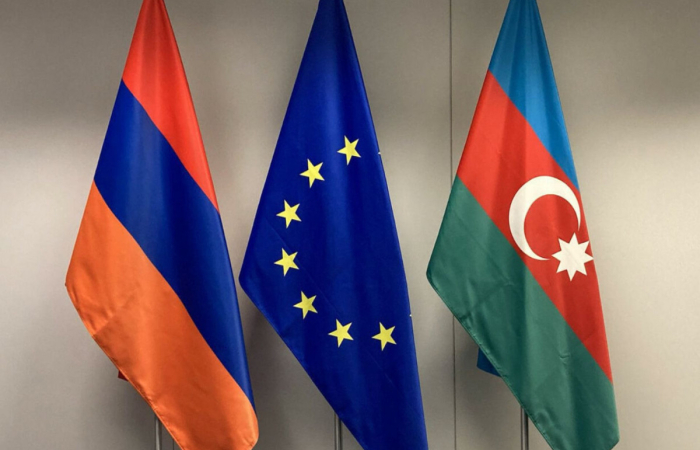
There is no denying that the EU, especially key member states acting in support, helped bring Baku and Yerevan closer to the Washington Declaration of August 8, 2025. But a declaration is not a treaty. Turning principles into a peace deal and eventually to a sustainable peace requires consistent long-term European involvement, writes Yalchin Mammadov in this-op-ed for commonspace.eu Before facilitating trust between Armenia and Azerbaijan, the EU is first expected to address its own credibility gap with Baku. A more balanced approach—such as including Azerbaijan, alongside Armenia, in the European Peace Facility—could be a useful first step. Diplomats can negotiate peace; societies must build peace. In this context, the EU can do what it does the best: long-term societal engagement. By expanding youth and academic exchange programmes, investing in cross-border civil society initiatives, and fostering people-to-people cooperation, Brussels can help shape a new generation equipped to sustain peace beyond political cycles. Such tools are slow and unglamorous, but if ignored, even the strongest treaty risks collapse. And obviously, these aspects require two-way engagement and genuine willingness by both governments to facilitate contact. If Brussels wants to remain influential, it needs to replace outdated one-size-fits-all policies with ambitious, interest-driven and differentiated approaches. Without a clear regional strategy, which appears to be the current situation, the South Caucasus will continue to sit at the margins of Europe’s security architecture—leaving space for other powers to take the lead. (You can read the op-ed in full by clicking the image.)

Filter archive

Publication date
Editor's choice
News
Leaders meet in Albania to debate European security concerns

Leaders meet in Albania to debate European security concerns

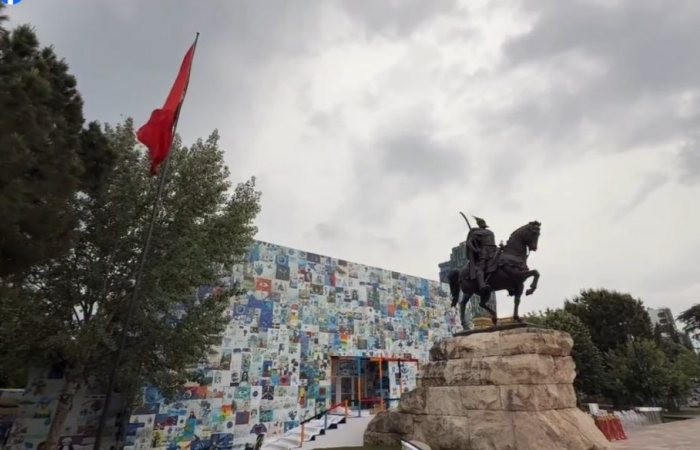
The leaders of 47 European countries and organizations are gathering Friday 16 May for a one-day summit in Albania’s capital Tirana to discuss security and defense challenges across the continent, with the Russia-Ukraine conflict at the top of the agenda. The theme of the European Political Community (EPC) summit in Tirana is “New Europe in a new world: unity - cooperation - joint action.” The gathering will also address ways to improve the continent’s competitiveness and tackle unauthorised migration.
Editor's choice
News
US lifts sanctions against Syria and urges normalised relations with Israel

US lifts sanctions against Syria and urges normalised relations with Israel

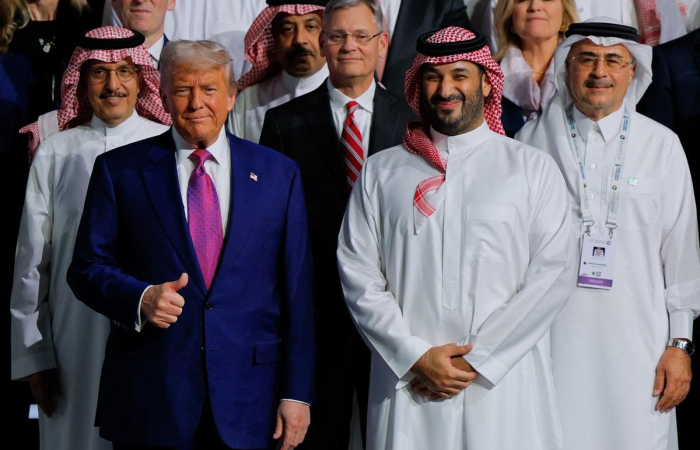
US President Donald Trump met with Syria's president Ahmed al-Sharaa in Saudi Arabia on Wednesday and urged him to normalise ties with longtime enemy Israel, after an announcement that US would lift all sanctions on the Islamist-led government. Trump met the Syrian president before a summit between the United States and Gulf Arab countries. They shook hands in the presence of Saudi Arabia's Crown Prince Mohammed bin Salman.
Editor's choice
News
President Trump signs $142 billion arms package during visit to Saudi Arabia

President Trump signs $142 billion arms package during visit to Saudi Arabia

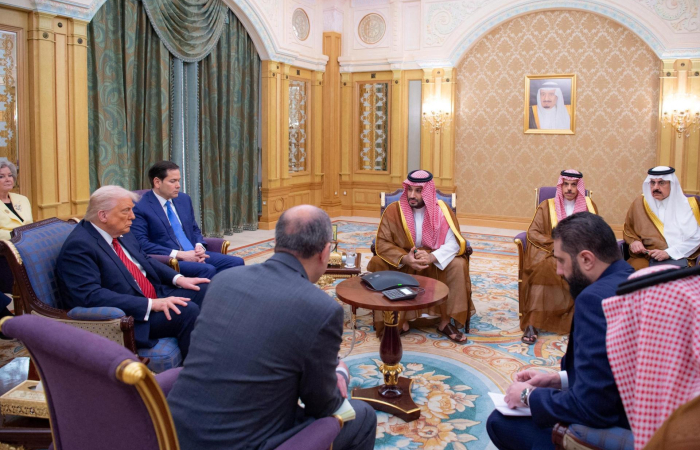
The US has agreed to sell Saudi Arabia an arms package worth nearly $142 billion, according to a White House fact sheet that called it "the largest defence cooperation agreement" Washington has ever done. The agreement, signed during US President Donald Trump's visit to the Saudi capital Riyadh, covers deals with more than a dozen U.S. defence companies in areas including air and missile defence, air force and space advancement, maritime security and communications, the fact sheet said. Saudi Arabia is the largest customer of U.S. arms.
Editor's choice
News
Trump optimistic about Russia - Ukraine Peace Talks in Istanbul

Trump optimistic about Russia - Ukraine Peace Talks in Istanbul

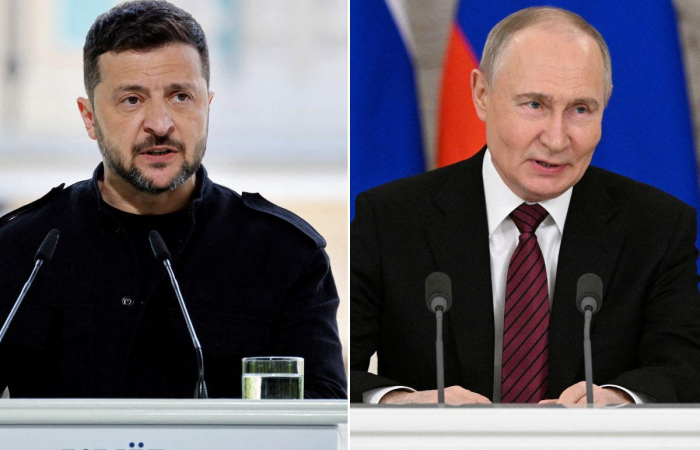
Russia launched more than 100 Shahed and decoy drones at Ukraine in nighttime attacks, the Ukrainian air force said after the Kremlin effectively rejected an unconditional 30-day ceasefire in the war that is now in its fourth year, but reiterated it would take part in possible peace talks later this week without preconditions. U.S. President Donald Trump said he’s optimistic about the Istanbul talks. There is “the potential for a good meeting” between Putin and Zelensky, Trump said in Washington, adding that he was “thinking about flying over” to the talks from his visit to Qatar and the United Arab Emirates that day.
Editor's choice
Opinion
Azerbaijan and the EU should seize the new momentum in bilateral relations

Azerbaijan and the EU should seize the new momentum in bilateral relations

On April 25, the EU’s High Representative for Foreign Affairs and Security Policy, Kaja Kallas paid a visit to Azerbaijan. This was the first visit of the EU’s top diplomat to Baku in the past nine years. Both sides gave positive messages during the visit about the existing situation in bilateral relations and future prospects. President Ilham Aliyev reaffirmed Azerbaijan’s position as a dependable EU partner, drawing attention to the Southern Gas Corridor’s steady supply of natural gas to Europe over the past four years. Currently, ten European nations – eight of them EU members – receive Azerbaijani gas, positioning Baku as a major contributor to the continent’s energy security. Aliyev also pointed to effective collaboration under the Southern Gas Corridor Advisory Council and noted promising opportunities in renewable energy. Azerbaijan’s involvement in advancing the Trans-Caspian Energy Corridor and joint Black Sea energy projects with countries like Georgia, Romania, Hungary, and Bulgaria was also underscored.
Editor's choice
Monday Commentary
New Pope, new Chancellor, same old Trump

New Pope, new Chancellor, same old Trump

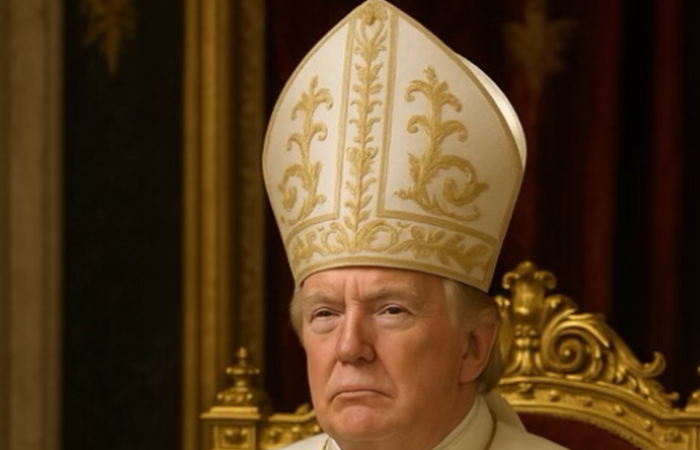
The Catholic Church has a new leader. Robert Prevost was not discussed by the media before being announced as the new Pope on Friday. He will follow the Church’s mantra, that has served it well over two thousand years, to be as flexible as necessary and as rigid as possible Europe has fresh energy in the person of the new German chancellor, Friedrich Merz. Despite the wobbly start in the German Parliament, Merz in the four days after his swearing-in met key European leaders, and laid the basis for his Chancellorship. Meanwhile, Donald Trump statements continue to hanker for the past. His call for the re-opening of the prison on Alcatraz is a case in point. Trump marks the end of the “American era”. The US will remain a rich and powerful country, but its global role will be much diminished.
Editor's choice
News
Ukraine and its allies push for 30-day ceasefire 

Ukraine and its allies push for 30-day ceasefire 

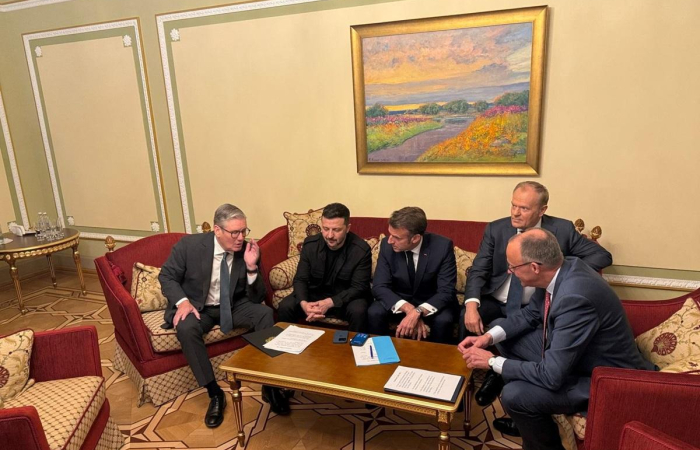
Ukraine and its allies are ready for a “full, unconditional ceasefire” with Russia for at least 30 days starting on Monday, Ukrainian FM Andrii Sybiha said on Saturday.  His remarks came as the leaders of four major European countries visited Kyiv, amid a push for Moscow to agree to a truce and launch peace talks on ending the nearly three-year war. They followed what Sybiha said was a “constructive” phone call between them, U.S. President Donald Trump and his Ukrainian counterpart, Volodymyr Zelenskyy. 
Editor's choice
News
Turkey's accession to the European Union frozen due to lack of progress

Turkey's accession to the European Union frozen due to lack of progress

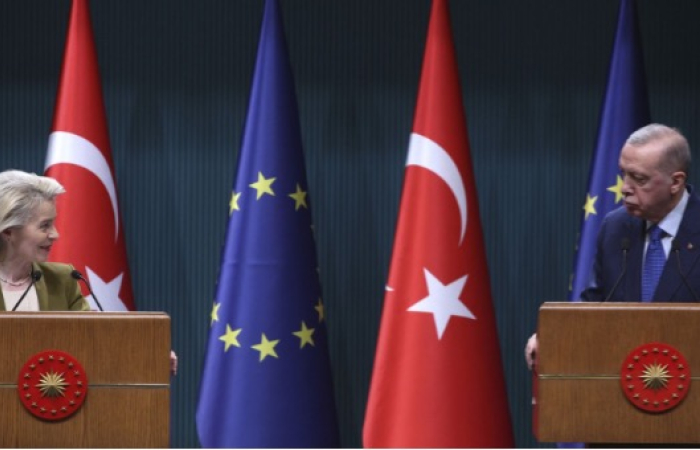
Turkey's EU accession process remains frozen due to democratic backsliding, despite the Mediterranean country's strategic importance and cooperation on migration, the European Parliament has stated in a report approved by MEPS in Strasbourg. Turkey's EU accession process, which has been at a standstill since 2018, cannot be relaunched in the current circumstances, despite Ankara's geopolitical and strategic importance, the report says. MEPs in Strasbourg approved the report on Wednesday 7 April, with 367 votes in favour, 74 against and 188 abstentions.
Editor's choice
News
Russia holds Victory Day parade marking 80th anniversary of Nazi Germany defeat

Russia holds Victory Day parade marking 80th anniversary of Nazi Germany defeat

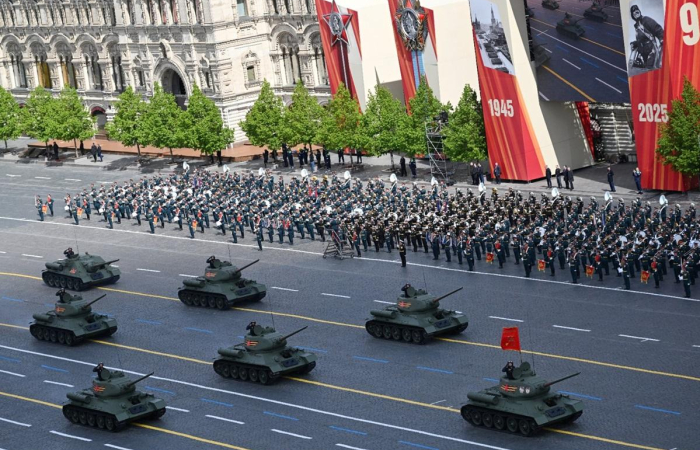
Russia marked the 80th anniversary of the defeat of Nazi Germany in World War II with a massive military parade on Red Square on Friday attended by President Vladimir Putin and foreign leaders, including Chinese President Xi Jinping and Brazilian President Luiz Inácio Lula da Silva. The parade and other ceremonies underline Moscow’s efforts to project its global power and cement the alliances it has forged while seeking a counterbalance to the West amid the conflict in Ukraine that has dragged into a fourth year.