Theme

Connectivity

Stories related to telecommunications and transport links. 

Editor's choice
Opinion
Opinion: The European Union must recognise that the C5 have now become the C6

Opinion: The European Union must recognise that the C5 have now become the C6

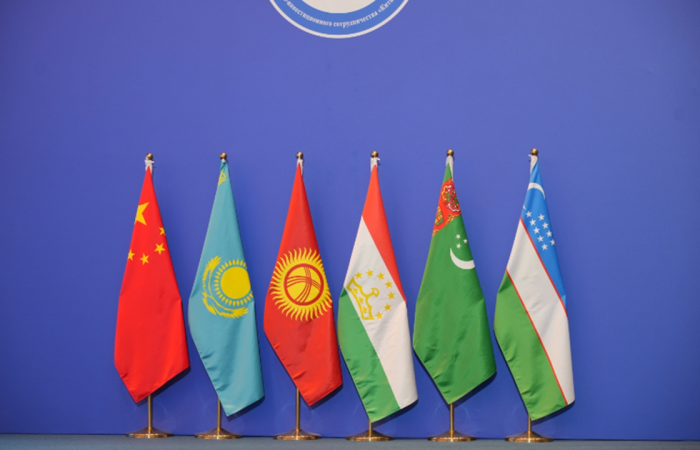
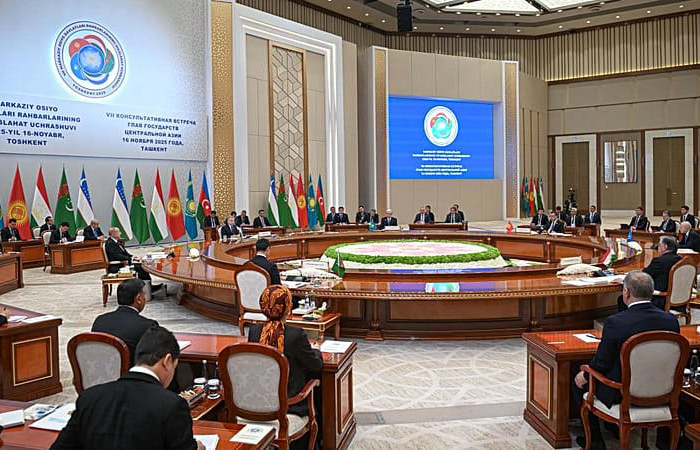
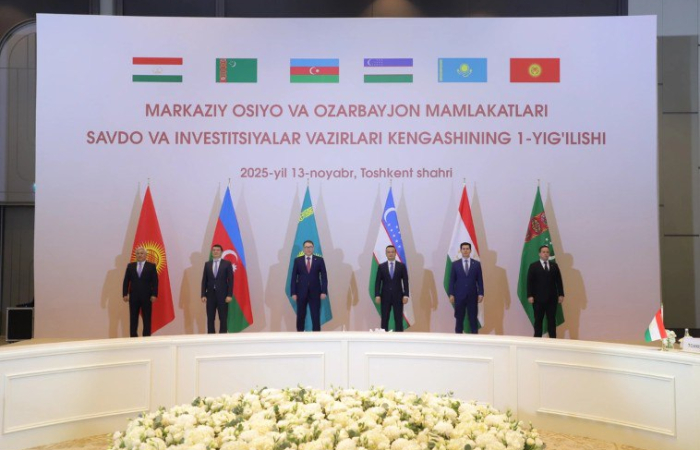
In recent years, Eurasia has undergone a structural transformation in how regions connect, trade, and cooperate. The combination of geopolitical shocks, disrupted supply chains, and the search for secure east–west routes has elevated the importance of the Trans-Caspian space. The states of Central Asia, once constrained by geography, have taken unprecedented steps to strengthen regional coordination, modernize infrastructure, and integrate more closely with Europe. Meanwhile, Azerbaijan has rapidly emerged as an indispensable connector linking Central Asia with the South Caucasus, Türkiye, and European markets. This new reality was formally acknowledged in November 2025 when Azerbaijan was unanimously welcomed as a full participant in the Consultative Meeting of Central Asian Heads of State in Tashkent. What had long been a C5 grouping transformed into a C6, marking a historic moment: the Caspian was no longer a frontier separating two regions but the center of a unified geopolitical and geo-economic space. President Ilham Aliyev described this alignment as the emergence of “a single geopolitical and geo-economic region,” while President Shavkat Mirziyoyev called Azerbaijan’s inclusion “historic” and proposed transforming the consultative platform into a structured regional institution capable of shaping security, economic, environmental, and digital policy. The Caspian is no longer a boundary; it is the heart of an integrated region. The transformation of the EU and U.S. C5+1 formats into C6+1 is the logical next step to ensure that both sides of the Caspian advance together – coherently, strategically, and with shared purpose. (click the image to read the full op-ed).
Editor's choice
Commentary
Central Asia on the march, but challenges ahead

Central Asia on the march, but challenges ahead

Central Asian leaders have been busy the last month, forging new ties in a changing geopolitical landscape. The presidents of Kazakhstan, Kyrgyzstan, Tajikistan, Turkmenistan, and Uzbekistan travelled to the White House to meet with U.S. President Donald Trump in the C5+1 format. The format, established in 2015, aims to deepen U.S. collaboration with Central Asia, emphasising security and economic cooperation. The U.S. is not the only power looking to maintain its influence in the region. The European Union, Russia, China, and increasingly, India, have all shown their interest in securing economic cooperation and inking energy and trade deals, recognising Central Asia’s strategic position as a key energy and transfer hub situated between East and West. Central Asian states are keenly aware of their leverage and have not only engaged in multi-lateral diplomacy with all of the aforementioned external actors but also adopted a pragmatic regional approach to increase cooperation amongst themselves and taken concrete steps to foster a more unified ‘Central Asian Community’. This was evident by last weekend’s Seventh Consultative Meeting of Heads of State, also known as the C5, where Central Asian leaders officially admitted Azerbaijan as a full member, effectively transforming it into the C6. However, although Central Asia has the unique opportunity to multilaterally engage with all of the world’s biggest economic and security powers, while continuing to shape regional politics and cooperation on its own terms, new security and economic issues are arising that may well reshape Central Asian states’ connections to external actors and potentially strain intra-regional relations. (Read the full commentary by clicking on the picture).

Filter archive

Publication date
Editor's choice
News
President Xi hosts first ever China-Central Asia summit in Xi'an

President Xi hosts first ever China-Central Asia summit in Xi'an

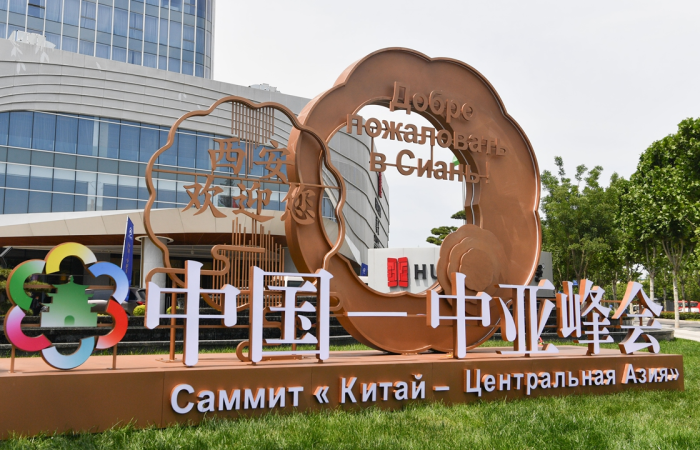
The President of China Xi Jinping is hosting the first ever China-Central Asia summit on Thursday and Friday (18 and 19 May). President Xi will host the presidents of Kazakhstan, Uzbekistan, Kyrgyzstan, Tajikistan and Turkmenistan in the historic city of Xi'an, which once marked the beginning of the Silk Road trade route stretching from China to Europe. It will be the first in-person meeting between the presidents of the six countries after they held an online summit in January 2022 marking 30 years of relations. Chinese officials have said that the meeting will mark "a new era of cooperation" as Central Asia looks to expand ties both to its east and west as Russian influence in the region wanes as a result of its ongoing full-scale invasion of Ukraine. According to the Chinese government newspaper Global Times, the presidents of the six countries will "exchange views on establishing mechanisms, cooperation and international, regional issues with respective concerns, as well as signing a slew of important political documents on trade, investment, connectivity and other areas".
Editor's choice
News
Azimuth Airlines to operate Russia-Georgia flights from 17 May

Azimuth Airlines to operate Russia-Georgia flights from 17 May

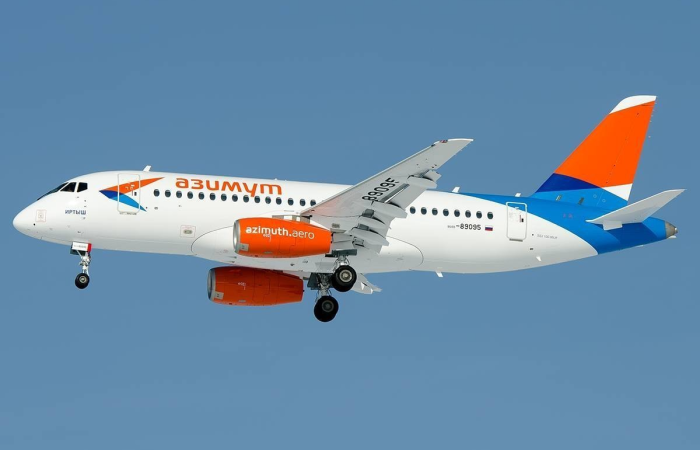
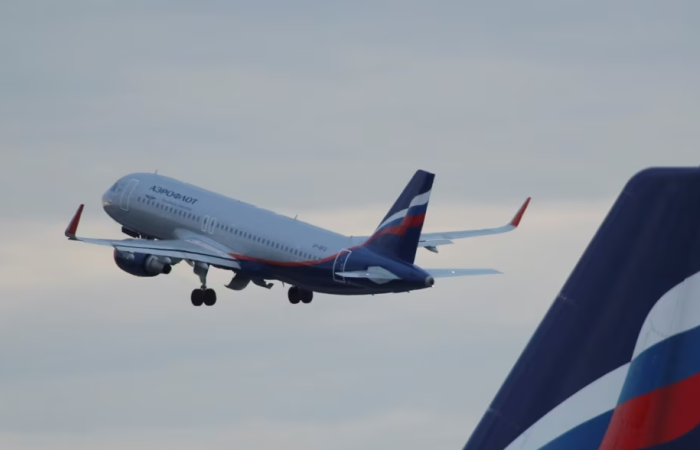
The Georgian Civil Aviation Authority (GCAA) announced yesterday (15 May) that Azimuth Airlines will start operating flights between Moscow and Tbilisi from 17 May. On Wednesday (10 May), Russian President Vladimir Putin reversed a 2019 ban on Russian airlines flying to Georgia, prompting many Georgian politicians to insist that no Russian airlines under international sanctions would be permitted to operate flights to Georgia. Georgian Prime Minister Irakli Garibashvili said that his government's "unequivocal" position was that "flights with sanctioned aircraft will not be carried out. This will happen only with planes and companies not under sanctions", he said. The GCAA statement from yesterday reads: "The Civil Aviation Agency of Georgia issued the necessary permission to the airline today, on May 15. As of today, Azimuth Airlines is not on the European Union blacklist. In accordance with the flight application submitted by the airline to the Civil Aviation Agency, flights on the Moscow-Tbilisi-Moscow airline will be performed from May 17 of this year, seven times a week."
Editor's choice
News
Kazakhstan to host EU-Central Asia Economic Forum on 18-19 May

Kazakhstan to host EU-Central Asia Economic Forum on 18-19 May

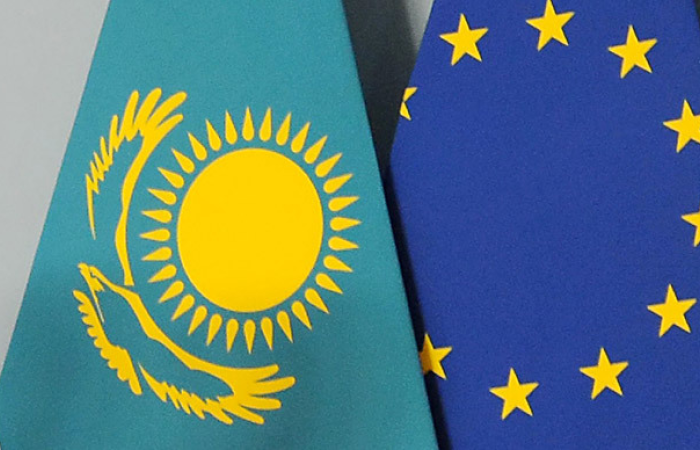
The Kazakh capital of Almaty will be hosting the 2nd European Union-Central Asia Economic Forum next week on 18-19 May. Building on the 1st EU-Central Asia Economic Forum that took place in Bishkek in 2021, next week's forum will "take stock of progress made so far and discuss ways forward on policy, programmes, and investment needed to develop a more integrated and interconnected regional market engagement". "The Forum will allow to strengthen sustainable connectivity and promote regulatory approximation in the economic area between the EU and Central Asia countries, which is so vital for a better business environment and a safe investment climate," a statement from the EU Central Asia Invest Programme says. "The Forum will gather high-level government officials, the European Investment Bank, the European Bank for Reconstruction and Development, other bilateral and international financial institutions, representatives of the private sector and members of civil society. It is organised in partnership with the Organisation for Economic Co-operation and Development," the statement adds. The forum will focus on three priority areas: a green and digital transition, a better business environment, and trade and connectivity. Next week's forum follows the 4th EU-Central Asia civil society forum that took place in the Uzbek capital of Tashkent in March.
Editor's choice
News
Russia lifts ban on flights to Georgia, removes visa restrictions for Georgian citizens

Russia lifts ban on flights to Georgia, removes visa restrictions for Georgian citizens

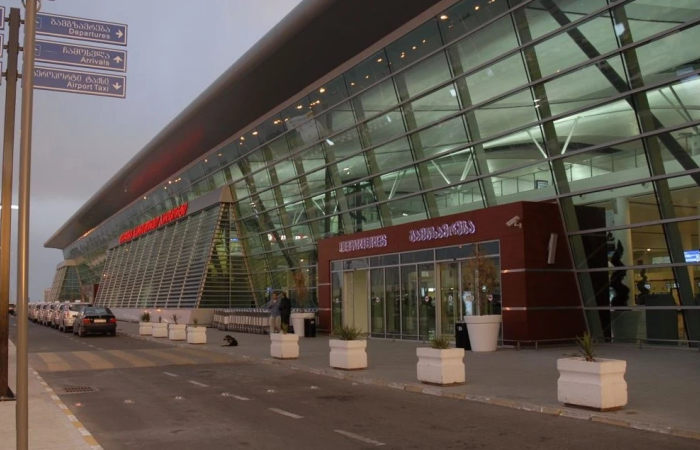
On Wednesday (10 May), Russian President Vladimir Putin signed two separate decrees lifting a ban on flights to Georgia, and abolishing visas for Georgian citizens. From 15 March, Georgian nationals will be allowed to enter Russia without visas for up to 90 days. Lifting the ban on flights reverses a 2019 decision in which the Kremlin banned air traffic with Georgia following a wave of anti-Kremlin protests there. After President Putin signed the decrees, the Russian Foreign Ministry also released a statement reversing its 2019 advice against Russian citizens travelling to Georgia. The statement added that Putin's decrees "are in line with our principled approach of consistently facilitating the conditions for communication and contacts between the citizens of Russia and Georgia, despite the absence of diplomatic relations". Later, Russian state media outlet RIA Novosti reported that the Georgian Deputy Minister of the Economy and Sustainable Development Mariam Kvrivishvili said that Georgia would issue permits for direct flights to non-sanctioned airlines, before adding that authorities were yet to receive any such requests from Russian airlines.