Theme

Conflict and Peace

Stories related to violent conflicts, diplomatic tensions, and conflict prevention, mediation and resolution.

Editor's choice
News
European leaders set out their plan for Ukraine

European leaders set out their plan for Ukraine

The leaders of Germany, Denmark, Finland, France, Italy, Netherlands, Norway, Poland, Sweden, and United Kingdom, together with the President of the European Council, and the President of the European Commission, o  Monday (15 December) issued a statement, outlining their plan for Ukraine. In their statement, Chancellor Merz, Prime Minister Frederiksen, President Stubb, President Macron, Prime Minister Meloni, Prime Minister Schoof, Prime Minister Støre, Prime Minister Tusk, Prime Minister Kristersson, Prime Minister Starmer, as well as President Costa and President von der Leyen spoke about "Peace for Ukraine". The Leaders welcomed significant progress on President Trump’s efforts to secure a just and lasting peace in Ukraine. They also welcomed the close work between President Zelenskyy’s and President Trump’s teams as well as European teams over the recent days and weeks. They agreed to work together with President Trump and President Zelenskyy to get to a lasting peace which preserves Ukrainian sovereignty and European security. Leaders appreciated the strong convergence between the United States, Ukraine and Europe. Leaders agreed that ensuring the security, sovereignty, and prosperity of Ukraine was integral for wider Euro-Atlantic security. They were clear that Ukraine and its people deserved a prosperous, independent, and sovereign future, free from fear of future Russian aggression. Both the US and European leaders committed to work together to provide robust security guarantees and economic recovery support measures for Ukraine in the context of an agreement on ending the war. This would include commitments to: Provide sustained and significant support to Ukraine to build its armed forces, which should remain at a peacetime level of 800,000 to be able to deter conflict and defend Ukraine’s territory. A European-led ‘multinational force Ukraine’ made up from contributions from willing nations within the framework of the Coalition of the Willing and supported by the US. It will assist in the regeneration of Ukraine’s forces, in securing Ukraine’s skies, and in supporting safer seas, including through operating inside Ukraine. (Click the image to read the statement in full).
Editor's choice
News
NATO Chief says war is on Europe's doorstep, and warns against complacency

NATO Chief says war is on Europe's doorstep, and warns against complacency

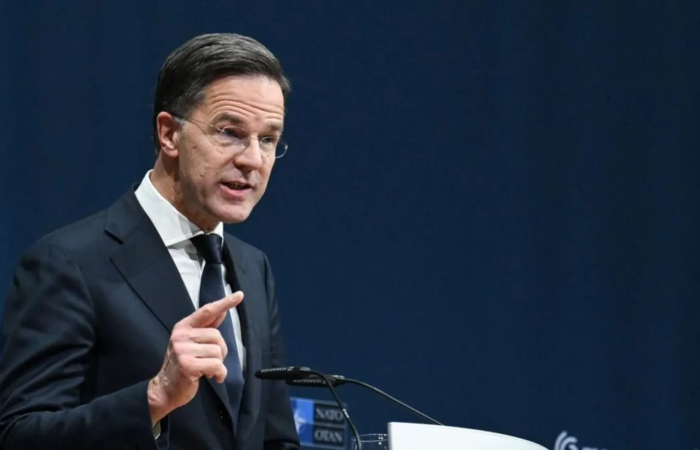
Russia could attack a NATO country within the next five years, the Secretary General of NATO, Mark Rutte, said in a stark new warning. "NATO's own defences can hold for now," Rutte warned in Berlin, but conflict was "next door" to Europe, and he feared "too many are quietly complacent, and too many don't feel the urgency, too many believe that time is on our side. "Russia is already escalating its covert campaign against our societies," Rutte said in a speech in Germany. "We must be prepared for the scale of war our grandparents or great-grandparents endured." Earlier this month, Russia's President Vladimir Putin said his country was not planning to go to war with Europe, but it was ready "right now" if Europe wanted to - or started a war. But similar reassurances were given by Moscow in 2022, just before 200,000 Russian troops crossed the border and invaded Ukraine. Putin has accused European countries of hindering US efforts to bring peace in Ukraine - a reference to the role Ukraine's European allies have recently played in trying to change a US peace plan to end the war, whose initial draft was seen as favouring Russia. But Putin was not sincere, Nato's secretary-general said in the German capital, Berlin. Supporting Ukraine, he added, was a guarantee for European security. "Just imagine if Putin got his way; Ukraine under the boot of Russian occupation, his forces pressing against a longer border with Nato, and the significantly increased risk of an armed attack against us." Russia's economy has been on a war footing for more than three years now - its factories churn out ever more supplies of drones, missiles and artillery shells. According to a recent report by the Kiel Institute for the World Economy, Russia has been producing each month around 150 tanks, 550 infantry fighting vehicles, 120 Lancet drones and more than 50 artillery pieces. The UK, and most of its Western allies, are simply not anywhere near this point. Analysts say it would take years for Western Europe's factories to come close to matching Russia's mass-production of weapons. "Allied defence spending and production must rise rapidly, our armed forces must have what they need to keep us safe," the Nato chief said.

Filter archive

Publication date
Editor's choice
News
Ukraine strengthens military forces on border with Belarus

Ukraine strengthens military forces on border with Belarus

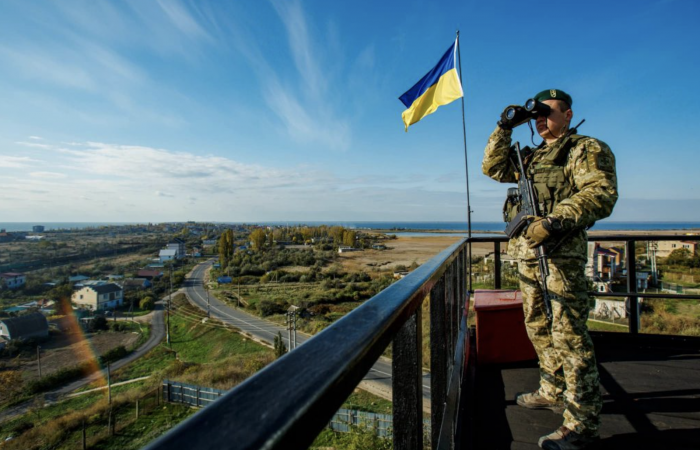
The Ukrainian army has reinforced its military strength in the north of Ukraine, along the border with Belarus. Ukrainian Deputy head of the General Staff's Main Operations Directorate Oleksii Hromov reported this at a press conference on Thursday morning (27 October). How strong Ukrainian the new units in the north are now and whether those reinforcements will come at the expense of military deployments in the south Hromov did not tell. "Right now we do not see a build-up of an attacking force, but that threat is there and will remain there," Hromov said. "We are responding to it and have reinforced our forces in the north." The Ukrainians have been preparing for another possible attack from Belarus for several weeks. At the beginning of the invasion, Russia tried to capture the capital Kyiv from that direction, and although the Ukrainians chased them away, military activity in the neighbouring country has recently been increasing again.
Editor's choice
Commentary
Moscow surprised "Excitable Caucasians" have become rational

Moscow surprised "Excitable Caucasians" have become rational

For many years after the collapse of the Soviet Union, and the emergence of the newly independent successor states, Russian diplomats counselled their western colleagues on the business of dealing with the people of the Caucasus, and their politics. They often described the Caucasians as the "excitable people of the South", who needed a special kind of handling, and only Russians knew how to do it. It was a Soviet version of "orientalism" that still lingers among the current Russian elite. Putin’s handling of the 2nd Karabakh War - and the subsequent steps he took to establish the post-war order in the region - was very much in this vein. Russia rushed troops to Karabakh to keep the peace, and Russia was to be involved at every stage and in every corner of building a post-war order. There was no space left for others to contribute to this process, except for some general reference to a UN role in providing humanitarian aid. Well content that the excitable people of the South had been calmed down, President Putin turned his attention to other matters – namely what for him were the less excitable, but no less irritable people on the western frontier, the Ukrainians.
Editor's choice
Opinion
Opinion: Balancing the mediators - Armenia and Azerbaijan should avoid offending Russia

Opinion: Balancing the mediators - Armenia and Azerbaijan should avoid offending Russia

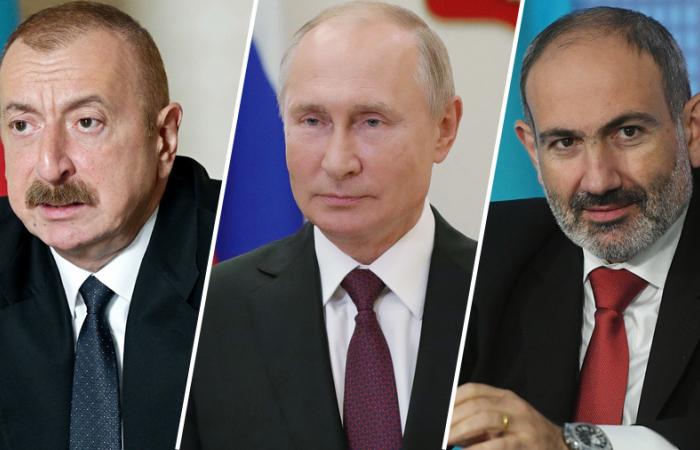
Russia has become increasingly critical of western involvement in the Armenia-Azerbaijan conflict settlement process, writes Benyamin Poghosyan in this op-ed for commonspace.eu. "Armenia and Azerbaijan should take all necessary steps to avoid being trapped in Russia – West or US – Iran confrontation. The ongoing war in Ukraine proved that this scenario might have catastrophic implications for both states. It does not mean that negotiations should be stopped. However, the hectic moves to sign a US or EU-prepared agreement, which Russia may view as an attempt to kick it out from South Caucasus, may destabilize the situation and bring new war instead of peace. In this context, the possible option to not lose the momentum could be a signature of a document that will envisage the principles of the future peace agreement while providing more time to carefully draft a peace treaty based on the balance of interests of Armenia, Azerbaijan, and other actors."
Editor's choice
Monday Commentary
Monday Commentary: The South Caucasus from "balance of power" to "balance of interests"

Monday Commentary: The South Caucasus from "balance of power" to "balance of interests"

For decades, relations between Armenia and Azerbaijan were seen from a false balance of power prism, that in the end failed miserably, and for Armenia, disastrously.  Since November 2020 the question of what comes next has dominated the political discourse in the region. Some think the solution is a return to a balance of power approach, but given the current realities this sounds more like wishful thinking. The future of the region is not balance of power, but balance of interests. This means that both sides engage and co-operate with each other, simply because it is in their interest to do so. The arguments for such an approach are strong, even if they have not yet been convincingly made to the populations at large. But first the loose ends from the 2020 war need to be tied up. The Jus post bellum framework has yet to be worked out. Signing a comprehensive peace treaty before the end of the year, as some insist is possible, is unlikely. But signing a peace document by the end of the year is possible. A "Prague Plus", may be a general document that builds on what has been discussed and agreed in Prague on 7 October 2022, and in other already agreed texts. It also means that after its signing negotiations will have to continue very intensively. These are likely to be in two tracks – the main track between Baku and Yerevan, and a secondary parallel track between Baku and Stepanakert. "It is disingenious to ask what comes first, whether it is peace or a peace treaty, for both depend on each other. For the South Caucasus the next days and weeks will be crucial and it is time for everyone to up their game", writes Dennis Sammut in this Monday Commentary on commonspace.eu
Editor's choice
Commentary
Monday Commentary: Comrade Xi's party

Monday Commentary: Comrade Xi's party

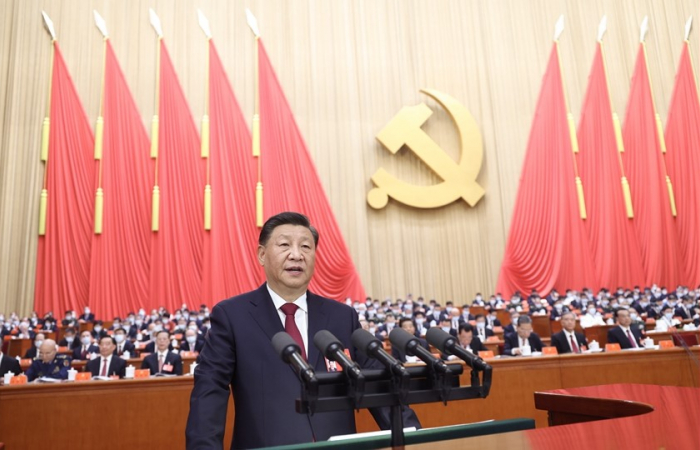
An event on the other side of the world that started on Sunday has huge global importance and will define international politics for decades to come. The 20th Congress of the Communist Party of China (CPC) is perhaps not the most important ever in terms of its impact within China itself, but when it comes to China’s role in the world it certainly is. This is not only because China is today stronger than it has ever been in modern times, but also because the congress gives the seal of approval to a Chinese global posture that is assertive, ambitious and with as yet an undefined end-game. That end-game is being defined by Xi Jinping, who during this congress is expected to be confirmed in his post as  Party leader for an unprecedented third term. President Xi has been making speeches both at the main session of the Congress and at side events. This morning he told a meeting of Communist activists on the fringe of the main event, that Chinese people should stay united as "a piece of hard steel" under the leadership of the Communist Party of China (CPC) and “pull together with one mind to power the giant ship of national rejuvenation through the wind and waves to reach its destination.” In a more formal speech to the Congress plenum a day before Xi had given an indication of what that destination is: “Incomparable glory’ awaits China on world stage”, Xi Jinping told the party congress. By 2049, when the People’s Republic will hold centennial celebrations, China should become a leading power in all aspects, the leader stated So no modesty or lack of ambition here. But what does this mean for the rest of the world?
Editor's choice
News
EU monitors will arrive on the Armenia-Azerbaijan border within two weeks

EU monitors will arrive on the Armenia-Azerbaijan border within two weeks

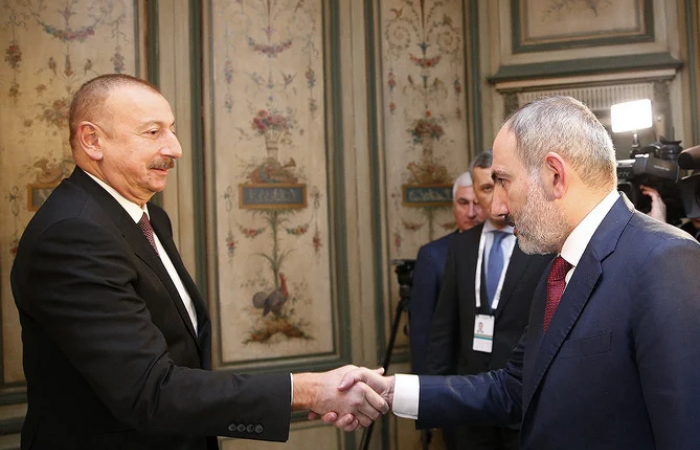
It is expected that European Union monitors will arrive on the Armenian side of the Armenia-Azerbaijan border before the end of this month. An EU technical assessment mission arrived in Yerevan on Friday (14 October), and EU foreign ministers are expected to discuss the matter and endorse a mandate and a budget for the mission on Monday (17 October). A statement from the European External Action Service on Friday evening stated: Following the request by Armenia, an EU technical assessment mission has today arrived in Yerevan. The task of this mission is to prepare for the deployment of EU monitors to the Armenian side of the Armenia-Azerbaijan border later this month, in line with the agreement reached on the 6 October at the quadrilateral meeting between President Aliyev, Prime Minister Pashinyan, President Macron and President Michel. EU Member States will further discuss at the Foreign Affairs Council on Monday 17 October the proposal of High Representative Josep Borrell to deploy a monitoring mission, which will have as its primary aims contributing to stability and building confidence as well as supporting the work of the border commissions to improve security along the bilateral border.