Theme

Conflict and Peace

Stories related to violent conflicts, diplomatic tensions, and conflict prevention, mediation and resolution.

Editor's choice
News
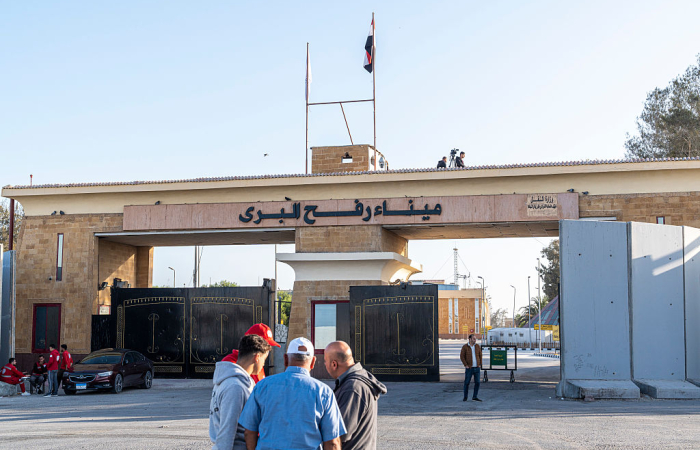
Egypt rejects Israeli "offer" for an exit only Rafah checkpoint in Gaza

Egypt rejects Israeli "offer" for an exit only Rafah checkpoint in Gaza

Egypt has rejected an Israeli "offer" for opening for exit only the Rafah checkpoint in Gaza. According to the Egyptian State Information Service, Egyptian authorities refuted on Wednesday afternoon reports that Israel claims it will open the Rafah crossing, the only lifeline for Gaza to the outside world, but only for those wishing to leave the besieged coastal enclave.  Citing an Egyptian official, the service stated that ''any agreement to open the crossing will cover both entry and exit, in line with US President Donald Trump's plan for humanitarian and political arrangements following the ceasefire.'' Cairo reaffirmed its adherence to the plan and UN Security Council Resolution 2803, including the right of return for Palestinians and maintaining two-way operations at the crossing. Earlier in the day, Israel's Coordinator of Government Activities in the Territories (COGAT) announced that the Rafah crossing would reopen ''within the next few days,'' marking the first such move since February 2025. According to the statement, departures would require prior Israeli security approval and would follow mechanisms previously implemented under EU supervision. Notably, the statement made no mention of the entry of humanitarian aid, which continues to flow through the Kerem Shalom crossing. A Palestinian official also echoed the Egyptian denial of Israel's claim. The announced agreements stress that no Palestinians will be forced to leave Gaza. Those who choose to travel will have the right to return, while humanitarian aid will continue through UN agencies, the International Red Cross and Crescent, and other independent organisations. A European Union official, who requested anonymity and is familiar with the matter, told TNA that the EU has received no official notification from Israel regarding new arrangements, stressing that "no changes exist beyond the January agreements, and we await Israel's formal approval for crossing operations under the Trump plan. "Reopening the crossing will follow mechanisms jointly supervised by the EU and the Palestinian Authority to ensure oversight and transparency, according to the EU official.
Filter archive

Publication date
Editor's choice
Editorial
Kherson: The end of the beginning

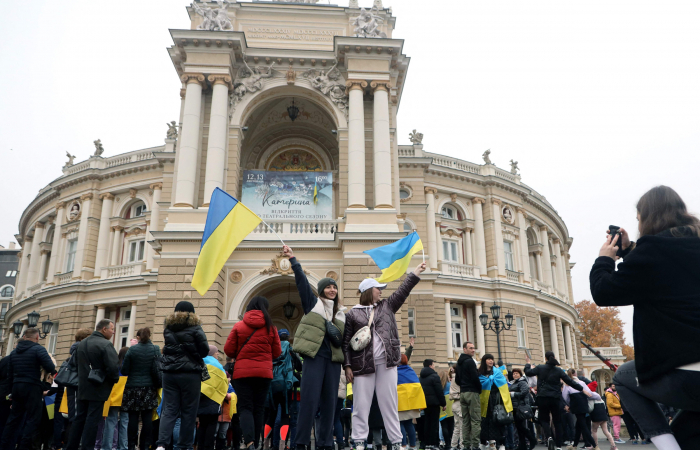
Kherson: The end of the beginning

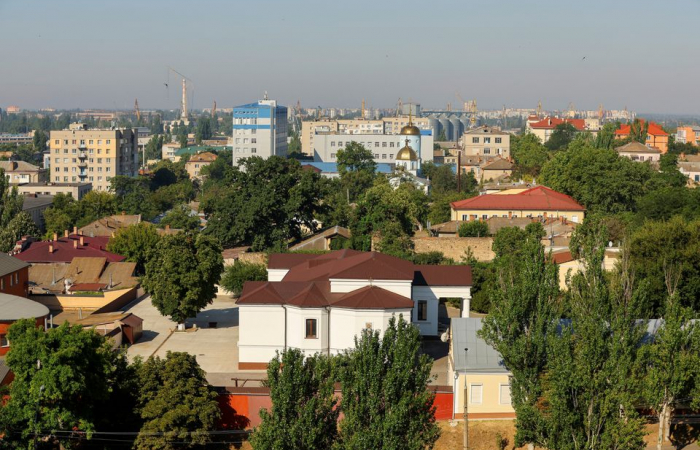
The withdrawal of the Russian army from the city of Kherson ends the first chapter of Vladimir Putin's misadventure in Ukraine, which started on 24 February when he ordered his army to invade. Ukrainians rightly celebrated, as the Ukrainian army returned to the city which Russia illegally annexed only a few weeks ago. Kherson was the only regional centre the Russians were able to occupy following their February invasion, which, let us not forget, initially aimed to take Kyiv and all other Ukrainian cities. But as the Ukrainian president, and other Ukrainian officials warned, the war is far from over yet. But the Russian army is still in Ukraine, and now consolidating its positions on the left bank of the Dnipro river.  The river will now serve as a natural defence barrier for the Russians in the face of Ukrainian attempts to liberate the rest of the territory under Russian occupation. And the coming winter may prove challenging for Ukraine in other ways too, given the Russian attempts to destroy key infrastructure and disrupt energy supplies. But still Kherson can be seen as the end of the beginning. The journey for the liberation of Ukraine will take longer. And after all Ukrainian territory is liberated, another journey will have to start: that of rebuilding Europe's security architecture on new foundations. Where Russia will stand in this is still not clear. Despite the facade of defiance and bravado, it is already evident that soul-searching has already started amongst the Russian elite about the Ukrainian adventure, and indeed about how Russia itself is governed. That, the Russian people will have to figure out by themselves, and the process is not likely to be either short, or easy.
Editor's choice
News
"Today Kherson, tomorrow Sevastopol"

"Today Kherson, tomorrow Sevastopol"

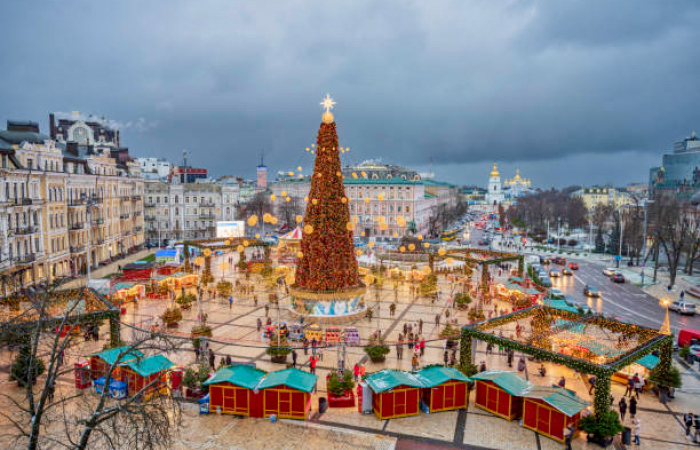
Russia's leadership has ordered its troops to withdraw from the Ukrainian city of Kherson. It was the only regional capital Russian forces were able to capture after invading in February. The news was welcomed cautiously in Ukraine, where the government said it will proceed carefully to avoid losses. Some commentators however are saying that it is the first step to forcing a complete Russian withdrawal from Ukrainian territory. "Today Kherson, tomorrow Sevatopol" is what many Ukrainians hope, referring to the port city on the Crimean peninsula. Russia's commander in Ukraine, Gen Sergei Surovikin, said on Wednesday (9 November) it was no longer possible to keep supplying the city. The withdrawal means Russian forces will pull out entirely from the western bank of the River Dnipro. The military's top brass announced the decision on Russian state TV, with Gen Surovikin reporting on the situation on the ground in Kherson. "In these circumstances, the most sensible option is to organise the defence along a barrier line along the river Dnipro," Gen Surovikin told the meeting. Russia's annexation of Kherson, and three other occupied regions, was announced with a lot of fanfare by president Putin at the end of September.
Editor's choice
News
EU concerned at situation in the Balkans amid tension between Kosovo and Serbia

EU concerned at situation in the Balkans amid tension between Kosovo and Serbia

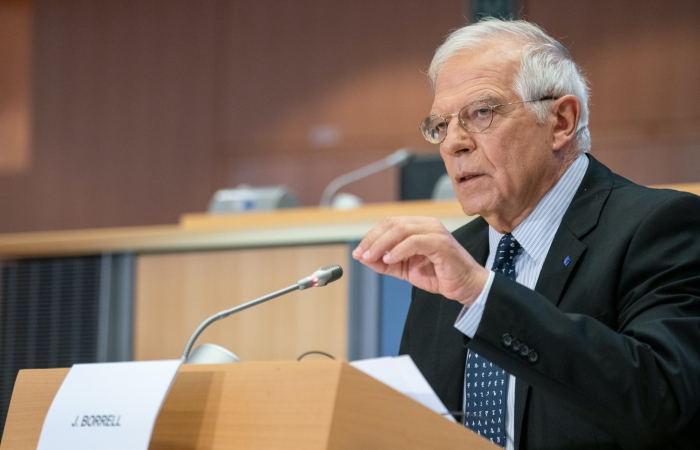
EU High Representative for Foreign and Security Policy, Josep Borrell, has expressed concern at recent developments in the Balkans amid increasing tensions between Kosovo and Serbia. Borrell, who is currently on an official visit to Abu Dhabi where he is participating in the 2022 Sir Bani Yas Forum, on Saturday (5 November) spoke with Serbian president Alexander Vucic and Kosovar Prime Minister, Albin Kurti. A statement issued later by the European Extern Action Service, said: "The recent developments in the relations between Kosovo and Serbia put years of hard work and achievements reached under the EU-facilitated Dialogue between Belgrade and Pristina at risk and hamper the security situation in the region and beyond. The European Union calls both sides to refrain from any unilateral actions, which might lead to further tensions.