Theme

Conflict and Peace

Stories related to violent conflicts, diplomatic tensions, and conflict prevention, mediation and resolution.

Editor's choice
News
European leaders set out their plan for Ukraine

European leaders set out their plan for Ukraine

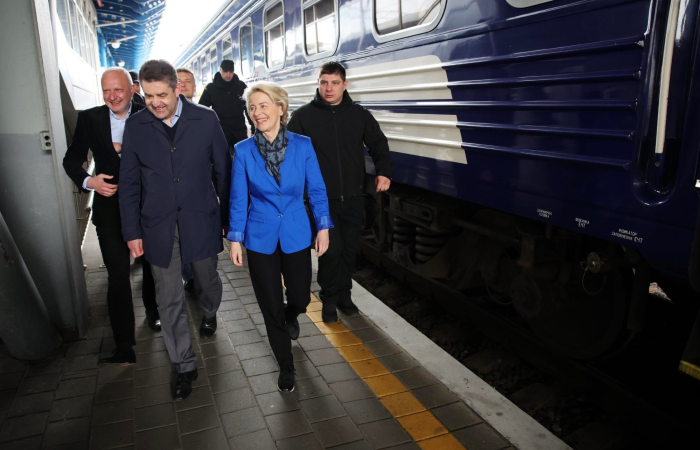
The leaders of Germany, Denmark, Finland, France, Italy, Netherlands, Norway, Poland, Sweden, and United Kingdom, together with the President of the European Council, and the President of the European Commission, o  Monday (15 December) issued a statement, outlining their plan for Ukraine. In their statement, Chancellor Merz, Prime Minister Frederiksen, President Stubb, President Macron, Prime Minister Meloni, Prime Minister Schoof, Prime Minister Støre, Prime Minister Tusk, Prime Minister Kristersson, Prime Minister Starmer, as well as President Costa and President von der Leyen spoke about "Peace for Ukraine". The Leaders welcomed significant progress on President Trump’s efforts to secure a just and lasting peace in Ukraine. They also welcomed the close work between President Zelenskyy’s and President Trump’s teams as well as European teams over the recent days and weeks. They agreed to work together with President Trump and President Zelenskyy to get to a lasting peace which preserves Ukrainian sovereignty and European security. Leaders appreciated the strong convergence between the United States, Ukraine and Europe. Leaders agreed that ensuring the security, sovereignty, and prosperity of Ukraine was integral for wider Euro-Atlantic security. They were clear that Ukraine and its people deserved a prosperous, independent, and sovereign future, free from fear of future Russian aggression. Both the US and European leaders committed to work together to provide robust security guarantees and economic recovery support measures for Ukraine in the context of an agreement on ending the war. This would include commitments to: Provide sustained and significant support to Ukraine to build its armed forces, which should remain at a peacetime level of 800,000 to be able to deter conflict and defend Ukraine’s territory. A European-led ‘multinational force Ukraine’ made up from contributions from willing nations within the framework of the Coalition of the Willing and supported by the US. It will assist in the regeneration of Ukraine’s forces, in securing Ukraine’s skies, and in supporting safer seas, including through operating inside Ukraine. (Click the image to read the statement in full).
Editor's choice
News
NATO Chief says war is on Europe's doorstep, and warns against complacency

NATO Chief says war is on Europe's doorstep, and warns against complacency

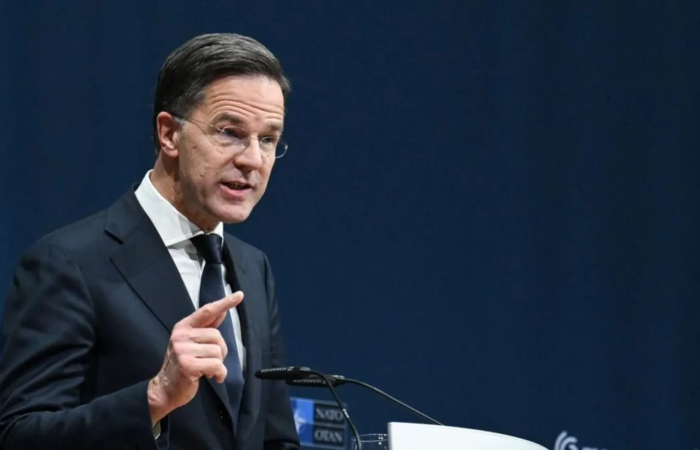
Russia could attack a NATO country within the next five years, the Secretary General of NATO, Mark Rutte, said in a stark new warning. "NATO's own defences can hold for now," Rutte warned in Berlin, but conflict was "next door" to Europe, and he feared "too many are quietly complacent, and too many don't feel the urgency, too many believe that time is on our side. "Russia is already escalating its covert campaign against our societies," Rutte said in a speech in Germany. "We must be prepared for the scale of war our grandparents or great-grandparents endured." Earlier this month, Russia's President Vladimir Putin said his country was not planning to go to war with Europe, but it was ready "right now" if Europe wanted to - or started a war. But similar reassurances were given by Moscow in 2022, just before 200,000 Russian troops crossed the border and invaded Ukraine. Putin has accused European countries of hindering US efforts to bring peace in Ukraine - a reference to the role Ukraine's European allies have recently played in trying to change a US peace plan to end the war, whose initial draft was seen as favouring Russia. But Putin was not sincere, Nato's secretary-general said in the German capital, Berlin. Supporting Ukraine, he added, was a guarantee for European security. "Just imagine if Putin got his way; Ukraine under the boot of Russian occupation, his forces pressing against a longer border with Nato, and the significantly increased risk of an armed attack against us." Russia's economy has been on a war footing for more than three years now - its factories churn out ever more supplies of drones, missiles and artillery shells. According to a recent report by the Kiel Institute for the World Economy, Russia has been producing each month around 150 tanks, 550 infantry fighting vehicles, 120 Lancet drones and more than 50 artillery pieces. The UK, and most of its Western allies, are simply not anywhere near this point. Analysts say it would take years for Western Europe's factories to come close to matching Russia's mass-production of weapons. "Allied defence spending and production must rise rapidly, our armed forces must have what they need to keep us safe," the Nato chief said.

Filter archive

Publication date
Editor's choice
Editorial
Editorial: Armenia-Azerbaijan talks are down to the nitty-gritty

Editorial: Armenia-Azerbaijan talks are down to the nitty-gritty

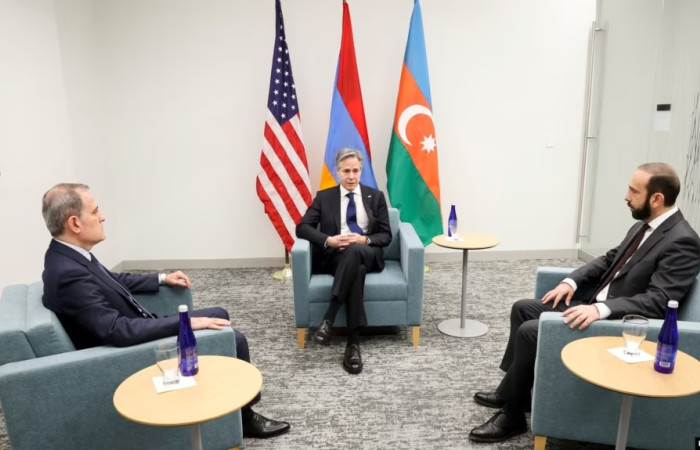
After months of diplomacy by e-mail, Armenia and Azerbaijan met in Washington DC in the first week of May for negotiations led by the foreign ministers of the two countries, with the United States providing facilitation and support, writes commonspace.eu in this editorial. The presence of US Secretary of State, Antony Blinken, at the opening of the talks, raised expectations that the talks may be conclusive. They were not, but enough progress was made for Blinken to return for the closing session, telling his guests that the US appreciated that the last bit of any negotiating process was going to be the most difficult. "The temptation to draw out the ongoing situation for many more months, with the hope that time is on their side, has big risks. Unplanned incidents still have the capacity to escalate quickly and spiral out of control, feeding on the existing level of mistrust. The violence between Armenia and Azerbaijan reported this morning (11 May) is a case in point. So in many ways this is the moment of truth, even if some would argue that we have been here before. Somehow however this time it feels different, even if the nitty-gritty problems have not gone away," they add.
Editor's choice
News
Russian brigade flees Bakhmut, UK prepares to supply Ukraine longer-range missiles

Russian brigade flees Bakhmut, UK prepares to supply Ukraine longer-range missiles

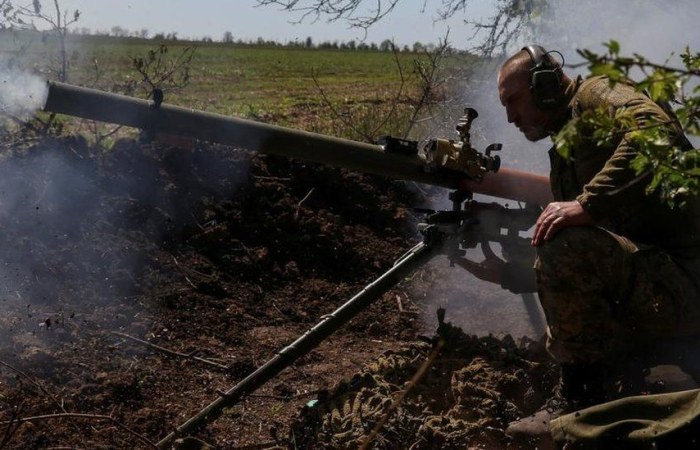
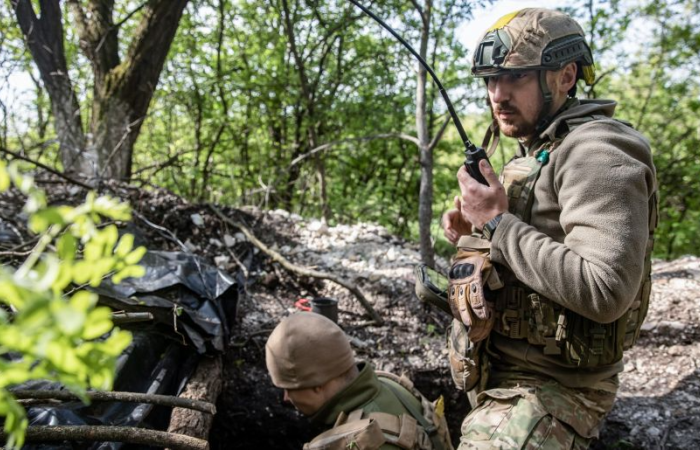
An entire Russian brigade has reportedly fled the embattled town of Bakhmut, in eastern Ukraine. This news was initially announced by the Wagner mercenary group founder Yevgeny Prigozhin, and confirmed by Ukraine's Third Assault Brigade on Tuesday (9 May).  Russian forces have been trying to take the town for some 10 months, but have reportedly taken huge losses in the face of strong Ukrainian resistance. Bakhmut, which had a pre-war population of around 70,000, has been almost completely destroyed by the fighting. "Prigozhin's report about the escape of the 72nd Separate Motorized Rifle Brigade of the Russian Armed Forces from Bakhmut and the '500 corpses' of Russians who remained there is true. The Third Assault Brigade is grateful for the publicity of our success at the front," the Third Assault Brigade wrote in a statement. Meanwhile, the leader of the Third Assault Brigade, Andriy Biletskiy, claimed that they had liberated a 3km x 2.6km strip of land south-west of Bakhmut in the process.
Editor's choice
News
Pashinyan and Aliyev to meet in Brussels on 14 May and in Chisinau on 1 June

Pashinyan and Aliyev to meet in Brussels on 14 May and in Chisinau on 1 June

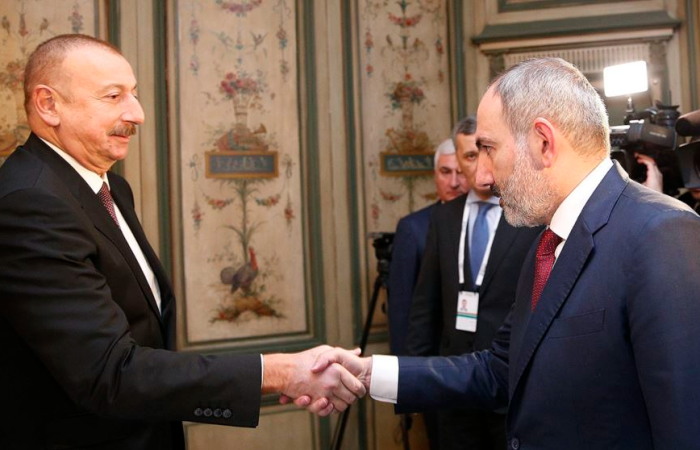
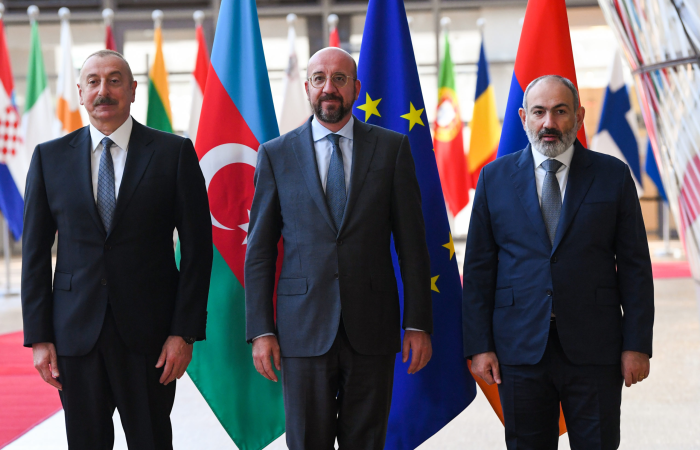
The European Union has officially confirmed that the Armenian Prime Minister Nikol Pashinyan and the Azerbaijani President Ilham Aliyev will meet in Brussels on Sunday (14 May). The official announcement comes after a claim made in the Financial Times yesterday (8 May) about the two leaders meeting in the Belgian capital this weekend. In a statement, the EU said "President Michel has continued to be in close contact with the leaders of Armenia and Azerbaijan to advance the EU’s efforts to promote stability in the South Caucasus and normalisation between the two countries," before announcing the trilateral meeting in Brussels this weekend. The statement adds that this meeting in Brussels will be "flanked" by a meeting with French President Emmanuel Macron and German Chancellor Olaf Scholz on the sidelines of the upcoming European Political Community summit in Chisinau, Moldova, on 1 June 2023. In addition to this, the EU also said that Pashinyan and Aliyev have "agreed to continue to meet trilaterally in Brussels as frequently as necessary to address ongoing developments on the ground and standing agenda items of the Brussels meetings".
Editor's choice
News
Biden calls Sudan violence a "betrayal", 17,000 tonnes of food aid looted

Biden calls Sudan violence a "betrayal", 17,000 tonnes of food aid looted

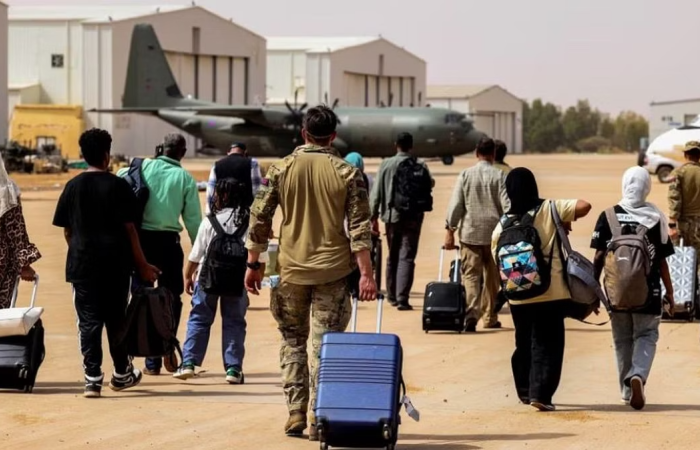
U.S. President Joe Biden has called the ongoing violence in Sudan an "unconscionable betrayal" in a statement made at the White House on Thursday (4 May).  The fighting, which will enter its fourth week this weekend, broke out on Saturday 15 April after the Sudanese army and a rival paramilitary group, the Rapid Support Forces, failed to reach an agreement over a transition to a civilian government. “The violence taking place in Sudan is a tragedy — and it is a betrayal of the Sudanese people’s clear demand for civilian government and a transition to democracy,” President Biden said. “I join the peace-loving people of Sudan and leaders around the world in calling for a durable ceasefire between the belligerent parties.” Meanwhile, also on Thursday, the U.S. state department announced that it had completed its evacuation of at least 1,300 U.S. citizens in Sudan, as well as evacuating at least 700 more from other countries. Air strikes and heavy shelling returned to the Sudanese capital city of Khartoum on Thursday as a fragile and frequently violated ceasefire lapsed.