Theme

Conflict and Peace

Stories related to violent conflicts, diplomatic tensions, and conflict prevention, mediation and resolution.

Editor's choice
News
NATO Chief says war is on Europe's doorstep, and warns against complacency

NATO Chief says war is on Europe's doorstep, and warns against complacency

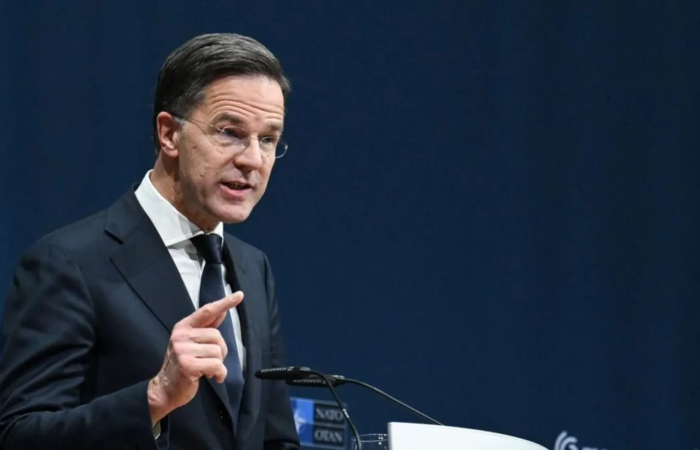
Russia could attack a NATO country within the next five years, the Secretary General of NATO, Mark Rutte, said in a stark new warning. "NATO's own defences can hold for now," Rutte warned in Berlin, but conflict was "next door" to Europe, and he feared "too many are quietly complacent, and too many don't feel the urgency, too many believe that time is on our side. "Russia is already escalating its covert campaign against our societies," Rutte said in a speech in Germany. "We must be prepared for the scale of war our grandparents or great-grandparents endured." Earlier this month, Russia's President Vladimir Putin said his country was not planning to go to war with Europe, but it was ready "right now" if Europe wanted to - or started a war. But similar reassurances were given by Moscow in 2022, just before 200,000 Russian troops crossed the border and invaded Ukraine. Putin has accused European countries of hindering US efforts to bring peace in Ukraine - a reference to the role Ukraine's European allies have recently played in trying to change a US peace plan to end the war, whose initial draft was seen as favouring Russia. But Putin was not sincere, Nato's secretary-general said in the German capital, Berlin. Supporting Ukraine, he added, was a guarantee for European security. "Just imagine if Putin got his way; Ukraine under the boot of Russian occupation, his forces pressing against a longer border with Nato, and the significantly increased risk of an armed attack against us." Russia's economy has been on a war footing for more than three years now - its factories churn out ever more supplies of drones, missiles and artillery shells. According to a recent report by the Kiel Institute for the World Economy, Russia has been producing each month around 150 tanks, 550 infantry fighting vehicles, 120 Lancet drones and more than 50 artillery pieces. The UK, and most of its Western allies, are simply not anywhere near this point. Analysts say it would take years for Western Europe's factories to come close to matching Russia's mass-production of weapons. "Allied defence spending and production must rise rapidly, our armed forces must have what they need to keep us safe," the Nato chief said.
Editor's choice
News
Thai-Cambodia border clashes enter fourth day

Thai-Cambodia border clashes enter fourth day

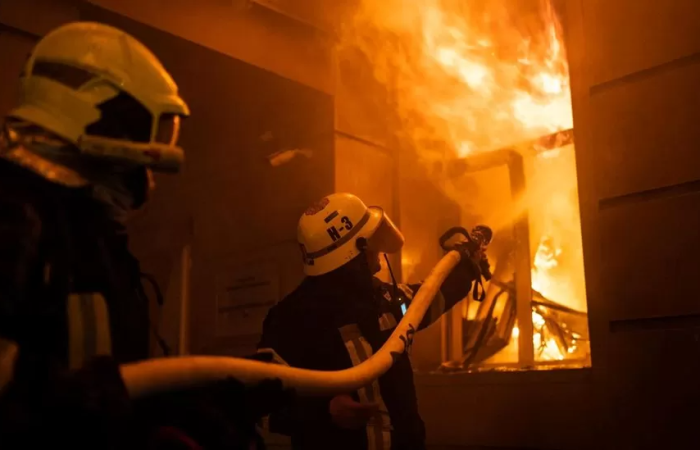
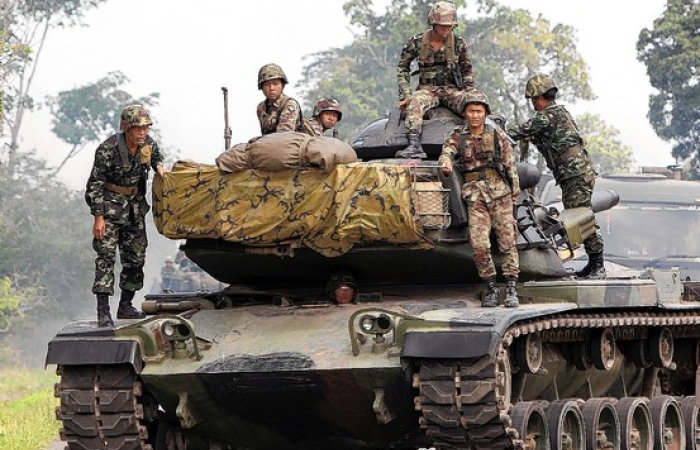
Renewed fighting between Thailand and Cambodia has entered its fourth day, with both sides accusing one another of violating international law, as they await a promised phone call from United States President Donald Trump. Cambodia’s Ministry of Defence accused Thailand’s military of carrying out numerous attacks within the country in the early hours of Thursday morning, including deploying tanks and artillery to strike targets in the country’s Pursat, Banteay Meanchey, and Oddar Meanchey provinces. In one such attack, Cambodia accused Thai soldiers of violating international humanitarian law by firing on civilians in Prey Chan village in Banteay Meanchey province. In another, it accused Thai forces of shelling “into Khnar Temple area”, and said Thai forces had also “fired artillery and support fire into the O’Smach area”. “Cambodia urges that Thailand immediately stop all hostile activities and withdraw its forces from Cambodia’s territorial integrity, and avoid acts of aggression that threaten peace and stability in the region,” the Defence Ministry said. Clashes took place on Wednesday at more than a dozen locations along the contested colonial-era demarcated 817-kilometre (508-mile) Thai-Cambodian border, with some of the most intense fighting being reported since a five-day battle in July, which saw dozens killed on both sides. Cambodia’s Ministry of the Interior said homes, schools, roads, Buddhist pagodas and ancient temples had been damaged by “Thailand’s intensified shelling and F-16 air strikes targeting villages and civilian population centres up to 30km [18.6 miles] inside Cambodian territory”. (click the image to read the full story).

Filter archive

Publication date
Editor's choice
Opinion
Opinion: Russia determined not to be marginalised in the Armenia-Azerbaijan negotiation process

Opinion: Russia determined not to be marginalised in the Armenia-Azerbaijan negotiation process

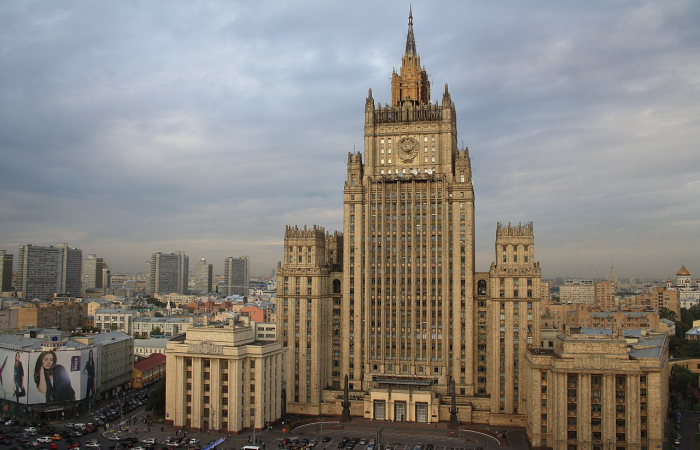
The Armenian and Azerbaijani foreign ministers meet in Moscow today at the invitation of their Russian counterpart. It is the latest attempt by Russia to ensure that it is not marginalized, as Armenia-Azerbaijan negotiations continue in earnest with western mediation. In this op-ed for commonspace.eu, Benyamin Poghosyan says that Russian demands to include in the peace agreement the issue of rights and security of the Armenians of Nagorno-Karabakh may allow Armenia to take a more flexible position during the upcoming negotiations and seek to create minimally acceptable conditions for Armenians living in Nagorno Karabakh. 
Editor's choice
News
Russia launches strikes on Ukrainian ports 200m from Romanian border

Russia launches strikes on Ukrainian ports 200m from Romanian border

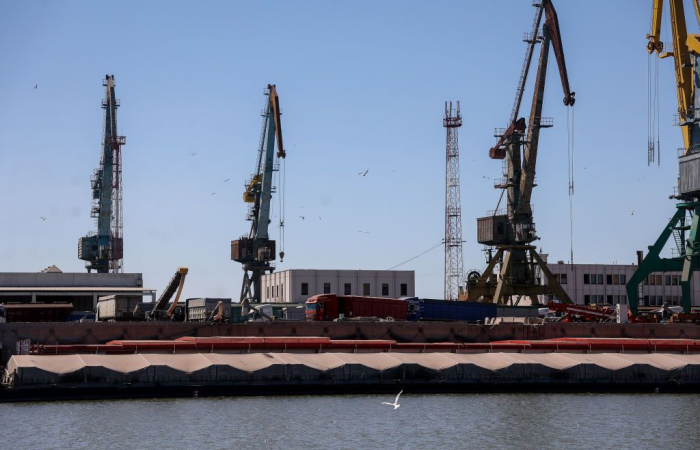
On the night of Monday (24 July), Russia launched a wave of drone strikes on Ukrainian grain silos at the Danube river ports of Izmail and Reni, located only 200m from the Ukraine's border with NATO member state Romania. The airstrikes injured six people and damaged grain storage units. Ukraine's Southern Military Command said they shot down three drones out of a total of 15 launched at the facility.
Editor's choice
Commentary
Commentary: Step by step

Commentary: Step by step

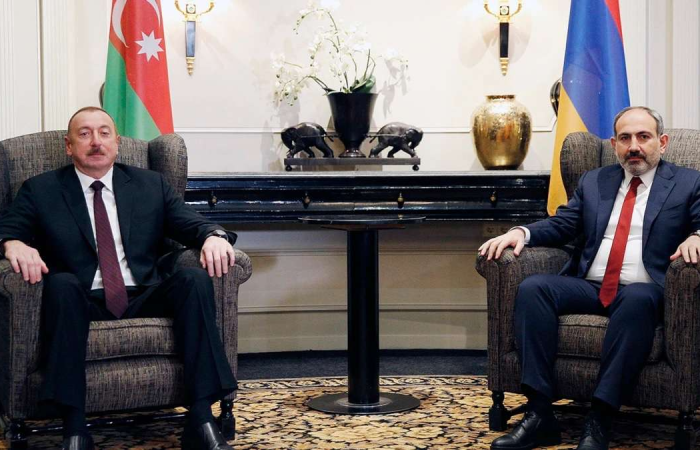
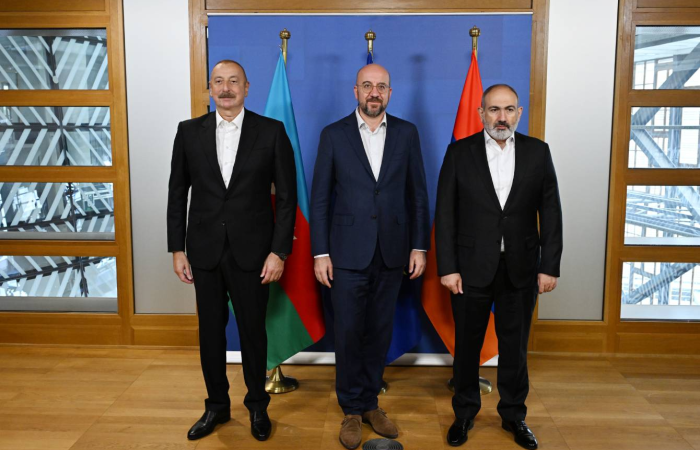
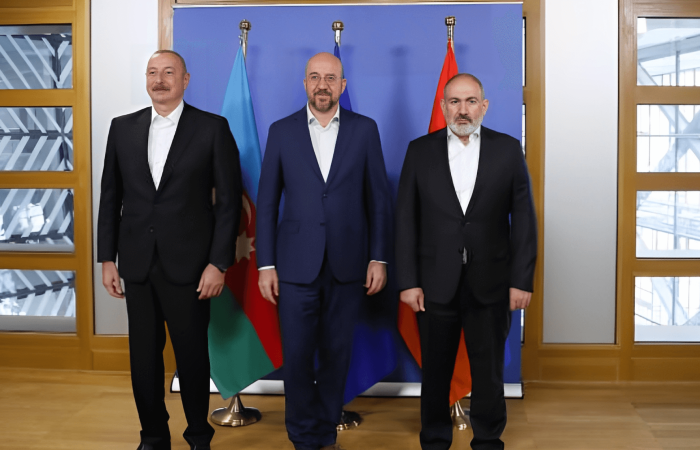
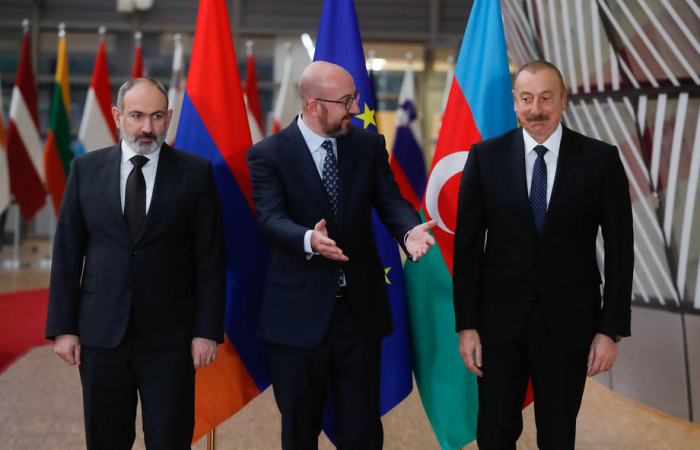
On Saturday, 15 July, the leaders of Armenia and Azerbaijan once again met in Brussels, under the auspices of the president of the European Council Charles Michel, to discuss the future of the relations between their two countries after years of war and conflict. Those who hoped for a dramatic breakthrough in the past in the process of Armenia - Azerbaijan normalisation, may have been disappointed at how slow the process moved. Yet progress is being made, and yesterday, speaking after the meeting in Brussels, European Council president Charles Michel summed it up, saying "We are going through one of the most comprehensive and vigorous stages of negotiations between Armenia and Azerbaijan". Those who still think that peace is a "moment" are mistaken. It is a process that needs to develop step by step. The meeting in Brussels this weekend was certainly a step in the right direction.
Editor's choice
News
UN warns of "full-scale civil war" in Sudan after air strike on residential area kills at least 22

UN warns of "full-scale civil war" in Sudan after air strike on residential area kills at least 22

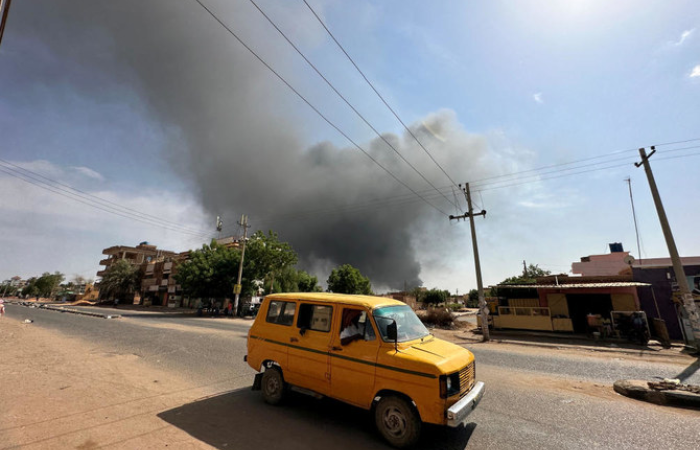
The United Nations (UN) has warned that Sudan risks descending into a "full-scale civil war" after an air strike was launched on a residential area in the city of Omdurman near the capital, Khartoum, on Sunday (9 July). The Deputy Spokesperson of the UN Secretary General Antonio Guterres said that he condemned the air strike that killed at least 22 people, adding that he "remains deeply concerned that the ongoing war between the armed forces has pushed Sudan to the brink of a full-scale civil war, potentially destabilizing the entire region." He said that "there is an utter disregard for humanitarian and human rights law that is dangerous and disturbing." Fighting broke out between two rival generals in Sudan on 15 April after talks between the Sudanese Army and the paramilitary group, the Rapid Support Forces, over a transition to a civilian government broke down, and fighting erupted. Since then approximately 3,000 people are confirmed to have been killed in the conflict, although the true death toll is likely to be much higher. Widespread sexual violence, targeted ethnic violence, and looting have been reported, as well as food and water shortages especially in the capital city of Khartoum.
Editor's choice
Editorial
Editorial: the end-game in Karabakh

Editorial: the end-game in Karabakh

Another summit between Armenian prime minister Nikol Pashinyan, and Azerbaijani president, Ilham Aliyev will take place later this month in Brussels, facilitated by the president of the European Council Charles Michel. The region is currently abuzz with diplomatic activity as the international community urges the sides to bring their negotiations to a successful conclusion. At the end of June in Washington DC the foreign ministers of the two countries met under the auspices of US Secretary of State, Antony Blinken. A read out of the meeting indicates that progress was made but substantial disagreements on key issues, such as the future of the Armenian community of Nagorno-Karabakh, remain also. It is likely that some tough discussions will take place over the summer. Time is now against those who want a peaceful solution. The momentum for peace in Baku and Yerevan is already fragile, and unless a breakthrough can be registered, even maintaining this momentum will become very difficult. The summer brings with it several challenges. Reducing incidents on the Armenia-Azerbaijan border and in the Nagorno-Karabakh conflict zone most surely now be a priority. Serious negotiations should not be taking place with violence in the background. Instead building up the momentum for peace through various track 1.5 and track 2 initiatives is hugely important.