Theme

Conflict and Peace

Stories related to violent conflicts, diplomatic tensions, and conflict prevention, mediation and resolution.

Editor's choice
News
European leaders set out their plan for Ukraine

European leaders set out their plan for Ukraine

The leaders of Germany, Denmark, Finland, France, Italy, Netherlands, Norway, Poland, Sweden, and United Kingdom, together with the President of the European Council, and the President of the European Commission, o  Monday (15 December) issued a statement, outlining their plan for Ukraine. In their statement, Chancellor Merz, Prime Minister Frederiksen, President Stubb, President Macron, Prime Minister Meloni, Prime Minister Schoof, Prime Minister Støre, Prime Minister Tusk, Prime Minister Kristersson, Prime Minister Starmer, as well as President Costa and President von der Leyen spoke about "Peace for Ukraine". The Leaders welcomed significant progress on President Trump’s efforts to secure a just and lasting peace in Ukraine. They also welcomed the close work between President Zelenskyy’s and President Trump’s teams as well as European teams over the recent days and weeks. They agreed to work together with President Trump and President Zelenskyy to get to a lasting peace which preserves Ukrainian sovereignty and European security. Leaders appreciated the strong convergence between the United States, Ukraine and Europe. Leaders agreed that ensuring the security, sovereignty, and prosperity of Ukraine was integral for wider Euro-Atlantic security. They were clear that Ukraine and its people deserved a prosperous, independent, and sovereign future, free from fear of future Russian aggression. Both the US and European leaders committed to work together to provide robust security guarantees and economic recovery support measures for Ukraine in the context of an agreement on ending the war. This would include commitments to: Provide sustained and significant support to Ukraine to build its armed forces, which should remain at a peacetime level of 800,000 to be able to deter conflict and defend Ukraine’s territory. A European-led ‘multinational force Ukraine’ made up from contributions from willing nations within the framework of the Coalition of the Willing and supported by the US. It will assist in the regeneration of Ukraine’s forces, in securing Ukraine’s skies, and in supporting safer seas, including through operating inside Ukraine. (Click the image to read the statement in full).
Editor's choice
News
NATO Chief says war is on Europe's doorstep, and warns against complacency

NATO Chief says war is on Europe's doorstep, and warns against complacency

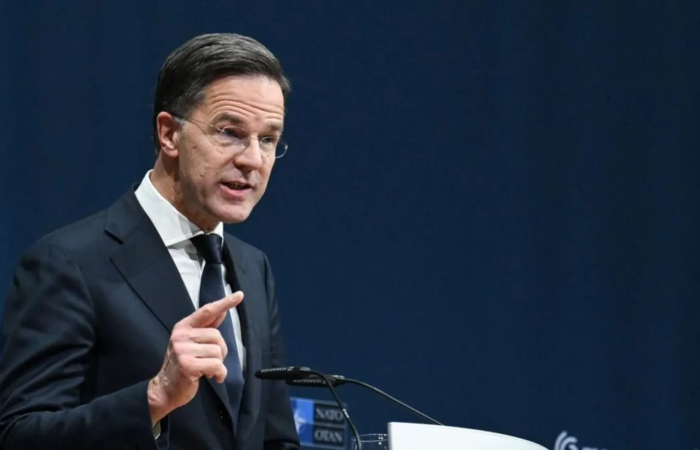
Russia could attack a NATO country within the next five years, the Secretary General of NATO, Mark Rutte, said in a stark new warning. "NATO's own defences can hold for now," Rutte warned in Berlin, but conflict was "next door" to Europe, and he feared "too many are quietly complacent, and too many don't feel the urgency, too many believe that time is on our side. "Russia is already escalating its covert campaign against our societies," Rutte said in a speech in Germany. "We must be prepared for the scale of war our grandparents or great-grandparents endured." Earlier this month, Russia's President Vladimir Putin said his country was not planning to go to war with Europe, but it was ready "right now" if Europe wanted to - or started a war. But similar reassurances were given by Moscow in 2022, just before 200,000 Russian troops crossed the border and invaded Ukraine. Putin has accused European countries of hindering US efforts to bring peace in Ukraine - a reference to the role Ukraine's European allies have recently played in trying to change a US peace plan to end the war, whose initial draft was seen as favouring Russia. But Putin was not sincere, Nato's secretary-general said in the German capital, Berlin. Supporting Ukraine, he added, was a guarantee for European security. "Just imagine if Putin got his way; Ukraine under the boot of Russian occupation, his forces pressing against a longer border with Nato, and the significantly increased risk of an armed attack against us." Russia's economy has been on a war footing for more than three years now - its factories churn out ever more supplies of drones, missiles and artillery shells. According to a recent report by the Kiel Institute for the World Economy, Russia has been producing each month around 150 tanks, 550 infantry fighting vehicles, 120 Lancet drones and more than 50 artillery pieces. The UK, and most of its Western allies, are simply not anywhere near this point. Analysts say it would take years for Western Europe's factories to come close to matching Russia's mass-production of weapons. "Allied defence spending and production must rise rapidly, our armed forces must have what they need to keep us safe," the Nato chief said.

Filter archive

Publication date
Editor's choice
News
 European Court of Human Rights orders Russia to compensate Georgia for violations committed after 2008 war

European Court of Human Rights orders Russia to compensate Georgia for violations committed after 2008 war

The European Court of Human Rights (ECHR) has ordered Russia to pay Georgia over €250 million for violations committed after the brief war between the two countries in 2008. Russia has stated that it will not comply with the decision of the ECHR. The Court decided on Tuesday 14th October that Russia had stopped people from crossing freely into Abkhazia and South Ossetia, Georgian regions that Moscow recognised as independent after the 16-day war. According to the Court, Russia committed violations including excessive use of force, ill-treatment, unlawful detention and unlawful restrictions on day-to-day movement across the administrative boundary line between Georgian-controlled territory and the Russian-backed breakaway regions.
Editor's choice
News
Israeli hostages and Palestinian detainees released as Trump’s Gaza plan is endorsed in Egypt summit

Israeli hostages and Palestinian detainees released as Trump’s Gaza plan is endorsed in Egypt summit

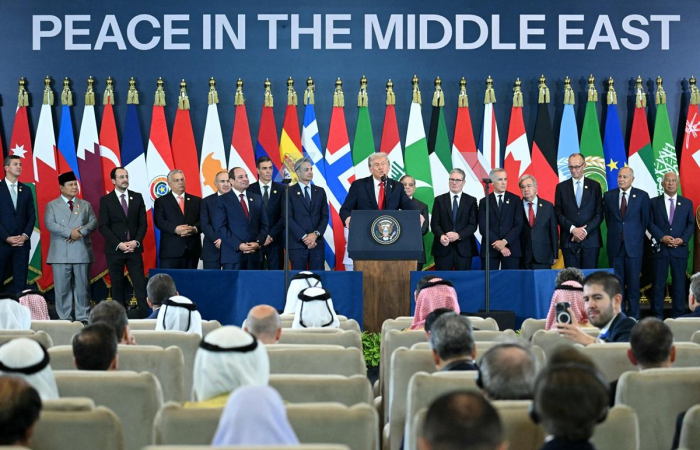
Hamas freed the last living Israeli hostages from Gaza on Monday 13 October under a ceasefire deal and Israel sent home busloads of Palestinian detainees, as U.S. President Donald Trump declared the end of the two-year long war in the Middle East. Hours later, Trump convened Muslim and European leaders in Egypt to discuss the future of the Gaza Strip and the possibility of a wider regional peace, even as Hamas and Israel, both absent from the gathering, are yet to agree on the next steps. The Israeli military said it had received all 20 hostages confirmed to be alive, after their transfer form Gaza by the Red Cross. The announcement prompted cheering, hugging and weeping among thousands waiting at "Hostage Square" in Tel Aviv. In Gaza, thousands of relatives, many weeping with joy, gathered at a hospital where buses brought home some of the nearly 2,000 Palestinian prisoners and detainees to be freed by Israel as part of the accord. "The skies are calm, the guns are silent, the sirens are still and the sun rises on a Holy Land that is finally at peace," Trump told the Knesset, Israel's parliament, saying a "long nightmare" for both Israelis and Palestinians was over.
Editor's choice
News
The Nobel Peace Prize was awarded to Venezuelan Politician Maria Corina Machado

The Nobel Peace Prize was awarded to Venezuelan Politician Maria Corina Machado

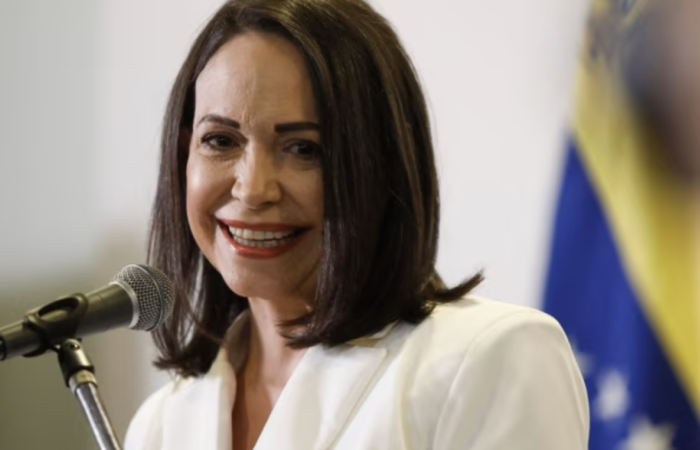
Today (10 October), the Norwegian Nobel Committee awarded Venezuelan opposition leader Maria Corina Machado for the Nobel Peace Prize. In the speech, the Norwegian Nobel Committee said that “she won for her struggle to achieve a just and peaceful transition from dictatorship to democracy”. Machado was among 338 nominees for the Nobel Peace Prize and has become its 20th female laureate.
Editor's choice
News
Israel and Hamas agree ceasefire in first phase of Trump’s peace plan

Israel and Hamas agree ceasefire in first phase of Trump’s peace plan

Israel and Hamas agreed to pause fighting in Gaza to free the remaining hostages in exchange for Palestinian prisoners, accepting elements of a plan put forward by the Trump administration that Palestinians greeted reluctantly on Thursday 9 October as a possible breakthrough toward ending the devastating two-year-old war. Under the terms, Hamas intends to release all 20 living hostages in a matter of days, while the Israeli military will begin a withdrawal from the majority of Gaza, people familiar with the matter told The Associated Press on condition of anonymity to discuss details of an agreement that has not fully been made public.
Editor's choice
News
A divided Israel marks October 7 anniversary as talks with Hamas continue in Egypt

A divided Israel marks October 7 anniversary as talks with Hamas continue in Egypt

Thousands of people converged on southern Israel on Tuesday 7 October to mourn the dead as the nation marked two years since the attack of two years ago that plunged the region into a devastating war, while Israel and Hamas hold indirect talks in Egypt. The negotiations between the two sides being held in the resort town of Sharm El-Sheikh have been "positive" so far, two sources close to the Palestinian militants' negotiating team told AFP, with discussions set to resume later on Tuesday. Mediators were shuttling between Israeli and Hamas delegations under tight security. Egyptian Foreign Minister Badr Abdelatty told reporters in Cairo, negotiations were underway for a "first phase" of the agreement, adding the discussions were focused on creating "the climate on the ground to complete the step of releasing the hostages". Trump has urged negotiators to "move fast" to end the war in Gaza, where Israeli strikes continued on Monday. Trump told Newsmax TV that "I think we're very, very close to having a deal... I think there's a lot of goodwill being shown now. It's pretty amazing actually".
Editor's choice
Monday Commentary
Monday Commentary: The Palestinian people in Gaza need peace now

Monday Commentary: The Palestinian people in Gaza need peace now

The 20-point American plan for Gaza seeks to take Hamas out of the Gaza equation. This is necessary but not easy. Hamas has become part of the Gaza fabric. It will reinvent itself as many Islamist movements have done elsewhere. But its leaders must go, after they released all the hostages they still kept from the 7 October attack. Then the process of building a new Gaza must start: infrastructure, institutions, and more importantly, the spirit and soul of the Palestinian people. Israel's plans for the annexation of Gaza are out, as is the talk of resettling Palestinians elsewhere. Gaza is, and will remain, Palestine. One can see that rebuilding the infrastructure will happen quickly. Establishing security can also happen if countries contribute forces, and if the international force has a clear mandate. Institutions will take longer, and much will depend on what is happening in the wider Palestinian spectrum, and Israel’s readiness to honour its part of the deal. It is unlikely that Hamas will hand power to anyone but the Palestinian Authority, and this is one of the points that will have to be negotiated. Rebuilding the Palestinian spirit will take years, and healing the trauma of the last two years will be difficult, will take time, but is doable. The American plan has some interesting ideas, but the US must be ready to work with diverse partners, especially in the Middle East, the Muslim world, and Europe. The plan misses one vital point. It does not commit to a two-state solution. Apparently, the Israelis opposed this. The plan, in article 19, says: “While Gaza re-development advances, and when the PA (Palestinian Authority) reform program is faithfully carried out, the conditions may finally be in place for a credible pathway to Palestinian self-determination and statehood, which we recognise as the aspiration of the Palestinian people”. Not good enough! But for the moment the world, and more importantly the Palestinian people, must accept the American plan, and make the most of it.
Editor's choice
Opinion
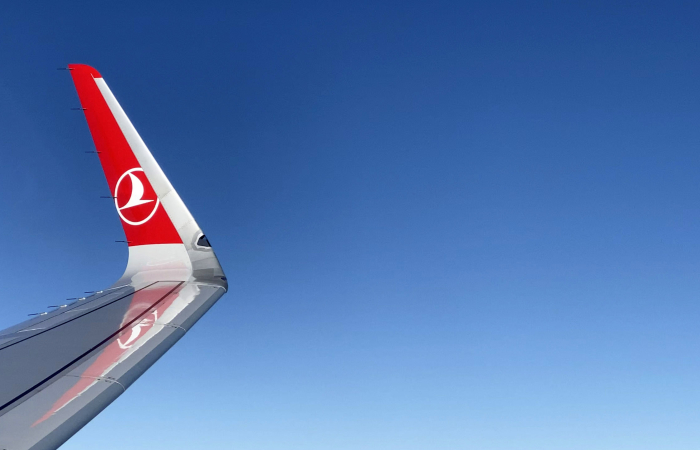
From Frozen Ties to Open Skies: Turkish Airlines to Connect Armenia and Türkiye

From Frozen Ties to Open Skies: Turkish Airlines to Connect Armenia and Türkiye

“Welcome to Armenia,” the pilot’s voice came over the tannoy as the Turkish Atlasjet flight touched down in Yerevan some time in 2011. “The temperature outsider is…” A normal announcement on any flight. This one, however, came in Turkish before being repeated in English. In Armenia. That was 14 years ago now. Despite the lack of diplomatic relations between the two countries, the flights have existed for years albeit with some interruptions and later operated by Pegasus and Flyone.