Theme

Conflict and Peace

Stories related to violent conflicts, diplomatic tensions, and conflict prevention, mediation and resolution.

Editor's choice
News
Thai-Cambodia border clashes enter fourth day

Thai-Cambodia border clashes enter fourth day

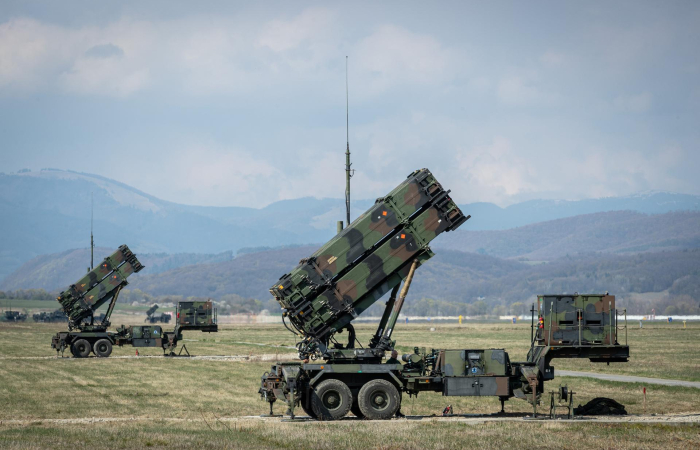
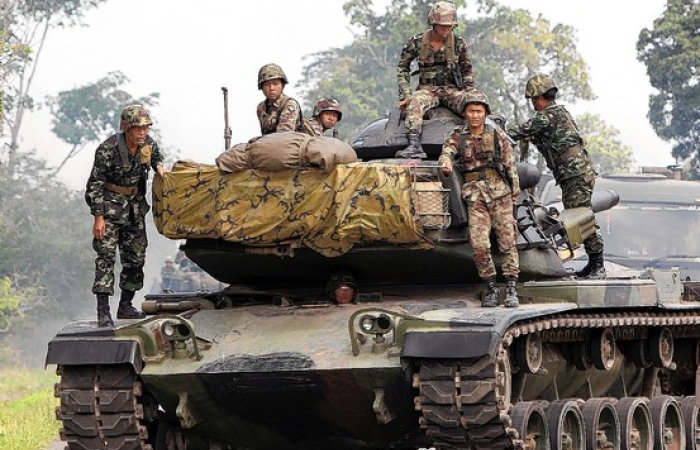
Renewed fighting between Thailand and Cambodia has entered its fourth day, with both sides accusing one another of violating international law, as they await a promised phone call from United States President Donald Trump. Cambodia’s Ministry of Defence accused Thailand’s military of carrying out numerous attacks within the country in the early hours of Thursday morning, including deploying tanks and artillery to strike targets in the country’s Pursat, Banteay Meanchey, and Oddar Meanchey provinces. In one such attack, Cambodia accused Thai soldiers of violating international humanitarian law by firing on civilians in Prey Chan village in Banteay Meanchey province. In another, it accused Thai forces of shelling “into Khnar Temple area”, and said Thai forces had also “fired artillery and support fire into the O’Smach area”. “Cambodia urges that Thailand immediately stop all hostile activities and withdraw its forces from Cambodia’s territorial integrity, and avoid acts of aggression that threaten peace and stability in the region,” the Defence Ministry said. Clashes took place on Wednesday at more than a dozen locations along the contested colonial-era demarcated 817-kilometre (508-mile) Thai-Cambodian border, with some of the most intense fighting being reported since a five-day battle in July, which saw dozens killed on both sides. Cambodia’s Ministry of the Interior said homes, schools, roads, Buddhist pagodas and ancient temples had been damaged by “Thailand’s intensified shelling and F-16 air strikes targeting villages and civilian population centres up to 30km [18.6 miles] inside Cambodian territory”. (click the image to read the full story).
Editor's choice
Young voices
Opinion: The children of Sudan that the world forgot to see

Opinion: The children of Sudan that the world forgot to see

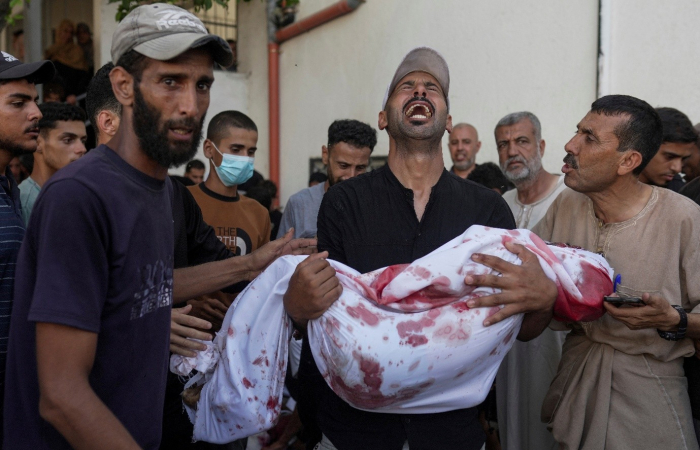
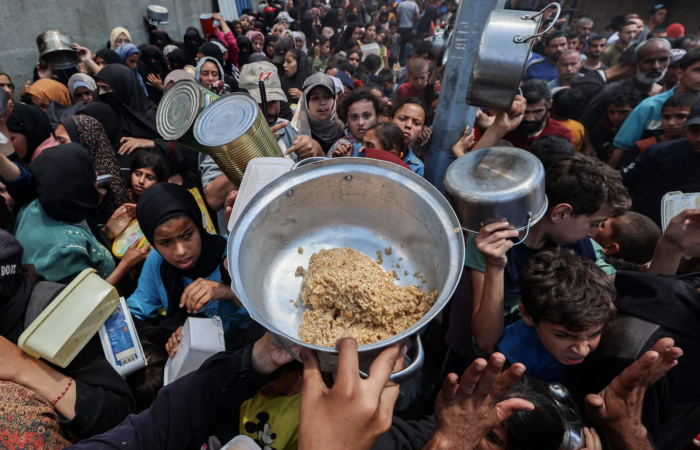
Sudan’s latest war began in April 2023, though the seeds of its violence were planted long before. The Sudanese Armed Forces and the Rapid Support Forces did not collide out of nowhere; they emerged from decades of political rot, unaddressed grievances, ethnic persecution, and military rule that carved deep fractures into the country’s social fabric. When fighting exploded across Khartoum and later consumed Darfur, Kordofan, and the east, it unleashed one of the worst humanitarian catastrophes of the 21st century. In this op-ed, Ioana-Maria Ungureanu, Junior Research Assistant at LINKS Europe, takes a heartfelt look at the plight of Sudan, and its children. When the latest war started, whole cities emptied. Markets burned. Families fled on foot. And a famine began tightening its grip, slow and suffocating. And yet, the world remained mostly silent. Sudanese death is too often framed as an unfortunate feature of the region, a tragedy that feels expected rather than outrageous. Even when evidence of atrocity is abundant, it fails to command the same emotional weight. Sudan should not have to beg for visibility. It deserves it. Because its people deserve to live. And their lives deserve the same respect, safety, and hope that we demand for our own. (read the op-ed in full by clicking the image above)

Filter archive

Publication date
Editor's choice
Monday Commentary
Monday Commentary: The War in Ukraine is Europe’s War

Monday Commentary: The War in Ukraine is Europe’s War

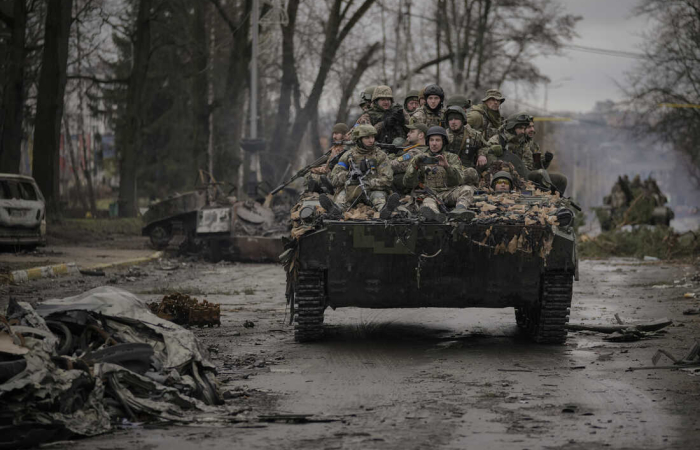
The war in Ukraine, following Russia’s unprovoked invasion in February 2022, has now raged on for three and a half years. Thousands of Ukrainians, military and civilian, have died, and millions of Ukrainians have been displaced. Vladimir Putin brought this calamity on the Ukrainian people, and on his nation too, for political capriciousness and naked ambition. Leaders of European countries understood the seriousness and significance of the moment, not only those near Russia, such as Poland, the Baltic States, Finland and Sweden, but in wider Europe too, including Germany, France, the UK, the Netherlands and beyond. Yet whilst the leaders rose to the occasion, the European public has remained largely indifferent. The majority of Europeans have so far acquiesced to the decision of their leaders to pour billions of euros into the Ukrainian war effort, but the conflict remains distant, and most Europeans carry on with their lives as usual. Putin is perceived more as an oddity than a threat. There is a great risk in this. The European Union High Representative for Foreign and Security Policy, and former Estonian politician, Kaja Kallas, is quoted as saying “Ukraine fights today so that we may not have to fight tomorrow. Their fight is our fight.” True! But that is not the full story.
Editor's choice
News
Abu Dhabi peace talks come with small breakthroughs for Armenia and Azerbaijan

Abu Dhabi peace talks come with small breakthroughs for Armenia and Azerbaijan

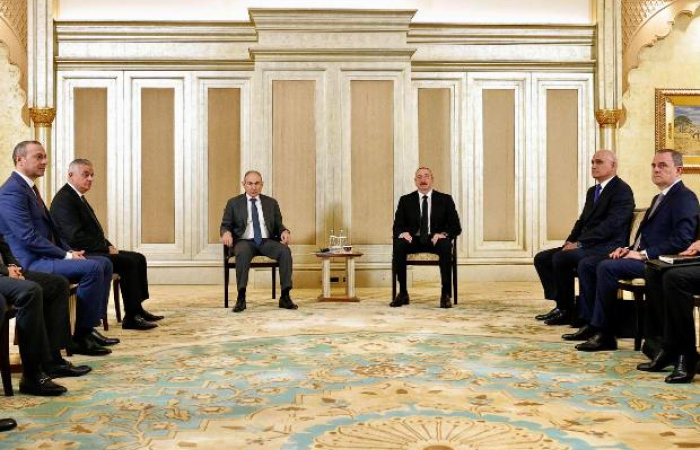
On Thursday (10 July), Armenian Prime Minister Nikol Pashinyan and Azerbaijani President Ilham Aliyev met in the UAE to advance their peace negotiations, following the March agreement on a draft treaty intended to end decades of conflict. The talks, which covered border delimitation and confidence-building measures, were described by both sides as constructive. However, no final timeline for signing the full agreement was announced.
Editor's choice
News
Leaders of Armenia and Azerbaijan meet in Abu Dhabi to finalise peace agreement

Leaders of Armenia and Azerbaijan meet in Abu Dhabi to finalise peace agreement

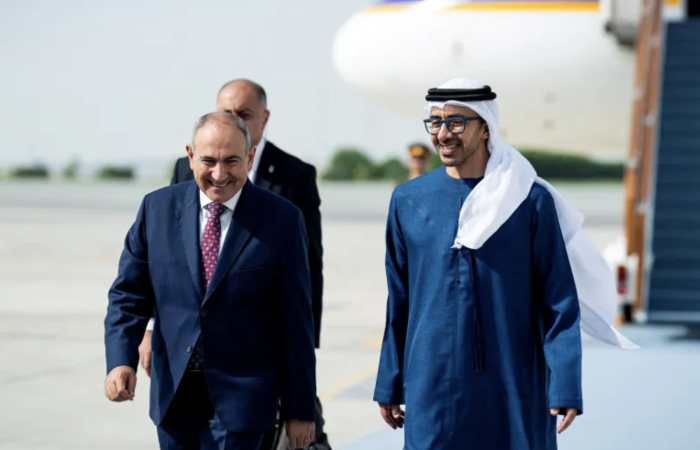
Armenian Prime Minister Nikol Pashinyan and Azerbaijani President Ilham Aliyev are meeting on Thursday 10 July in Abu Dhabi, United Arab Emirates, to discuss the next steps in finalising the peace agreement, their offices have confirmed to international news agencies. This is the first formal bilateral meeting between the leaders of Armenia and Azerbaijan since they agreed on the draft text of the peace agreement, following nearly four decades of conflict. The results of this meeting will shape the future of the South Caucasus and how the two countries can live peacefully next to each other after decades of conflict.
Editor's choice
News
Trump says US will send more weapons to Ukraine

Trump says US will send more weapons to Ukraine

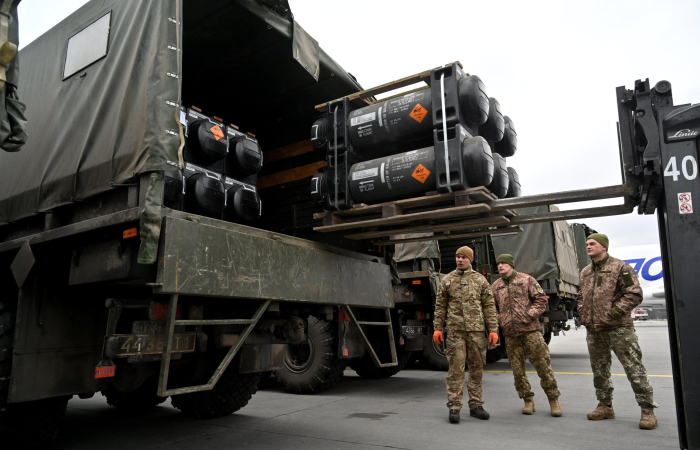
On Monday evening (7 July), US President Donald Trump announced that the US will supply more weapons to Ukraine. According to Trump, recent Russian attacks on Ukrainian cities left him with little choice. “We are going to send more weapons,” Trump told reporters at the White House. “We have to. They have to be able to defend themselves. They are being hit very hard.” It is unclear what kind of weapons Trump is referring to.
Editor's choice
News
Russia fires record number of drones at Ukraine overnight

Russia fires record number of drones at Ukraine overnight

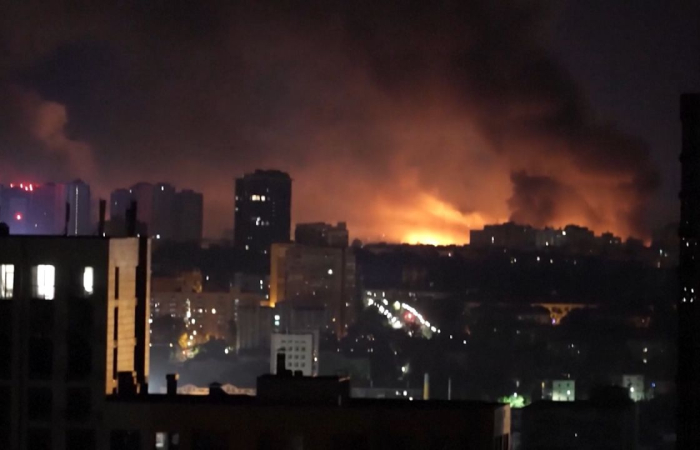
According to various Ukrainian media reports, several Ukrainian cities were hit on the night of Tuesday 8 July into Wednesday 9 July by the heaviest Russian missile and drone attack since the large-scale invasion in February 2022. The capital, Kyiv, was among the cities that came under heavy fire, according to Kyiv Independent journalists who were on the scene.
Editor's choice
News
Dozens participate in new Armenia-Azerbaijan dialogue process as societies prepare for the signing of historic peace agreement

Dozens participate in new Armenia-Azerbaijan dialogue process as societies prepare for the signing of historic peace agreement

The governments of Armenia and Azerbaijan have recently agreed the text of a historic peace agreement that ends years of animosity and warfare. The agreement is expected to be signed soon. LINKS Europe, which has a long history of engagement with the process of peace in the region, recently launched a new Armenia-Azerbaijan dialogue format in the framework of the European Union's EU4Peace initiative. In the last two weeks dozens of Armenians and Azerbaijanis, including academics, students, civil society activists, journalists and other professionals, many of them young, were involved. The work is organised in five thematic groups focusing on peace and security, connectivity, environment, governance and gender and equality and in phase 2 of the project, which has just ended, around fifty participants took part in in-person and online meetings, and more than twenty others were involved indirectly. The Chairpersons of the five thematic groups met in Vilnius, 3-6 July to launch the third phase of the program. The five thematic groups are now working on separate reports, which are expected to be finished in November and presented to the two governments and other stakeholders. The reports will outline a vision, up to 2040.