Tense weekend on the Karabakh front line.

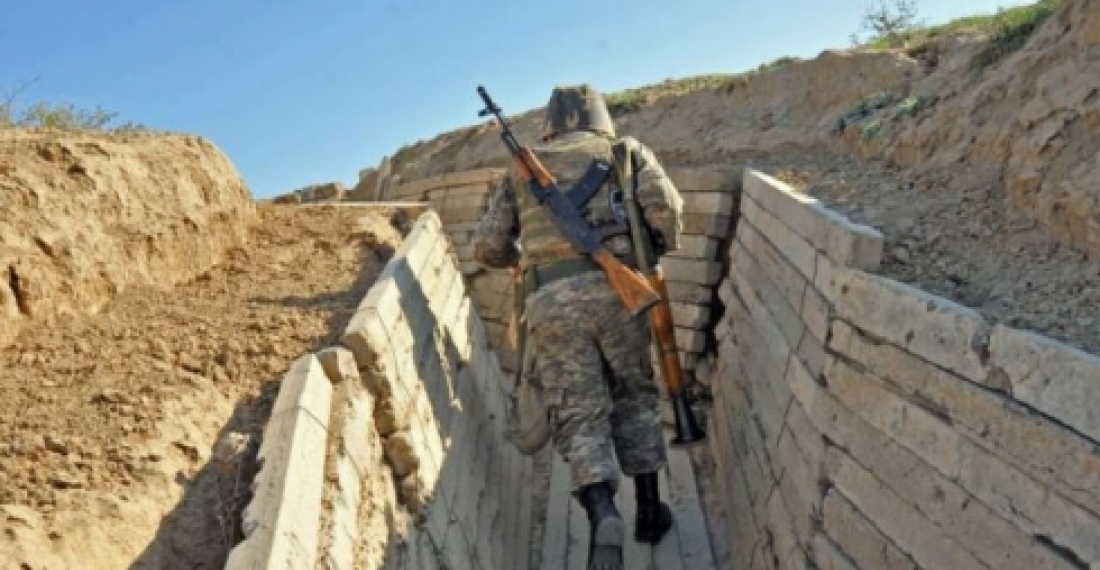
Reports from the line of contact in the Karabakh conflict zone speak of on-going violations of the cease fire between Armenian and Azerbaijani forces starting on Friday 25 July until Monday morning. Both sides confirm incidents, but reports are confused and contradictory.

From the Azerbaijani side it was reported that, what was described as an Armenian diversionary group, had attempted to breach the line of contact and was rebuffed by Azerbaijani troops. In the incident it was claimed that five Armenian soldiers were killed and one Azerbaijani soldier died also. The Azerbaijani soldier was named as Feteliyev Eldar Sakhavet. He was decorated posthumously and buried with military honours. The Azerbaijani Defence Ministry angrily refuted reports that first appeared in the Armenian media but were later reported also by some Azerbaijani media, that many Azerbaijani soldiers were injured when the troops were encircled by Armenian forces.

The Armenian side also reports many violations of the ceasefire over the weekend, including the use of heavy weapons. However there were no reports of casualties on the Armenian side.

Despite the contradictory information coming from the two sides this appears to have been the worst weekend for incidents in the Karabakh conflict zone since March. It started hours after the co-Chair of the OSCE Minsk Process ended their latest visit to the region. A statement by the three diplomats, representing France, Russia and the United States issued before the latest incidents said:

"During our visit to Yerevan and Baku, we noted recent high-level meetings and discussed with each President current proposals to advance negotiations towards a lasting settlement of the Nagorno-Karabakh conflict. We welcomed the readiness of the Presidents to meet each other later this year, and they instructed their Foreign Ministers to continue their work with the Co-Chairs on an agenda for the presidential summit.

We also welcomed the period of relative stability along the Line of Contact and Armenia-Azerbaijan border that coincided with major international events in both countries over the last several months. However, we are concerned about the recent rise in tensions, and we urged the Presidents to avoid a deadly escalation of violence and take all measures to adhere strictly to the ceasefire."

Commonspace.eu political editor said in a comment that "the incidents of this weekend can be the start of an anticipated long hot summer on the Karabakh line of contact. There does not seem to have been enough progress in the negotiations over the reasonably quiet Spring months, and, as has often happened in the past, the sides may decide to vent their frustration by creating conditions for incidents, such as we have seen over the weekend, to take place. There is a risk that the coming weeks will see more incidents,and the use of new weaponary, as the sides take the opportunity of good weather to test some of the new equipment that they have recently acquired."

source: commonspace.eu
 

Related articles

Editor's choice
News
Borrell tells the European Parliament that the situation in Afghanistan was critical, but the EU will remain engaged

Borrell tells the European Parliament that the situation in Afghanistan was critical, but the EU will remain engaged

Borrell underlined that the European Union will make every effort to support the peace process and to remain a committed partner to the Afghan people. "Of course, we will have to take into account the evolving situation, but disengagement is not an option.  We are clear on that: there is no alternative to a negotiated political settlement, through inclusive peace talks.
Editor's choice
News
Pope's visit to Türkiye and Lebanon has a strong ecumenical character, and places interreligious dialogue at its centre

Pope's visit to Türkiye and Lebanon has a strong ecumenical character, and places interreligious dialogue at its centre

Pope Leo XIV has begun the first overseas trip of his pontificate, a six-day visit to Türkiye and Lebanon, which started yesterday (27 November) and ends on Tuesday (2 December). According to Vatican Radio, the visit "carries a strong ecumenical character and places interreligious dialogue at its centre. It will also be a moment of closeness to Christian communities and local populations across the region".   During nearly a week in the region, Pope Leo XIV will meet civil and religious authorities, visit mosques and ancient churches, pray at Beirut’s port in memory of the victims of the 2020 explosion, and hold private meetings with Presidents Recep Tayyip Erdoğan and Joseph Aoun.   A highlight of the visit will be a visit to Nicaea, where the Pope will mark the anniversary of the Council of Nicaea. Christians of many traditions recognise the Council of Nicaea as a foundation of shared faith. One of the most anticipated moments will be the Pope’s encounter with Lebanese youth in Bkerké, at the Maronite Patriarchate, a meeting expected to carry strong messages of hope in the Jubilee Year. A central event will be the ecumenical celebration in İznik, where the Pope and Ecumenical Patriarch Bartholomew will walk together toward the ruins of the Basilica of St Neophytos. The prayer, held before icons of Christ and the Council, will conclude with the lighting of a candle—a symbolic gesture of unity. The journey will also highlight interreligious engagement.   Memorable moments are expected throughout the trip: a wreath at Atatürk’s mausoleum, prayer inside the Blue Mosque, Mass at Istanbul’s Volkswagen Arena, the planting of a cedar at the presidential palace in Beirut, and prayer at the tomb of St Charbel in Lebanon. The Vatican said that "Pope Leo XIV’s pilgrimage to Türkiye and Lebanon aims to offer a voice of peace, unity, and hope at the heart of the Middle East."

Popular

Editor's choice
News
Pope's visit to Türkiye and Lebanon has a strong ecumenical character, and places interreligious dialogue at its centre

Pope's visit to Türkiye and Lebanon has a strong ecumenical character, and places interreligious dialogue at its centre

Pope Leo XIV has begun the first overseas trip of his pontificate, a six-day visit to Türkiye and Lebanon, which started yesterday (27 November) and ends on Tuesday (2 December). According to Vatican Radio, the visit "carries a strong ecumenical character and places interreligious dialogue at its centre. It will also be a moment of closeness to Christian communities and local populations across the region".   During nearly a week in the region, Pope Leo XIV will meet civil and religious authorities, visit mosques and ancient churches, pray at Beirut’s port in memory of the victims of the 2020 explosion, and hold private meetings with Presidents Recep Tayyip Erdoğan and Joseph Aoun.   A highlight of the visit will be a visit to Nicaea, where the Pope will mark the anniversary of the Council of Nicaea. Christians of many traditions recognise the Council of Nicaea as a foundation of shared faith. One of the most anticipated moments will be the Pope’s encounter with Lebanese youth in Bkerké, at the Maronite Patriarchate, a meeting expected to carry strong messages of hope in the Jubilee Year. A central event will be the ecumenical celebration in İznik, where the Pope and Ecumenical Patriarch Bartholomew will walk together toward the ruins of the Basilica of St Neophytos. The prayer, held before icons of Christ and the Council, will conclude with the lighting of a candle—a symbolic gesture of unity. The journey will also highlight interreligious engagement.   Memorable moments are expected throughout the trip: a wreath at Atatürk’s mausoleum, prayer inside the Blue Mosque, Mass at Istanbul’s Volkswagen Arena, the planting of a cedar at the presidential palace in Beirut, and prayer at the tomb of St Charbel in Lebanon. The Vatican said that "Pope Leo XIV’s pilgrimage to Türkiye and Lebanon aims to offer a voice of peace, unity, and hope at the heart of the Middle East."