Shooting and sharp words ahead of meeting. Incidents on the front line have created a difficult atmosphere ahead of Paris talks.

Armenia and Azerbaijan continued to report serious violations of the cease fire on the line of contact separating their military forces over the last twenty four hours. Both sides have reported dozens of violations by the other side and the Azerbaijani Defence Ministry this morning reported an alleged Armenian incursion stating that an "Armenian subversive group attempted to cross the contact line in the south-western region (in the east of Khojavand region). The Azerbaijani Armed Forces prevented the enemy's action at the initial stage and they were forced to retreat because of losses." Armenia on Monday reported a two pronged Azerbaijani incursion which it now says was made up of thirty special forces personnel, but which it repelled after suffering the death of one of its soldiers. The funeral of the soldier is due to take place today, and the Armenian Defence Minister will personally attend, Armenian sources stated.

In the meantime the OSCE has announced that it will monitor the front line in the Fizuli region tomorrow. It is not clear if this monitoring was already scheduled or if it is being done in view of the current situation.

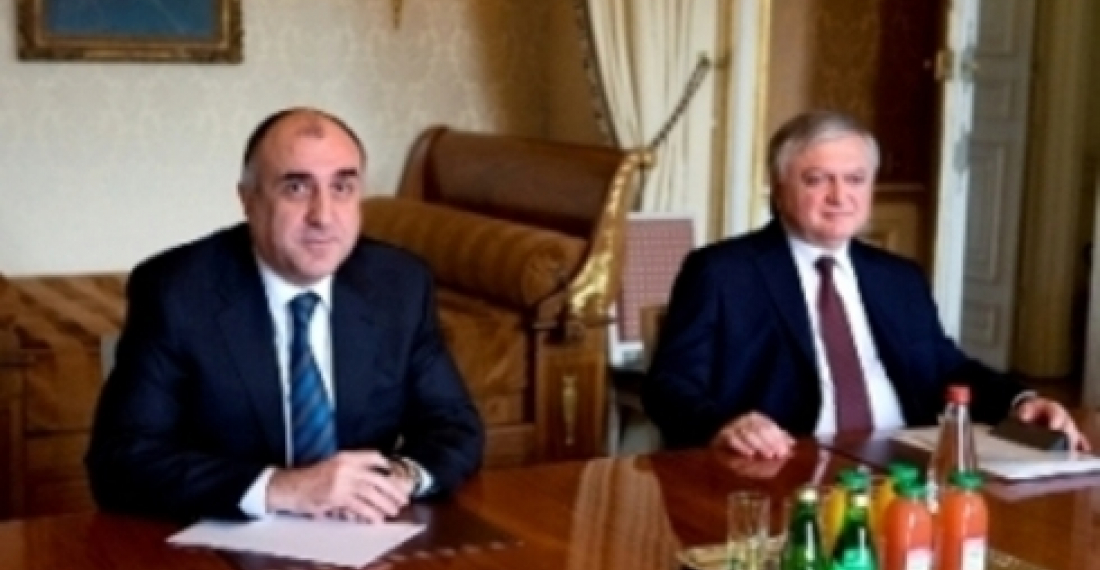
The tension on the line of contact has created a sombre background ahead of the meeting of the Foreign Ministers of Armenia and Azerbaijan which is due to take place in Paris on Saturday. Some Armenian sources are suggesting that the meeting may be cancelled, but this is unlikely. Speaking in a meeting with the EU Special Representative for the South Caucasus, Philippe Lefort, in Yerevan yesterday, Armenian President Serzh Sargsyan "expressed his deep concern in regard to the latest cases of constant provocations and the violations of the ceasefire regime by the Azerbaijani side on the Karabakh-Azerbaijan border, and underlined that they create serious obstacles for the further progress of the peace process."

The President of Azerbaijan, Ilham Aliev in the meantime yesterday visited a complex for refugees and IDPS displaced by the conflict in the city of Ganja. Speaking in one of the new flats built for the refugees in the presence of a family displaced by the conflict, Aliev spoke of the occupation that has lasted for 20 years and described it as an injustice, causing pain, and suffering to people and poses a great obstacle to the development of the country: "But the history of 20 years is not such a long time. We should look ahead - what will happen in 20, 30, 50 years, as Azerbaijan will develop? I am sure that we will return to our historical lands in near future. Then historical justice will be restored completely. At the first stage should be released the occupied lands. Azerbaijanis will live in Nagorno-Karabakh, and then in other places. We should all try to bring that day closer".

source: commonspace.eu with agencies.

photo: the Foreign Ministers of Armenia and Azerbaijan (archive picture).
Related articles

Editor's choice
News
Borrell tells the European Parliament that the situation in Afghanistan was critical, but the EU will remain engaged

Borrell tells the European Parliament that the situation in Afghanistan was critical, but the EU will remain engaged

Borrell underlined that the European Union will make every effort to support the peace process and to remain a committed partner to the Afghan people. "Of course, we will have to take into account the evolving situation, but disengagement is not an option.  We are clear on that: there is no alternative to a negotiated political settlement, through inclusive peace talks.
Editor's choice
News
Pope's visit to Türkiye and Lebanon has a strong ecumenical character, and places interreligious dialogue at its centre

Pope's visit to Türkiye and Lebanon has a strong ecumenical character, and places interreligious dialogue at its centre

Pope Leo XIV has begun the first overseas trip of his pontificate, a six-day visit to Türkiye and Lebanon, which started yesterday (27 November) and ends on Tuesday (2 December). According to Vatican Radio, the visit "carries a strong ecumenical character and places interreligious dialogue at its centre. It will also be a moment of closeness to Christian communities and local populations across the region".   During nearly a week in the region, Pope Leo XIV will meet civil and religious authorities, visit mosques and ancient churches, pray at Beirut’s port in memory of the victims of the 2020 explosion, and hold private meetings with Presidents Recep Tayyip Erdoğan and Joseph Aoun.   A highlight of the visit will be a visit to Nicaea, where the Pope will mark the anniversary of the Council of Nicaea. Christians of many traditions recognise the Council of Nicaea as a foundation of shared faith. One of the most anticipated moments will be the Pope’s encounter with Lebanese youth in Bkerké, at the Maronite Patriarchate, a meeting expected to carry strong messages of hope in the Jubilee Year. A central event will be the ecumenical celebration in İznik, where the Pope and Ecumenical Patriarch Bartholomew will walk together toward the ruins of the Basilica of St Neophytos. The prayer, held before icons of Christ and the Council, will conclude with the lighting of a candle—a symbolic gesture of unity. The journey will also highlight interreligious engagement.   Memorable moments are expected throughout the trip: a wreath at Atatürk’s mausoleum, prayer inside the Blue Mosque, Mass at Istanbul’s Volkswagen Arena, the planting of a cedar at the presidential palace in Beirut, and prayer at the tomb of St Charbel in Lebanon. The Vatican said that "Pope Leo XIV’s pilgrimage to Türkiye and Lebanon aims to offer a voice of peace, unity, and hope at the heart of the Middle East."

Popular

Editor's choice
News
Pope's visit to Türkiye and Lebanon has a strong ecumenical character, and places interreligious dialogue at its centre

Pope's visit to Türkiye and Lebanon has a strong ecumenical character, and places interreligious dialogue at its centre

Pope Leo XIV has begun the first overseas trip of his pontificate, a six-day visit to Türkiye and Lebanon, which started yesterday (27 November) and ends on Tuesday (2 December). According to Vatican Radio, the visit "carries a strong ecumenical character and places interreligious dialogue at its centre. It will also be a moment of closeness to Christian communities and local populations across the region".   During nearly a week in the region, Pope Leo XIV will meet civil and religious authorities, visit mosques and ancient churches, pray at Beirut’s port in memory of the victims of the 2020 explosion, and hold private meetings with Presidents Recep Tayyip Erdoğan and Joseph Aoun.   A highlight of the visit will be a visit to Nicaea, where the Pope will mark the anniversary of the Council of Nicaea. Christians of many traditions recognise the Council of Nicaea as a foundation of shared faith. One of the most anticipated moments will be the Pope’s encounter with Lebanese youth in Bkerké, at the Maronite Patriarchate, a meeting expected to carry strong messages of hope in the Jubilee Year. A central event will be the ecumenical celebration in İznik, where the Pope and Ecumenical Patriarch Bartholomew will walk together toward the ruins of the Basilica of St Neophytos. The prayer, held before icons of Christ and the Council, will conclude with the lighting of a candle—a symbolic gesture of unity. The journey will also highlight interreligious engagement.   Memorable moments are expected throughout the trip: a wreath at Atatürk’s mausoleum, prayer inside the Blue Mosque, Mass at Istanbul’s Volkswagen Arena, the planting of a cedar at the presidential palace in Beirut, and prayer at the tomb of St Charbel in Lebanon. The Vatican said that "Pope Leo XIV’s pilgrimage to Türkiye and Lebanon aims to offer a voice of peace, unity, and hope at the heart of the Middle East."