Region

Ukraine and Eastern Europe

Stories under this heading cover Ukraine and Eastern Europe. 

Editor's choice
News
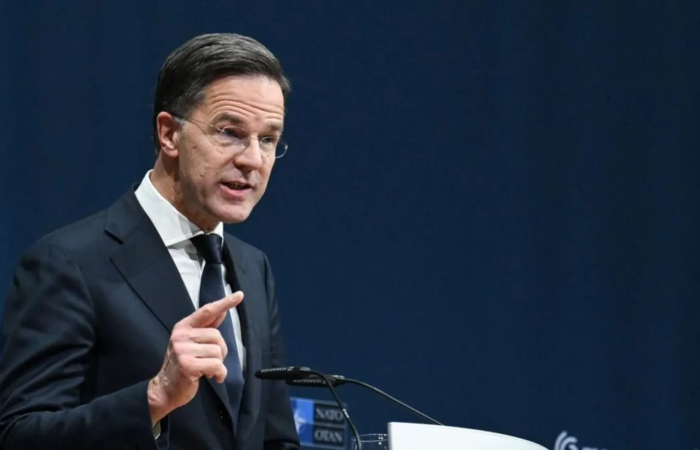
NATO Chief says war is on Europe's doorstep, and warns against complacency

NATO Chief says war is on Europe's doorstep, and warns against complacency

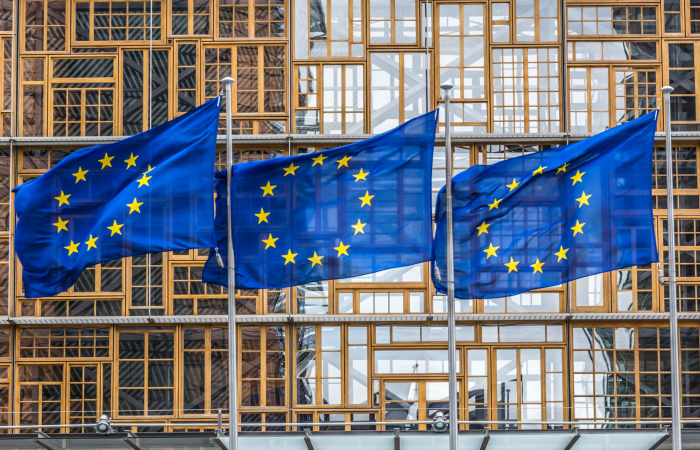
Russia could attack a NATO country within the next five years, the Secretary General of NATO, Mark Rutte, said in a stark new warning. "NATO's own defences can hold for now," Rutte warned in Berlin, but conflict was "next door" to Europe, and he feared "too many are quietly complacent, and too many don't feel the urgency, too many believe that time is on our side. "Russia is already escalating its covert campaign against our societies," Rutte said in a speech in Germany. "We must be prepared for the scale of war our grandparents or great-grandparents endured." Earlier this month, Russia's President Vladimir Putin said his country was not planning to go to war with Europe, but it was ready "right now" if Europe wanted to - or started a war. But similar reassurances were given by Moscow in 2022, just before 200,000 Russian troops crossed the border and invaded Ukraine. Putin has accused European countries of hindering US efforts to bring peace in Ukraine - a reference to the role Ukraine's European allies have recently played in trying to change a US peace plan to end the war, whose initial draft was seen as favouring Russia. But Putin was not sincere, Nato's secretary-general said in the German capital, Berlin. Supporting Ukraine, he added, was a guarantee for European security. "Just imagine if Putin got his way; Ukraine under the boot of Russian occupation, his forces pressing against a longer border with Nato, and the significantly increased risk of an armed attack against us." Russia's economy has been on a war footing for more than three years now - its factories churn out ever more supplies of drones, missiles and artillery shells. According to a recent report by the Kiel Institute for the World Economy, Russia has been producing each month around 150 tanks, 550 infantry fighting vehicles, 120 Lancet drones and more than 50 artillery pieces. The UK, and most of its Western allies, are simply not anywhere near this point. Analysts say it would take years for Western Europe's factories to come close to matching Russia's mass-production of weapons. "Allied defence spending and production must rise rapidly, our armed forces must have what they need to keep us safe," the Nato chief said.
Filter archive

Publication date
Editor's choice
Editorial
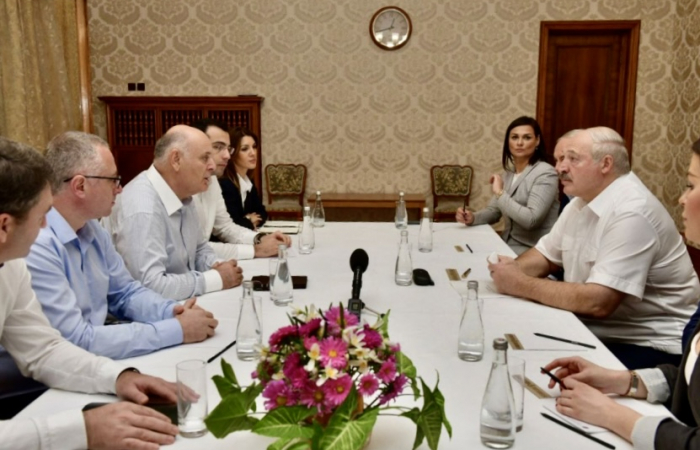
Editorial: Lukashenko's trip to Abkhazia is another act in Putin's nefarious plan

Editorial: Lukashenko's trip to Abkhazia is another act in Putin's nefarious plan

The president of Belarus, Alexandre Lukashenko, made a surprise appearance in Abkhazia on Wednesday (28 September), in a move that many see as being part of the Kremlin’s present strategy to further distabilise Eurasia to help achieve the ultimate aim, which is complete Russian hegemony on the post-Soviet Space. For sure, Lukashenko did not go to Sukhumi to have a last dip in the Black Sea before winter sets in. This was a calculated political move, typical of Lukashenko. So why did he go, and why now? Lukashenko has long been a tool of the Kremlin, not only when it comes to affairs in his own Belarus, but more broadly on the international stage. Yet he has also tried to cultivate the image of being independent-minded, not the sort to take orders from Vladimir Putin, but rather one that is able to influence the Kremlin and its policies. This visit proves that in fact he is simply a stooge.
Editor's choice
News
Biggest prisoner exchange between Ukraine and Russia, including Azov battalion fighters

Biggest prisoner exchange between Ukraine and Russia, including Azov battalion fighters

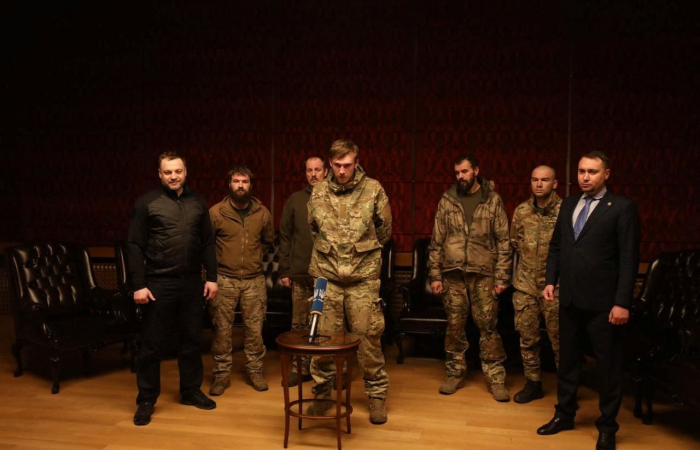
In a surprise move, Russia and Ukraine on the night from Wednesday to Thursday (22 September) implemented the biggest prisoner exchange since the start of the war between them in February Russia released over a hundred captured Ukrainian fighters in a prisoner exchange, including fighters from the Azov battalion.  In numerical terms, the prisoner swap represents a major victory for Ukrainian morale. Among others, Ukraine got back three commanders who led the last Ukrainian resistance in the port city of Mariupol and over 100 more members of the battalion. A total of 215 Ukrainians have been released. Among them are policemen, border guards, soldiers and pregnant fighters. In a seperate move ten foreigners who were fighting for the Ukrainian side and were captured by the Russians, were released thanks to the mediation of Crown Prince Mohamed bin Salman of Saudi Arabia.
Editor's choice
Commentary
Commentary: Putin’s partial mobilisation exposes how weak he really is

Commentary: Putin’s partial mobilisation exposes how weak he really is

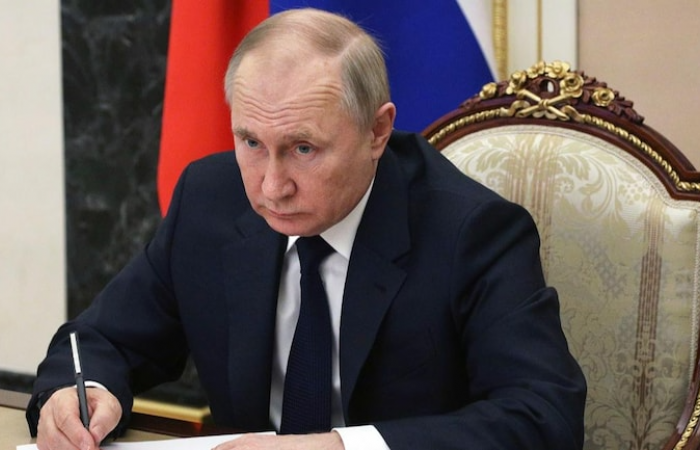
Speaking in a pre-recorded speech that was originally scheduled for the evening before, Russian President Vladimir Putin announced on Wednesday morning (21 September) a partial mobilisation of 300,000 reservists to boost his faltering invasion of Ukraine. Far from being a demonstration of strength, however, his announcement exposes how weak a position Russia currently finds itself in, and on a number of levels too, writes commonspace.eu Deputy Editor Patrick Norén. The Russian President finds himself hamstrung across three fronts: his narrative of "everything is going according to plan" is imploding; the risks of doing nothing or declaring a full mobilisation have resulted in an unsatisfactory fudge that does not address the root cause of the problem; and Russia's far-right, furious at the disastrous invasion of Ukraine, is baying for blood.
Editor's choice
News
Russia mobilises 300,000 reservists in a desperate effort to reverse setbacks in Ukraine

Russia mobilises 300,000 reservists in a desperate effort to reverse setbacks in Ukraine

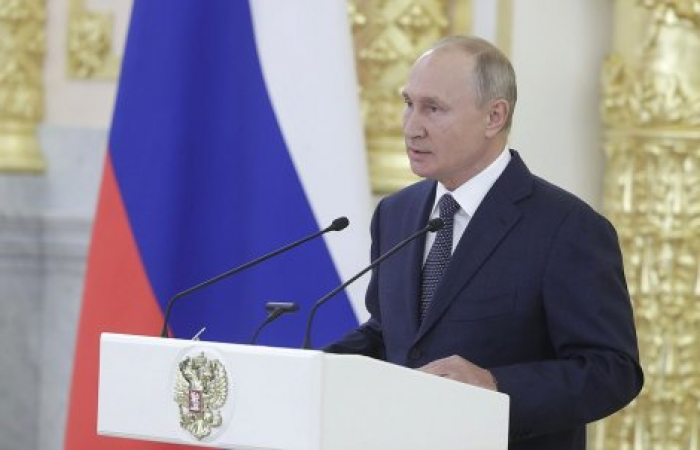
Russian president Vladimir Putin has ordered a partial mobilisation as part of an effort to boost its military effort in Ukraine. Putin made the announcement during a pre-recorded television speech which was first scheduled to be aired on Wednesday evening, but was eventually delayed until Thursday morning. After the speech was aired, Russia's defence minister, Sergei Shoigu gave further details on the partial military mobilisation, saying 300,000 reservists will be conscripted into the armed forces. Sergei Shoigu said that number represented a small fraction of Russia's available resources, while students and those who had already served as conscripts would not be called up. He said all those being conscripted would be given military training before being sent to Ukraine. In his speech Vladimir Putin said the decision, which followed the announcement of referendums to pave the way for the formal annexation of swathes of Ukraine, is meant to "protect our Motherland and our territorial integrity." Claiming the West was threatening Russia with nuclear weapons, Mr Putin said: "We have lots of weapons to reply - it is not a bluff."
Editor's choice
News
Russia attacks power stations and civilian infrastructure in Ukraine

Russia attacks power stations and civilian infrastructure in Ukraine

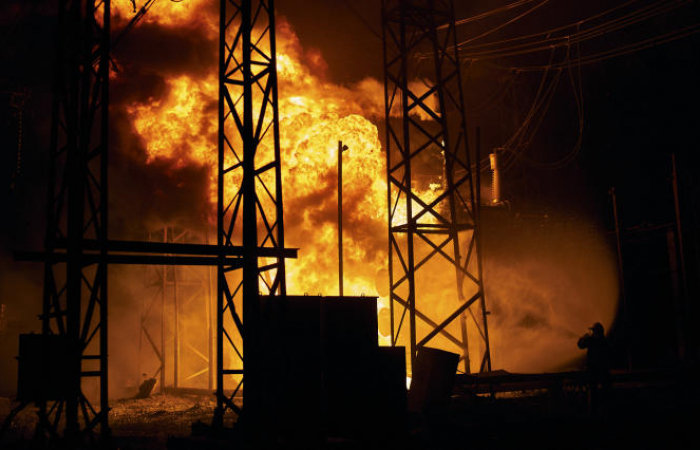
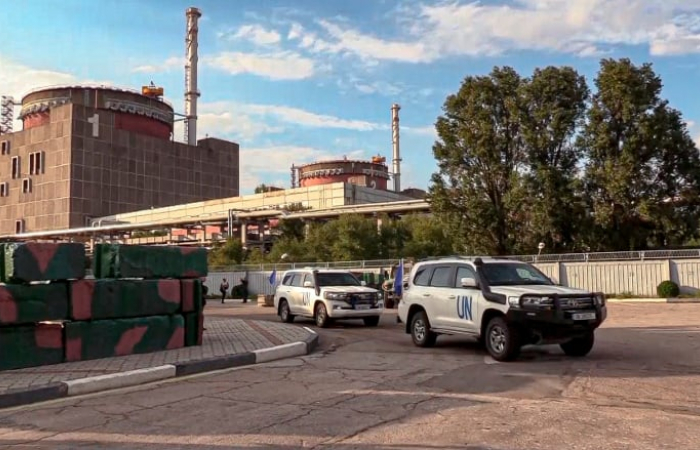
Russia attacked power stations and other civilian infrastructure in Ukraine on Sunday (11 September), causing widespread outages across the country as Kyiv’s forces pressed a swift counteroffensive that has driven Moscow’s troops from large swaths of territory it had occupied in the northeast. The bombardment ignited a massive fire at a power station on Kharkiv’s western outskirts and killed at least one person. President Volodymyr Zelensky denounced the “deliberate and cynical missile strikes” against civilian targets as acts of terrorism. Ukraine’s second-largest city of Kharkiv appeared to be without power Sunday night. Cars drove through darkened streets, and the few pedestrians used flashlights or mobile phones to light their way. Separately, the Zaporizhzhia Nuclear Power Plant in the Russia-occupied south completely shut down in a bid to prevent a radiation disaster as fighting raged nearby.
Editor's choice
News
Ukrainian army makes advances liberating big chunks of territory

Ukrainian army makes advances liberating big chunks of territory

Ukrainian forces have liberated over 2,000 sq km (772 sq miles) of territory from Russian occupation in a rapid counter-offensive in eastern Ukraine. Ukraine's rapid advance saw troops enter the key towns of Izyum and Kupiansk on Saturday, although fighting continues in the vicinity of the towns. Officials in Kyiv said Ukrainian forces were still fighting to gain control of a number of settlements around Izyum, while adding that more than 30 towns and villages have been retaken in the Kharkiv region. Russia's defence ministry confirmed its forces' retreat from Izyum itself and Kupiansk, which it said would allow its forces "to regroup" in territory held by Moscow-backed separatists. The Russian ministry also confirmed the withdrawal of troops from a third key town, Balaklyia, in order to "bolster efforts" on the Donetsk front. Ukrainian forces entered the town on Friday. Meanwhile, the head of the Russia-installed administration in the Kharkiv region recommended that its people evacuate to Russia "to save lives".