Region

Ukraine and Eastern Europe

Stories under this heading cover Ukraine and Eastern Europe. 

Editor's choice
News
Council of Europe launches new International Claims Commission for Ukraine

Council of Europe launches new International Claims Commission for Ukraine

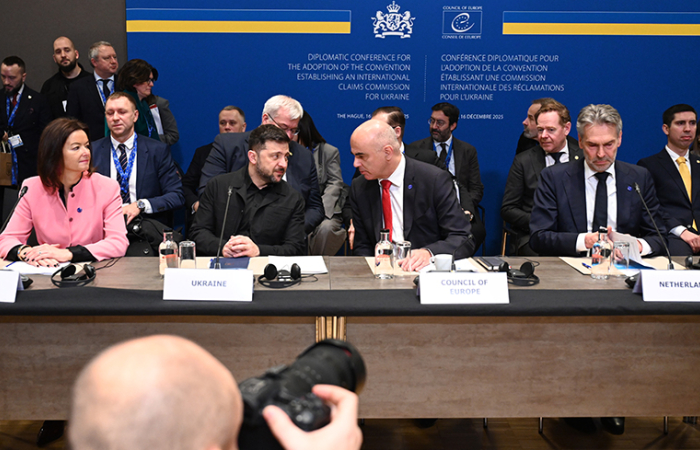
Thirty-four countries and the European Union have signed a new convention establishing an International Claims Commission for Ukraine at a diplomatic conference co-hosted by the 46-nation Council of Europe and the Netherlands in the Hague. The diplomatic conference was attended by leaders and high-level representatives from over 50 states, including the President of Ukraine, Volodymyr Zelenskyy, the President of the Republic of Moldova, Maia Sandu, and the Prime Minister of the Netherlands, Dick Schoof.  “Today marks a major step forward in ensuring accountability for Ukraine. The International Claims Commission represents justice and hope for tens of thousands of victims—our determination that those who have suffered will not be forgotten. I call for quick ratifications so we can get the commission rapidly up and running for the people of Ukraine,” said Council of Europe Secretary General Alain Berset. Ukrainian President Volodymyr Zelenskyy said: “We expect that every mechanism for compensation from the Register of Damage and Claims Commission to the actual payments – will start working and receive strong and sufficient international support, so that people can truly feel that any kind of damage caused by the war can be compensated. This war, and Russia’s responsibility for it, MUST become a clear example – so that others learn not to choose aggression.” “Accountability is about creating the conditions for peace that endures. And therefore, accountability is a condition of security – today and for the future. But accountability is not only about Ukraine. And it is not only about one aggressor and one victim. Accountability is about Europe. About every country in Europe. It is about whether Europe, as a whole, is willing to defend its peace,” said Maia Sandu, President of the Republic of Moldova, which currently holds the Presidency of the Council of Europe’s Committee of Ministers. The Prime Minister of the Netherlands, Dick Schoof, said: “Every day Russia is deliberately bombarding homes, destroying businesses and damaging infrastructure in Ukraine. Russia must compensate Ukraine for the damage caused. That is why we have launched the International Claims Commission for Ukraine and we are honoured to host it.” The International Claims Commission will be the second part of a comprehensive compensation mechanism related to Russia’s war of aggression, building on the existing Register of Damage for Ukraine. The claims commission will be established within the framework of the Council of Europe and will also be open to other countries. The Register of Damage for Ukraine, created in 2023, collects and records compensation claims submitted by individuals, organisations and public bodies in Ukraine. Forty-four states and the European Union have so far joined the Register, which has already received 86,000 claims. The International Claims Commission will review, assess and decide upon claims submitted to the Register of Damage for Ukraine and determine the amount of compensation, if any, which is due in each case. The convention establishing the commission will enter into force once it has been ratified by 25 signatories, as long as sufficient funds have been secured to support its initial work.

Filter archive

Publication date
Editor's choice
Monday Commentary
Opinion: Preparing for the worst, whilst working to avoid it

Opinion: Preparing for the worst, whilst working to avoid it

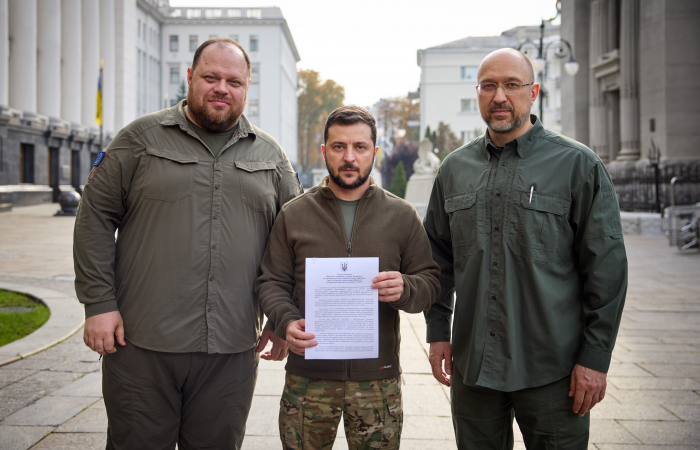
Putin’s annexation of parts of Ukraine takes the world to the verge of War, but a stronger and more united global condemnation of Russian aggression can still make Putin step back. Monday Commentary is back. Every Monday, commonspace.eu Managing Editor, Dennis Sammut discusses a hot topic on the European and international agenda. This week he weighs the implications of Russia’s annexation of parts of Ukraine, and the dilemma it poses to the rest of the world. He argues that it takes the world to the verge of a world war involving nuclear-armed states. But this can still be avoided if there is more global unity in condemnation of the Russian aggression.
Editor's choice
News
All together, for now

All together, for now

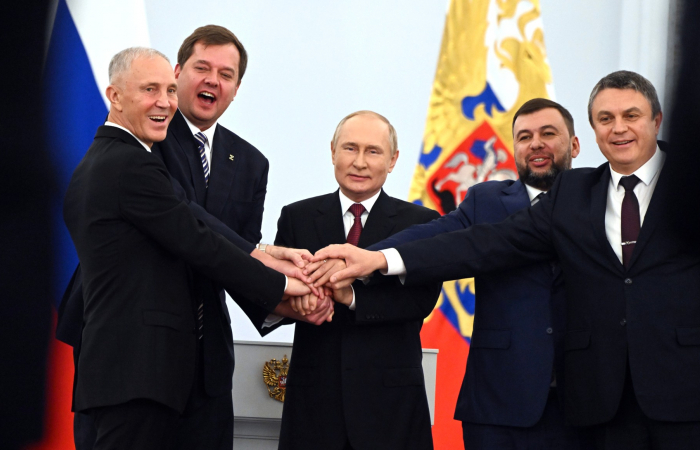
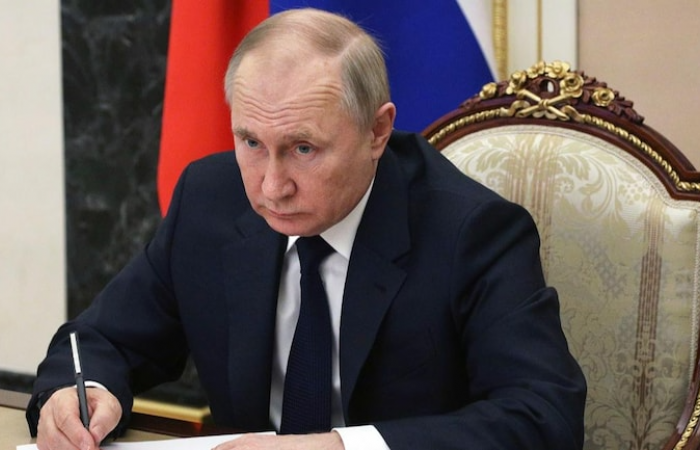
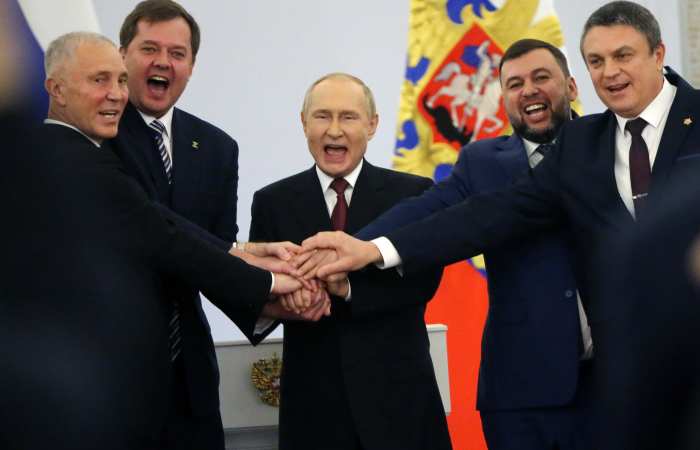
Russian President Vladimir Putin presided over a ceremony at the Kremlin on Friday, (30 September) to formally annex Donetsk, Luhansk, Zaporizhzhia and Kherson regions of Ukraine into the Russian Federation. "Congratulations! You have successfully cast your vote. I want the Kyiv authorities and their real masters in the West to hear me. People living in Luhansk and Donetsk, Kherson and Zaporizhzhia are becoming our citizens. Forever." "We call on the Kyiv regime to immediately end hostilities, end the war that they unleashed back in 2014 and return to the negotiating table. We are ready for this ... But we will not discuss the choice of the people in Donetsk, Luhansk, Zaporizhzhia and Kherson. That has been made. Russia will not betray them", Putin told an audience of dignatries in the Kremlin. The official annexation was widely expected following the votes that wrapped up on Tuesday in the areas under Russian occupation. Moscow claimed residents overwhelmingly supported that their areas should formally become a part of Russia. The EU, US and other countries have denounced the referendums as "illegal and rigged", saying they were clearly orchestrated by Kremlin. United Nations chief Antonio Guterres said it was a "dangerous escalation" that would jeopardise prospects for peace.  With the formal annexation of Kherson, Zaporizhzhia, Donetsk and Luhansk, nearly 15% of Ukraine's territory will become Russian territory, for now. Ukraine and western countries have vowed never to accept the annexation.
Editor's choice
Editorial
Editorial: Lukashenko's trip to Abkhazia is another act in Putin's nefarious plan

Editorial: Lukashenko's trip to Abkhazia is another act in Putin's nefarious plan

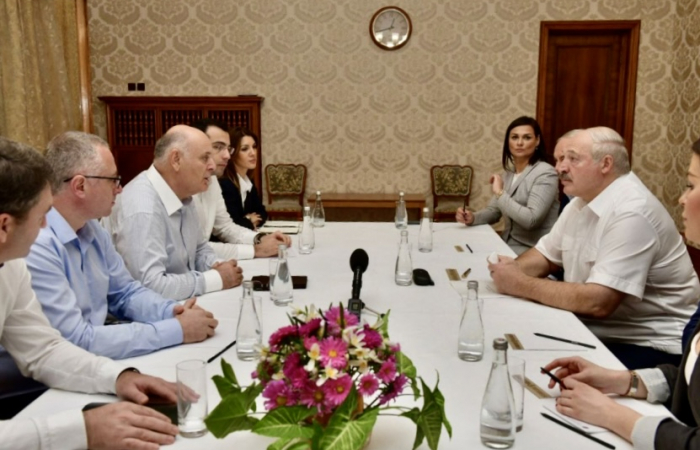
The president of Belarus, Alexandre Lukashenko, made a surprise appearance in Abkhazia on Wednesday (28 September), in a move that many see as being part of the Kremlin’s present strategy to further distabilise Eurasia to help achieve the ultimate aim, which is complete Russian hegemony on the post-Soviet Space. For sure, Lukashenko did not go to Sukhumi to have a last dip in the Black Sea before winter sets in. This was a calculated political move, typical of Lukashenko. So why did he go, and why now? Lukashenko has long been a tool of the Kremlin, not only when it comes to affairs in his own Belarus, but more broadly on the international stage. Yet he has also tried to cultivate the image of being independent-minded, not the sort to take orders from Vladimir Putin, but rather one that is able to influence the Kremlin and its policies. This visit proves that in fact he is simply a stooge.
Editor's choice
News
Biggest prisoner exchange between Ukraine and Russia, including Azov battalion fighters

Biggest prisoner exchange between Ukraine and Russia, including Azov battalion fighters

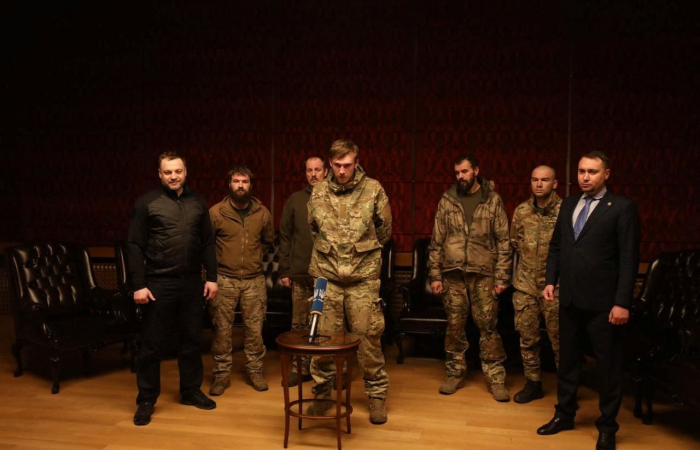
In a surprise move, Russia and Ukraine on the night from Wednesday to Thursday (22 September) implemented the biggest prisoner exchange since the start of the war between them in February Russia released over a hundred captured Ukrainian fighters in a prisoner exchange, including fighters from the Azov battalion.  In numerical terms, the prisoner swap represents a major victory for Ukrainian morale. Among others, Ukraine got back three commanders who led the last Ukrainian resistance in the port city of Mariupol and over 100 more members of the battalion. A total of 215 Ukrainians have been released. Among them are policemen, border guards, soldiers and pregnant fighters. In a seperate move ten foreigners who were fighting for the Ukrainian side and were captured by the Russians, were released thanks to the mediation of Crown Prince Mohamed bin Salman of Saudi Arabia.
Editor's choice
Commentary
Commentary: Putin’s partial mobilisation exposes how weak he really is

Commentary: Putin’s partial mobilisation exposes how weak he really is

Speaking in a pre-recorded speech that was originally scheduled for the evening before, Russian President Vladimir Putin announced on Wednesday morning (21 September) a partial mobilisation of 300,000 reservists to boost his faltering invasion of Ukraine. Far from being a demonstration of strength, however, his announcement exposes how weak a position Russia currently finds itself in, and on a number of levels too, writes commonspace.eu Deputy Editor Patrick Norén. The Russian President finds himself hamstrung across three fronts: his narrative of "everything is going according to plan" is imploding; the risks of doing nothing or declaring a full mobilisation have resulted in an unsatisfactory fudge that does not address the root cause of the problem; and Russia's far-right, furious at the disastrous invasion of Ukraine, is baying for blood.
Editor's choice
News
Russia mobilises 300,000 reservists in a desperate effort to reverse setbacks in Ukraine

Russia mobilises 300,000 reservists in a desperate effort to reverse setbacks in Ukraine

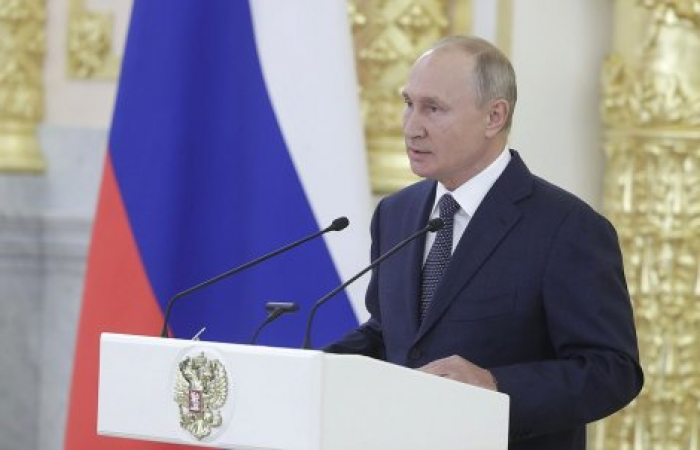
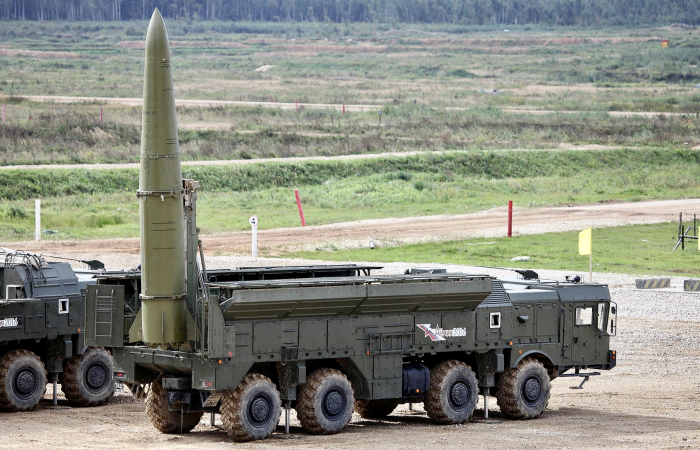
Russian president Vladimir Putin has ordered a partial mobilisation as part of an effort to boost its military effort in Ukraine. Putin made the announcement during a pre-recorded television speech which was first scheduled to be aired on Wednesday evening, but was eventually delayed until Thursday morning. After the speech was aired, Russia's defence minister, Sergei Shoigu gave further details on the partial military mobilisation, saying 300,000 reservists will be conscripted into the armed forces. Sergei Shoigu said that number represented a small fraction of Russia's available resources, while students and those who had already served as conscripts would not be called up. He said all those being conscripted would be given military training before being sent to Ukraine. In his speech Vladimir Putin said the decision, which followed the announcement of referendums to pave the way for the formal annexation of swathes of Ukraine, is meant to "protect our Motherland and our territorial integrity." Claiming the West was threatening Russia with nuclear weapons, Mr Putin said: "We have lots of weapons to reply - it is not a bluff."