Region

South Caucasus

The South Caucasus – a region encompassing Armenia, Azerbaijan and Georgia - is one of strategic importance, not only for adjacent countries, such as Turkiye, Russia, Iran and the Central Asian states, but also for neighbours such as the European Union and the GCC states, and globally for the United States, India, China, Pakistan and Japan.

commonspace.eu team brings decades of experience of working in the South Caucasus and we are pleased to share our insights with our loyal readers through the website, and the sister newsletter, Caucasus Concise.

Filter archive

Publication date
Editor's choice
Commentary
Commentary: Georgia is in a hole, and its politicians must stop digging

Commentary: Georgia is in a hole, and its politicians must stop digging

"The Georgian people have over a long period of time expressed their desire to be part of the European family," writes the commonspace.eu editorial team. "Georgia is situated in a difficult neighbourhood, with predators, such as Vladimir Putin’s Russia, as neighbours. Europe and the broader west need to support Georgia in this difficult moment. But first, Georgian politicians need to step back and defuse the current crisis...in a move that surprised even its own supporters, Georgian Dream came up with the idea of a law on foreign funding for NGOs and media and others, popularly known as the “foreign agents” law. Regardless of the small print of the law, on which lawyers can happily argue for many years, politically this was a reckless act by the Georgian Dream government with two consequences that could have easily been predicted. First, it united a broad spectrum of political and civil society forces behind one objective – that of opposing the GD government and preventing the law from being enacted. Second, it galvanised international public opinion against the tactics of the Georgian Dream government."
Editor's choice
News
Georgian government withdraws proposed foreign agent law after second night of violent protests

Georgian government withdraws proposed foreign agent law after second night of violent protests

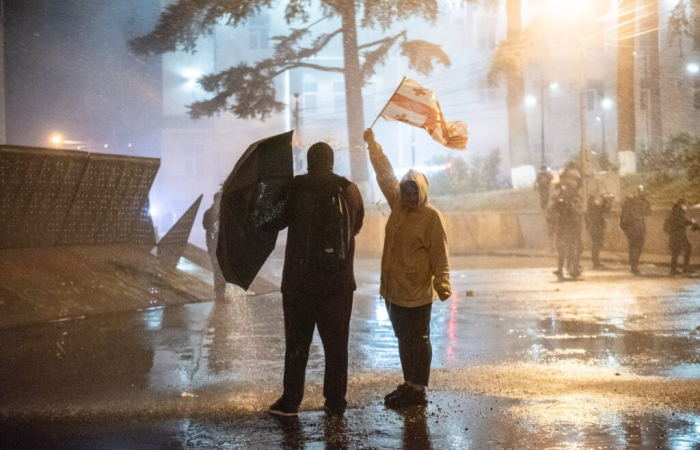
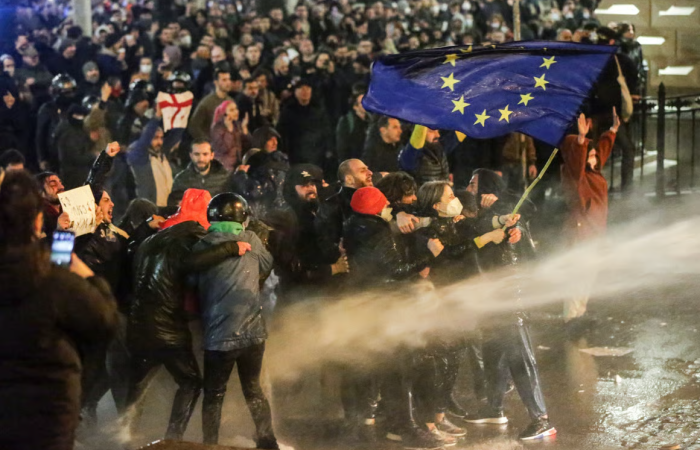
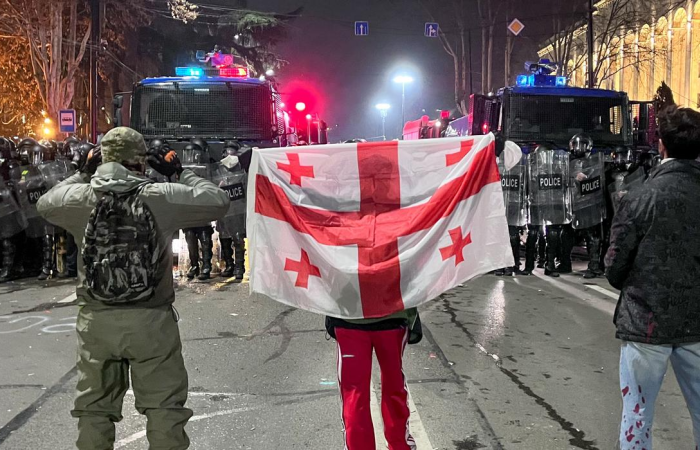
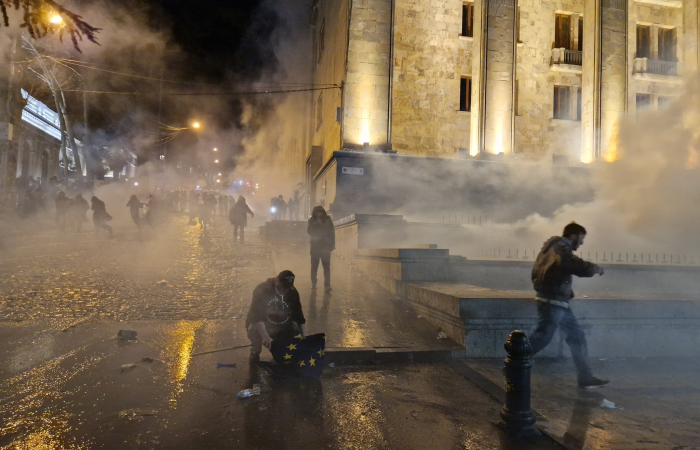
The Georgian government has announced that they have withdrawn the controversial proposed law on "foreign agents" that sparked two nights of violent protests in the capital, Tbilisi. In an announcement released on Thursday morning (9 March), the ruling Georgian Dream party, the People's Power movement that introduced the law, and the parliamentary majority said: “We, as an authority responsible to every member of society, have decided to unconditionally withdraw the bill we supported without any reservations.” The announcement comes after a second night of violent protests on Tbilisi's central Rustaveli Avenue outside the parliament building, that saw riot police deploy huge quantities of tear gas, water cannon, protesters blocking access to parliament, building barricades, smashing windows, and destroying and burning cars. Dozens of protesters were also arrested. The proposed law was particularly controversial because of its similarity to a law passed in Russia in 2012 that has been used to clamp down on civil society and stifle opposition, and Tbilisi in particular is known for its vibrant civil society.
Editor's choice
News
Turmoil in Tbilisi as thousands protest against foreign agent law

Turmoil in Tbilisi as thousands protest against foreign agent law

Tbilisi's central Rustaveli Avenue was in turmoil last night (7-8 March) as thousands came out to protest against a proposed foreign agent law that had been backed in parliament earlier on 7 March. It was the second day of large protests in the Georgian capital over the proposed law, with a large group having gathered at the back of the parliament building on Monday (6 March) as the law was debated in parliamentary committee meetings, which themselves led to scuffles between parliamentarians. Yesterday's protests in Tbilisi grew in size as the sun set, and riot police were deployed to control the protesters whereupon scuffles between them began. Protesters waved EU and Georgian flags, the EU and Ukrainian national anthems were also heard, and protesters chanted anti-government slogans. Riot police employed increasing force to disperse the protesters, including using water cannon and large amounts of tear gas. Some protesters were seen falling on the ground and coughing, and journalists on the ground also reported choking and being unable to breathe because of the quantity of tear gas used against the protesters. The government says several policemen were hurt and police gear was damaged.
Editor's choice
News
Armenian and Azerbaijani experts discuss transboundary water dialogue in Tbilisi

Armenian and Azerbaijani experts discuss transboundary water dialogue in Tbilisi

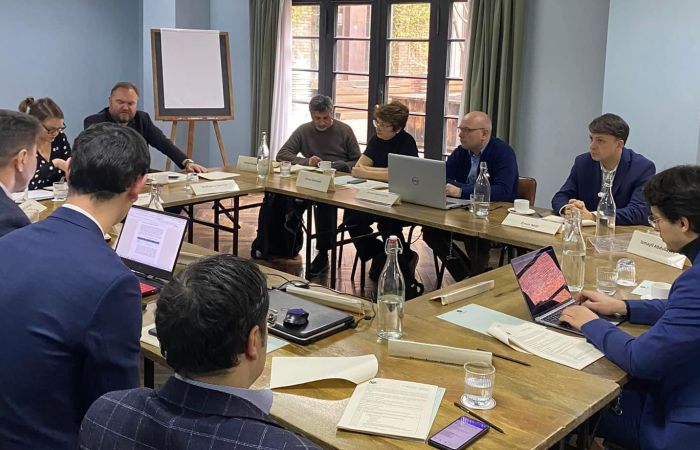
An event on water dialogue between Armenian and Azerbaijani experts is taking place today in Tbilisi, Georgia, on Monday (6 March). In a Facebook post, Emin Milli, the Founder and Chairman of Restart Initiative and the Co-Founder of Daha Yaxşı, Restart Initiative's media project, revealed that the focus of the meeting is to establish what are the key challenges to Internal Water Resources Management at the bilateral transboundary basin level, and to explore potential areas of mutual interest and cooperation between Armenia and Azerbaijan. It is the third dialogue in the "Economic Connectivity: Armenia-Azerbaijan Dialogue Series" organised by the Restart Initiative in cooperation with the Hertie School, and sponsored by the United States of America. There will be a series of interviews with the participants of the dialogue published by Daha Yaxşı both this and next week. In today's meeting, one of the participants said, "we all will be losers if we don’t cooperate."
Editor's choice
News
Georgian MPs resume discussions on foreign agent law amid protests and scuffles

Georgian MPs resume discussions on foreign agent law amid protests and scuffles

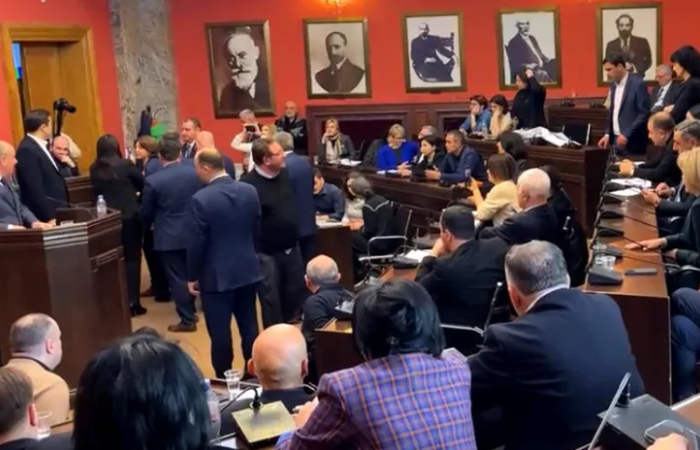
Georgian MPs have resumed discussing a draft law on "foreign agents" amid large protests in Tbilisi and even scuffles between politicians inside the committee room. The draft law was introduced on 14 February by a group of pro-government MPs who formally left the ruling Georgian Dream party last year. During discussions on Monday (6 March), a large crowd gathered at the back of the Georgian parliament to protest against the proposed law. According to OC Media journalist Mariam Nikuradze who was at the protest, protesters chanted "Russians", waved EU and Georgian flags, some taped their mouths shut, and one threw eggs at the building. Inside parliament, some opposition MPs were removed from the sitting of the Parliamentary Committee on Legal Affairs after physical confrontation between lawmakers. The chairman of the committee, Anri Okhanashvili, requested the removal of several deputies from the hall due to shouting from their seats. This then led to the chairman of the United National Movement Levan Khabeishvili physically confronting Orkhanashvili, leading to larger scuffles. Later, Salome Samadashvili, Khatuna Samnidze and Tamar Kordzaia were also removed from the sitting, having previously been warned about disruption by the chairman, according to reports.