Region

South Caucasus

The South Caucasus – a region encompassing Armenia, Azerbaijan and Georgia - is one of strategic importance, not only for adjacent countries, such as Turkiye, Russia, Iran and the Central Asian states, but also for neighbours such as the European Union and the GCC states, and globally for the United States, India, China, Pakistan and Japan.

commonspace.eu team brings decades of experience of working in the South Caucasus and we are pleased to share our insights with our loyal readers through the website, and the sister newsletter, Caucasus Concise.

Editor's choice
Opinion
Opinion: A sustainable peace requires consistent long-term European involvement

Opinion: A sustainable peace requires consistent long-term European involvement

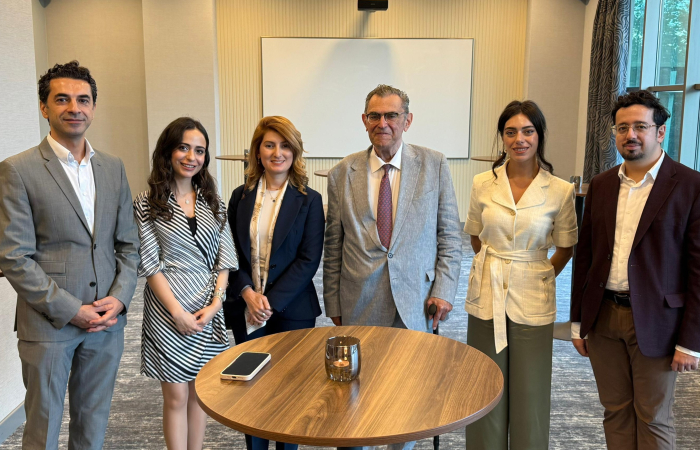
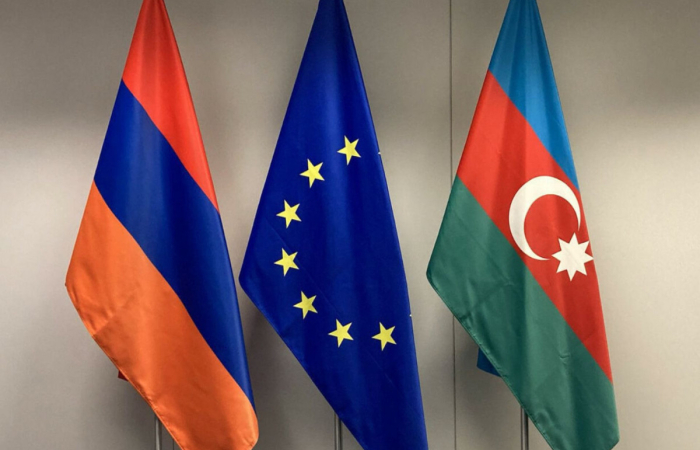
There is no denying that the EU, especially key member states acting in support, helped bring Baku and Yerevan closer to the Washington Declaration of August 8, 2025. But a declaration is not a treaty. Turning principles into a peace deal and eventually to a sustainable peace requires consistent long-term European involvement, writes Yalchin Mammadov in this-op-ed for commonspace.eu Before facilitating trust between Armenia and Azerbaijan, the EU is first expected to address its own credibility gap with Baku. A more balanced approach—such as including Azerbaijan, alongside Armenia, in the European Peace Facility—could be a useful first step. Diplomats can negotiate peace; societies must build peace. In this context, the EU can do what it does the best: long-term societal engagement. By expanding youth and academic exchange programmes, investing in cross-border civil society initiatives, and fostering people-to-people cooperation, Brussels can help shape a new generation equipped to sustain peace beyond political cycles. Such tools are slow and unglamorous, but if ignored, even the strongest treaty risks collapse. And obviously, these aspects require two-way engagement and genuine willingness by both governments to facilitate contact. If Brussels wants to remain influential, it needs to replace outdated one-size-fits-all policies with ambitious, interest-driven and differentiated approaches. Without a clear regional strategy, which appears to be the current situation, the South Caucasus will continue to sit at the margins of Europe’s security architecture—leaving space for other powers to take the lead. (You can read the op-ed in full by clicking the image.)
Editor's choice
Event
LFSC25: Yerevan meeting focuses on issues of landmines and remnants of war in Armenia and the South Caucasus

LFSC25: Yerevan meeting focuses on issues of landmines and remnants of war in Armenia and the South Caucasus

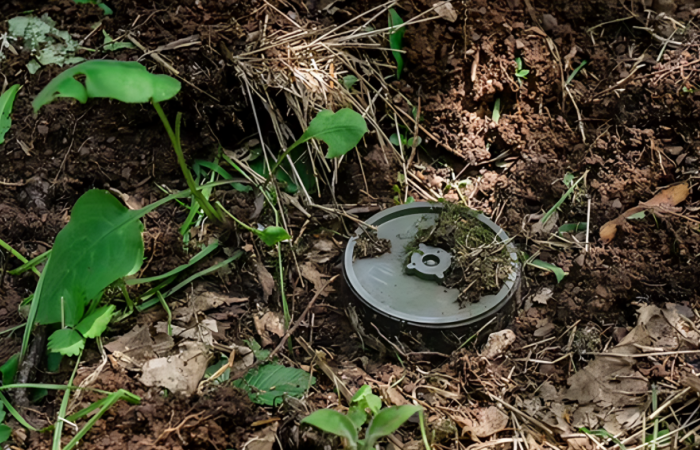
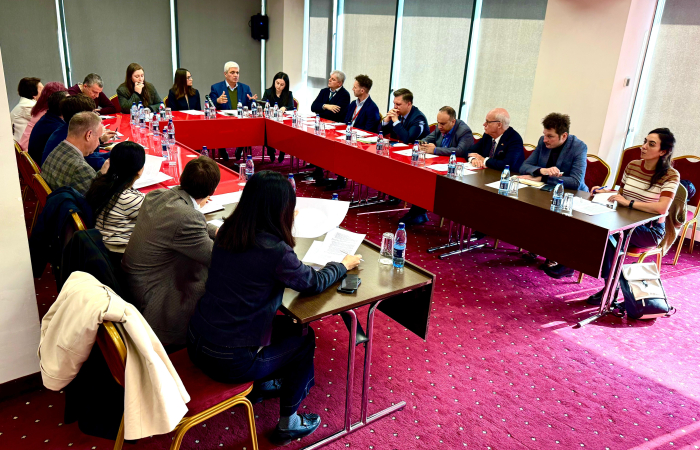
The meeting titled “The residue of conflict: Landmines and other remnants of war in the South Caucasus, and its victims” was held in Yerevan, Armenia, on Monday, 24 November 2025, in the framework of the 2025 regional campaign "Landmine Free South Caucasus" (LFSC25). Addressing the meeting, Mr Stepan Grigoryan, Chairman of the Armenian Analytical Center on Globalisation and Regional Cooperation, emphasized that the problem of landmines is mutual, and it exists in both Armenia and Azerbaijan. He argued that it is important in the peace process to address the humanitarian issues caused by landmines. In addition, he also stressed that it is important for experts to have conversations on the topic of demining, as often it is experts who begin the process that can then be taken further by governments. Stepan Grigoryan said he was happy to be collaborating with LINKS Europe on this important issue, and was glad to associate himself with the LFSC 25 appeal. Anahit Poghosyan, Adviser to the Secretary of the RA Security Council also spoke at the event. Ms Anahit Poghosyan said that the problem of landmines exists in Armenia, and that already around 800 people have been injured or killed due to landmine contamination. The border regions are highly affected, and around 200000 people live in proximity of contaminated areas. She stressed that landmine contamination is an important issue to solve. In addition, she added that Armenia remains committed to humanitarian principles and that experts have been involved in checking the contamination maps to ensure reliability. She ended on an important note that landmines undermine peace and development and pose a grave humanitarian situation in the region. (read more by clicking the image)

Filter archive

Publication date
Editor's choice
News
 European Court of Human Rights orders Russia to compensate Georgia for violations committed after 2008 war

European Court of Human Rights orders Russia to compensate Georgia for violations committed after 2008 war

The European Court of Human Rights (ECHR) has ordered Russia to pay Georgia over €250 million for violations committed after the brief war between the two countries in 2008. Russia has stated that it will not comply with the decision of the ECHR. The Court decided on Tuesday 14th October that Russia had stopped people from crossing freely into Abkhazia and South Ossetia, Georgian regions that Moscow recognised as independent after the 16-day war. According to the Court, Russia committed violations including excessive use of force, ill-treatment, unlawful detention and unlawful restrictions on day-to-day movement across the administrative boundary line between Georgian-controlled territory and the Russian-backed breakaway regions.
Editor's choice
News
Ruling party in Georgia secures tense local election victories as EU expresses concern on democratic process

Ruling party in Georgia secures tense local election victories as EU expresses concern on democratic process

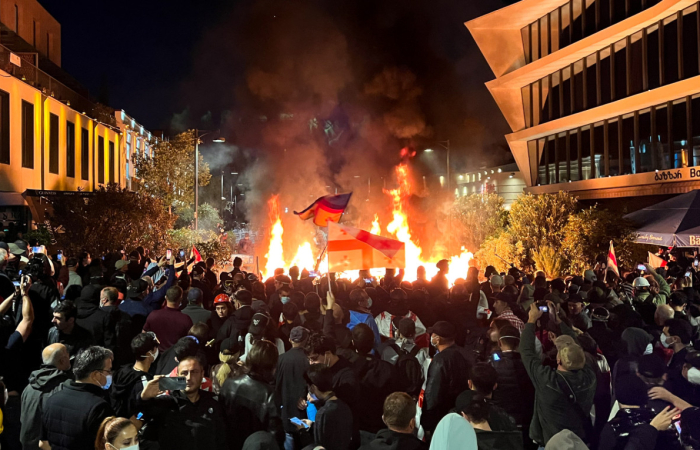
Candidates of the ruling Georgian Dream party have won local elections held on 4 October in all five self-governing cities namely Tbilisi, Rustavi, Kutaisi, Batumi, and Poti based on preliminary results released by the Central Election Commission. The results appear to consolidate the ruling party’s control over Georgia’s largest municipalities amid a backdrop of political tension and opposition boycotts of the local elections.
Editor's choice
News
Almaty Summit advances reforms to strengthen the Trans-Caspian transport route

Almaty Summit advances reforms to strengthen the Trans-Caspian transport route

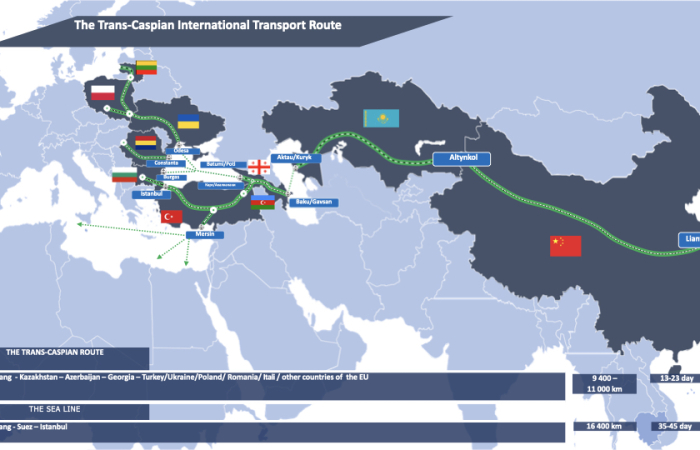
On Wednesday (1 October), Almaty hosted a high-level summit attended by delegations from Azerbaijan, Georgia, Kazakhstan, and Turkey to coordinate measures to improve the Trans-Caspian International Transport Route (TITR), also known as the Middle Corridor. The meetings produced a series of agreements intended to streamline logistics, boost infrastructure, and unify tariff policies along the corridor.
Editor's choice
Opinion
From Frozen Ties to Open Skies: Turkish Airlines to Connect Armenia and Türkiye

From Frozen Ties to Open Skies: Turkish Airlines to Connect Armenia and Türkiye

“Welcome to Armenia,” the pilot’s voice came over the tannoy as the Turkish Atlasjet flight touched down in Yerevan some time in 2011. “The temperature outsider is…” A normal announcement on any flight. This one, however, came in Turkish before being repeated in English. In Armenia. That was 14 years ago now. Despite the lack of diplomatic relations between the two countries, the flights have existed for years albeit with some interruptions and later operated by Pegasus and Flyone.
Editor's choice
Opinion
Opinion: Clearing landmines in the South Caucasus is key to peace and regional cooperation

Opinion: Clearing landmines in the South Caucasus is key to peace and regional cooperation

On 1 September 2025, LINKS Europe launched the regional campaign 'Landmine Free South Caucasus 2025'.While the world's attention is focused on new conflicts and crises, and some countries have withdrawn from the Ottawa Treaty due to heightened security concerns, the South Caucasus remains trapped by the deadly remnants of wars, some fought decades ago, others more recent. Although recent months have seen breakthroughs in relations between Armenia and Azerbaijan, suggesting that sustainable peace is within reach, landmines and unexploded ordnance (UXO) continue to pose a daily threat in the region and remain a contentious issue in relations. They claim innocent victims, hinder economic development, and cause ecological damage.
Editor's choice
News
Azerbaijani members of thematic groups for dialogue with Armenians briefed, as work on five final reports continues in earnest

Azerbaijani members of thematic groups for dialogue with Armenians briefed, as work on five final reports continues in earnest

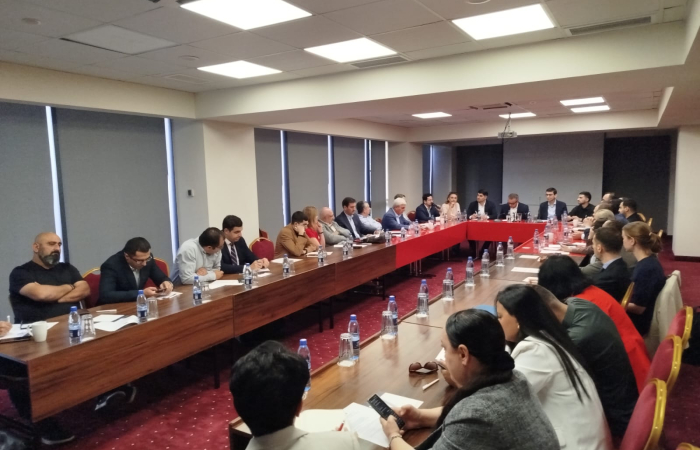
On Friday, (26 September) there was another amazing event in the process of Armenia-Azerbaijan dialogue, this time in Baku. Around twenty five Azerbaijanis involved in five thematic groups established by LINKS Europe earlier this year were briefed by Murad Muradov, co-Chair of the thematic group on Peace and Security; Liman Namazova, Chair of the thematic group on Environment; Lala Jumayeva, Chair of the thematic group on gender and diversity; Nigar Gurbanli, Deputy Chair of the thematic group on regional connectivity; and Ramazan Samadov, Deputy Chair of the thematic group on Governance, on the work done so-far. Murad Muradov spoke about his visit to Yerevan earlier in the week, and his speech to Armenian thematic group members. He said the momentum for peace, dialogue and regional co-operation was stronger than ever before. Ambassadors and other representatives of EU member states and others, as well as representatives of the EU Delegation, the EUSR office and other international institutions were in attendance. In a short speech to the gathering, LINKS Europe Director, Dr Dennis Sammut, said that enemies of peace remained active in both Armenia and Azerbaijan. Many had been warmongers for years, and it was difficult for them to change. However it was important to engage them, and have an open and honest discussion with them. The Azerbaijani members of the thematic groups are eager to meet their Armenian counterparts in person in Tbilisi 27-28 October, when they hope to finish the work on the five reports.
Editor's choice
Opinion
Five Years Later, Armenians and Azerbaijanis Need to See Each Other Differently

Five Years Later, Armenians and Azerbaijanis Need to See Each Other Differently

This Saturday marks the fifth anniversary of the Second Karabakh War. To be honest, and personally speaking, it had always seemed the continuation of the first waged between Armenia and Azerbaijan in the early 1990s. After all, in the three decades between both, the conflict had nearly always been described as ‘frozen’ rather than resolved – at least until it wasn’t.
Editor's choice
News
Thirty Armenian members of the five Armenian-Azerbaijani Thematic Groups meet in Yerevan

Thirty Armenian members of the five Armenian-Azerbaijani Thematic Groups meet in Yerevan

Yesterday (23 September) around thirty Armenians involved in the five Armenian-Azerbaijani Thematic Groups gathered in Yerevan to be briefed by Leonid Narsisian, co-Chair of the thematic group on Peace and Security; Narek Minasyan, Chair of the thematic group on regional connectivity; Sargis Harutyunyan, Chair of the thematic group on Governance; Aghavni Harutyunyan, Deputy Chair of the thematic group on Environment; and Andranik Shirinyan, Deputy Chair of the thematic group on gender and diversity. The Thematic Groups are a LINKS Europe initiative aimed at promoting a new style of Armenia-Azerbaijan dialogue, fit for the new reality. They will present their five reports in mid-November. We were delighted to welcome to the meeting in Yerevan, Murad Muradov, Azerbaijani co-Chair of the thematic group on peace and security who also spoke. Others to address the meeting included Erik Jessen, Political Officer at the EU Delegation in Armenia, Stepan Grigoryan, Senior Member of the Armenia-Azerbaijan Expert Strategic Platform (under the auspices of LINKS Europe), and Dennis Sammut, Director and George Simonishvili, South Caucasus coordinator, of LINKS Europe. It was a very good and engaging meeting, also attended by representatives of various embassies, including HE Marieke Monroy-Winter, the Ambassador of The Netherlands. A similar meeting with Azerbaijani members will take place in Baku on Friday (26 September). The Armenian and Azerbaijani members have been meeting on line since April. On 27 October they will meet together in Tbilisi to finalise their work.
Editor's choice
News
Azerbaijan and China Forge Defence Ties

Azerbaijan and China Forge Defence Ties

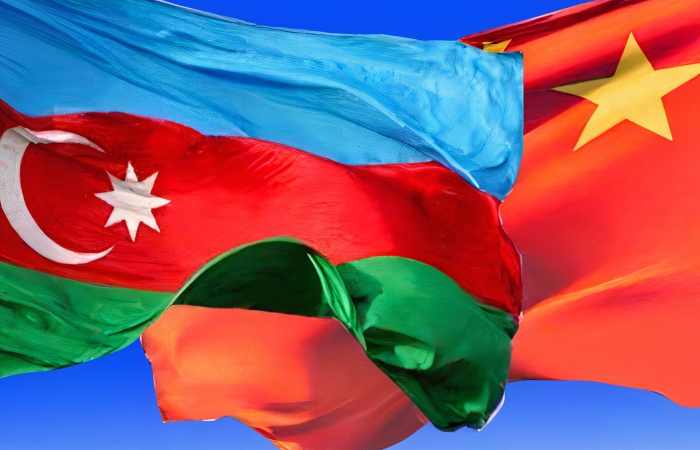
At the 12th Beijing Xiangshan Forum, which was held from Wednesday to Friday (17 - 19  September), Azerbaijan’s Defence Minister, Colonel-General Zakir Hasanov, led Baku’s delegation and held high-level discussions with his Chinese counterpart on advancing joint military capabilities.