Region

Gulf and Red Sea Regions

Stories under this heading cover the Gulf and the Red Sea regions, including the Arabian Peninsula, Iran and the countries bordering the Red Sea.

Editor's choice
Young voices
Opinion: The children of Sudan that the world forgot to see

Opinion: The children of Sudan that the world forgot to see

Sudan’s latest war began in April 2023, though the seeds of its violence were planted long before. The Sudanese Armed Forces and the Rapid Support Forces did not collide out of nowhere; they emerged from decades of political rot, unaddressed grievances, ethnic persecution, and military rule that carved deep fractures into the country’s social fabric. When fighting exploded across Khartoum and later consumed Darfur, Kordofan, and the east, it unleashed one of the worst humanitarian catastrophes of the 21st century. In this op-ed, Ioana-Maria Ungureanu, Junior Research Assistant at LINKS Europe, takes a heartfelt look at the plight of Sudan, and its children. When the latest war started, whole cities emptied. Markets burned. Families fled on foot. And a famine began tightening its grip, slow and suffocating. And yet, the world remained mostly silent. Sudanese death is too often framed as an unfortunate feature of the region, a tragedy that feels expected rather than outrageous. Even when evidence of atrocity is abundant, it fails to command the same emotional weight. Sudan should not have to beg for visibility. It deserves it. Because its people deserve to live. And their lives deserve the same respect, safety, and hope that we demand for our own. (read the op-ed in full by clicking the image above)
Filter archive

Publication date
Editor's choice
Commentary
Saudi-Iran agreement: Welcome to the age of pragmatism

Saudi-Iran agreement: Welcome to the age of pragmatism

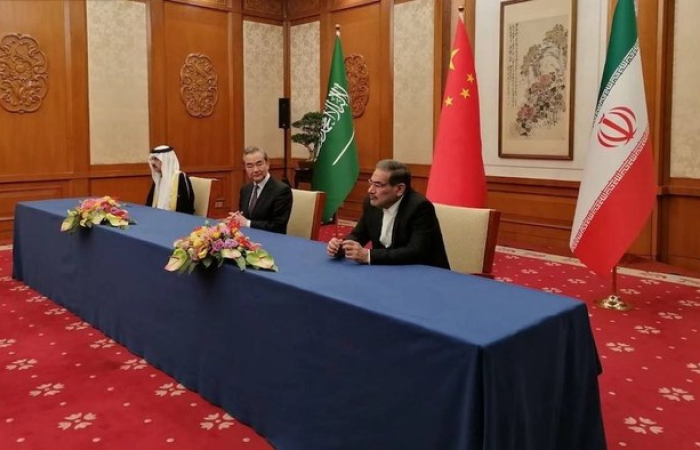
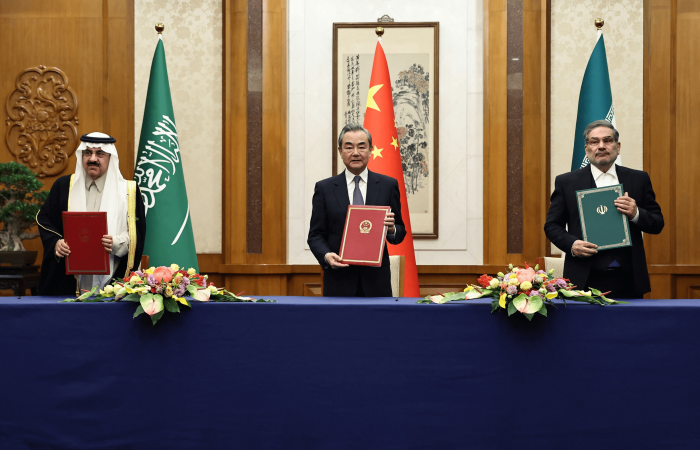
On Friday (10 March), it was announced in Beijing that with the mediation of China, Iran and Saudi Arabia had agreed to end decades of hostility, re-establish diplomatic relations that had been broken in 2016, re-open embassies in their respective capitals within two months, and work towards resolving all disputes between them through dialogue. The diplomatic world appeared taken by surprise, both by the Iranian-Saudi reconciliation, as well as by China’s involvement. The sight of a Sunni Kingdom, a Shia revolutionary republic, and a Communist state cosying together was somewhat unsettling for some. Many rushed to welcome the deal, others, especially among the chattering classes in Washington, rushed to criticise it. Diplomatic contacts have been ongoing between Tehran and Riyadh for some time, held mainly in Baghdad and Muscat with Iraqi and Omani facilitation. After the UAE normalised relations with Iran some months ago, it was assumed that sooner or later Saudi Arabia will follow. But the timing and context of the deal announced in Beijing last week remains a very significant development, with wide-ranging consequences. It also appears to herald a new age of pragmatism in international relations, with considerable implications.
Editor's choice
News
Saudi Arabia and Iran reach agreement to renew diplomatic relations

Saudi Arabia and Iran reach agreement to renew diplomatic relations

Following a meeting in Beijing, on Friday (10 March), Saudi Arabia and Iran have agreed to reestablish diplomatic relations and reopen their embassies within two months following years of tensions between the two countries. A joint statement released by the Saudi state news agency SPA read: “In response to the noble initiative of His Excellency President Xi Jinping, President of the People’s Republic of China, of China’s support for developing good neighborly relations between the Kingdom of Saudi Arabia and the Islamic Republic of Iran...the three countries announce that an agreement has been reached between the Kingdom of Saudi Arabia and the Islamic Republic of Iran." "That includes an agreement to resume diplomatic relations between them and re-open their embassies and missions within a period not exceeding two months, and the agreement includes their affirmation of the respect for the sovereignty of states and the non-interference in internal affairs of states,” the statement said.
Editor's choice
Commentary
Gulf States' position on the war in Ukraine is a work in progress

Gulf States' position on the war in Ukraine is a work in progress

When Russia launched its full-scale invasion of Ukraine one year ago the prevalent feeling among the Arab Gulf states was that they did not want to get involved.  Some thought the best policy was to ignore it, others that they should at the very least dodge it, and some even saw in it some opportunity to extend relations with Russia and China.  There were a number of reasons for this. The region was frustrated with how the west dealt with it. It expected a more equal relationship that never properly materialised. There was fatigue at western attempts – some clearly ill-judged – at interfering in the Arab region, and conversely, disappointment at western failure to stand up to Iran. The unsightly US departure from Afghanistan, and talk of American strategic re-positioning, convinced some that the American moment in the Gulf had passed.
Editor's choice
Opinion
Tourism in the Gulf is a game changer

Tourism in the Gulf is a game changer

The process of opening-up Saudi Arabia to the world is going on in earnest. As a part of the Vision 2030 blueprint, masterminded by Crown Prince Mohammed bin Salman, the Saudi government is implementing a plan, which, amongst many other things, aims to turn the Kingdom into a popular tourist destination by the end of the decade. Other GCC countries, but particularly UAE, Qatar and Oman, also seek a growth in tourism, and see the industry as one of the potential pillars for their post oil economies. In many countries, tourism is a major economic activity that contributes to economic prosperity. It is also an industry which generates revenues that quickly seep downwards to the very grassroots of society, and so everyone benefits from it. But apart from the economic and financial gains, tourism can also be an instrument of change within societies, opening up conservative, inward looking communities to the outside world. Several Arab Gulf countries have the ambition of turning themselves into major tourist destinations, and some have already considerable success. The potential is great, but there are also some risks.
Editor's choice
Monday Commentary
The free market in foreign policy on display as Xi meets the Arabs

The free market in foreign policy on display as Xi meets the Arabs

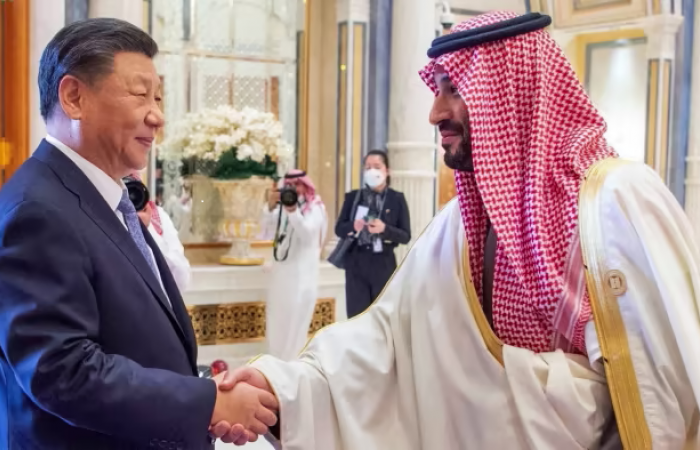
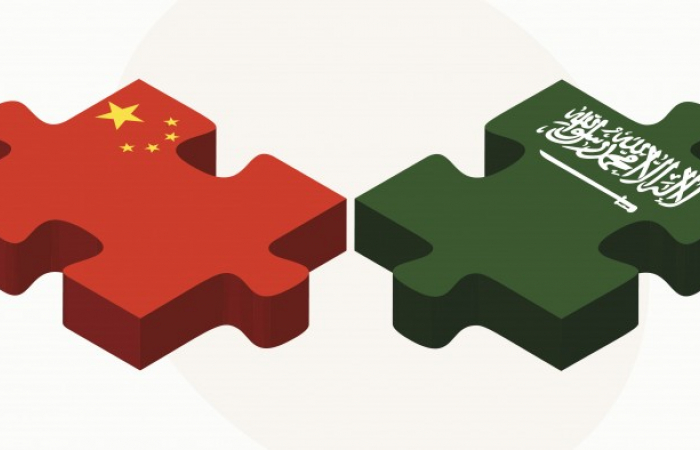
It appears that the principles of the free market now dominate the international system, not only in areas of trade, but also in defence, security and foreign policy, writes Dennis Sammut in today's Monday Commentary on commonspace.eu. Bigger countries are wooing smaller countries, unashamedly displaying their goods, and dismissing those of others. China’s president Xi was in Saudi Arabia last week, to seal China’s new partnership with the Arabs. This week, it will Joe Biden’s turn to host African leaders at the White House. "For the moment small countries are making the most out of this new free market atmosphere in the international system. But they must also keep in mind that, as in the market, demand sometimes slumps abruptly. It is at this point countries will not need just customers, but also friends."
Editor's choice
News
Xi in Saudi Arabia as China woos Gulf Arabs

Xi in Saudi Arabia as China woos Gulf Arabs

China's president Xi Jinping on Wednesday (7 December) starts a three-day visit to Saudi Arabia where he will meet Saudi and other Arab leaders in a series of summits. Three summits will take place during his trip: the Saudi-Chinese Summit, the Riyadh Gulf-China Summit for Cooperation and Development, and the Riyadh Arab-China Summit for Cooperation and Development. The participants will include more than 30 leaders and officials, highlighting the importance of the gatherings and their high regional and international profile, the Saudi Press Agency reported. Xi’s visit reflects the desire of the leaderships of Saudi Arabia and China to strengthen the bilateral relationship, enhance their strategic partnership and realize the political and economic potential it offers to serve their common interests, the SPA added. Reporting the visit, the New York Times said the trip sends a message that Beijing’s clout in the region is growing at a time when U.S. officials say that they want to make the Middle East less of a priority, focusing diplomatic and military resources on Asia and Europe.