Region

Global

Stories in this section cover various issues and stories from all around the world.

Editor's choice
News
Zelensky to meet Trump on Sunday for crucial Ukraine talks

Zelensky to meet Trump on Sunday for crucial Ukraine talks

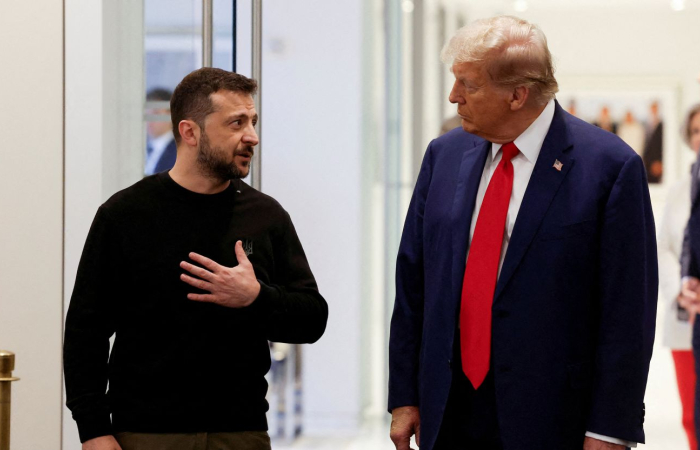
Ukrainian president Volodymyr Zelensky will meet with US president, Donald Trump, in Florida on Sunday (28 December) at 3.00 p.m. local time, in what many see as crucial talks on the future of Ukraine. Over the weekend, Russia has continued its attacks on  Ukraine, with the Ukranian air force warning that a drone and missile threat is in force for the entire country. Moscow currently controls about 75% of the Donetsk region, and some 99% of the neighbouring Luhansk.   Ukraine's president last met President Donald Trump at the White House in October Ukraine has sought to secure guarantees from the US as part of a peace deal, and Zelensky has suggested that a demilitarised "free economic zone" is a potential option for areas of Donbas that Russia has failed to take by force. On Friday, Zelensky told reporters that the 20-point plan was 90% complete: "Our task is to make sure everything is 100% ready." He wrote on social media: "We are not losing a single day. We have agreed on a meeting at the highest level – with President Trump in the near future. A lot can be decided before the new year." But in an interview with Politico, published on Friday, Trump said his Ukrainian counterpart "doesn't have anything until I approve it". "I think it's going to go good with him. I think it's going to go good with [Vladimir] Putin," Trump said. He also said he expects to speak with the Russian president "soon".

Filter archive

Publication date
Editor's choice
News
Russia isolated

Russia isolated

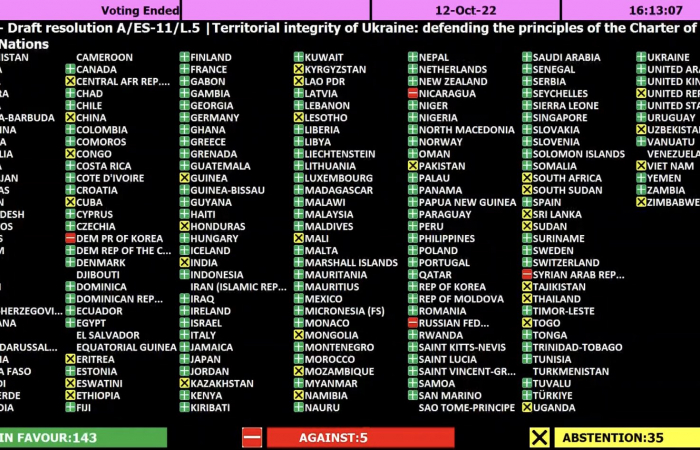
Russia found itself in the company of only four other countries at a vote at the UN General Assembly on Wednesday (12 October) which condemned its annexation of Ukrainian territory The resolution calls on all States, the UN and international organisations not to recognize any of Russia’s annexation claim and demands the immediate reversal of its annexation declaration. 143 courties supported the resolution that condemned Russia's annexations. The four countries that supported Russia were Belarus, Nicaragua, North Korea, and Syria 35 countries abstained, namely: Algeria, Armenia, Bolivia, Burundi, Central African Republic, China, Republic of the Congo, Cuba, Eritrea, Eswatini, Ethiopia, Guinea, Honduras, India, Kazakhstan, Kyrgyzstan, Laos, Lesotho, Mali, Mongolia, Mozambique, Namibia, Pakistan, South Africa, South Sudan, Sri Lanka, Sudan, Tajikistan, Tanzania, Thailand, Togo, Uganda, Uzbekistan, Vietnam, Zimbabwe. Ten countries were absent and so their vote was not recorded. They were: Azerbaijan, Burkina Faso, Cameroon, Djibouti, El Salvador, Equatorial Guinea, Iran, Sao Tome and Principle, Turkmenistan and Venezuela.
Editor's choice
News
6th CICA summit opens in Astana

6th CICA summit opens in Astana

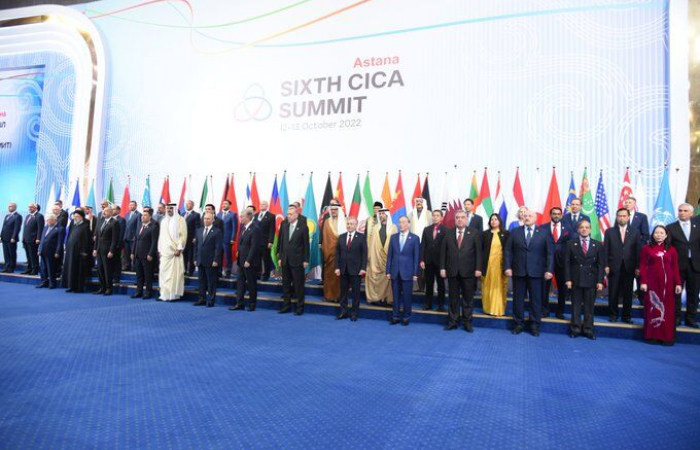
The sixth summit of the Conference on Interaction and Confidence-Building Measures in Asia (CICA) started on Wednesday (12 October) in Astana. The summit marks the 30th anniversary of CICA, and the end of Kazakhstan’s two-year chairmanship of the conference. The summit is also expected to agree the transformation of the process into a fully fledged international organisation. According to the spokesperson of the Kazakh Foreign Ministry Aibek Smadiyarov, the summit will welcome 11 heads of state, including the leaders of Azerbaijan, Iraq, Iran, Qatar, Kyrgyzstan, Palestine, Russia, Tajikistan, Turkey, and Uzbekistan. President of Belarus Alexander Lukashenko will participate as an observer and the Vice Presidents of Vietnam and China will also attend the summit. 
Editor's choice
News
G7 countries issue tough statement on Ukraine in response to Russian missile attacks against Ukrainian cities

G7 countries issue tough statement on Ukraine in response to Russian missile attacks against Ukrainian cities

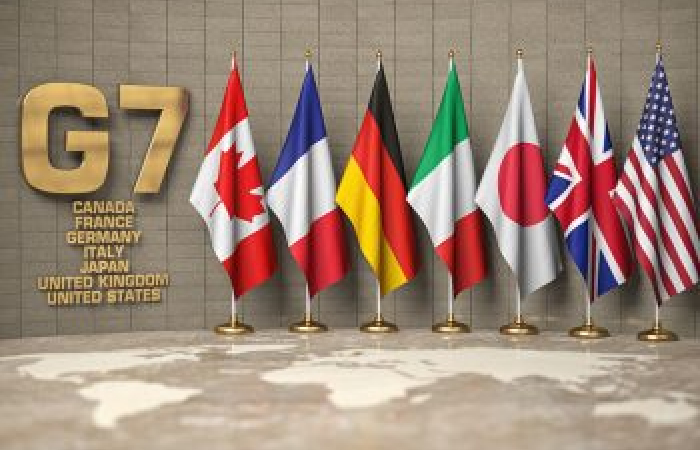
Leaders of the G7 countries (Canada, France, Germany, Italy, Japan, United States, United Kingdom, together with the European Union) met virtually in extraordinary session on Monday to discuss developments in the Ukraine situation, and particularly the recent Russian missile attacks against Ukrainian cities and civilian infrastructure. The meeting was convened by Germany which holds the current chairmanship of the Group. In a tough statement, the G7 leaders said that Russia has blatantly violated the principles enshrined in the UN Charter and called upon all countries to unequivocally reject these violations of international law and demand that Russia cease all hostilities and immediately, completely and unconditionally withdraw all of its troops and military equipment from Ukraine. The statement also had a word of warning for Russia: "We deplore deliberate Russian escalatory steps, including the partial mobilisation of reservists and irresponsible nuclear rhetoric, which is putting global peace and security at risk. We reaffirm that any use of chemical, biological or nuclear weapons by Russia would be met with severe consequences". Ukrainian president Volodymyr Zelensky also attended the virtual summit and he was assured that the G7 countries are undeterred and steadfast in their commitment to provide the support Ukraine needs to uphold its sovereignty and territorial integrity.
Editor's choice
News
Taiwanese President reiterates island's sovereignty on national day

Taiwanese President reiterates island's sovereignty on national day

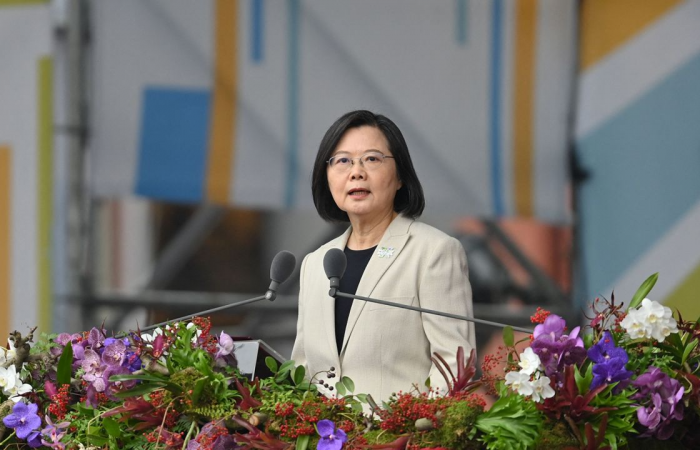
As Taiwan celebrated “Double Ten”, the island’s national day on Monday (10 October), President Tsai Ing-wen reiterated Taiwan’s sovereignty in an address to the people of Taiwan. During a ceremonial speech, President Tsai said that the Taiwanese people “must defend our national sovereignty and our free and democratic way of life. On this point, we have no room for compromise”.  Tsai Ing-wen said it was “regrettable” that China has increased its military and political presence thereby threatening peace and stability in the Taiwan Strait and region. President Tsai continued to say that they would be willing to have talks with Beijing in order to keep the peace, but only if the negotiations were conducted with “rationality, equality and mutuality”. On top of that, she emphasised that Beijing must not think there is any space for compromise in Taiwan’s commitment to democracy and freedom. 
Editor's choice
News
Pope urges Putin to stop "spiral of violence and death"

Pope urges Putin to stop "spiral of violence and death"

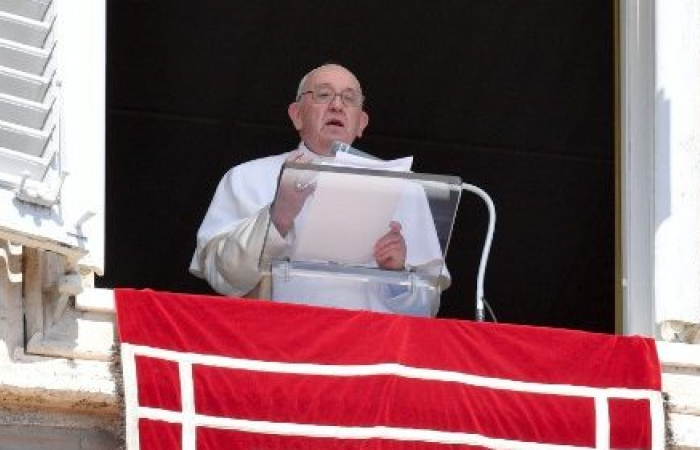
Pope Francis on Sunday (2 October) expressed concern over the nuclear threat and military escalation in the war in Ukraine, dedicating his entire Angelus address to the situation and issuing a powerful appeal for an immediate ceasefire. He deplored the annexation of Ukrainian territory by Russia, called for respect for the territorial integrity of every country and the rights of minorities. He expressed his saddness for the thousands of victims, especially children. "How much blood must still flow for us to realize that war is never a solution, only destruction? In the name of God and in the name of the sense of humanity that dwells in every heart, I renew my call for an immediate ceasefire. Let there be a halt to arms, and let us seek the conditions for negotiations that will lead to solutions that are not imposed by force, but consensual, just and stable. And they will be so if they are based on respect for the sacrosanct value of human life, as well as the sovereignty and territorial integrity of each country, and the rights of minorities and legitimate concerns", the Pope said. Pope Francis appealed to Russian President Vladimir Putin, imploring him to “stop this spiral of violence and death” in Ukraine and denounced the “absurd” risk to humanity of catastrophic nuclear war as tensions escalate.
Editor's choice
Monday Commentary
Opinion: Preparing for the worst, whilst working to avoid it

Opinion: Preparing for the worst, whilst working to avoid it

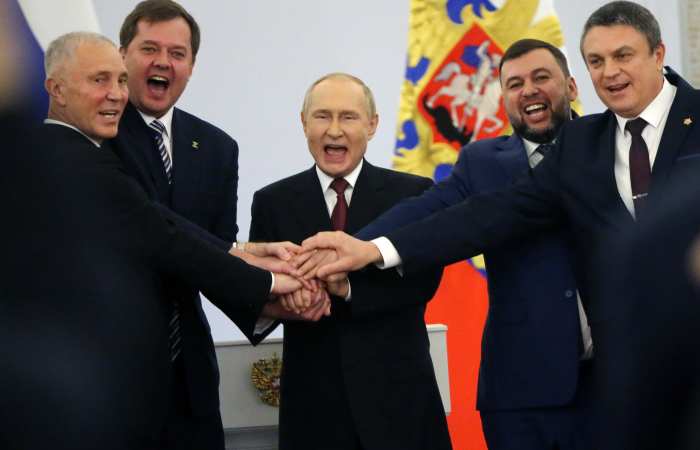
Putin’s annexation of parts of Ukraine takes the world to the verge of War, but a stronger and more united global condemnation of Russian aggression can still make Putin step back. Monday Commentary is back. Every Monday, commonspace.eu Managing Editor, Dennis Sammut discusses a hot topic on the European and international agenda. This week he weighs the implications of Russia’s annexation of parts of Ukraine, and the dilemma it poses to the rest of the world. He argues that it takes the world to the verge of a world war involving nuclear-armed states. But this can still be avoided if there is more global unity in condemnation of the Russian aggression.