Region

EU plus

Stories in this section cover the EU-27 countries plus the UK, Norway, Switzerland, Iceland, Liechtenstein, Monaco, Andorra and the Balkan Countries (Albania, Serbia, Montenegro, Bosnia-Herzegovina, Kosovo, North Macedonia).

Editor's choice
News
European leaders set out their plan for Ukraine

European leaders set out their plan for Ukraine

The leaders of Germany, Denmark, Finland, France, Italy, Netherlands, Norway, Poland, Sweden, and United Kingdom, together with the President of the European Council, and the President of the European Commission, o  Monday (15 December) issued a statement, outlining their plan for Ukraine. In their statement, Chancellor Merz, Prime Minister Frederiksen, President Stubb, President Macron, Prime Minister Meloni, Prime Minister Schoof, Prime Minister Støre, Prime Minister Tusk, Prime Minister Kristersson, Prime Minister Starmer, as well as President Costa and President von der Leyen spoke about "Peace for Ukraine". The Leaders welcomed significant progress on President Trump’s efforts to secure a just and lasting peace in Ukraine. They also welcomed the close work between President Zelenskyy’s and President Trump’s teams as well as European teams over the recent days and weeks. They agreed to work together with President Trump and President Zelenskyy to get to a lasting peace which preserves Ukrainian sovereignty and European security. Leaders appreciated the strong convergence between the United States, Ukraine and Europe. Leaders agreed that ensuring the security, sovereignty, and prosperity of Ukraine was integral for wider Euro-Atlantic security. They were clear that Ukraine and its people deserved a prosperous, independent, and sovereign future, free from fear of future Russian aggression. Both the US and European leaders committed to work together to provide robust security guarantees and economic recovery support measures for Ukraine in the context of an agreement on ending the war. This would include commitments to: Provide sustained and significant support to Ukraine to build its armed forces, which should remain at a peacetime level of 800,000 to be able to deter conflict and defend Ukraine’s territory. A European-led ‘multinational force Ukraine’ made up from contributions from willing nations within the framework of the Coalition of the Willing and supported by the US. It will assist in the regeneration of Ukraine’s forces, in securing Ukraine’s skies, and in supporting safer seas, including through operating inside Ukraine. (Click the image to read the statement in full).


Filter archive

Publication date
Editor's choice
News
Sweden leads EU effort to harden position against Israel

Sweden leads EU effort to harden position against Israel

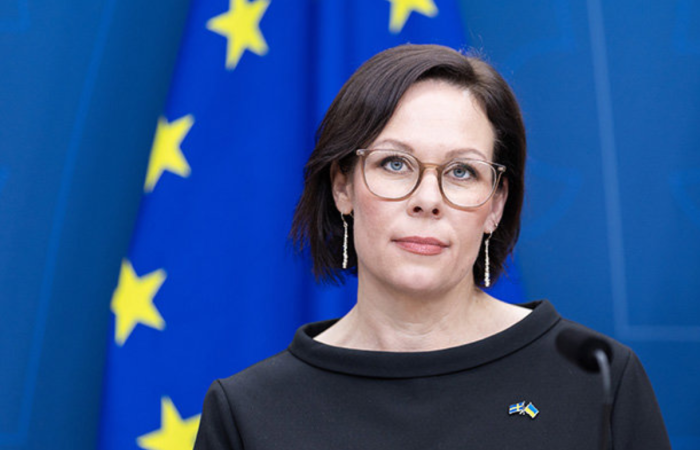
The European Union should harden its stance against Israel and follow in the footsteps of the United Kingdom and other Western allies by issuing sanctions against far-right members of Israeli Prime Minister Benjamin Netanyahu’s Cabinet, Sweden’s foreign minister told Politico. Maria Malmer Stenergard said after meeting in Brussels with Kaja Kallas, the EU’s top diplomat, that the EU now needs to take a stronger position and increase pressure on the Israeli government.
Editor's choice
News
EU Council Delegation holds Partnership talks in Kazakhstan

EU Council Delegation holds Partnership talks in Kazakhstan

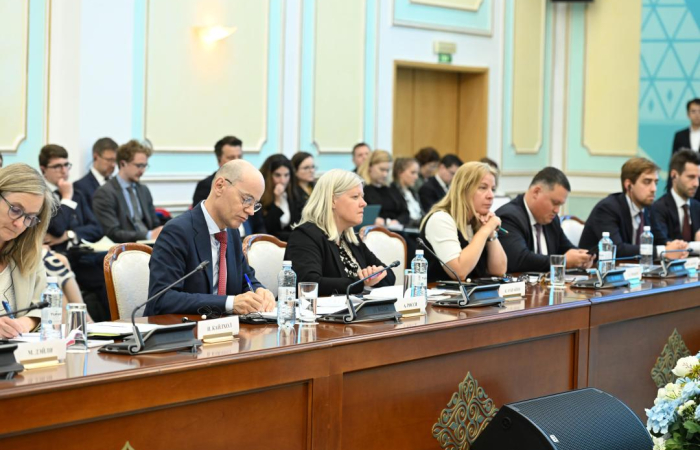
A delegation from the Council of the European Union’s Working Party on Eastern Europe and Central Asia (COEST) visited Kazakhstan on June 8-10 to hold talks with government officials in Kazakhstan. The visit, which included the cities of Aktau and Astana, was part of the practical implementation of the Enhanced Partnership and Cooperation Agreement (EPCA) between Kazakhstan and the European Union and its member states. According to the Astana Times quoting the Kazakh Foreign Ministry, the discussions demonstrated a high level of dialogue and mutual commitment aiming to strengthen the Kazakhstan-EU partnership.
Editor's choice
Opinion
The Organization of Turkic States Is Emerging as a Key Geopolitical Actor in Eurasia

The Organization of Turkic States Is Emerging as a Key Geopolitical Actor in Eurasia

The Informal Summit of the Organization of Turkic States (OTS), held on May 20-21, 2025, in Budapest, Hungary, marked a significant milestone in the organisation’s growing geopolitical influence. Hosted by Hungarian Prime Minister Viktor Orbán, the summit brought together leaders from Azerbaijan, Kazakhstan, Kyrgyzstan, Türkiye, and Uzbekistan, alongside observer states Hungary, Turkmenistan, and the Turkish Republic of Northern Cyprus. This gathering, the first OTS summit hosted by an observer state, underscored Hungary’s role as a bridge between the Turkic world and Europe, reflecting the theme “Meeting Point of East and West.”
Editor's choice
News
Russia expanding military footprint in Africa while skirting sanctions

Russia expanding military footprint in Africa while skirting sanctions

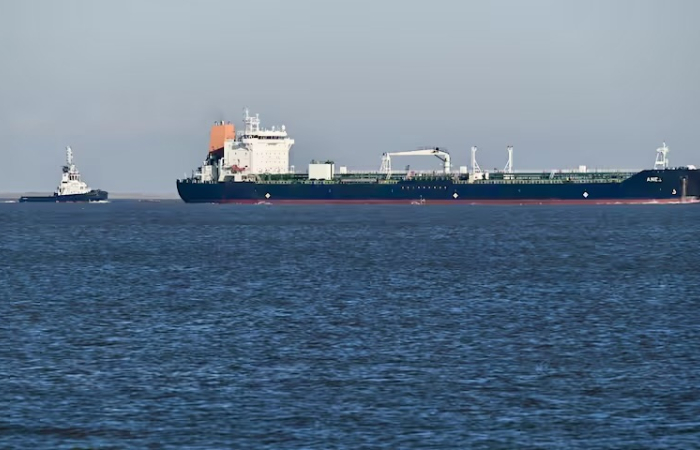
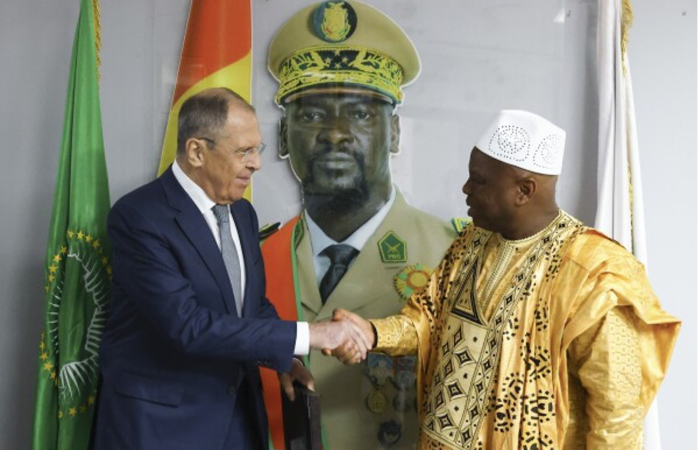
Russia is expanding its military footprint in Africa, delivering sophisticated weaponry to sub-Saharan conflict zones where a Kremlin-controlled armed force is on the rise. Skirting sanctions imposed by Western nations, Moscow is using cargo ships to send tanks, armoured vehicles, artillery and other high-value equipment to West Africa, according to the Associated Press.
Editor's choice
News
Who is Italian?

Who is Italian?

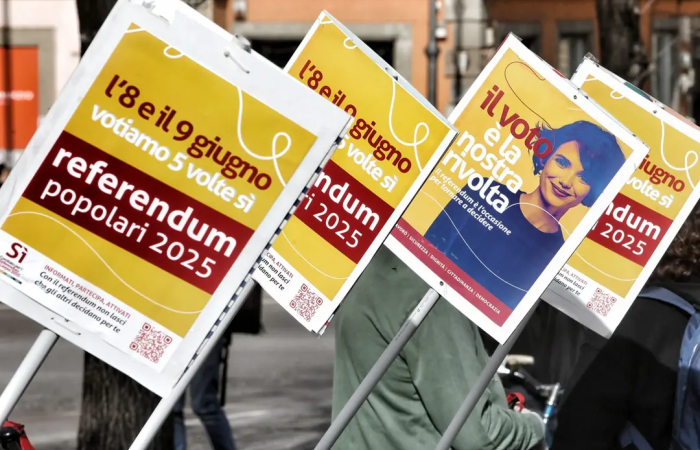
Italians go to vote on 8 and 9 June in a referendum that is dividing the nation and will help define "Who is Italian". Until the mid-19th century Italy was "a mere geographical expression", divided in small states and parts of it occupied by foreign powers. Eventually, the Italian language brought people together, and the Italian state as we know it emerged by 1871. In todays Italy, the question of who gets to be Italian is a sensitive one. Large numbers of migrants and refugees arrive in the country each year helped across the Mediterranean from North Africa by smuggling gangs. The national referendum on Sunday and Monday proposes halving the time required to apply for Italian citizenship. Cutting the wait from 10 years to five would bring this country in line with most others in Europe. The referendum was initiated by a citizens' initiative and is supported by civil society groups. But for such a referendum to be valid, 50% of all voters in Italy have to turn up. Giorgia Meloni, the country's hard-right prime minister, has announced she will boycott the vote, declaring the citizenship law already "excellent" and "very open". Other parties allied to her are calling on Italians to go to the beach instead of the polling station.