Region

EU plus

Stories in this section cover the EU-27 countries plus the UK, Norway, Switzerland, Iceland, Liechtenstein, Monaco, Andorra and the Balkan Countries (Albania, Serbia, Montenegro, Bosnia-Herzegovina, Kosovo, North Macedonia).

Editor's choice
News
European leaders set out their plan for Ukraine

European leaders set out their plan for Ukraine

The leaders of Germany, Denmark, Finland, France, Italy, Netherlands, Norway, Poland, Sweden, and United Kingdom, together with the President of the European Council, and the President of the European Commission, o  Monday (15 December) issued a statement, outlining their plan for Ukraine. In their statement, Chancellor Merz, Prime Minister Frederiksen, President Stubb, President Macron, Prime Minister Meloni, Prime Minister Schoof, Prime Minister Støre, Prime Minister Tusk, Prime Minister Kristersson, Prime Minister Starmer, as well as President Costa and President von der Leyen spoke about "Peace for Ukraine". The Leaders welcomed significant progress on President Trump’s efforts to secure a just and lasting peace in Ukraine. They also welcomed the close work between President Zelenskyy’s and President Trump’s teams as well as European teams over the recent days and weeks. They agreed to work together with President Trump and President Zelenskyy to get to a lasting peace which preserves Ukrainian sovereignty and European security. Leaders appreciated the strong convergence between the United States, Ukraine and Europe. Leaders agreed that ensuring the security, sovereignty, and prosperity of Ukraine was integral for wider Euro-Atlantic security. They were clear that Ukraine and its people deserved a prosperous, independent, and sovereign future, free from fear of future Russian aggression. Both the US and European leaders committed to work together to provide robust security guarantees and economic recovery support measures for Ukraine in the context of an agreement on ending the war. This would include commitments to: Provide sustained and significant support to Ukraine to build its armed forces, which should remain at a peacetime level of 800,000 to be able to deter conflict and defend Ukraine’s territory. A European-led ‘multinational force Ukraine’ made up from contributions from willing nations within the framework of the Coalition of the Willing and supported by the US. It will assist in the regeneration of Ukraine’s forces, in securing Ukraine’s skies, and in supporting safer seas, including through operating inside Ukraine. (Click the image to read the statement in full).


Filter archive

Publication date
Editor's choice
News
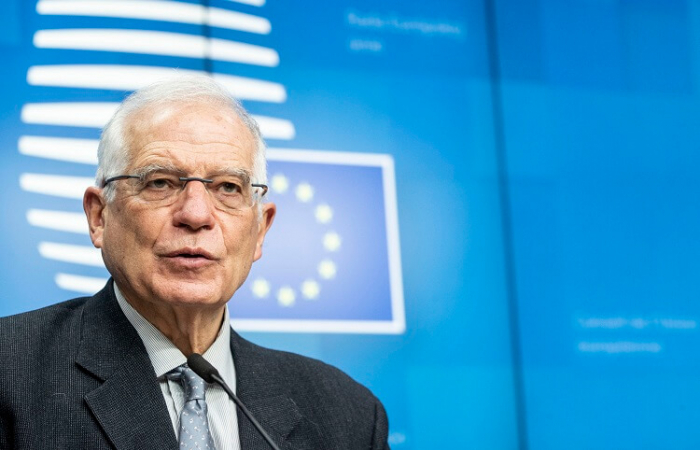
Borrell and Lavrov try to find common ground

Borrell and Lavrov try to find common ground

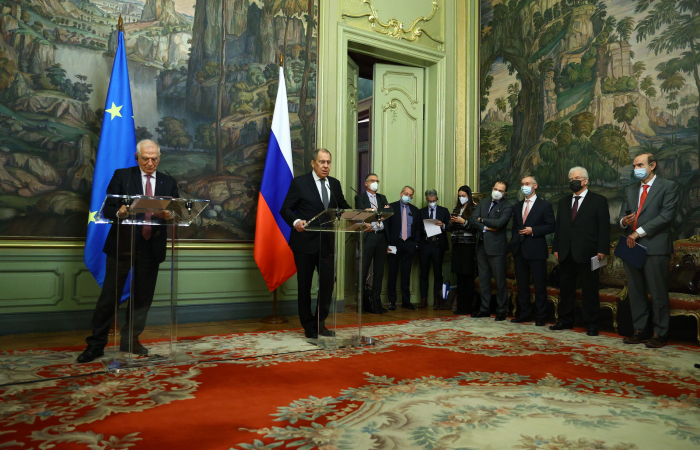
Russian Foreign Minister, Sergei Lavrov, and EU High Representative, Josep Borrell, met in Moscow on Friday (5 February). In a press conference after the first part of their talks the two senior diplomats appeared to be struggling to identify common ground for future co-operation whilst wanting to sound tough on their respective positions, especially on the ongoing controversies surrounding Alexei Navalny and Russian clampdown on his supporters.
Editor's choice
News
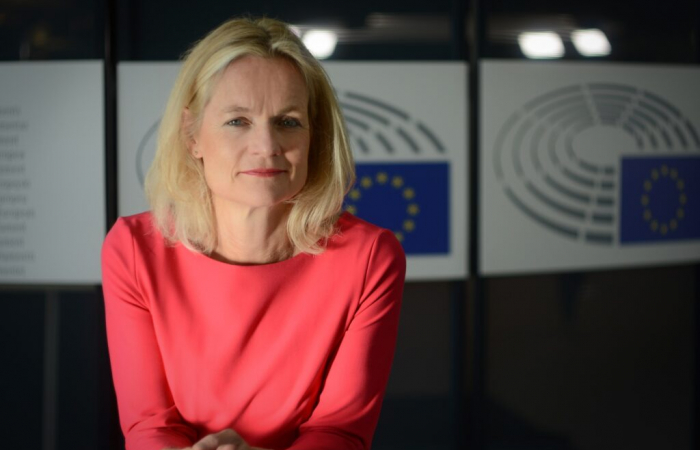
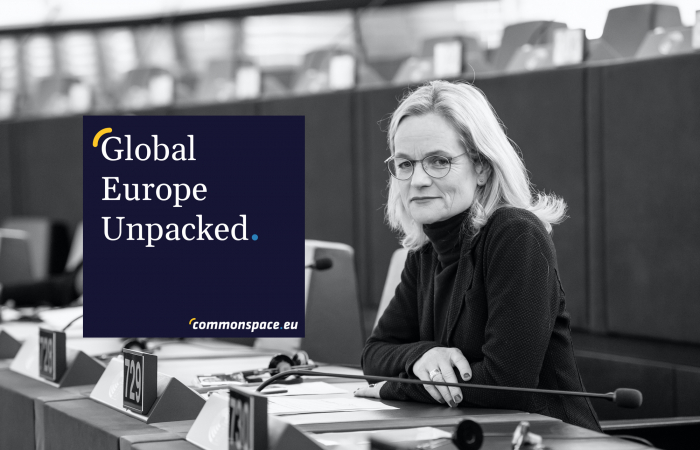
GEU Podcast: How should the EU manage relations with its eastern neighbours? – with Viola von Cramon MEP

GEU Podcast: How should the EU manage relations with its eastern neighbours? – with Viola von Cramon MEP

It’s now nearly 12-years since the establishment of the Eastern Partnership (EaP) – a joint initiative bringing together the EU, Armenia, Azerbaijan, Belarus, Georgia, Moldova and Ukraine. In this episode, Will Murray speaks to Viola von Cramon-Taubadel MEP about the EU’s neighbourhood policy to the east and how it should move forwards.
Editor's choice
News
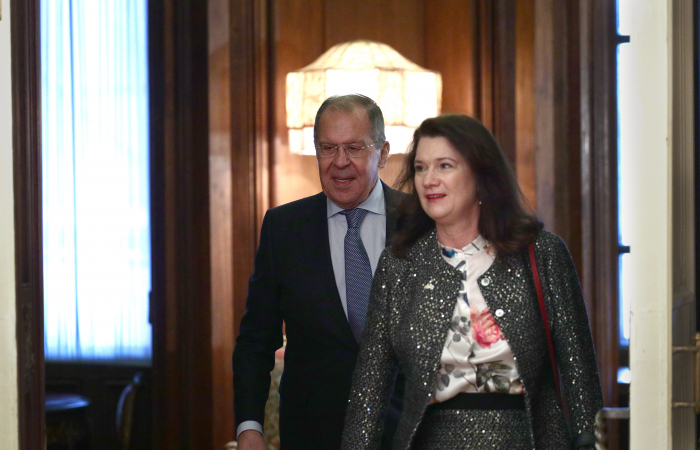
Ann Linde holds talks with Lavrov on European Security

Ann Linde holds talks with Lavrov on European Security

Sweden is trying to use its one year chairmanship of the OSCE to bring back focus to the organisation after a difficult period last year, and a growing sense that the organisation was drifting away from its original mandate on European security. Russia is central to this process, since it is seen as being at odds with the Helsinki Final Act - the OSCE's milestone document - in both its internal policies, as well as in its relations with its neighbours.
Editor's choice
News
Borrell sailing straight into a Russian storm

Borrell sailing straight into a Russian storm

The visit of the EU High Representative to Russia on Thursday will provide an opportunity to have wide-ranging discussions with Foreign Minister Sergei Lavrov and other Russian interlocutors ahead of the European Council’s strategic discussion on EU-Russia relations scheduled for March.
Editor's choice
News
GEU Podcast: How does Brexit affect Europe’s global ambitions? – with Dr Fabian Zuleeg

GEU Podcast: How does Brexit affect Europe’s global ambitions? – with Dr Fabian Zuleeg

It’s 2021 and the United Kingdom has formally left the European Union. In this episode of Global Europe Unpacked, Will Murray speaks to Dr Fabian Zuleeg, the Chief Executive and Chief Economist of the European Policy Centre in Brussels, about how the absence of the UK will impact the EU’s global ambitions and prospects for UK-EU relations going forward.