Region

EU plus

Stories in this section cover the EU-27 countries plus the UK, Norway, Switzerland, Iceland, Liechtenstein, Monaco, Andorra and the Balkan Countries (Albania, Serbia, Montenegro, Bosnia-Herzegovina, Kosovo, North Macedonia).

Editor's choice
News
Germany accuses Russia of cyberattacks and disinformation campaign

Germany accuses Russia of cyberattacks and disinformation campaign

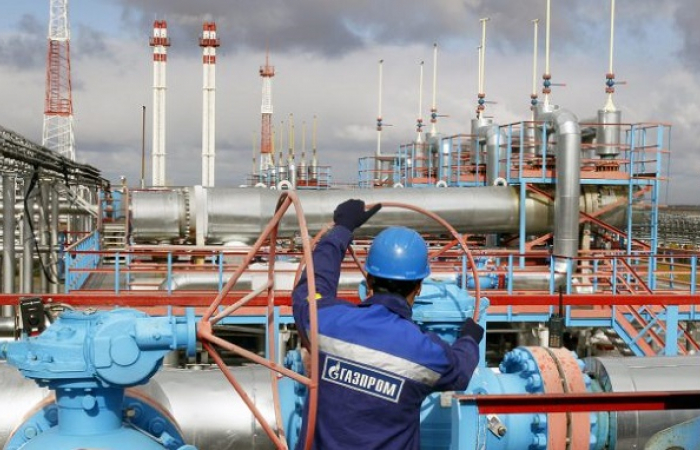
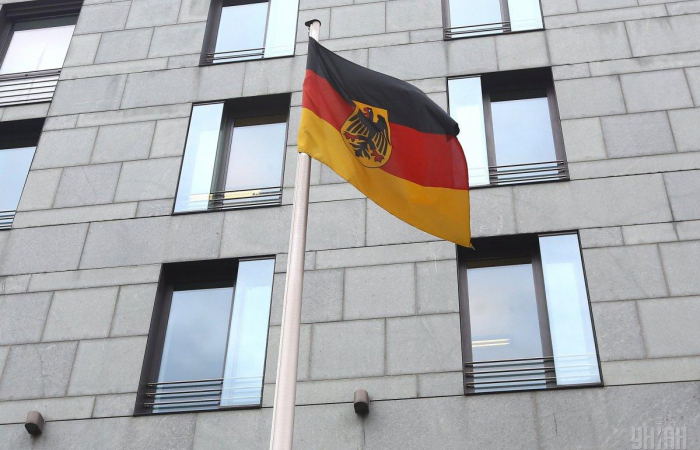
The German government holds Russia responsible for a cyberattack on German air traffic control, and for targeted disinformation campaigns before the last federal election. According to the German Foreign Office in Berlin, the incidents could be clearly attributed to the Russian military intelligence service, the GRU. In response, the Russian ambassador to Berlin was summoned to the Foreign Ministry. "We have been observing a massive increase in threatening hybrid activities by Russia for some time now," a spokesperson for the Foreign Ministry stated. These range from disinformation campaigns and espionage to cyberattacks and sabotage attempts. The aim is to divide society, sow distrust, and undermine confidence in democratic institutions. The spokesperson added that with these actions, Russia is "very concretely threatening our security, not only through its war of aggression against Ukraine, but also here in Germany."  The Foreign Ministry spokesperson explained that the cyberattack on air traffic control in August 2024 was clearly attributed to the hacker collective "APT28," known as "Fancy Bear," and to the responsibility of the Russian military intelligence service, the GRU. Furthermore, it could now be "conclusively stated" that Russia had attempted "to influence and destabilize both the last Federal election and the ongoing internal affairs of the Federal Republic of Germany." There was "absolutely irrefutable evidence" for this". The so-called "Storm 1516" campaign, which has been running since 2024, is allegedly backed by "reliable information" that the Moscow-based think tank "Center for Geopolitical Expertise" is behind it. The Center is also said to be supported by Russian military intelligence. Its primary aim is to influence democratic elections in the West. (Click the image to read more).
Editor's choice
News
NATO Chief says war is on Europe's doorstep, and warns against complacency

NATO Chief says war is on Europe's doorstep, and warns against complacency

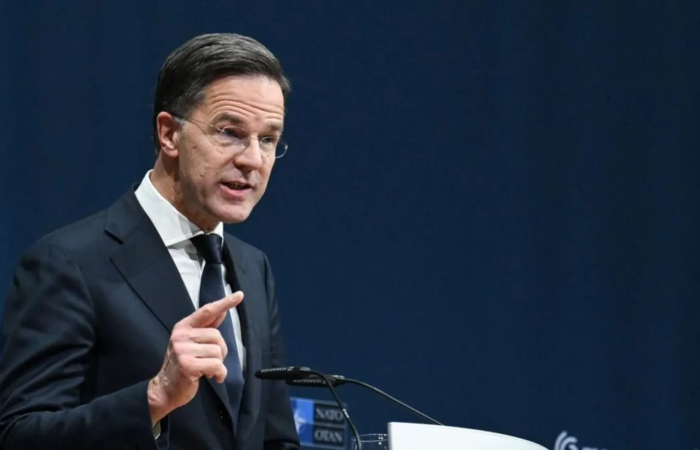
Russia could attack a NATO country within the next five years, the Secretary General of NATO, Mark Rutte, said in a stark new warning. "NATO's own defences can hold for now," Rutte warned in Berlin, but conflict was "next door" to Europe, and he feared "too many are quietly complacent, and too many don't feel the urgency, too many believe that time is on our side. "Russia is already escalating its covert campaign against our societies," Rutte said in a speech in Germany. "We must be prepared for the scale of war our grandparents or great-grandparents endured." Earlier this month, Russia's President Vladimir Putin said his country was not planning to go to war with Europe, but it was ready "right now" if Europe wanted to - or started a war. But similar reassurances were given by Moscow in 2022, just before 200,000 Russian troops crossed the border and invaded Ukraine. Putin has accused European countries of hindering US efforts to bring peace in Ukraine - a reference to the role Ukraine's European allies have recently played in trying to change a US peace plan to end the war, whose initial draft was seen as favouring Russia. But Putin was not sincere, Nato's secretary-general said in the German capital, Berlin. Supporting Ukraine, he added, was a guarantee for European security. "Just imagine if Putin got his way; Ukraine under the boot of Russian occupation, his forces pressing against a longer border with Nato, and the significantly increased risk of an armed attack against us." Russia's economy has been on a war footing for more than three years now - its factories churn out ever more supplies of drones, missiles and artillery shells. According to a recent report by the Kiel Institute for the World Economy, Russia has been producing each month around 150 tanks, 550 infantry fighting vehicles, 120 Lancet drones and more than 50 artillery pieces. The UK, and most of its Western allies, are simply not anywhere near this point. Analysts say it would take years for Western Europe's factories to come close to matching Russia's mass-production of weapons. "Allied defence spending and production must rise rapidly, our armed forces must have what they need to keep us safe," the Nato chief said.

Filter archive

Publication date
Editor's choice
News
Tens of thousands in pro European rally in Tbilisi

Tens of thousands in pro European rally in Tbilisi

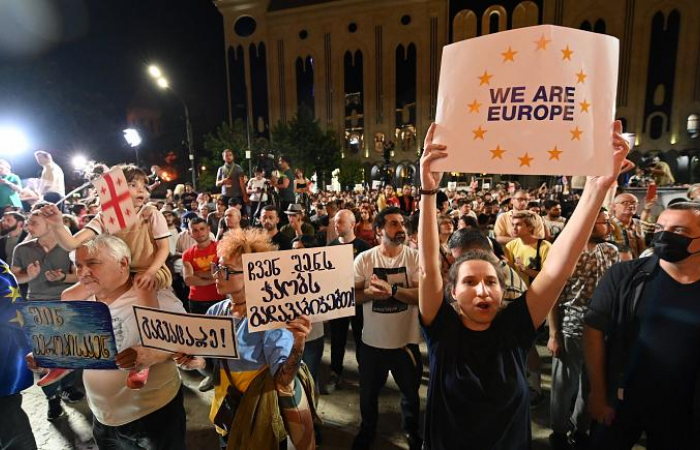
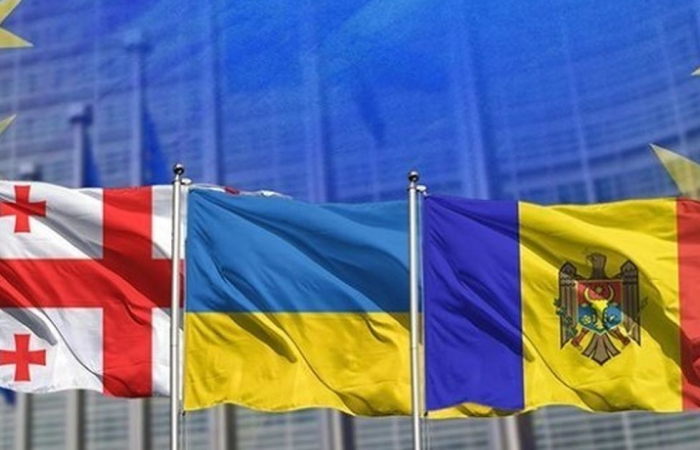
Tens of thousands of Georgians attended a pro European rally in Tbilisi on Monday (20 June) amid continuing controversy about the country's European asspirations. On Friday, the European Commission recommended to EU leaders to give Georgia a membership perspective, but stopped short of granting the country the same candidate status as it recommended for Ukraine and Moldova. The three countries, sometimes referred to as the "Trio" countries recently submitted an application for full membership of the European Union. The EU on its part has dealt with the applications with unusual speed, motivated primarily by a wish to send a positive signal to Ukraine as it continues to resist a Russian military invasion. The Commission has recommended to give candidate status to Ukraine and Moldova but stopped short of doing so as regards Georgia. "It is up to Georgia to accelerate (the reforms) and move towards this open door," commented Commission President Ursula von der Leyen. "Georgia must now come together politically to design a clear path towards structural reform and the EU,"  Commission President Ursula von der Leyen said on twitter. "So we recommend to grant Georgia the European perspective, but to come back and assess how it meets a number of conditions before granting it candidate status."
Editor's choice
News
European Commission recommends to give candidate status to Ukraine and Moldova, and a membership perspective to Georgia

European Commission recommends to give candidate status to Ukraine and Moldova, and a membership perspective to Georgia

The EU should grant candidate status to Ukraine and Moldova, bringing them a step closer to bloc membership, while Georgia still has some work to do, but is given a membership perspective, the European Commission said on Friday (17 June). Ursula von der Leyen, President of the European Commission, said: “Ukraine, Moldova and Georgia share the strong and legitimate aspiration of joining the European Union. Today, we are sending them a clear signal of support in their aspirations, even as they face challenging circumstances. And we do so standing firm on our European values and standards, setting out the path they need to follow in order to join the EU. The Commission's opinions mark an inflection point in our relations. Indeed, this is a historic day for the people of Ukraine, Moldova and Georgia. We are confirming that they belong, in due time, in the European Union. The next steps are now in the hands of our Member States.”
Editor's choice
News
Brussels sources say European Commission will recommend candidate status for Ukraine, but final decision is with the EU member states

Brussels sources say European Commission will recommend candidate status for Ukraine, but final decision is with the EU member states

The European Commission will recommend granting Ukraine official status as an EU candidate country, according to several officials familiar with deliberations that took place during a debate among commissioners on Monday. This was reported by the authoritative website Politico on Tuesday (14 June) The debate in the College of Commissioners followed a surprise visit Saturday by Commission President Ursula von der Leyen to Kyiv, where she discussed Ukraine’s membership bid with President Volodymyr Zelenskyy. It was von der Leyen’s second trip to the Ukrainian capital since Russia’s full-scale invasion began in late February. Moldova and Georgia have also applied for candidate status, and officials said that commissioners were generally supportive of Moldova, where a staunchly pro-EU government is now in place, but that they were less confident about Georgia, which has suffered from pervasive political turmoil and notable democratic backsliding in recent years.
Editor's choice
Editorial
Editorial: Give Georgia, Moldova and Ukraine EU candidate status now!

Editorial: Give Georgia, Moldova and Ukraine EU candidate status now!

In the next few days the European Commission will announce its opinion on the request of Georgia, Moldova and Ukraine for European Union candidate status. A decision will then be taken by the 27 member states in the European Council at the end of this month. “Candidate Status” is the beginning of a journey for any country that wants to join the European Union. In the case of many successful candidates in the past, the process has often taken a decade or more. In the case of others, such as Turkey, the process does not appear to have an end in sight. In short candidate status is not an automatic ticket to EU membership, simply a political expression of the will of the applicant and of the EU to embark on the journey. This notwithstanding the EU has been increasingly hesitant to give a membership perspective to the trio. This is partly due to the so called “enlargement fatigue”, partly because there are those within the member states and the institutions who do not think Georgia, Moldova and Ukraine should be in the EU, period! These sceptics have been caught on the wrong foot by the war in Ukraine, the heroism of the Ukrainian resistance to the Russian invasion, and the decision of the trio to bring forward their request for candidate status and to ask that it be dealt with urgently. Clearly, Georgia, Moldova and Ukraine are not ready for EU membership today, but that is not what is on the agenda now. The many challenges facing the three countries should not be hidden under the carpet, and the political elites in Tbilisi, Chisinau and Kyiv must assume their responsibility to ensure political, economic and judicial reforms are implemented more comprehensively and more speedily. But for now, candidate status, especially in the present context, is primarily a political decision and a political statement, and it should be extended to the three countries now!
Editor's choice
Interview
Opinion: "Our ambition in Kosovo is to transform our young and vibrant democracy into the most prosperous nation in the region"

Opinion: "Our ambition in Kosovo is to transform our young and vibrant democracy into the most prosperous nation in the region"

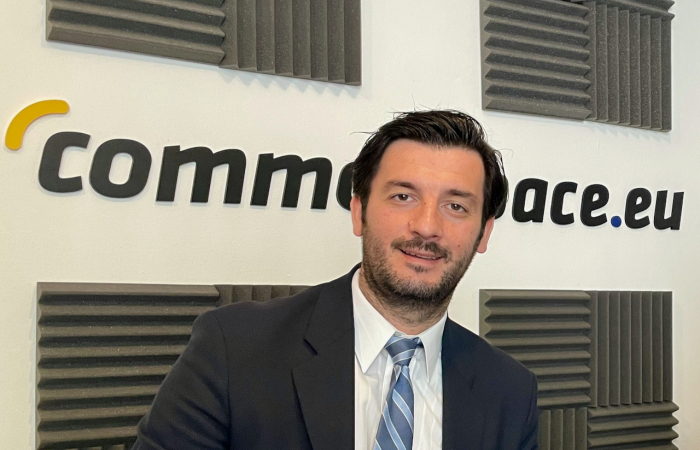
Recently, the Government of Kosovo submitted a formal application to join the Council of Europe as a full member. The international community remains divided on the issue of Kosovo's international recognition. Yet in the few years since its independence Kosovo has made great strides forward, and today has one of the most dynamic economies in the Western Balkans, a vibrant cultural life, and a solid track record on human rights and the fight against corruption. commonspace.eu interviewed the Ambassador of Kosovo to the Netherlands, Dren Doli, about the current state of play in relations between Kosovo and Serbia, and on the thorny issue of whether the recognition of Kosovo has emboldened secessionist movements elsewhere. Ambassador Doli said that "the tendency to use Kosovo as a model for other cases is a strategy to generalise the rules that guide the creation of states and inflict confusion, deflect the truth, and deny the significance of objective arguments that differentiate Kosovo from other cases". Doli told commonspace.eu that "Kosovo is one of the rare examples of successful democratic state-building supported by western democracies". Ambassador Doli said that the government of Kosovo is committed to further develop and improve its relations with Serbia and welcomes any initiative  by the EU and the US in this direction.
Editor's choice
News
Turkey holds delicate talks with Sweden and Finland ahead of a decision on their NATO membership application

Turkey holds delicate talks with Sweden and Finland ahead of a decision on their NATO membership application

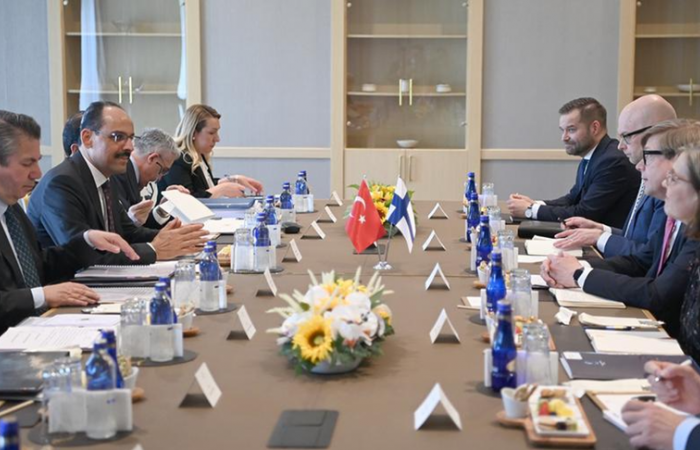
Senior Turkish officials have met with government delegations from Sweden and Finland as discussions continue following Ankara's threat to veto the NATO membership application of the two Nordic countries. Most NATO countries have warmly welcomed the decision of Sweden and Finland since their membership in NATO will considerably strengthen the northern flank of the alliance, but Turkey accuses both countries of having an ambivalent position on Turkey's struggle with militant Kurdish groups. On Wednesday, Swedish and Finnish government delegations travelled to Ankara to meet with Turkish representatives in an effort to resolve the country’s doubts regarding their accession to NATO. In their first face-to-face meeting since the two Nordic countries applied for membership, Turkish representatives stressed their security concerns, and conditions regarding Sweden’s “cooperation” with Kurdistan Workers’ Party (PKK). Turkish presidential spokesperson Ibrahim Kalin said in a statement late on Wednesday that positive steps towards the lifting of an arms embargo from Finland and Sweden had been taken. In October of 2019, Sweden and Finland were among some  European states that imposed an arms embargo on Turkey following a military incursion into Syria.
Editor's choice
News
Progress in EU hosted talks between Armenia and Azerbaijan

Progress in EU hosted talks between Armenia and Azerbaijan

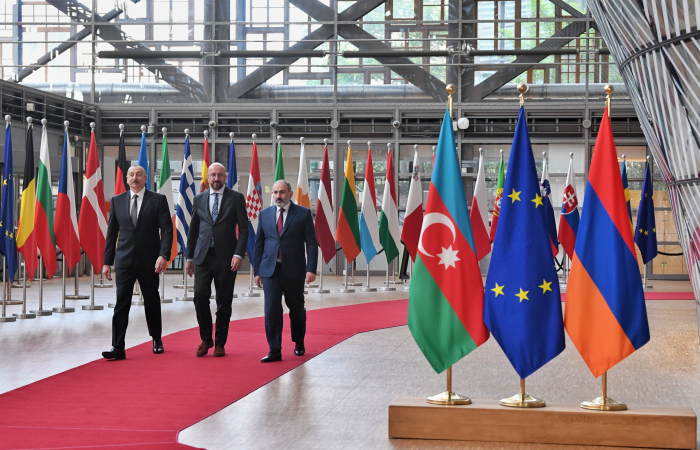
A third round of meetings between the leaders of Armenia and Azerbaijan hosted by the European Union in Brussels have resulted in progress on a range of issues as the two countries work to resolve the long standing conflict between them. European Council president, Charles Michel welcomed president Ilham Aliyev of Azerbaijan and prime minister Nikol Pashinyan of Armenia for another meeting in trilateral format on Sunday (22 May). He later described the talks as "frank and productive". In a statement to the media late on Sunday night Michel said the talks focused on the situation in the South Caucasus and the development of EU relations with both countries as well as the broader region. Summarising the meeting, Michel said "the discussion was frank and productive. We reviewed the entire set of issues. We had a detailed discussion on humanitarian issues, including demining, and efforts to free detainees and address the fate of missing persons." He listed a number of outcomes from the meeting including on border issues, connectivity, on a future peace agreement and on socio economic development. In conclusion president Michel said that he also stressed the importance of preparing the populations for long-term sustainable peace. The EU is ready to step up its support. "We agreed to remain in close contact and will meet again in the same format by July/August."