


Region

EU plus

Stories in this section cover the EU-27 countries plus the UK, Norway, Switzerland, Iceland, Liechtenstein, Monaco, Andorra and the Balkan Countries (Albania, Serbia, Montenegro, Bosnia-Herzegovina, Kosovo, North Macedonia).

Editor's choice
News
Landmines present to the European Union both a contradiction and a dilemma

Landmines present to the European Union both a contradiction and a dilemma

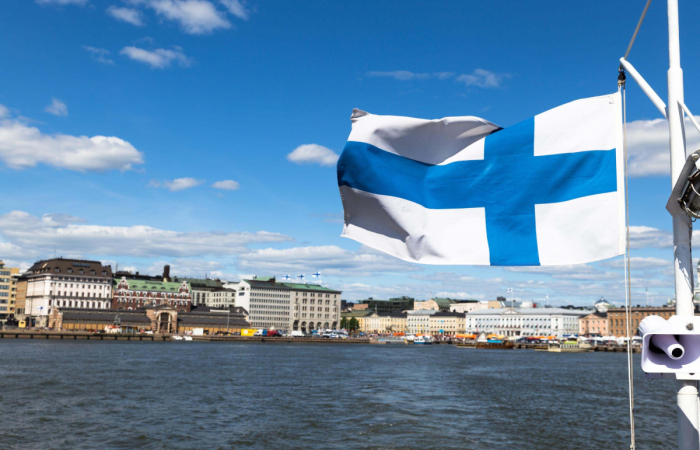
Finland’s decision to buy one million landmines creates a serious contradiction in the policy of the European Union, and is symbolic of a bigger dilemma facing European countries as they get used to the need to acquire “hard” power to face an increasing threat from Russia. Finland is seeking to acquire one million anti-personnel mines at a cost of 100 million euros. Finland, together with Poland, Latvia, Lithuania and Estonia last year abandoned the Ottawa agreement, the international framework that bans the use of anti-personnel mines, which the EU had been instrumental in establishing and supporting. All five countries cite the threat from Moscow as the reason. Colonel Riku Mikkonen of the Army Command told Finland’s national news agency STT that officials are now gathering information from suppliers regarding the deal, the AFP news agency reports. Helsinki would like domestic manufacturers to supply the mines, with contracts signed by the end of 2027 and production up and running by 2028. “It would be useful in many ways if Finnish companies produced the anti-personnel mines in Finland,” Mikkonen said. About half a dozen Finnish firms qualify, he told STT. “However, at this stage, buying the mines from abroad is not totally ruled out,” he added. LANDMINES PROVIDE THE EU WITH BOTH A CONTRADICTION, AND A DILEMMA Eliminating landmine contamination worldwide is one of the EU’s main soft power postures, and it basks in its record as the biggest funder of anti-landmine action in the world. But the fact that 5 of its 27 member states  have now left the Ottawa Treaty dents the EU moral high ground. It is a contradiction that is too big and important to be ignored. It also presents the European Union with a deeper dilemma. The threat from Russia is changing what the EU has stood for decades, namely a force for good able to mobilise its considerable soft power for the greater good of humanity. How the Union will implement this change will define its future. In the meantime landmines have not become any less lethal, benign, or unimportant. They remain in many parts of the world a major threat to life, an impediment to prosperity, and a potential trigger to further conflict. The 22 EU members states that still adhere to the Ottawa treaty must regroup, and be more assertive in their quest against anti-personnel land mines. All the reasons why they supported the Ottawa treaty in the first place still exist. The message must be clear: NO TO LANDMINES!
Editor's choice
Monday Commentary
Monday Commentary - Merz: "If Germany wavers, Europe wavers; if Europe wavers, Ukraine wavers”

Monday Commentary - Merz: "If Germany wavers, Europe wavers; if Europe wavers, Ukraine wavers”

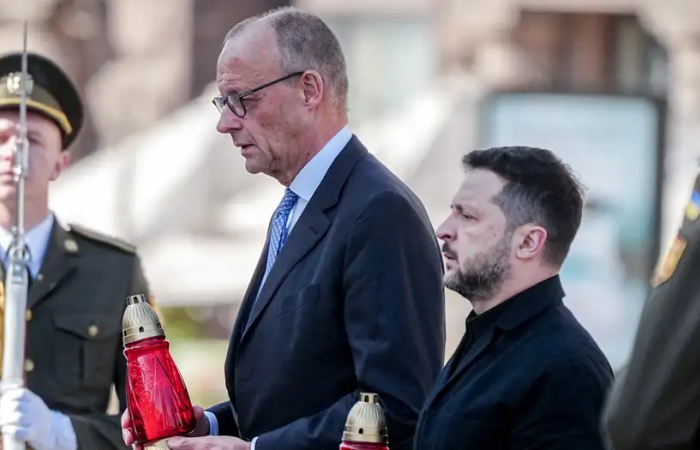
Mertz surprise visit to Kyiv, and increased German support for Ukraine, is a potential game-changer, writes Dennis Sammut, in this week's "Monday Commentary". German Chancellor, Friedrich Merz, made a surprise visit to Ukraine over the weekend. He visited the Ukrainian capital, Kyiv, on Sunday and called on Russian President Vladimir Putin to stop his "barbaric attacks" and end what he called a "senseless war." This was the fourth such visit to Ukraine by a German chancellor since the full-scale Russian invasion began in February 2022. Merz visit to Kyiv this weekend came at a very significant moment, and was full of symbolism, but not only. It was very significant also in terms of content. Merz arrived in Kyiv by train early on Sunday morning, accompanied by the German Economy Minister and a delegation of leading figures from German business, including executives from Siemens Energy, Hensoldt, Diehl Defence and Quantum Systems. "If Russia is not stopped, it will turn its war machine against us sooner or later," Merz said upon arrival. During the visit of the German Chancellor air raid sirens blared across the Ukrainian capital throughout the morning, as Kyiv's mayor announced one of the city's bridges had been hit by a Russian drone. Sunday's visit comes just days after Merz had assured Ukraine of Germany's support, despite isolated resistance and criticism at home. Merz said earlier  'If Germany wavers, Europe wavers;  if Europe wavers, Ukraine wavers” The German broadcaster Deutche Welle said that  “Germany remains Ukraine's most important backer, both militarily and financially, but state elections in September saw significant gains for parties at both ends of the political spectrum who are critical of expenditure on Ukraine: the far-right Alternative for Germany (AfD) in Saxony-Anhalt and Mecklenburg-Western Pomerania and the socialist Left Party in Berlin.” Speaking before his visit to Ukraine, Merz called out in particular "the AfD and their Russian backers" and promised Ukraine that Germany would not be divided.” Merz visit and Germany’s stronger support is a game-changer The visit of the German Chancellor to Ukraine this weekend came  at crucial moment for Ukraine and for Europe. Germany's strong and tangible support for Ukraine can be a game-changer, (click image to read the Commentary in full)

Stories in this section cover the EU-27 countries plus the UK, Norway, Switzerland, Iceland, Liechtenstein, Monaco, Andorra and the Balkan Countries (Albania, Serbia, Montenegro, Bosnia-Herzegovina, Kosovo, North Macedonia).