Region

EU plus

Stories in this section cover the EU-27 countries plus the UK, Norway, Switzerland, Iceland, Liechtenstein, Monaco, Andorra and the Balkan Countries (Albania, Serbia, Montenegro, Bosnia-Herzegovina, Kosovo, North Macedonia).

Editor's choice
News
Germany accuses Russia of cyberattacks and disinformation campaign

Germany accuses Russia of cyberattacks and disinformation campaign

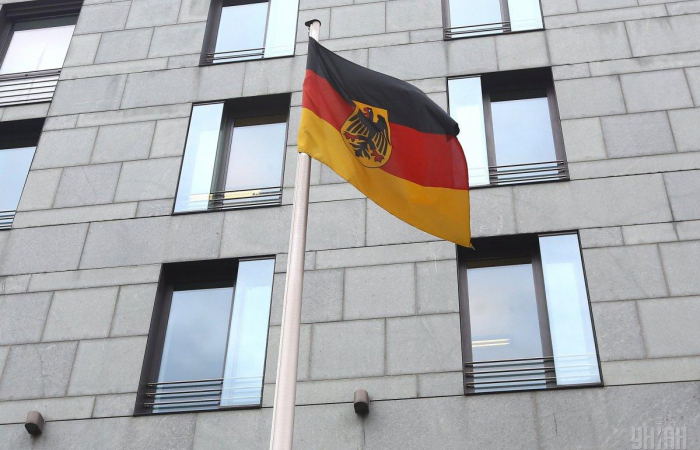
The German government holds Russia responsible for a cyberattack on German air traffic control, and for targeted disinformation campaigns before the last federal election. According to the German Foreign Office in Berlin, the incidents could be clearly attributed to the Russian military intelligence service, the GRU. In response, the Russian ambassador to Berlin was summoned to the Foreign Ministry. "We have been observing a massive increase in threatening hybrid activities by Russia for some time now," a spokesperson for the Foreign Ministry stated. These range from disinformation campaigns and espionage to cyberattacks and sabotage attempts. The aim is to divide society, sow distrust, and undermine confidence in democratic institutions. The spokesperson added that with these actions, Russia is "very concretely threatening our security, not only through its war of aggression against Ukraine, but also here in Germany."  The Foreign Ministry spokesperson explained that the cyberattack on air traffic control in August 2024 was clearly attributed to the hacker collective "APT28," known as "Fancy Bear," and to the responsibility of the Russian military intelligence service, the GRU. Furthermore, it could now be "conclusively stated" that Russia had attempted "to influence and destabilize both the last Federal election and the ongoing internal affairs of the Federal Republic of Germany." There was "absolutely irrefutable evidence" for this". The so-called "Storm 1516" campaign, which has been running since 2024, is allegedly backed by "reliable information" that the Moscow-based think tank "Center for Geopolitical Expertise" is behind it. The Center is also said to be supported by Russian military intelligence. Its primary aim is to influence democratic elections in the West. (Click the image to read more).
Editor's choice
News
NATO Chief says war is on Europe's doorstep, and warns against complacency

NATO Chief says war is on Europe's doorstep, and warns against complacency

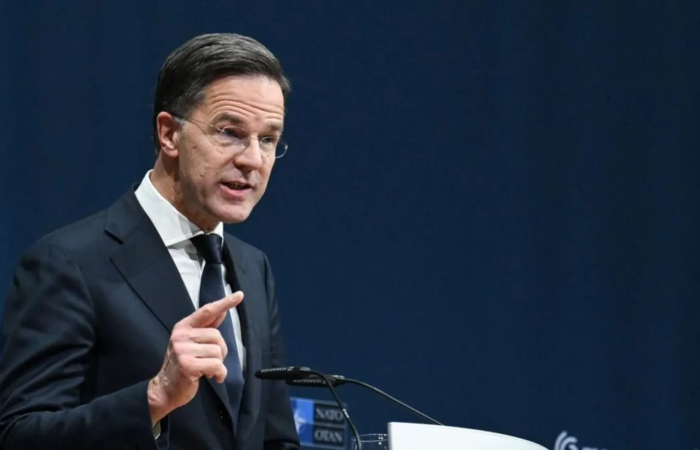
Russia could attack a NATO country within the next five years, the Secretary General of NATO, Mark Rutte, said in a stark new warning. "NATO's own defences can hold for now," Rutte warned in Berlin, but conflict was "next door" to Europe, and he feared "too many are quietly complacent, and too many don't feel the urgency, too many believe that time is on our side. "Russia is already escalating its covert campaign against our societies," Rutte said in a speech in Germany. "We must be prepared for the scale of war our grandparents or great-grandparents endured." Earlier this month, Russia's President Vladimir Putin said his country was not planning to go to war with Europe, but it was ready "right now" if Europe wanted to - or started a war. But similar reassurances were given by Moscow in 2022, just before 200,000 Russian troops crossed the border and invaded Ukraine. Putin has accused European countries of hindering US efforts to bring peace in Ukraine - a reference to the role Ukraine's European allies have recently played in trying to change a US peace plan to end the war, whose initial draft was seen as favouring Russia. But Putin was not sincere, Nato's secretary-general said in the German capital, Berlin. Supporting Ukraine, he added, was a guarantee for European security. "Just imagine if Putin got his way; Ukraine under the boot of Russian occupation, his forces pressing against a longer border with Nato, and the significantly increased risk of an armed attack against us." Russia's economy has been on a war footing for more than three years now - its factories churn out ever more supplies of drones, missiles and artillery shells. According to a recent report by the Kiel Institute for the World Economy, Russia has been producing each month around 150 tanks, 550 infantry fighting vehicles, 120 Lancet drones and more than 50 artillery pieces. The UK, and most of its Western allies, are simply not anywhere near this point. Analysts say it would take years for Western Europe's factories to come close to matching Russia's mass-production of weapons. "Allied defence spending and production must rise rapidly, our armed forces must have what they need to keep us safe," the Nato chief said.

Filter archive

Publication date
Editor's choice
News
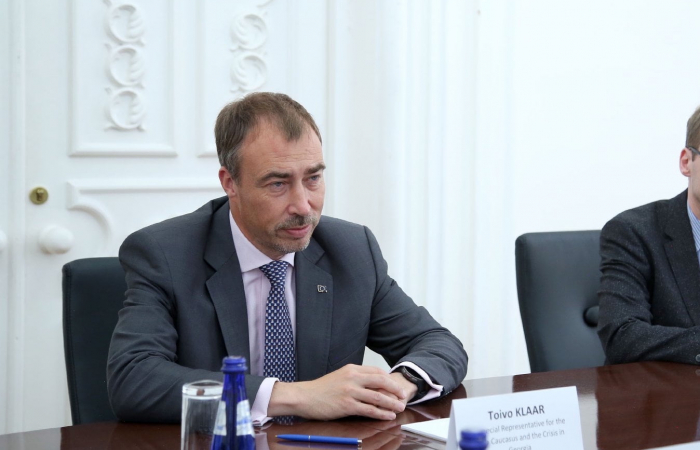
Toivo Klaar: "We are moving slowly in the right direction"

Toivo Klaar: "We are moving slowly in the right direction"

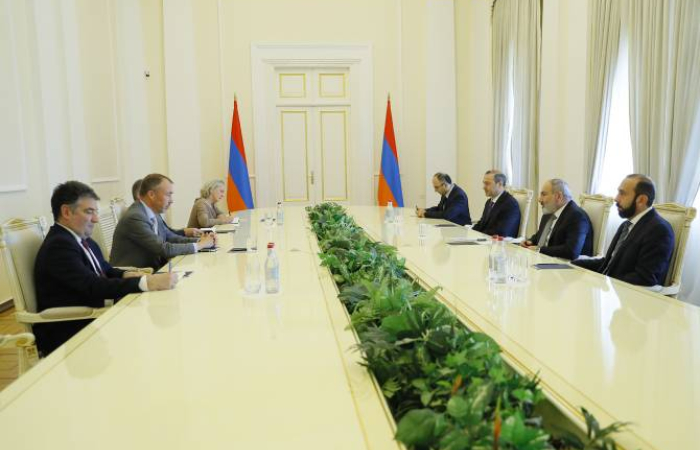
A meeting with the leaders of Armenia and Azerbaijan will be held in Brussels in the very near future, but it will not be held before the end of this month as had been previously hoped. This was stated by the EU Special Representative for the South Caucasus, Toivo Klaar. Speaking about the state of Armenia-Azerbaijan negotiations that are being facilitated by the European Union, Klaar said "We are moving slowly in the right direction". The EUSR for the South Caucasus addressed the forum "Making Progress in time of uncertainty" organised in Yerevan by the Applied Policy Research Institute, Armenia. Klaar spoke to participants on-line from Brussels. In his address Klaar spoke about the reaction of the European Union to events in Nagorno-Karabakh in September and said that the EU had taken a clear position , which was robustly communicated to interested parties. The EU is now calling for conditions to be created for the safe return of Armenians displaced from Nagorno-Karabakh. As regards on-going negotiations, Toivo Klaar said that the situation now is qualitatively different. The objective is the normalisation of relations between the sovereign state of Azerbaijan and the sovereign state of Armenia. There is now a window of opportunity to move forward with the objective of normalising relations between Armenia and Azerbaijan. The signing of a peace treaty is not an aim in itself, but simply an expression of this objective. Klaar said that peace between Armenia and Azerbaijan will have benefit for the whole region, and the aim of the EU was to see the South Caucasus as a place where all countries have normal diplomatic relations, there is movement of people and goods, and the whole region is opened up for economic co-operation. Speaking about Russia, EUSR Klaar said that the EU is not in the business of including and excluding anyone from the South Caucasus. Russia was an important close neighbour of the region and has its interests, as have the EU and the US. Klaar criticised the negative rhetoric coming from Moscow. Toivo Klaar said the EU will continue to support civil society initiatives aimed at promoting trust and confidence across the South Caucasus. He however emphasised that this can never be an alternative to political will on the part of the governments who need to lead by changing official narratives.
Editor's choice
News
EU and US leaders say they are "bound together by the most dynamic relationship on earth"

EU and US leaders say they are "bound together by the most dynamic relationship on earth"

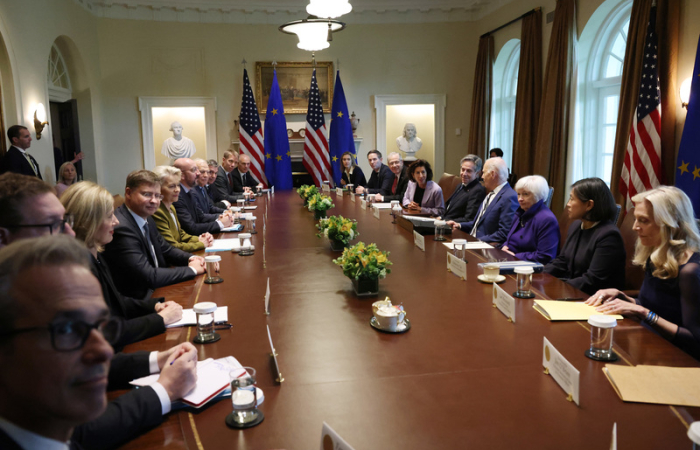
A summit between the US and the EU has re-affirmed the resilience of the transatlantic relationship at a time of increased global turmoil. On Friday (20 October), EU leaders, notably the President of the European Council, Charles Michel, the President of the European Commission, Ursula von der Leyen, and the High Representative of the European Union for Foreign Affairs and Security Policy, Josep Borrell, met with US President, Joe Biden, and the US Secretary of State, Antony Blinken, in Washington DC. The summit was an opportunity to review the close transatlantic partnership and areas of cooperation within the partnership. At the end of the summit the leaders adopted a joint statement, which includes a roadmap to underpin and further strengthen the relationship for years to come. A statement issued at the end of the meeting said: Representing nearly 800 million citizens, united by our values and bound together by the most dynamic relationship on earth, we reaffirm our commitment to a transatlantic partnership that delivers for all our people. The statement added that the EU and the US are close and like-minded partners that share a strong bond and a commitment to a rules-based international order and effective multilateralism. The summit also discussed global issues, including Africa, the Balkans, the Caucasus and the Indo-Pacific Region. On the Caucasus, the summit statement said that the EU and the US remain fully committed to supporting Georgia’s territorial integrity and sovereignty, and its European perspective.  They also said that they remain committed to advancing a lasting peace between Armenia and Azerbaijan based on mutual recognition of sovereignty, inviolability of borders and territorial integrity. We urge Azerbaijan to ensure the rights and security of those who remain in Nagorno-Karabakh as well as for those who wish to return to their homes. We also call for all parties to adhere to the principle of non-use of force and threat of use of force.
Editor's choice
News
Pashinyan:  "Armenia is ready to be closer to the European Union, as much as the European Union considers it possible." 

Pashinyan: "Armenia is ready to be closer to the European Union, as much as the European Union considers it possible." 

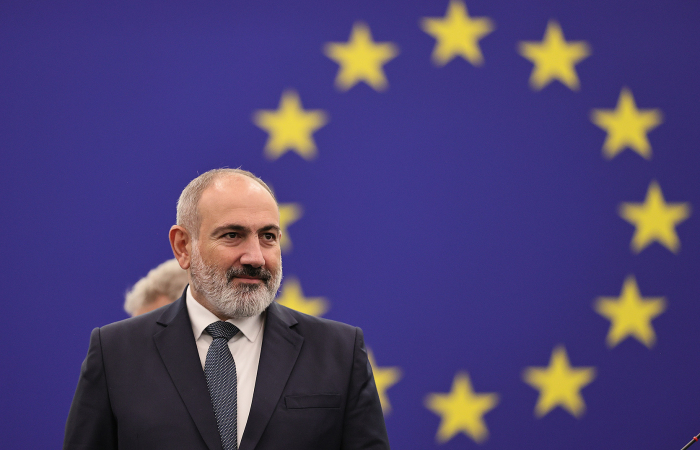
Armenian prime minister Nikol Pashinyan on Tuesday, 17 October spoke to the European Parliament meeting in Strasbourg addressing important issues of Armenia-EU relations, peace between Armenia and Azerbaijan, and South Caucasus regional co-operation. commonspace.eu political editor said in a comment that this was one of Pashinyan's most important speeches since he took office as leader of Armenia in 2018. Throughout his speech Pashinyan made reference to "common values" and to "democracy", saying that for Armenia this was a strategic choice, and not a choice dictated by circumstances. Pashinyan said that "Armenia is ready to be closer to the European Union, as much as the European Union considers it possible."  But Pashinyan focused most in his speech on peace in  the South Caucasus and Armenia-Azerbaijan relations. He spoke in detail about the issues under consideration, stating "we are ready to sign a peace and relations settlement agreement with Azerbaijan by the end of the year."
Editor's choice
News
Donald Tusk set to become Poland's next leader

Donald Tusk set to become Poland's next leader

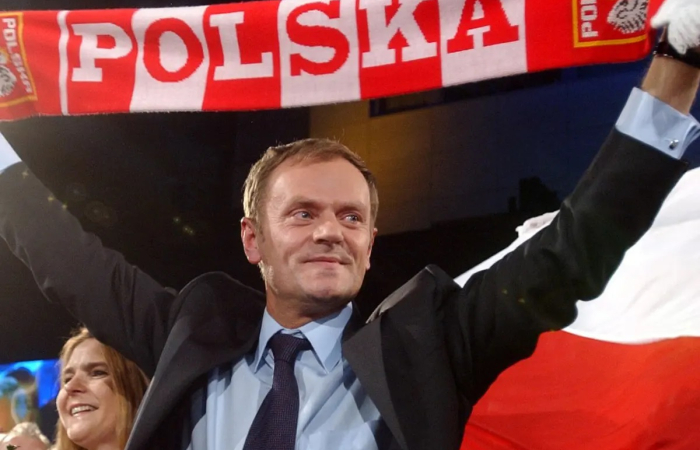
After parliamentary elections held on Sunday (15 October) in Poland, Donald Tusk is set to become the country's next leader. Exit polls results after the close of voting showed that Poland’s opposition parties look like they’ve won convincingly opening the way for the leader of the Civic Coalition led by former president of the European Council, Donald Tusk, to become the country's next leader. Whilst the current governing party, the Law and Justice (PiS) party still emerged as the largest party, winning 36.8 percent of the vote, it will still not be enough to form a government and other opposition parties are likely to join the Civic Coalition, which won 31.6 percent, to form the new government. Two smaller opposition parties, the center-right Third Way which won 13 percent, and the Left which won 8.6 percent, are likely to join the new government. A far-right Confederation won 6.2 percent, but is unlikely to be included in the new coalition. In 2019, PiS won 43.6 percent of the vote. The poll was conducted by IPSOS and was shared with Poland’s three main television networks. The poll has a 2 percent margin of error. Turnout was was high at 73 percent. If the exit poll results are confirmed, the Law and Justice will win 200 seats, Civic Coalition 163, Third Way 55, the Left 30 and Confederation will take 12. Poland is one of the largest and most important members of the European Union but in recent years its government has clashed continuously with the European institutions, as the PiS tried to implement changes in the judicial system and other sectors of government that Brussels considered to be against accepted European norms and values.
Editor's choice
News
EU and GCC countries hold first joint ministerial meeting in eight years amidst deepening crisis in the Middle East

EU and GCC countries hold first joint ministerial meeting in eight years amidst deepening crisis in the Middle East

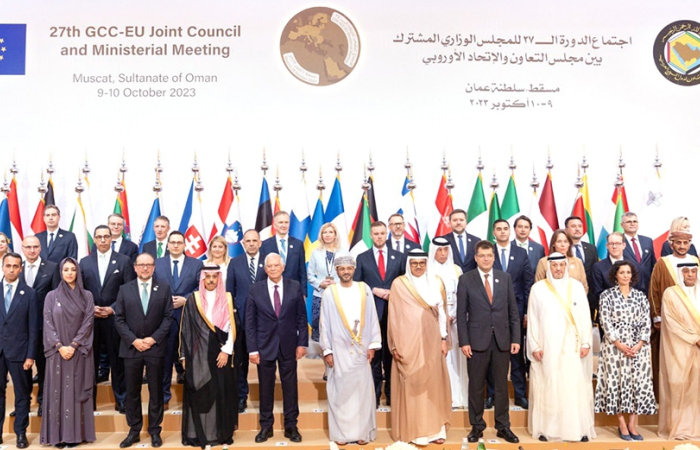
It has been planned for many months, and it took place for the first time after a gap of eight years, but the meeting of the foreign ministers of the six GCC countries and the 27 EU member states when it eventually took place yesterday in Muscat, capital of Oman, was inevitably overshadowed by the deepening crisis in the Middle  East triggered by Saturday's attack by Hamas on Southern Israel. Addressing the issue, whilst speaking to the media at the end of the meeting, EU High Representative Josep Borrell stated that in the meeting, the two sides agreed that "the priority is to cease violence and to prevent further regional escalation. It is of utmost importance to ensure the release of hostages, as well as the protection of civilians at all times and by all parties."  commonspace.eu political editor said in a comment that it is good that after years of neglect, the EU is finally giving relations with the Gulf Co-operation Council countries the importance that they deserve. The final declaration from the Muscat meeting is ambitious and wide ranging. It needs to be seen how the EU proposes to take it forward, and what is the mechanism it will put in place to ensure that it does not remain merely a piece of paper. The final declaration announces the holding of an EU-GCC summit of Heads of State and Government but gives no details. Whilst this summit will need to be well prepared, the aim should be to have it as soon as possible. But in the meantime the crisis in Middle East will remain the topic of the day for a while, and it is good that, even if by co-incidence of timing, the EU and the GCC countries could co-ordinate their positions in such a sensitive time.