Region

Central Asia

Stories under this heading cover Central Asia – a region of Asia, stretching from the Caspian Sea in the west to Mongolia in the east, from Afghanistan in the south to Russia in the north.

Editor's choice
Opinion
Opinion: The European Union must recognise that the C5 have now become the C6

Opinion: The European Union must recognise that the C5 have now become the C6

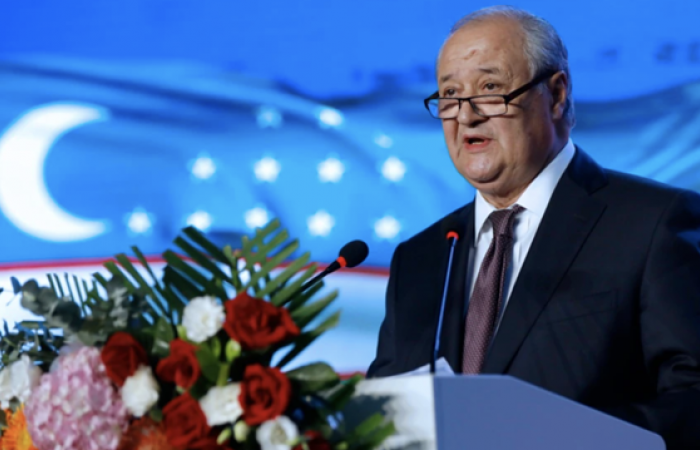
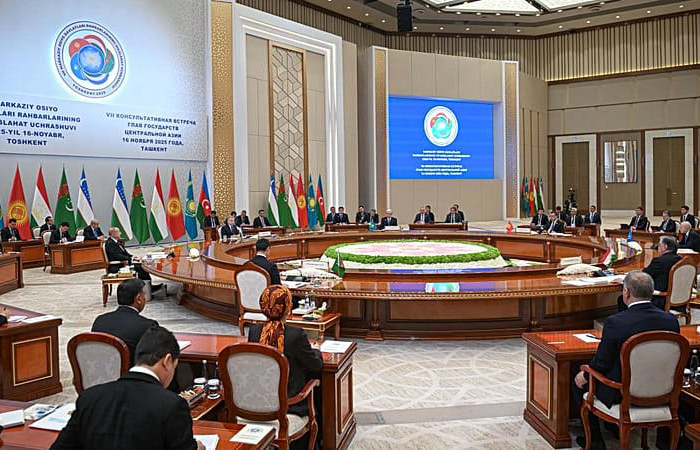
In recent years, Eurasia has undergone a structural transformation in how regions connect, trade, and cooperate. The combination of geopolitical shocks, disrupted supply chains, and the search for secure east–west routes has elevated the importance of the Trans-Caspian space. The states of Central Asia, once constrained by geography, have taken unprecedented steps to strengthen regional coordination, modernize infrastructure, and integrate more closely with Europe. Meanwhile, Azerbaijan has rapidly emerged as an indispensable connector linking Central Asia with the South Caucasus, Türkiye, and European markets. This new reality was formally acknowledged in November 2025 when Azerbaijan was unanimously welcomed as a full participant in the Consultative Meeting of Central Asian Heads of State in Tashkent. What had long been a C5 grouping transformed into a C6, marking a historic moment: the Caspian was no longer a frontier separating two regions but the center of a unified geopolitical and geo-economic space. President Ilham Aliyev described this alignment as the emergence of “a single geopolitical and geo-economic region,” while President Shavkat Mirziyoyev called Azerbaijan’s inclusion “historic” and proposed transforming the consultative platform into a structured regional institution capable of shaping security, economic, environmental, and digital policy. The Caspian is no longer a boundary; it is the heart of an integrated region. The transformation of the EU and U.S. C5+1 formats into C6+1 is the logical next step to ensure that both sides of the Caspian advance together – coherently, strategically, and with shared purpose. (click the image to read the full op-ed).
Editor's choice
News
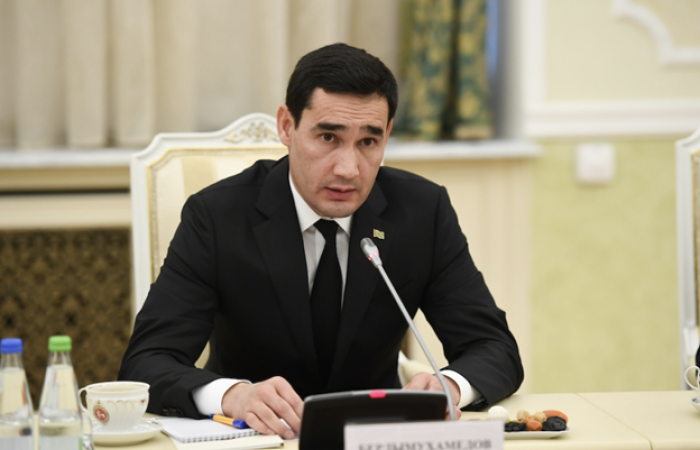
Central Asian leaders meet in Tashkent this weekend for their 7th Consultative  Meeting. Azerbaijan participates for the third year as guest

Central Asian leaders meet in Tashkent this weekend for their 7th Consultative Meeting. Azerbaijan participates for the third year as guest

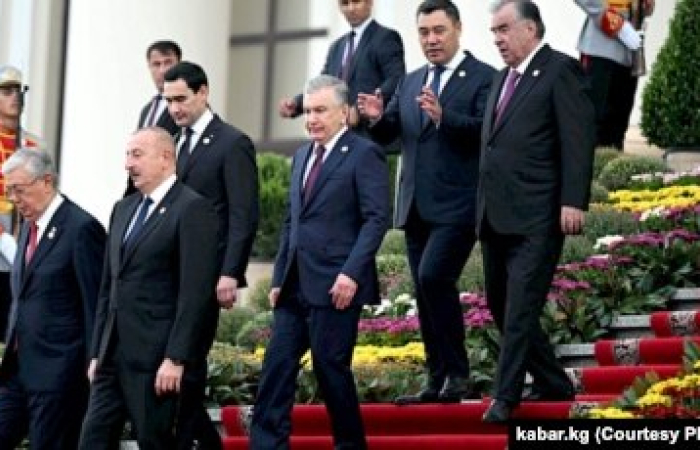
Central Asian leaders will gather in Tashkent this weekend for the Seventh Consultative Meeting of Heads of State, with plans to adopt a package of multilateral agreements to deepen regional cooperation. The summit brings together the leaders of Uzbekistan, Kazakhstan, Kyrgyzstan, Tajikistan and Turkmenistan, with Azerbaijan participating as a guest of honour for the third consecutive year. The leaders will discuss ways to advance joint projects in priority sectors and exchange views on key regional and international issues, as outlined in the agenda. The consultative meeting format originated from Mirziyoyev's initiative announced at the UN General Assembly in 2017, proposing regular high-level consultations among Central Asian states. The inaugural meeting took place in Astana in 2018. Azerbaijan's President Ilham Aliyev told the Uzbekistan press agency the meeting will be "a significant stage in fostering the centuries-old friendship between our brotherly peoples and expanding multi-level cooperation in the political, economic, transport, investment, energy, cultural and humanitarian spheres, and in the field of digital transformation." He noted that over the past three years, Central Asian heads of state have made nearly 30 visits to Azerbaijan, while he has visited the countries 13 times. Azerbaijan's engagement strengthens regional connectivity, particularly through the Middle Corridor linking Central Asia with Europe.

Filter archive

Publication date
Editor's choice
News
Tajikistan and Iran signal start of new era of co-operation

Tajikistan and Iran signal start of new era of co-operation

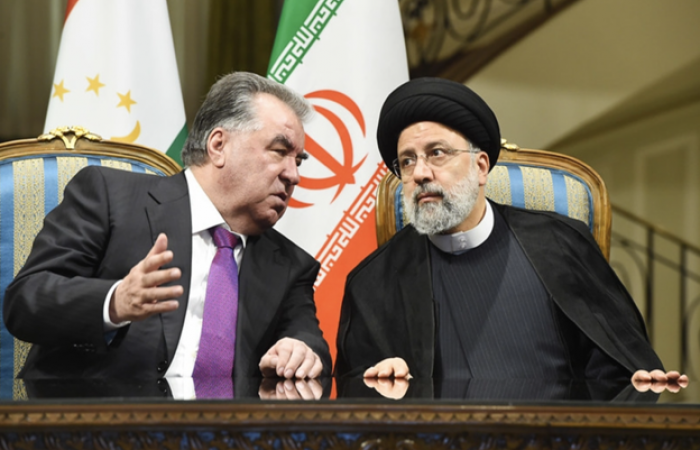
Iran and Tajikistan, in a change of course, appear to have opened a new chapter of friendly relations. After years of accusations from the Tajik government that Iran was supporting militant activity, the two countries, over the past month, have signed several agreements increasing co-operation in various areas. Tajik President, Emomali Rahmon, travelled to Tehran on an official visit at the end of last month to sign the documents. While no agreements were signed on security, there is a feeling among analysts that one may come soon. The accords illustrate the weakening of the Kremlin’s influence in Central Asia and the downstream effects of their invasion of Ukraine. They also reflect a widespread desire, noticed across the whole Central Asia region, to lessen dependence on Moscow and develop a more diversified relationship with other countries and blocs, including the US, the EU and Japan.
Editor's choice
Interview
Interview with the Ambassador of Kazakhstan to the EU:  "We have very high hopes that the results of the referendum will have deep positive consequences for the future of our country"

Interview with the Ambassador of Kazakhstan to the EU: "We have very high hopes that the results of the referendum will have deep positive consequences for the future of our country"

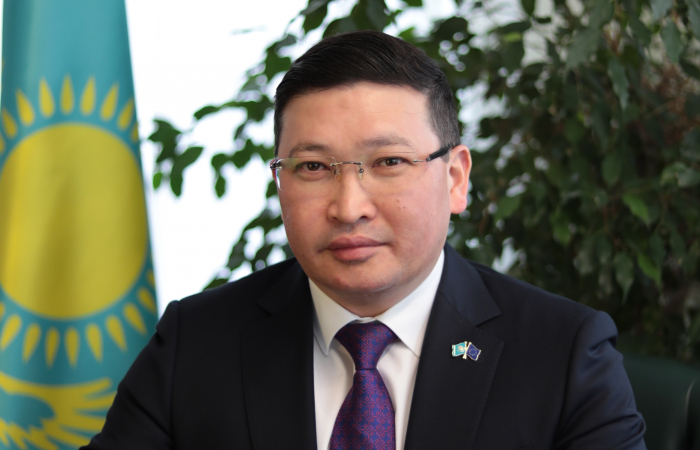
On Sunday, 5 June, the people of Kazakhstan voted overwhelmingly in favour of big changes to the country's constitution which envisage a redistribution of presidential powers to various other state organs and a system of checks and balances. The changes complement other ongoing political and economic reforms that have been initiated by president Kassym-Jomart Tokayev over the last three years. Commonspace.eu interviewed Ambassador Margulan Baimukhan, Head of the Mission of Kazakhstan to the EU about the importance of the constitutional changes, the role of Kazakhstan in Central Asia and the changes taking place in his country. "We have very high hopes that the results of the referendum will have deep positive consequences for the future of our country. It brings us one step closer to become a democratic state. Most importantly for me is that the referendum result paves the way for increasing the participation of the population in the governance of the country. It will nurture the culture of people in standing and defending their rights", the Ambassador said. Ambassador Baimukhan also spoke about the relations of his country with the European Union.  "The European Union was, is and will be at the forefront of our foreign policy agenda."
Editor's choice
News
Enchanting but distant Tajikistan says it is ready for increased co-operation with Europe

Enchanting but distant Tajikistan says it is ready for increased co-operation with Europe

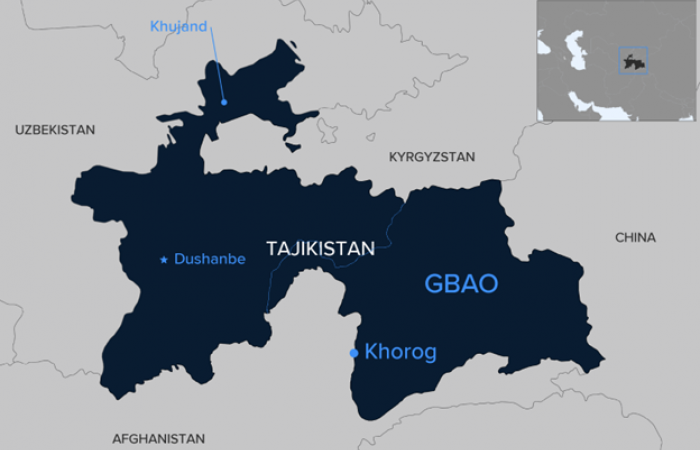
At a recent promotion forum in Brussels senior Tajik officials emphasised that their country was business friendly and tourist welcoming. Young and eager Tajik entrepreneurs also highlighted that both country and society were ready for qualitative step-change in relations with Europe. On its part the EU has signalled it is ready to increase co-operation with the strategically located country, including through enhanced partnership agreements.
Editor's choice
News
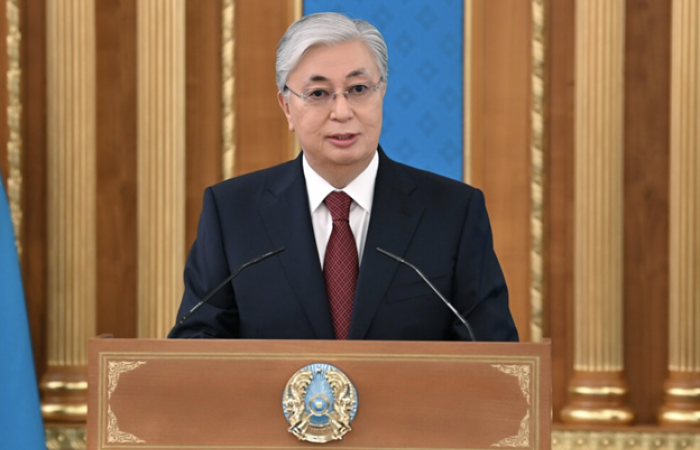
Tokayev sets the date for constitutional referendum that promises to hail a new era for Kazakhstan

Tokayev sets the date for constitutional referendum that promises to hail a new era for Kazakhstan

President Kassym-Jomart Tokayev of Kazakhstan announced Thursday (5 May) that on 5 June, a constitutional referendum will take place. The referendum will ask voters to approve an overhauled constitution that the government say will launch Kazakhstan’s Second Republic. To modernize Kazakhstan, Tokayev will need to implement deep-rooted reforms to institute substantial reforms, in practice and not merely in a declaratory fashion as was the habit with his predecessor. The constitutional changes are seen as a good start, but can certainly not be the end of the story if the promise of a new Kazakhstan is to be delivered.
Editor's choice
News
Sectarian carnage in Afghanistan leaves dozens of dead and wounded

Sectarian carnage in Afghanistan leaves dozens of dead and wounded

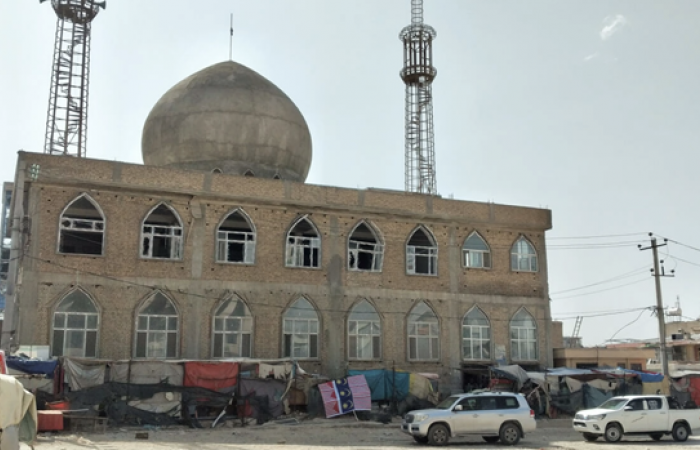
The terrorist jihadist group, "Islamic State" (IS) claimed responsibility for a cluster of deadly attacks across Afghanistan on 21 April. The explosions were aimed at mosques as well as Taliban affiliated vehicles. At least 31 were killed and 87 were wounded. Another blast was reported on 22 April with 33 reported dead. No group is yet to claim responsibility for the latest attack.The IS say that the actions are part of a global campaign to “avenge” the death of its former leader and spokesman. While the Taliban government in Afghanistan say that they have defeated the extremist Jihadist group, the outburst of attacks highlights the continuing security risk that the group poses. Afghanistan has suffered several attacks over the past week as at least 47 were killed after Pakistan conducted airstrikes in Eastern Afghanistan.