


Central Asian countries make diplomatic adjustments

The Foreign Ministers of both Kyrgyzstan and Uzbekistan have stepped down in the past few weeks. Kyrgyz FM, Ruslan Kazakbaev, resigned on 22 April and Uzbek FM, Abdulaziz Komilov, left his post on 27 April. The resignations come at a time of uncertainty in the Central Asia region.

In Kyrgyzstan, Erbol Sultanbaev, a spokesperson for President Sadyr Zhaparov, told RFE/RL on 22 April that Kazakbaev had stepped down. A lawmaker since 2015, Kazakbaev had been the FM since 14 October 2020 after previously serving in the same position from 2010 to 2012. The statement did not provide any reasons for the resignation, however, the decision came on the same day Russian FM Sergey Lavrov met with Central Asian Foreign Ministers. President Zhaparov announced two days later through his press service that he had appointed Jeenbek Kulubaev as acting Minister for Foreign Affairs. Kulubaev, a career diplomat, was the previous Head of the Foreign Policy Department of the Presidential administration. Kulubaev, also the former ambassador to China and specialises in relations with the country. The move may illustrate that Kyrgyzstan is focusing on shoring up relations with Beijing rather than with Moscow.

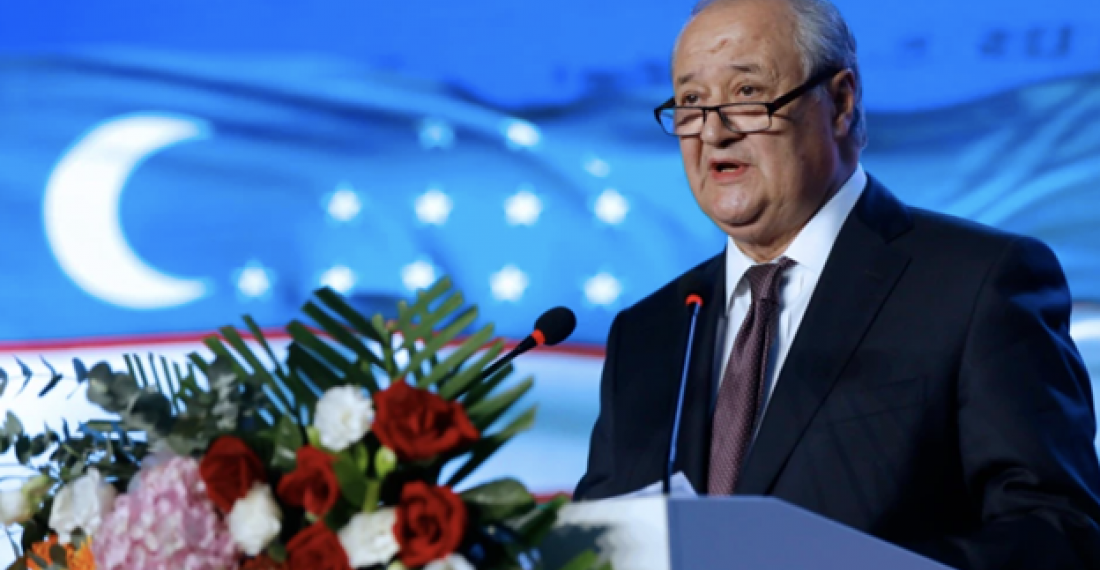
While little is known of the reasons for Kazakbaev’s departure, for Uzbek FM Komilov, the rationale for the dismissal is clearer. In a speech to lawmakers (17 March), Komilov supported the Ukrainian position of territorial sovereignty. He said “Firstly, the military actions and violence must be stopped right away. The Republic of Uzbekistan recognizes Ukraine's independence, sovereignty, and territorial integrity. We do not recognize the Luhansk and Donetsk republics.” The statements came as a surprise; Central Asian countries, due to their deep economic and political ties to Russia, are usually careful to not make large pronouncements on controversial actions carried out by the Kremlin.

After not being seen in public for close to two weeks after the speech, the Uzbek Foreign Ministry said Komilov was being treated for a “chronic illness” in the capital before being moved to an unspecified foreign country. Nearly a month after his abrupt departure from the public eye, Presidential spokesperson Sherzod Asadov said (27 April) that Komilov was to take up another role as deputy secretary of the presidential Security Council. Komilov has been a staple of Uzbek diplomacy dating back decades. Former US ambassador to Turkmenistan tweeted, “He has dominated Uzbek diplomacy to a degree not seen elsewhere in Central Asia […] As we say, he leaves big shoes to fill.”


Sources: CommonSpace.eu with RFE/RL (Prague), 24.kg (Bishkek), and other media agencies
Picture: Abdulaziz Komilov in April 2019 (AP)
 

Related articles

Editor's choice
News
Council of Europe launches new International Claims Commission for Ukraine

Council of Europe launches new International Claims Commission for Ukraine

Thirty-four countries and the European Union have signed a new convention establishing an International Claims Commission for Ukraine at a diplomatic conference co-hosted by the 46-nation Council of Europe and the Netherlands in the Hague. The diplomatic conference was attended by leaders and high-level representatives from over 50 states, including the President of Ukraine, Volodymyr Zelenskyy, the President of the Republic of Moldova, Maia Sandu, and the Prime Minister of the Netherlands, Dick Schoof.  “Today marks a major step forward in ensuring accountability for Ukraine. The International Claims Commission represents justice and hope for tens of thousands of victims—our determination that those who have suffered will not be forgotten. I call for quick ratifications so we can get the commission rapidly up and running for the people of Ukraine,” said Council of Europe Secretary General Alain Berset. Ukrainian President Volodymyr Zelenskyy said: “We expect that every mechanism for compensation from the Register of Damage and Claims Commission to the actual payments – will start working and receive strong and sufficient international support, so that people can truly feel that any kind of damage caused by the war can be compensated. This war, and Russia’s responsibility for it, MUST become a clear example – so that others learn not to choose aggression.” “Accountability is about creating the conditions for peace that endures. And therefore, accountability is a condition of security – today and for the future. But accountability is not only about Ukraine. And it is not only about one aggressor and one victim. Accountability is about Europe. About every country in Europe. It is about whether Europe, as a whole, is willing to defend its peace,” said Maia Sandu, President of the Republic of Moldova, which currently holds the Presidency of the Council of Europe’s Committee of Ministers. The Prime Minister of the Netherlands, Dick Schoof, said: “Every day Russia is deliberately bombarding homes, destroying businesses and damaging infrastructure in Ukraine. Russia must compensate Ukraine for the damage caused. That is why we have launched the International Claims Commission for Ukraine and we are honoured to host it.” The International Claims Commission will be the second part of a comprehensive compensation mechanism related to Russia’s war of aggression, building on the existing Register of Damage for Ukraine. The claims commission will be established within the framework of the Council of Europe and will also be open to other countries. The Register of Damage for Ukraine, created in 2023, collects and records compensation claims submitted by individuals, organisations and public bodies in Ukraine. Forty-four states and the European Union have so far joined the Register, which has already received 86,000 claims. The International Claims Commission will review, assess and decide upon claims submitted to the Register of Damage for Ukraine and determine the amount of compensation, if any, which is due in each case. The convention establishing the commission will enter into force once it has been ratified by 25 signatories, as long as sufficient funds have been secured to support its initial work.

Popular

Editor's choice
News
Council of Europe launches new International Claims Commission for Ukraine

Council of Europe launches new International Claims Commission for Ukraine

Thirty-four countries and the European Union have signed a new convention establishing an International Claims Commission for Ukraine at a diplomatic conference co-hosted by the 46-nation Council of Europe and the Netherlands in the Hague. The diplomatic conference was attended by leaders and high-level representatives from over 50 states, including the President of Ukraine, Volodymyr Zelenskyy, the President of the Republic of Moldova, Maia Sandu, and the Prime Minister of the Netherlands, Dick Schoof.  “Today marks a major step forward in ensuring accountability for Ukraine. The International Claims Commission represents justice and hope for tens of thousands of victims—our determination that those who have suffered will not be forgotten. I call for quick ratifications so we can get the commission rapidly up and running for the people of Ukraine,” said Council of Europe Secretary General Alain Berset. Ukrainian President Volodymyr Zelenskyy said: “We expect that every mechanism for compensation from the Register of Damage and Claims Commission to the actual payments – will start working and receive strong and sufficient international support, so that people can truly feel that any kind of damage caused by the war can be compensated. This war, and Russia’s responsibility for it, MUST become a clear example – so that others learn not to choose aggression.” “Accountability is about creating the conditions for peace that endures. And therefore, accountability is a condition of security – today and for the future. But accountability is not only about Ukraine. And it is not only about one aggressor and one victim. Accountability is about Europe. About every country in Europe. It is about whether Europe, as a whole, is willing to defend its peace,” said Maia Sandu, President of the Republic of Moldova, which currently holds the Presidency of the Council of Europe’s Committee of Ministers. The Prime Minister of the Netherlands, Dick Schoof, said: “Every day Russia is deliberately bombarding homes, destroying businesses and damaging infrastructure in Ukraine. Russia must compensate Ukraine for the damage caused. That is why we have launched the International Claims Commission for Ukraine and we are honoured to host it.” The International Claims Commission will be the second part of a comprehensive compensation mechanism related to Russia’s war of aggression, building on the existing Register of Damage for Ukraine. The claims commission will be established within the framework of the Council of Europe and will also be open to other countries. The Register of Damage for Ukraine, created in 2023, collects and records compensation claims submitted by individuals, organisations and public bodies in Ukraine. Forty-four states and the European Union have so far joined the Register, which has already received 86,000 claims. The International Claims Commission will review, assess and decide upon claims submitted to the Register of Damage for Ukraine and determine the amount of compensation, if any, which is due in each case. The convention establishing the commission will enter into force once it has been ratified by 25 signatories, as long as sufficient funds have been secured to support its initial work.

