OSCE pushes for enhanced talks on NK - tells sides to stop making excuses.

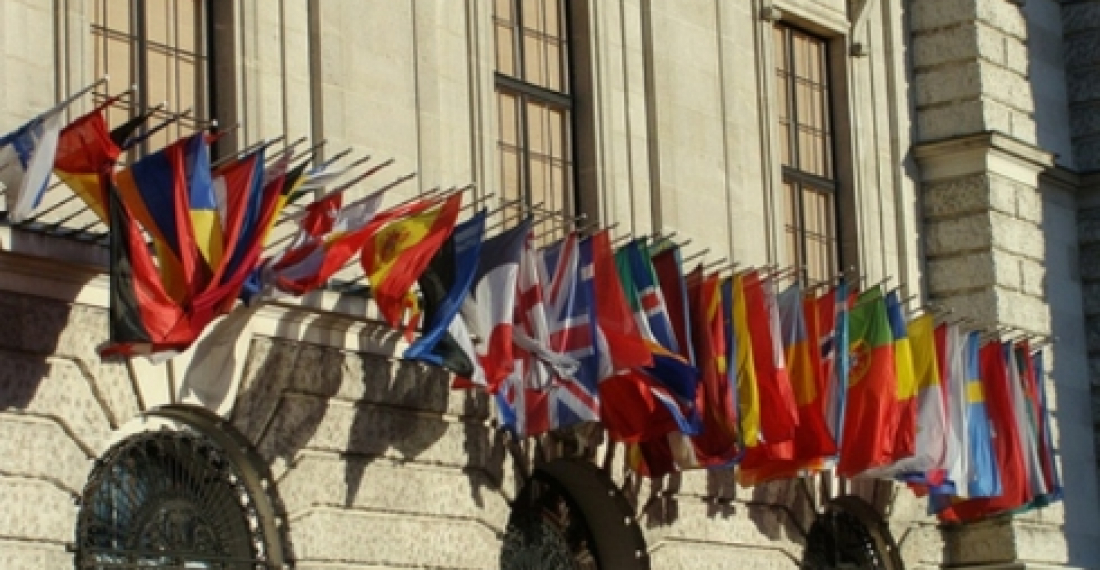
In a terse statement issued during the weekend the leadership of the Organisation for Security and co-Operation in Europe (OSCE) and the Minsk Group co-Chair said that the current military situation constituted a threat to regional stability.

The OSCE Chairperson-in-Office, Serbia's Foreign Minister Ivica Dacic met the Co-Chairs of the OSCE Minsk Group (Ambassadors Igor Popov of the Russian Federation, James Warlick of the United States of America, and Pierre Andrieu of France) on Saturday (7 February) to discuss developments in the Nagorno-Karabakh peace process. The OSCE Secretary General Lamberto Zannier and the Personal Representative of the CiO Ambassador Andrzej Kasprzyk also joined the meeting.

In a statement issued by the OSCE they stated:

"We all agree that the military situation along the Line of Contact and Armenia-Azerbaijan border is deteriorating, posing a threat to regional stability and endangering the lives of civilians. The 12 casualties and 18 wounded cited by Ambassador Kasprzyk's monitoring reports in January represent the highest confirmed number of victims in the first month of a year since the 1994 ceasefire agreement. After 2014, in which approximately 60 people lost their lives, we are alarmed that this disturbing violent trend has continued.

There is no military solution to the conflict, and the sides must cease using force. We call on the sides to end incursions, cease targeting villages and civilians, stop the threat of reprisals and the use of asymmetric force, and take additional steps to reduce tensions and strengthen the ceasefire. We find it unacceptable that the security guarantees are not fully observed during OSCE monitoring exercises.

Additionally, we reaffirm the December 4, 2014 joint statement of the Heads of Delegation of the Co-Chair countries at the Basel Ministerial Council, calling on the sides to settle humanitarian issues, including the return of bodies and prisoners, in the spirit of the Astrakhan statement of October 2010.

The Minsk Group Co-Chairs, with the full support of the Chairperson-in-Office, are prepared to host an intensified negotiation process that can bring to a peaceful end a conflict that has scarred the region for too long. We strongly urge the sides to find the political will to begin this process immediately without excuses."

Over the last days the Minsk Group co-chair met seperately with the Foreign Ministers of Azerbaijan and Armenia. Statements issued after the two meetings indicate the co-Chair are taking a more robust approach to the sides and are concerned that the current situation on the front line may spiral out of control.


source: commonspace.eu with OSCE.org
Related articles

Editor's choice
News
Aden under curfew, as problem in Yemen's south deepens

Aden under curfew, as problem in Yemen's south deepens

The port city of Aden, in Yemen's south, has been put under curfew, as the rift in the country between  the Saudi led coalition which  backs Yemen's presidential governing council, and the southern forces led by the Southern Transitional Council (STC), deepens. Abdul Rahman al-Mahrami, a member of the Yemeni Presidential Governing Council and commander of the al-Amalik brigades, has ordered a curfew in the temporary capital, Aden, "to maintain security". "A curfew has been imposed throughout Aden Governorate from 9:00 p.m. to 6:00 a.m., in accordance with the instructions of Commander Abdul Rahman al-Mahrami, a member of the Presidential Management Council," the statement said. It states that only security and military personnel, as well as medical and technical teams with approved permits, will be allowed to move in the area during these hours. Yemen's presidential council, which is backed by Saudi Arabia and which already is in a struggle with the Houthi Movement in the north of the country who also occupy the capital Sanaa, two days ago issued an order for the arrest of the head of the Southern Transitional Council (STC),, Aidarous al Zubaidi. The STC have wide support among people in the South, and advocate that South Yemen restores its independence. The coalition warned of further escalation in Aden, long regarded as an STC stronghold, as the Presidential Leadership Council (PLC) chief accused STC leader Aidarous Al Zubaidi of “high treason” and announced the revocation of his membership in the governing body. The moves mark a sharp escalation in tensions within the anti-Houthi camp, despite National Shield Forces, rivals of the STC and former allies, having recently retaken control of Hadhramaut and Mahra from southern fighters. The STC’s takeover of the two regions last month angered Saudi Arabia and contributed to igniting the current internal conflict. (click the picture to read more)

Popular

Editor's choice
Interview
Thursday Interview: Murad Muradov

Thursday Interview: Murad Muradov

Today, commonspace.eu starts a new regular weekly series. THURSDAY INTERVIEW, conducted by Lauri Nikulainen, will host  persons who are thinkers, opinion shapers, and implementors in their countries and spheres. We start the series with an interview with Murad Muradov, a leading person in Azerbaijan's think tank community. He is also the first co-chair of the Action Committee for a new Armenian-Azerbaijani Dialogue. Last September he made history by being the first Azerbaijani civil society activist to visit Armenia after the 44 day war, and the start of the peace process. Speaking about this visit Murad Muradov said: "My experience was largely positive. My negative expectations luckily didn’t play out. The discussions were respectful, the panel format bringing together experts from Armenia, Azerbaijan, and Turkey was particularly valuable during the NATO Rose-Roth Seminar in Yerevan, and media coverage, while varied in tone, remained largely constructive. Some media outlets though attempted to represent me as more of a government mouthpiece than an independent expert, which was totally misleading.  Overall, I see these initiatives as important steps in rebuilding trust and normalising professional engagement. The fact that soon a larger Azerbaijani civil society visits to Armenia followed, reinforces the sense that this process is moving in the right direction." (click the image to read the interview in full)