Domestic politics has the potential to influence the balance of power between Yerevan and Baku, argues Benyamin Poghosyan in this op-ed
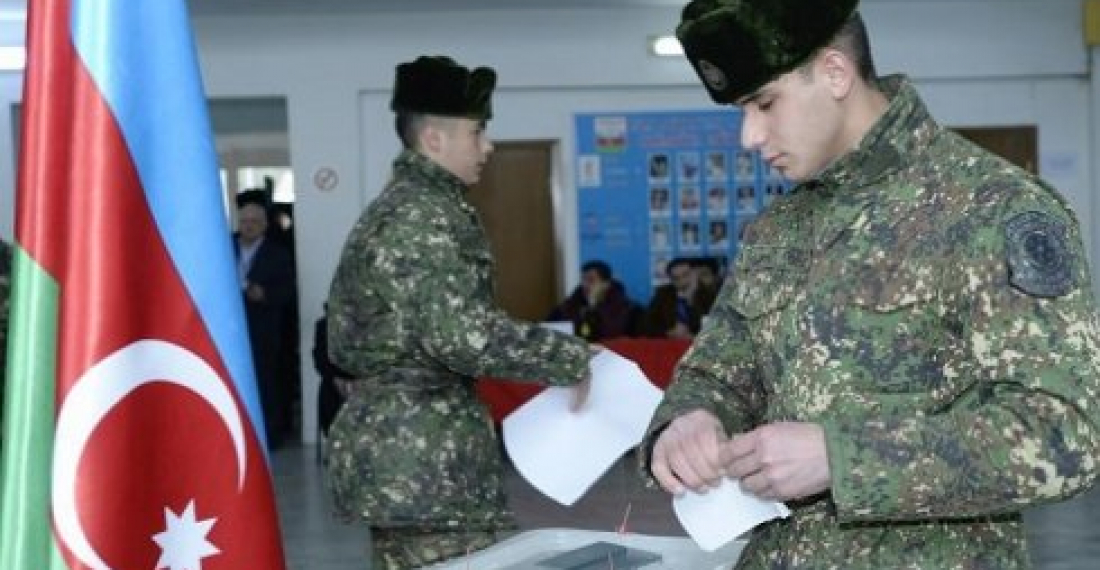
On February 9, 2020 early parliamentary elections were held in Azerbaijan. According to preliminary results the ruling "New Azerbaijan" party has won a clear majority, while, some representatives of opposition, such as Erkin Gadirli from REAL, have entered the Parliament. However, the main speculation around the elections was not the name of the winner; few if any had expectations that ruling party may lose the elections, or that the process will be in full compliance with liberal democracy requirements. The key question is the implications of these elections for the domestic power balance in Azerbaijan, and the future development of the country. Early parliamentary elections were the last episode of a rapid domestic transformation, which was launched in autumn 2019 and resulted in the overhaul of the Government and Presidential administration. Many domestic and foreign experts dealing with Azerbaijan were arguing that the key driver behind these changes was the fighting between different Azerbaijani clans. However, some experts argue that recent developments in Azerbaijan are not merely clan fights, they believe that Azerbaijani leadership has understood that the governance model in place since the 1990s had exhausted itself, and that modernization was urgently needed. The ascent to power of younger, well educated professionals is the key tool for Azerbaijani leadership to start the long waited modernization.
Armenia was carefully following the Azerbaijani elections. Given the decades long rivalry with Azerbaijan with no end in sight, a clear understanding of Azerbaijani domestic developments is of crucial importance for Armenia. The primitive clan fighting which may decrease Azerbaijan national power will be welcomed in Yerevan, while the long term strategy towards state modernization may cause serious concerns. Given the relative closed nature of Azerbaijani society and state and the lack of verified sources of information, Armenia is facing a tough task of making right assessments and decisions.
Meanwhile, Armenia itself is in an ongoing process of domestic transformations. After the April 2018 "Velvet revolution", and the December 2018 early parliamentary elections, both executive and legislative branches of government came under the firm control of Prime Minister Nikol Pashinyan. Despite disagreements with the heads of some law enforcement bodies, which resulted in the resignation of the heads of the National Security Service and Police in September 2019, and the rumors and revelations of attempted "real or hybrid" coups, the Prime Minister's position remains quite strong.
Since spring 2019 the main battle in Armenian domestic politics has been the struggle over the Constitutional Court. The authorities are stating that there were irregularities during the elections of the seven court members who were appointed before the April 2018 revolution, and that a "secret deal" was inked between former President Serzh Sargsyan and the current President of the Constitutional Court to give him that position. Thus, according to this logic, seven of nine judges of the court lack the legitimacy within society and should resign. A criminal investigation was opened against the President of the Constitutional court and his house was searched on January 24, 2020. In December 2019 the Parliament adopted package of special laws on the introduction of an early retirement system for the judges of the Constitutional Court. It stipulates that if the serving judges of the Constitutional Court resign within two months, they will receive a pension equivalent to their current salary until the expiry of their term of office. The deadline of this offer is 27 February 2020.
Simultaneously, both the parliamentary and non-parliamentary opposition argue that the Constitutional court is the only body not under the direct control of the Prime Minister, and thus plays a key role in creating at least some checks and balances. Another argument against the Government position claims that judges, and especially Constitutional court members, should not be replaced after each change of Government, otherwise any future government of Armenia may seek to change the judges appointed by its predecessors, and Armenia may enter a vicious circle of judicial turbulence.
As apparently none of the seven judges is going to use the right of early retirement, on February 6, 2020 the ruling "My step" coalition in Parliament adopted a decision to organize a referendum for constitutional amendments, which will cancel the authorities of the seven judges of the constitutional court. On February 9, despite calls by different political and civil society organizations to send Parliament's decision to the Constitutional Court to check its compatibility with the constitution, the Armenian President signed a decree to hold the referendum on April 5, 2020. However, many lawyers and some political forces argue that Parliament's decision violated several laws, and thus the upcoming referendum is illegal. Meanwhile, the ruling coalition, and the Prime Minister, himself are depicting the referendum as the final battle against the "old, corrupt regime" and the new phase of the "Velvet revolution", as a means of mobilizing public opinion in support of the referendum proposals.
Regardless of legal considerations, if the Constitutional Court members don't use their right of early retirement, Armenia will face a tense political season. The Prime Minister will seek to once more mobilize large parts of society under the banner of revolution, while the parliamentary and non-parliamentary opposition will attempt to use the referendum as a tool for fighting back, accusing the Prime Minister of overt efforts to establish full control over all branches of the government, and a one-man rule. Any result of the referendum will most probably be appealed in the courts, potentially triggering long term legal battles. Given the establishment of the constitutional amendments commission in January 2020, which should elaborate a draft for extensive constitutional amendments, which will be put to another referendum in the first half of the 2021, Armenia faces a tough and tense political year ahead.
Thus, both Azerbaijan and Armenia are in the midst of domestic transformations with unclear results. Azerbaijan may be embroiled in another circle of clan fighting, but there are some chances of cautious efforts towards state modernization. Armenia faces tough political season which may result in long lasting legal battles. Meanwhile, regardless of these developments, the rivalry between Armenia and Azerbaijan will continue, but domestic politics has the potential to influence the balance of power between Yerevan and Baku.
source: Benyamin Poghosyan is the Founder and Chairman of the Center for Political and Economic Strategic Studies in Yerevan.
photo: Azerbaijani soldiers cast their votes at a polling station in Baku, Azerbaijan, Feb. 9, 2020. (Photo courtesy of Xinhua news agency, Beijing)
The views expressed in opinion pieces and commentaries do not necessarily reflect the position of commonspace.eu or its partners