Dennis Sammut discusses the future of the OSCE in this op-ed which first appeared on the website of the journal Security and Human Rights Monitor
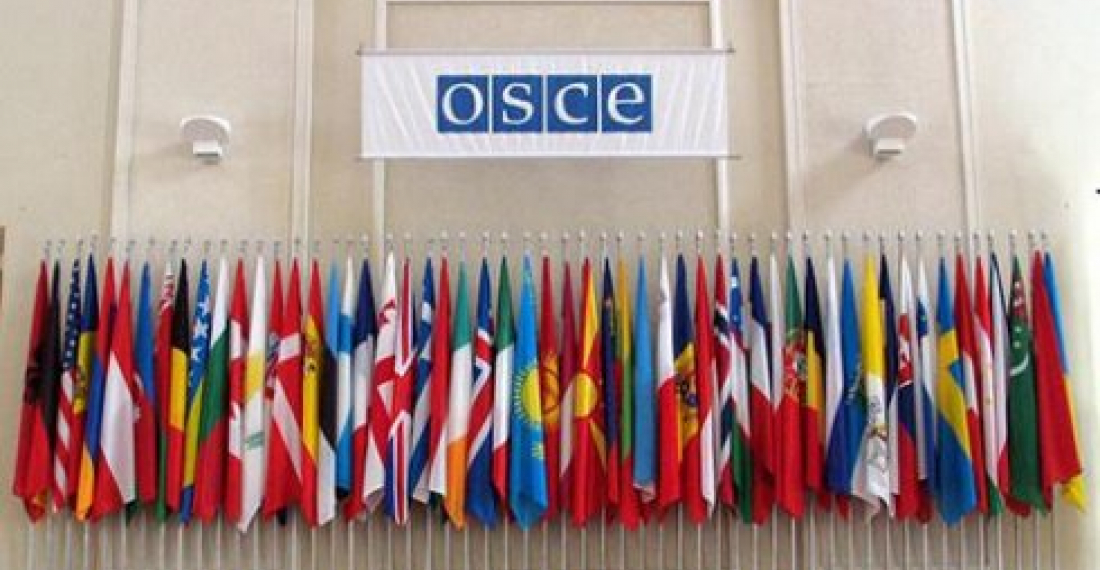
The Organization for Security and Co-operation in Europe (OSCE) is in deep trouble. This venerable institution, created in 1995 as part of Europe's transition out of the Cold War, faces an existential crisis, triggered by the abrupt termination of the mandates of its Secretary General and the heads of its three institutions - the Office for Democratic Institutions and Human Rights (ODIHR), the High Commissioner on National Minorities (HCNM) and the Representative on Freedom of the Media (RFoM).
The failure of the representatives of the 57 participating States to reach a consensus leaves the organization's executive structures leaderless, at least for several months. Replacements are not expected to be appointed until the end of the year at the earliest.
A dispute on the reappointment of the RFoM was unexpectedly allowed to escalate to engulf all four senior positions in the organisation.
The ongoing crisis raises serious questions about the organization's fundamental goals - as well as about the very future of the OSCE itself.
related content on commonspace.eu: The OSCE in crisis
Roots of dysfunction
The OSCE is the successor of the Conference for Security and Co-operation in Europe (CSCE), which helped contain, and later defuse, the Cold War between the United States (U.S.) and its European allies in NATO on the one hand, and the Soviet Union and its allies in the Warsaw Pact on the other.
The CSCE produced important documents such as the 1975 Helsinki Final Act, the 1990 Paris Charter and the Copenhagen Document, in addition to key conflict prevention tools, including on arms control. Turning the conference into an organization was meant to consolidate this process and to create a mechanism by which its many principles and ideas could be implemented.
But despite agreement on that larger aspiration, the OSCE suffered from divergent expectations by participating States from the very beginning.
For its part, Russia had hoped the OSCE would lead to the dissolution of NATO, or at least ensure that the alliance would not expand its membership. Western countries, meanwhile, saw the OSCE as an organization through which "to manage relations with Russia", particularly in the former Soviet space, which Moscow quaintly calls "the near abroad".
Both sides were hugely disappointed. NATO membership has nearly doubled since the establishment of the OSCE, from 16 countries in 1994 to 30 today. And despite the "honeymoon period" between Russia and the West in the 1990s, the OSCE later failed to contain Russia's geopolitical ambitions under Vladimir Putin, particularly in the Caucasus region and in Ukraine - where the principles of sovereignty and territorial integrity enshrined in the Helsinki Final Act were openly flouted.
Living with this failure while still attempting to engage Russia as a constructive participant has long been a central test for the organization's leadership.
Thus, the OSCE has become less important for both sides, a trend which eventually reflected itself in the political commitment of participating States. With the exception of the Special Monitoring Mission to Ukraine in 2014, political support for using the OSCE as a primary instrument to address issues affecting security in the wider Europe have gradually diminished. Moreover, OSCE states have increasingly politicized administrative processes like approving the budget, appointing senior officials, and setting the agenda for meetings.
Many Foreign Ministers were not ready to invest time and political capital in the organization; some did not even show up at annual Ministerial Council meetings. For example, when was the last time the British Foreign Secretary and the French Foreign Minister attended an OSCE Ministerial meeting? Furthermore, during the annual Ministerial meeting in Milan in December 2018, the Italian Foreign Minister did not even bother to stay until the end of the two-day meeting.
Moreover, successive OSCE Secretary Generals succumbed to the same temptation to enlarge the bureaucracy and budget. Participating States began asking if they were getting any value for their money, while the annual OSCE budget debate became an occasion for recrimination. The current budget of approximately 140 million Euros may not be excessive, particularly when compared with other organizations, but compared to 18.9 million, which was the budget in the OSCE's first full year of existence in 1995, it is clear that the OSCE has become much costlier for its members.
Some attribute many of the organization's problems to its consensus-driven decision-making process, and particularly to the fact that any one country - regardless how small - can veto any decision. Yet, if at the peak of the Cold War the CSCE could make consensus-based decisions and produce a historic document such as the Helsinki Final Act, there are few reasons that agreeing on the OSCE budget should be so difficult.
For some countries, however, the compromises involved have become morally and financially too costly. This is maybe also one of the main reasons for the current crisis.
Time to scrap the OSCE?
Still, dysfunctional as it is, the OSCE remains an important framework for dealing with European security issues.
It is the guardian of the much-cherished Helsinki Final Act, and a forum that allows all European countries to sit together - with the additional participation of the U.S. and Canada - to discuss the security issues affecting a vast geographical space between Vancouver and Vladivostok. It also empowers small countries, even if at an organizational and political cost. Given the current global tensions, the collapse of many arms control mechanisms, and the increasing signs of authoritarianism and radicalization, it is needed more than ever.
Those who champion the OSCE - in the chancelleries of Europe, as well as in the think tank community, civil society and the academic world - need to stand up in defense of the organization.
It is also regrettable that the mainstream media has ignored the OSCE for so long. Some outlets are not represented in Vienna, which may be a contributing factor for the bad behavior of certain delegations, since neither their capitals nor their media are paying much attention.
But the current situation should alert journalists across the Continent to the seriousness of the crisis unfolding inside the OSCE.
From crisis to opportunity
A long overdue period of reflection on the future of the OSCE is now underway, although it should have been triggered by better circumstances. The organization needs to refocus on its core task: maintaining security through cooperation.
The incoming 2021 Swedish Chairmanship has already promised a lot when its representative unveiled his country's priorities to the Permanent Council on July 17. He declared that Sweden's "primary focus will have to be to go back to basics", and that the "emphasis will be on the fundamental tasks of the OSCE: to defend the European security order and to uphold the OSCE comprehensive concept of security".
Mapping a way forward will not be easy, but it is possible. Hopefully, the current Albanian Chairmanship will be able to resolve the issue of appointing a new Secretary General and the other three heads of institutions by the time foreign ministers meet in Tirana in December.
But then Sweden must move forward decisively. This should entail an extraordinary Ministerial meeting in the first half of 2021, during which the process of renewal can begin in earnest. This may require slimming down the organization. One radical option would be a shake-up of the institutions, giving more autonomy to ODIHR, and re-inventing the positions of HCNM and the RFoM to the level of Special Representatives of the Chairperson-in-Office. That way, they can be insulated from the more excessive use of the consensus rule.
But most of the energy and resources of the OSCE need to be redirected back to fundamental security issues, with the dialogue both intensified and upgraded, and with a renewed and higher sense of ambition about what needs to be done - something that has unfortunately been sorely missing in recent years.
Source: Dennis Sammut is the Director of LINKS Europe and is a regular commentator on European security issues and on relations between Europe and its neighbourhood. This op-ed first appeared on the website of the Journal Security and Human Rights Monitor
The views expressed in opinion pieces and commentaries do not necessarily reflect the position of commonspace.eu or its partners