Opinion: In this op-ed Dennis Sammut discusses two competing narratives emerging in Brussels and Ankara. Often blurred and episodical, they need to be challenged where necessary
Earlier this week I was in Istanbul to participate in the first global forum of TRT World, the new international channel of the Turkish state broadcaster. It was attended by the great and the good of Turkey - President Erdogan, Prime Minister Binali Yildirim, Foreign Minister Cavusoglu and pretty much anyone who is anyone in the Turkish ruling establishment.
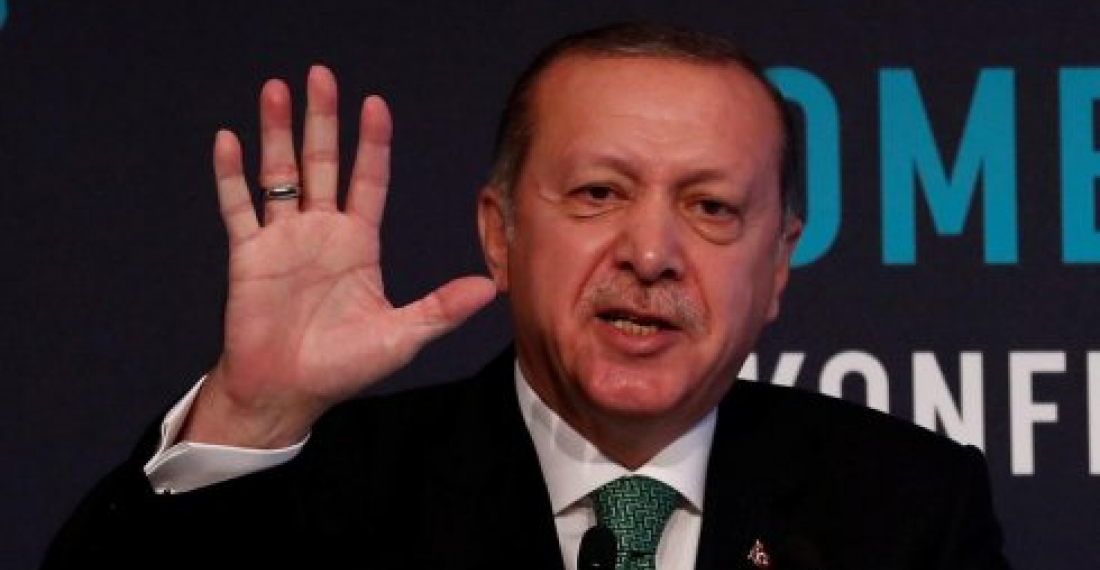
The message from one and all was clear and unambiguous: Turkey is back; it is once more a global power, and it is ready to challenge the existing global hegemony. President Erdogan at this year's UN General Assembly, flashed out the palm of his hand and said that the world was more than five permanent members of the United Nations, and the global order that they represent. He repeated this at the Istanbul forum this week. Turkey's message is that the world order established after the second world war is no now longer fit for purpose. The many problems around the world are a sign of how broken the system is, and Turkey is now strong enough and willing enough to challenge this: to stand up and be "a voice for the oppressed and a conscious for the oppressors".
This was a forum of numbers. Speakers endlessly rolled out numbers: from the 5 hegemons to the US$30 billion Turkey has spent so far on supporting 3.5 million Syrian refugees, to the paltry 820 million euros the EU has contributed to this effort, to 236 the number of diplomatic missions that Turkey now has all over the world to help promote its "enterprising and humanitarian foreign policy", as it spends US$ 6 billion (in 2016) in humanitarian and development aid, making it second only to the US in terms of GNP.
It is all about altruism, speaker after speaker repeated, with President Erdogan, in the concluding speech twice reminding the audience of the Turkish axiom that "the hand that gives is more auspicious than the hand that receives".
Whilst this was going on in Istanbul, on the other side of Europe, EU leaders meeting in Brussels, were discussing Turkey, in terms more akin to dealing with a distant irritating relative than with an emerging global power, threatening to slow down funding ostensibly available as part of Turkey's EU membership process. As Donald Tusk, the president of the European Council put it, the European Commission was tasked "to reflect on whether to cut and re-orient pre-accession funds. It was a substantive discussion, we want to keep the door open to Ankara, but the current reality in Turkey is making this difficult. It was also stressed that Turkey needs to respect all Member States in its relations with the EU, including when it comes to the implementation of the existing Customs Union agreement". Individual EU leaders, were more candid. German Chancellor Angela Merkel said Turkey was "moving away step by step from something we consider as preconditions for accession".
The two narratives could not have been further away from each other, and in their pure interpretation, further away from reality. On both the Turkish and the European side the list of grievances against the other are mounting up, spoiling the atmosphere, destroying trust, and making it much more likely that one or the other sides, sooner or later will make a fatal mistake. Not all the grievances are unfounded. When president Erdogan complains about the slow and weak reaction in Europe and the United States to the 15 July 2016 coup attempt he is absolutely right. An armed rebellion against a legitimate and democratically elected government - with the parliament bombed an attempted assassination of the president and many civilians killed - would have probably triggered a strong and quick response if it happened in a remote African country. That it happened in an EU candidate state, and that no senior EU leader deemed it necessary to immediately fly to Ankara to offer solidarity remain not understandable, and not only to Turks - a major failure of EU diplomacy and EU decision making mechanism. It remains a sore point with president Erdogan, who raised it again during this week's Istanbul forum, together with the issue how the EU had failed to pay up the amount it had promised to support Turkey's efforts on behalf of Syrian refugees, and Turkish accusations that the EU and US are not helping Turkey fight its terrorist problems. Turkish officials are cagier when it comes to the issue of the response of the Turkish state following the July 2016 coup attempt: the mass arrests, purges of the civil service and clampdown on the space for media and civil society.
Read more: The AK party in Turkey: in government, and at last in power
And then there is the Kurdish issue, and the presence of sympathisers to the outlawed PKK in Europe, much to Ankara's irritation. Where does freedom of speech stop and terrorism begin? With Catalonia looming in the background this issue may become even thornier for European politicians to deal with now than in the past, regardless of the very different circumstances.
All this whilst ostensibly Turkey is preparing to become a full member of the EU. In both Brussels and Ankara I often hear these days that Turkish membership of the European Union will never happen. In my lifetime I have heard the word never used too many times - from "the Soviet Union will never collapse", to "Donald Trump will never become President of the United States" - to know that in politics one should never say never. Nonetheless it should be perfectly clear to everyone by now that the present EU accession talks with Turkey are never going to go anywhere in their present format. A country so large and complex as Turkey cannot simply follow the route of Slovakia and Slovenia to European integration. Yet despite the obvious problems, inconsistencies, and in some areas, unsuitability, a Turkey firmly anchored in the European Union will have huge advantages for both sides. The road map to that end game is however, yet not clear.
And in the meantime, President Putin of Russia, despite the fact that his country is one of Erdogan's five villains, has the Turkish president in his sight. Before the European leaders had time to reach their planes to return home from Brussels, he was on the phone to the Turkish president, no doubt massaging his ego. "Agreement was reached to continue personal contacts. Overall, the conversation was business-like and constructive, directed at strengthening bilateral cooperation and interaction on the regional agenda", said the Kremlin website.
The two narratives that we have heard in Brussels and Istanbul this week are blurred and episodical, and need to be challenged where necessary. The two sides need to be humble enough to listen to other's point of view - more patiently, more carefully and with more willingness to accept and deal with each other's concerns.
Turkey is a land full of colour. Those who try to see it, or depict it, in black or white terms are doing everyone a great disservice.
Dennis Sammut is the Director of LINKS (Dialogue, Analysis and Research). He participated in the 1st TRT World Forum in Istanbul on 18 and 19 October 2017, and contributed this op-ed for commonspace.eu
photo: President Erdogan of Turkey flashing his five fingers: "The world is more than five" he told participants at the TRT World Forum in Istanbul on 19 October 2017.