Currently Yerevan has almost no leverage to influence future developments around Nagorno Karabakh, argues Benyamin Poghosyan in this op-ed. In 2021, Armenia has no choice but to wait and watch the ups and downs in Russia – Turkey – Azerbaijan relations.
Since the end of the second Karabakh war in November 2020, Armenian, Azerbaijani, and international pundits have published many opinions and assessments focusing on the war, its causes and consequences, and the decisive victory of Azerbaijan. The strategic blunders of the Pashinyan government, the Russia – Turkey deal, and the aloofness of the US, are among the hotly debated issues about what contributed to the launch of the war, and the capitulation of Armenia. Some experts seek to forecast the distant future (5-10 years). They argue that Armenia will accept its defeat, will forget about territories taken by Azerbaijan during the war, and will seek to get material benefits through establishing economic cooperation with Baku and Ankara. Others believe that Yerevan will focus on rebuilding its economy and military, and on retaking at least part of the lost territories.
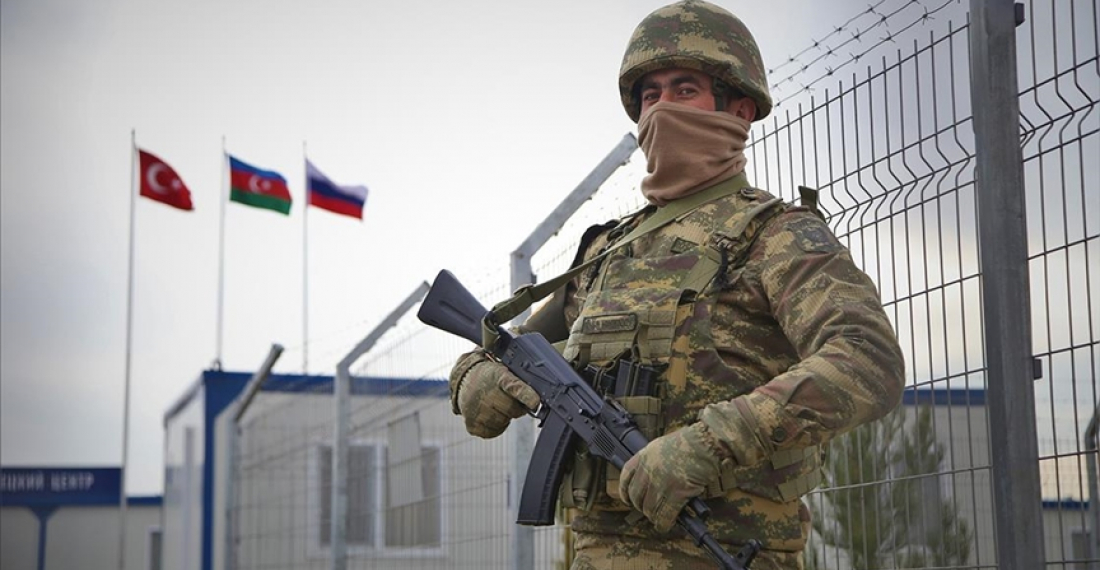
Meanwhile, the current situation in Nagorno Karabakh remains quite fluid. The establishment of the Russian military base headquartered in Stepanakert prevents any immediate resumption of large-scale hostilities. The opening of the Russia – Turkey joint monitoring center in the Aghdam region proves that Moscow and Ankara are keen to continue their cooperation on the Karabakh issue. However, this does not mean that in 2021 Nagorno Karabakh will not come back to the spotlight of experts and international media. Azerbaijan understands quite well that the vast majority of Karabakh Armenians who currently live within the Russian protectorate’s borders will not agree to receive Azerbaijani passports and live a "happy and quiet life" as Azerbaijani citizens. Simultaneously, Karabakh Armenians do not want to listen to anything about Azerbaijani population’s possible return into these territories, including some parts of Stepanakert. Meanwhile, it is evident to everyone – Armenians, Azerbaijanis, Russians, and Turks, that those Armenians who fled their homes from the territories which are now under Azerbaijani control due to the 2020 war will not have the possibility to return in the foreseeable future.
As Azerbaijan still views the 3000 square km of the de facto Russian protectorate as an inextricable part of Azerbaijan, while having no possibilities to invade it by force, the only way forward for Azerbaijan will be to put pressure on Armenians living in these territories and to squeeze them out. Azerbaijan will accompany this policy with the official statements of willingness to secure Armenians' rights and the simultaneous rejection of any offer to discuss Karabakh's future status within OSCE Minsk Group. The President of Azerbaijan has publicly stated that the 2020 war threw the question of the Karabakh status to the dustbin of history, and Baku has no intention to pull it back out from there.
One of the possible scenarios is Azerbaijan’s attempt to organize small-scale subversive actions along the roads connecting Stepanakert and other Karabakh cities with Armenian villages. Azerbaijan will reject any state involvement there and argue that those actions have been implemented by either criminal elements or by the relatives of the killed Azerbaijani soldiers triggered by revenge. Another option would be to launch the same actions against Armenian villages along the new line of contact, given that Russian peacekeepers do not stand on each meter of that line. On a political level, Azerbaijan and Turkey may offer Russia a deal to abandon Karabakh's remaining territories and concentrate its forces in Stepanakert as the center of the Russian military base while keeping control over the Goris - Stepanakert highway. In this scenario, Stepanakert will become the second Gyumri with its 40-50000 population providing the Russian soldiers with all necessary services. It is not easy to assess the Russian reaction to such an offer. Russia has been yearning for the base located in Stepanakert since the early 2000s and may not be interested in the fate of other small Armenian cities in Karabakh such as Martuni, Askeran, and Martakert.
The key in this equation is the Russia – Turkey relations. If both sides keep their tacit agreement on how to move forward in the South Caucasus, the Kremlin may not be interested in preventing Azerbaijan from gradually squeezing the Armenian population out of the Martuni, Askeran, Martakert cities and surrounding villages. Meanwhile, due to the US pressure on President Erdogan or some internal upheaval in Turkey, Ankara may change its attitude towards Russia and offer its services to the US within a Russia containment strategy. In that case, the current Russian protectorate in Nagorno Karabakh will become a significant asset for Russia as a forward operating base in the South Caucasus in a renewed confrontation with Turkey.
As for Armenia, Yerevan has almost no leverages to influence Nagorno Karabakh's developments. Currently, Russia protects the remnants of the unrecognized Nagorno Karabakh Republic and parts of the Armenian Syunik region. The Kremlin can quickly cede these territories to Azerbaijan if Moscow decides to punish Armenia for any reason. Armenia is also passing through a domestic political crisis, and faces snap parliamentary elections in June or September 2021. Domestic turmoil makes Armenia even weaker in regional geopolitics and forces Yerevan to wait and see what Russia and Turkey will decide on Nagorno Karabakh.
The situation may change in 2022 if the Biden administration elaborates a new, more assertive policy for the former Soviet space, including the South Caucasus. If the US seeks to weaken Russian influence in the region, Armenia will face the choice to align itself with the US and most probably lose not only Karabakh but also parts of the Syunik region with its land corridor with Iran. Another option could be to more firmly anchor itself within the Russian orbit and forget about getting new loans and financial aid from the Euro-Atlantic institutions. However, all this may happen no sooner than in 2022, while in 2021, Yerevan has no choice but to wait and watch the ups and downs in Russia – Turkey – Azerbaijan triangle.
Source: This op-ed was prepared for commonspace.eu by Benyamin Poghosyan, Founder and Chairman of the Center for Political and Economic Strategic Studies in Yerevan.
Photo: Turkish, Russian and Azerbaijani flags fly outside the Russia-Turkey Joint Monitoring Centre in Agdam (picture courtesy of the Anadolu News Agency, Ankara)