Editor's choice
News
Armenia-Azerbaijan Strategic Expert Platform: Members emphasise the importance of the present moment for the South Caucasus and call for the momentum to be used for the long-term peace and prosperity of the region

Armenia-Azerbaijan Strategic Expert Platform: Members emphasise the importance of the present moment for the South Caucasus and call for the momentum to be used for the long-term peace and prosperity of the region

On 27 February 2026, the members of the Armenia-Azerbaijan Strategic Expert Platform met in Antwerp, Belgium, to assess developments in the South Caucasus following the initialling of a peace agreement between Armenia and Azerbaijan on 8 August 2025 at the White House. The members described the present moment as one of major importance for the region and its neighbours, urging leaders and societies alike to use the current momentum to secure long-term peace and prosperity. Established in 2024 with the support of LINKS Europe, the Platform provides a space for direct dialogue and joint analysis between Armenian and Azerbaijani experts. The members also reaffirmed the importance of continued international engagement and expressed strong support for LINKS Europe’s ongoing peacebuilding work in the region. (Click on the image above for the full statement.)
Editor's choice
Interview
Thursday Interview: Dr. Anar Valiyev

Thursday Interview: Dr. Anar Valiyev

Dr. Anar Valiyev is an Associate Professor of Urban and Public Affairs at ADA University in Baku, Azerbaijan, with more than 18 years of experience in higher education. His research focuses on public policy, urban development, governance, and post-Soviet regional affairs. He holds a PhD in Urban and Public Affairs from the University of Louisville and has published widely on urbanisation, policy reform, and regional connectivity in the South Caucasus and beyond. This week, commonspace.eu spoke with Dr. Valiyev in Brussels ahead of a roundtable jointly organised by LINKS Europe Foundation and the European Policy Centre. He is taking part in a panel discussion focusing on the Armenia–Azerbaijan peace process, its implications for both countries and the wider region, the involvement of the European Union and the United States, and the challenges that lie ahead. In this interview, he reflects on how his research has evolved over nearly two decades in academia, examines the transformative potential of regional connectivity and trade, discusses the strategic role of energy in Azerbaijan’s foreign policy, and highlights the importance of people-to-people ties through education as a form of long-term soft power. (Read the full interview by clicking on the image above)
Editor's choice
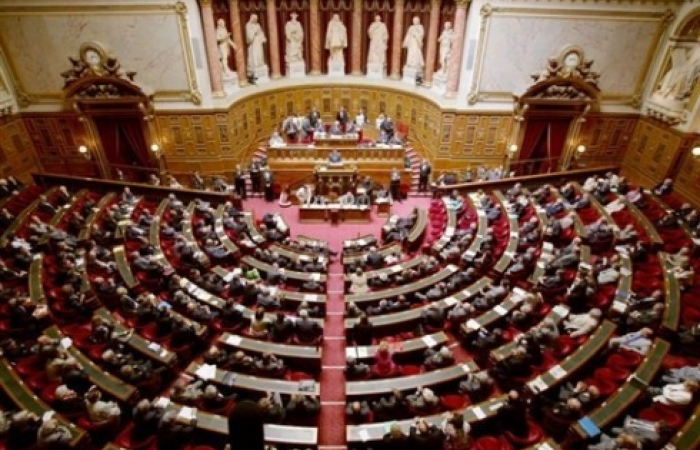
5 December: The pro-Kremlin United Russia party has won 238 of 450 seats during elections to the State Duma, the lower house of parliament, marking a significant drop compared to 315 seats after 2007's elections, the Central Election Committee said o

5 December: The pro-Kremlin United Russia party has won 238 of 450 seats during elections to the State Duma, the lower house of parliament, marking a significant drop compared to 315 seats after 2007's elections, the Central Election Committee said o

Ria Novosti
Editor's choice
4 December: Russians are voting in elections for the State Duma in what many observers consider a test of the popularity of Vladimir Putin. As of 5.00 p.m. Moscow time (1.00 p.m. GMT), turnout was 41.9% across Russia, according to figures released by the

4 December: Russians are voting in elections for the State Duma in what many observers consider a test of the popularity of Vladimir Putin. As of 5.00 p.m. Moscow time (1.00 p.m. GMT), turnout was 41.9% across Russia, according to figures released by the

agencies
Editor's choice
2 December: Eleven European Union Foreign Minister have written a joint article in which they state that Turkey's accession process is of vital strategic and economic importance for both the EU and Turkey and that the 27-member bloc welcomes Turkey&#

2 December: Eleven European Union Foreign Minister have written a joint article in which they state that Turkey's accession process is of vital strategic and economic importance for both the EU and Turkey and that the 27-member bloc welcomes Turkey&#

EUobserver.com
Editor's choice
1 December: Russia and the European Union will begin on Thursday a regular round of arduous negotiations on gas pipeline projects. Russian Energy Minister Sergei Shmatko will once against try to persuade EU Energy Commissioner Gunther Oettinger to support

1 December: Russia and the European Union will begin on Thursday a regular round of arduous negotiations on gas pipeline projects. Russian Energy Minister Sergei Shmatko will once against try to persuade EU Energy Commissioner Gunther Oettinger to support

Kommersant
Editor's choice
President Aliev meets with Minsk Group diplomats

President Aliev meets with Minsk Group diplomats

On the eve of the forthcoming OSCE Ministerial Meeting in Vilnius the co-Chair of the Minsk Process have been taking soundings of the views of the sides in the Karabakh conflict