A summit of leaders of NATO states, and partners, will take place in the Turkish Capital, Ankara on 7 and 8 July.
This is being described as the most important NATO summit this century.
NATO Secretary General, Mark Rutte said:
"The task ahead is clear: to turn Allied commitments into concrete results. Increased investment, industrial production and continued support for Ukraine. All of this contributes to a stronger NATO and greater security for all of us."
The summit also highlights the importance of Turkiye, a regional strategic power in its own right, but also a key NATO country, who’s role in the alliance is increasingly recognised. With the second largest army in NATO, an expanding and successful military industry, and an ambitious foreign policy, the summit offers an opportunity for Turkiye to show leadership and foresight at a time when NATO is at an important crossroad.
============================================================================================
8 July
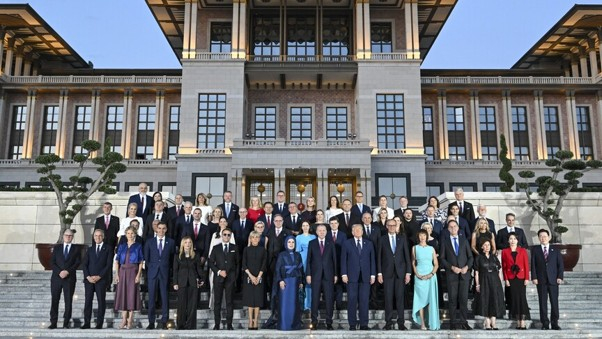
NATO LEADERS GATHER IN ANKARA FOR DEFINING SUMMIT
Family Photo
================================================================================================================================================================
7 July
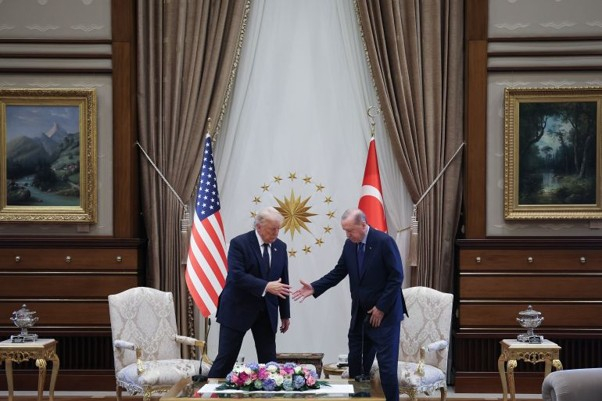
Trump in Ankara: meets Erdogan and lashes out at NATO
United States President Donald Trump has declared he is “very disappointed with NATO” on the first day of a summit of leaders of the mutual defence alliance in Turkiye that exposed tensions over European defence spending, the Russia-Ukraine war and the future of Greenland. Trump met with Turkish president, Recip Tayip Erdogan, shortly after his srrival in the Turkish capital
Trump later joined a glitzy dinner for the NATO leaders, hosted by the Turkish president and his wife. The main session will be on held today.
After criticising NATO allies during a news conference with Turkish President Recep Tayyip Erdogan, Trump said that if the summit “weren’t held in Turkiye, where my friend happens to be a very strong leader, a very strong person, it’s possible that I wouldn’t have attended”.
Trump also named European countries who he perceived as unsupportive during the US-Israel war on Iran, saying, “We weren’t treated well because we did something in Iran.”
“Why are we spending hundreds of billions of dollars when they’re not there for us? We’ve always been there for them,” he said.
“Italy turned us down, and Germany turned us down, and France turned us down.”
The US president cast a brighter eye toward Ankara, remarking on the “chemistry” between the US and Turkiye, vowing to remove sanctions and saying he would soon decide about the potential sale of F-35s.
“We have a very good relationship,” he said
On the eve of the Ankara summit, NATO Secretary General Mark Rutte asked for "clear, concrete and credible plans” for defence spending while insisting the evidence so far was “impressive”.
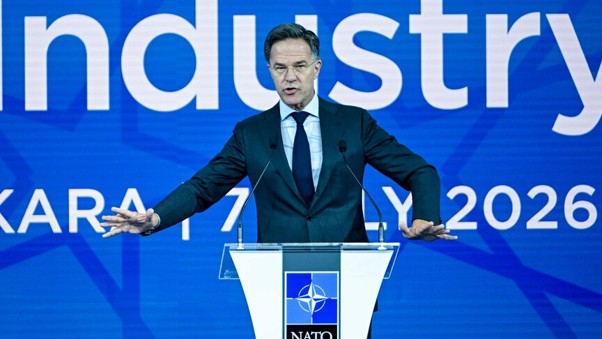
Delivering an address at a defence industry forum Tuesday, Rutte pointed to threats from China, North Korea and Iran – in addition to Russia, whose defence industry is “working around the clock” to supply the war on Ukraine.
“We must remain vigilant,” Rutte said. “These countries are increasingly working together.”
The US president also reignited tensions over Greenland, telling reporters the territory “should be controlled by the United States, not by Denmark”.
Trump has for months insisted that taking control of the autonomous Danish territory was crucial to US security, causing tensions with Copenhagen and across Europe.
Speaking in Ankara after Trump’s remarks, Danish Prime Minister Mette Frederiksen said she expects allies to respect Denmark’s sovereignty and accept that Greenland is not for sale.
===========================================================================================================================
7 July
NATO on Tuesday unveiled a series of multinational defense initiatives ranging from airborne surveillance and counter-drone capabilities to space, industrial production and critical raw materials, as the alliance opened its 2026 summit with a defense industry forum in the Turkish capital.
Opening the NATO Defense Industry Forum, the first official event of the two-day summit in Ankara, Secretary General Mark Rutte highlighted what he described as a new wave of billion-dollar defense agreements between North American and European companies, saying the projects demonstrate allies working "hand in hand" to develop next-generation military capabilities.
Under the forum's "Big Reveal," Rutte announced three major multinational projects aimed at strengthening NATO's airlift, intelligence and surveillance capabilities.
The first initiative is a multinational modernization program centered on the Airbus A400M transport aircraft and the Airbus A330 Multi Role Tanker Transport (MRTT) fleet.
"Several allies are officially announcing the forthcoming delivery of additional Airbus A330 MRTT aircraft," Rutte said, describing the project as a step toward strengthening NATO's strategic airlift and aerial refueling capabilities.
He also announced a joint procurement project for MQ-4C Triton unmanned aircraft to enhance the alliance's intelligence, surveillance and reconnaissance (ISR) capabilities.
"These additional aircraft will provide persistent surveillance over large maritime areas," he said.
Rutte's third announcement focused on replacing NATO's aging Airborne Warning and Control System (AWACS) fleet.
According to the alliance's chief, NATO will jointly procure up to 10 Swedish-made Saab GlobalEye surveillance aircraft to replace the alliance's aging US-built Boeing E-3A Sentry AWACS aircraft, in a move aimed at modernizing airborne surveillance and early warning capabilities.
SEE MORE ON OUR LIVE BLOG ON THE ANKARA SUMMIT HERE
Additional multinational initiatives
Rutte also unveiled the Front Door platform, designed to provide defense companies with a single entry point for NATO procurement opportunities, innovation programs and alliance events.
He announced the launch of the Drone Edge initiative, under which allies committed to investing more than $40 billion in counter-drone capabilities over the next five years while aiming to train five times as many drone operators by the end of 2027.
To accelerate procurement, NATO will also establish a counter-drone marketplace to provide allies with NATO-tested, NATO-compatible systems available for rapid acquisition.
Rutte announced a new Defense Critical Raw Materials initiative, bringing together a multinational group of allies, including Türkiye, to secure and manage strategic materials essential for defense production.
He also unveiled the NATO Engine initiative, which aims to establish a network of factories and manufacturing facilities across the 32-member alliance to expand defense industrial capacity, saying no single nation can meet growing defense demand alone.
The alliance additionally launched HALO (Hybrid Alliance Layered Operations in Space), a multinational initiative intended to improve the connectivity and integration of sovereign military satellites into a networked constellation to strengthen NATO's collective space capabilities.
Speaking at the forum, NATO Deputy Secretary General Radmila Shekerinska announced additional multinational projects involving Türkiye across air defense, communications and space.
She said Türkiye is investing in NATO's air defense systems initiative and described Ankara as making a significant contribution to strengthening the alliance's integrated air and missile defense capabilities.
Shekerinska also announced Türkiye's contribution of two domestically produced observation satellites to the alliance's collective space capabilities. Built by TUBITAK under contracts worth more than $300 million, the satellites will strengthen regional surveillance capabilities.
The deputy secretary general also identified Türkiye as a core partner in NATO's Alliance Persistent Surveillance from Space (APSS) initiative, citing its growing contribution to the organization's space-based surveillance and communications capabilities.She added that Türkiye has signed contracts with ASELSAN for the development of military communication systems, as well as early warning radar systems under the Steel Dome National Integrated Air Defense Architecture.
The NATO summit continues through Wednesday, with allied leaders set to discuss defense investment, military support for Ukraine and efforts to expand the alliance's defense industrial base.
source: commonspace.eu with NATO (Brussels) and Anadolou Agency (Ankara)
7 July
More about yesterday's press conference by Mark Rutte
Nato chief Mark Rutte said the alliance "cannot be naive" about China’s military build-up, after the nation conducted its first known launch of a strategic missile from a nuclear submarine.
“What happens in the Indo-Pacific is relevant to what is happening in the transatlantic,” Rutte told a news conference on Monday, ahead of the military alliance’s annual summit in Ankara, Turkey. The Indo-Pacific and European theatres were becoming “more intertwined”, as was also shown by China’s support for Russia in the Ukraine war, he said.
A Chinese nuclear-powered submarine fired a missile carrying a dummy warhead into the southern Pacific Ocean at 12.01pm, Beijing time, on Monday as part of a “routine arrangement” for annual training, a People’s Liberation Army spokesman told state media. The launch underscores China’s growing military power, and is a landmark moment in its push to build a nuclear triad, or the ability to deliver nuclear weapons from land, air and sea.
============================================================================================================================
7 July
A key NATO summit will open in Ankara today, Tuesday, 7th July.
Leaders of the members of the alliance, including US president Donald Trump, are travelling to the Turkish capital for the summit.
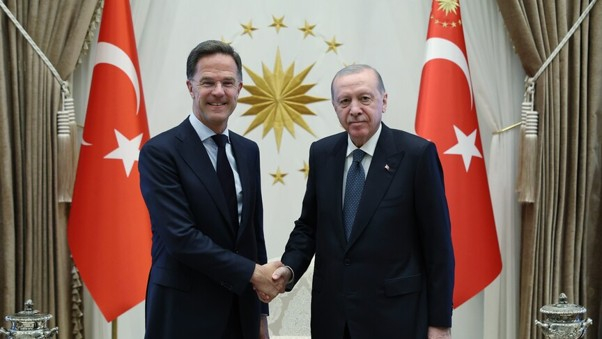
On Monday (6 July) Turkish President Recep Tayyip Erdoğan met in Ankara with NATO Secretary General Mark Rutte.
According to Turkish media, the parties discussed the agenda for the upcoming NATO summit, as well as current regional and global issues. Erdogan stated that Turkey had completed preparations for the leaders' meeting and expressed hope that the summit would be successful.
According to the Turkish president, the key topics of the summit will be collective defense and expanding allied cooperation in the defense industry. He also noted the importance of the Defense Industry Forum, which will be held on the sidelines of the NATO summit.
On Monday (6 July 2026), NATO Secretary General Mark Rutte previewed the Ankara Summit, explaining that it will focus on delivery. Allies are expected to demonstrate how they are transforming the commitments made at The Hague last year into stronger armed forces, increased defence production, and more capabilities needed to defend the Alliance.
The Secretary General highlighted the progress made by European Allies and Canada in investing 5% of GDP on defence by 2035. “Here in Ankara, I expect nations to present clear, concrete and credible plans to reach that 5% goal. And the evidence we see so far is impressive,” said Mr Rutte, “Just one year into a 10-year project, we see that European Allies and Canada are already investing around 4% of their GDP in defence and security.”
The Secretary General set out how NATO Allies are turning the extra cash into capabilities. “We will announce tens of billions in new contracts that will provide the crucial kit we need to deter and defend”, said Mr Rutte in Ankara, “This will help grow our economies, spread innovation and support hundreds of thousands of jobs, on both sides of the Atlantic.”
Support for Ukraine will also be an important focus of the Summit of Allied Heads of State and Government. “Allies and NATO partners must continue to ensure Ukraine gets what it needs,” said the Secretary General, “And let me be clear, all Allies need to pull their weight, so that our support to Ukraine continues to flow. Because Ukraine’s security is so closely linked with our own.”
=========================================================================================================================================================
6 July
Can NATO Pull Off a Dull Summit?
European countries are hoping that Erdogan can keep Trump from causing chaos.
Dr Dimitar Bechev, the director of the Dahrendorf Programme at St. Antony’s College’s Oxford, European Centre. writes on the US journal Foreign Policy
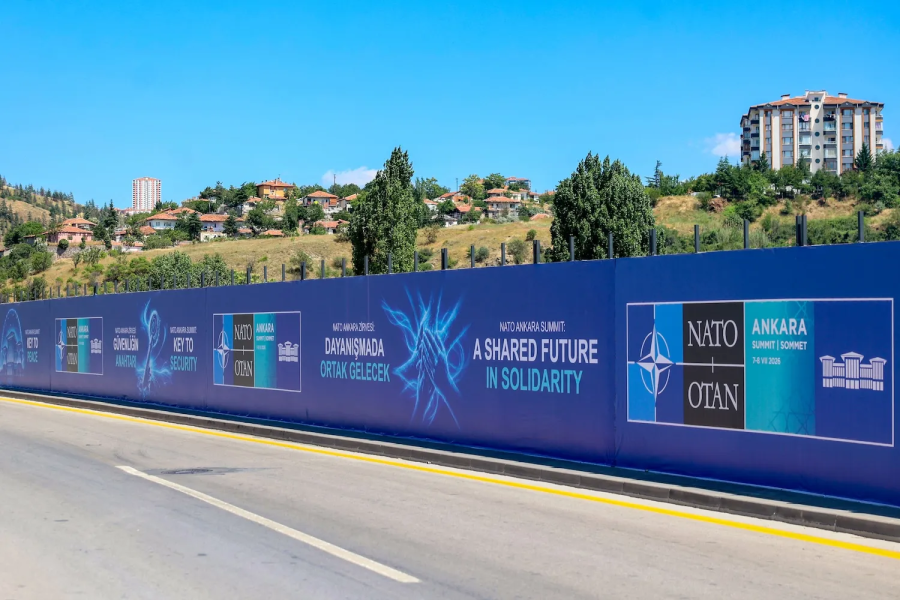
Billboards with the slogans “Key to Peace,” “Key to Security,” and “Shared Future in Peace”, displayed along the boulevard on the protocol route ahead of the NATO Summit in Ankara, on 26 June.Billboards along the protocol route ahead of the NATO summit in Ankara, Turkey, on June 26. Dem Altan/AFP via Getty Images
U.S. President Donald Trump revels in his reputation as a disruptor. Europe has typically been on the receiving end. Cozying up to Russian President Vladimir Putin, calling for the seizure of Greenland, slapping arbitrary tariffs on the European Union, forging alliances with insurgent parties and politicians on the far right, threatening to punish NATO allies for not backing the United States against Iran—there has been no shortage of drama in trans-Atlantic relations since he took office last January
But as NATO’s annual summit inAnkara, Turkey, on July 7-8 draws near, it’s becoming increasingly obvious that an equilibrium has emerged. European leaders have learned how to handle Trump. Trump’s haphazard efforts to reshape continental order have yielded only partial results. As a result, the trans-Atlantic alliance has degenerated into a partnership of convenience, but it is a partnership all the same..
6 July
Turkish First Lady will host spouses during summit
Türkiye's first lady will host the spouses of heads of state and government attending the NATO Summit in Ankara on Tuesday, with discussions centered on children's safety in the digital age.
Emine Erdogan will welcome more than 20 spouses of NATO leaders at the Cankaya Presidential Mansion before hosting a roundtable on Children, Technology and Security: Protecting the Next Generation.
The meeting aims to raise awareness of the risks children face in digital environments, strengthen cooperation among stakeholders and encourage the sharing of best practices among allied countries.
Topics on the agenda include digital security and emerging risks, protective approaches for children, multistakeholder cooperation, digital literacy, ethical approaches and the exchange of best practices.
Following the roundtable, Erdogan will host a luncheon featuring traditional Turkish cuisine.
The spouses will dine in a hall showcasing Iznik tiles and tables decorated with traditional Turkish embroidered linens, highlighting Türkiye's cultural heritage and hospitality.
After the luncheon, the participants will pose for a family photograph before touring a collection of traditional Turkish textiles, embroidery and handicrafts reflecting the cultural heritage of Anatolia, Mesopotamia, the Ottoman Empire and earlier Turkish states.
source: commonspace.eu with Anadolou Agency (Ankara)
====================================================================================
6 JULY
Side events add substantial content to Summit discussions
The Munich Security Conference, and the Turkish organisation SETA, have teamed up to organise a number of side events that add to the substance and content of the discussions at the NATO Summit. Together, they are called 'ALLIES IN ANKARA', and they will be held on 8 July. Here is a listing of the events:
“Allies in Ankara”
List of events:
Flanking the Future: UK–Türkiye Cooperation in NATO’s Next Chapter
Host Organization: Royal United Services Institute (RUSI)
The event is kindly supported by RUSI’s strategic partner AYDA, a member of YDA Group.
The panel will examine how the United Kingdom and Türkiye, as NATO’s two most consequential non-EU security actors, can help shape the Alliance’s next strategic compact across the Black Sea, the southern flank, Ukraine and the wider Euro-Atlantic security architecture. The discussion will consider how NATO can better integrate the perspectives and capabilities of non-EU allies into deterrence and defence planning; where UK–Türkiye cooperation can strengthen the Alliance’s southern flank, Black Sea posture and Middle East crisis awareness; and what lessons Türkiye’s defence-industrial base, regional military experience and support to Ukraine may offer for NATO’s future adaptation.
Fighting as One: Interoperability, Trust, and Adaptation Across the Alliance
Host Organizations: Foreign Policy and Amazon Web Services
Modern conflict is increasingly defined by the ability to adapt faster than emerging threats. As adversaries compress decision cycles, accelerate innovation, and leverage autonomous and AI-enabled capabilities, NATO’s advantage depends on operational readiness, coalition interoperability, and the ability to translate information into action at speed. The challenge is no longer access to technology, but the Alliance’s ability to rapidly integrate innovation into operational capability while maintaining trust, resilience, and security across allied nations.
Lessons from Ukraine and NATO’s Eastern Flank have reinforced the importance of resilient command-and-control, secure communications, rapid innovation adoption, and interoperable coalition operations. As the pace of technological change accelerates, allies face growing pressure to shorten the path from information to decision to action while ensuring forces can operate effectively across domains and national boundaries. This event will examine how NATO can accelerate alliance decision tempo, strengthen interoperability, enhance agility and security.
Connecting Europe’s Flanks: NATO, Germany, Türkiye, Italy, and the Mediterranean
Host Organization: IstanPol Institute and Friedrich-Ebert-Stiftung Türkiye Office
How can NATO connect its eastern and southern priorities after Ankara? This side event examines the Mediterranean as a central arena for NATO and European security, where regional instability, maritime security, energy and infrastructure resilience, migration, and defense cooperation increasingly intersect.
Focusing on Germany, Türkiye, and Italy, the discussion will explore how Mediterranean and non-Mediterranean allies can contribute to a more coherent NATO southern agenda. Türkiye and Italy bring frontline perspectives from the Central and Eastern Mediterranean, while Germany adds political, industrial, and strategic weight to Europe’s role within the Alliance. The event will ask how tangible cooperation among these three actors can strengthen EU–NATO coordination, connect fragmented policy agendas, and address challenges linked to North Africa, the Middle East, and wider geopolitical competition. The intended outcome is to identify practical ways for a “coalition of the willing and able” to advance a more comprehensive Mediterranean security agenda after the Ankara Summit.
The European Moment: NATO’s Eastern Flank at the Frontlines
Host Organizations: GLOBSEC
As European Allies take on a more assertive role within NATO, CEE is increasingly shaping the Alliance’s strategic direction. For CEE countries, shaped by the war in Ukraine and proximity to the eastern flank, deterrence, readiness, and defense industrial capacity are immediate operational priorities rather than abstract policy debates.
While political commitments to European rearmament are accelerating, major structural gaps remain in defense industrial output, fragmented procurement, and interoperability. These challenges are most visible from the perspective of frontline states, where the demand for rapid capability delivery and credible deterrence is highest. At the same time, the NATO–EU relationship has become a practical governance issue across European capitals, requiring clearer alignment between political ambition and operational delivery within overlapping memberships. The Discussion will explore how CEE is shaping the Europeanisation of NATO, whether Europe can translate political ambition into real military capability, and what credible leadership in defense means beyond burden-sharing rhetoric.
Inside the Architecture: Türkiye’s Defense Industry as a Structural Asset for NATO
Host Organizations: SETA Foundation, ROKETSAN, and ASELSAN
As NATO members race to close critical capability gaps, Türkiye’s defense industry has emerged as an indispensable component of the Alliance’s broader industrial ecosystem. No longer a peripheral supplier, Türkiye now occupies a structural position within allied defense production networks, from unmanned systems and air defense to armoured platforms and ammunition, with bilateral partnerships spanning more than a dozen European allies. This session examines how Turkish defense platforms and production networks are reshaping allied deterrence and collective capability, and interrogates a core tension: as European defense spending accelerates and new procurement architectures take shape, institutional frameworks have yet to catch up with operational realities.
NATO Youth Dialogue at the Ankara Summit: Recommendations to NATO on Ukraine, the Baltics, the Southern Neighborhood & the Balkans
Host Organization: Johns Hopkins SAIS, Western Balkans Youth Leaders, and YATA
Launched in 2024 under a US Mission to NATO grant, the ‘Seeing is Believing’ project brings security-focused Youth Leaders from the Western Balkans together with SAIS students. Rather than a typical gathering of youth leaders, our emerging experts present their recommendations tackle an array of threats to Alliance interests. These imaginative and practical suggestions are the basis for a meaningful exchange with NATO and member state officials along with experts and commentators—and all those interested in hearing how the next generation perceives evolving, essential roles and policies for the Alliance.
Civilian Protection, Missile Fire, and Drone War: Ukraine’s Lessons for Protecting the Gulf
Host Organization: Center for Civilians in Conflict
How does Ukraine’s experience of protecting civilians under sustained missile, drone, artillery, and infrastructure attacks inform civilian protection responses to the US/Israel war in Iran and its spillover across the Gulf. Drawing on CIVIC’s work with Ukrainian authorities, the Armed Forces of Ukraine, CIMIC officers, and affected communities, the session would focus on operational choices that save lives: civilian casualty tracking, warning systems, evacuation under fire, military-community communication, protection of hospitals, schools, water and energy systems, and post-harm assistance.
The discussion would compare Ukraine’s increasingly institutionalized protection architecture with the Gulf’s fast-moving regional crisis, where civilians in Iran, Israel, Lebanon, and Gulf states face drone and missile threats, infrastructure disruption, and maritime insecurity. The aim of the session would be to produce practical lessons for integrating protection of civilians into high-intensity defense planning (since most of the efforts in the Gulf, like in Ukraine, are defensive in nature.
(Don’t) Forget About the Price Tag: How to Fund NATO’s Defense Industrial Revolution?
Host Organization: NATO Parliamentary Assembly
At the 2026 Ankara Summit, NATO Allies will demonstrate progress on implementing the historical commitments made at The Hague Summit in 2025. As Allies move toward the 5% defense spending benchmark, parliamentary leadership will be decisive in ensuring political legitimacy, fiscal sustainability and public transparency to enable the defense industrial revolution needed for the Alliance. This event, led by parliamentary voices, will help participants walk away with a set of recommendations on the critical role legislators play in enabling the industrial transformation needed to reach the 5% defense spending threshold.
The event will focus on how legislators can, through targeted legislation, improve access to finance for defense and dual-use technologies, incentivize public–private partnerships, and reduce entry costs and cooperation barriers for new players, including SMEs and start-ups; and adopt legal and regulatory frameworks to accelerate procurement, reduce fragmentation, and facilitate multinational cooperation to create momentum for NATO’s defense industrial revolution.
Allies, Partners, or Hedgers? NATO and the Gulf After the Iran War
Host Organization: Middle East Council on Global Affairs
The last NATO Summit hosted by Türkiye in 2004 produced the Istanbul Cooperation Initiative (ICI), NATO’s principal framework for engagement with Gulf partners. Two decades later, and in the aftermath of the 2026 Iran war, the Summit’s return to Türkiye offers a timely opportunity to rethink NATO–Gulf cooperation. The war underscored that Gulf security is now directly tied to Euro-Atlantic security. Air and missile defense, maritime security, energy infrastructure protection, drone threats, and crisis coordination in the Gulf increasingly affect Alliance resilience and global energy stability.
This side event examines how NATO–Gulf relations should evolve at a moment of major change for both sides. Discussions will focus on practical areas of cooperation, including counter-UAS, maritime awareness, cybersecurity, interoperability, training, and critical infrastructure protection. The panel will also address the Gulf’s internal diversity and explore more flexible, differentiated forms of regional and international security cooperation.
Routes to Resilience: Mapping the Middle Corridor, the Development Road, and the New Connectivity Agenda
Host Organizations: Turkish Atlantic Council (ATA Türkiye) and Eastern Circles
Eurasia’s trade geography has been redrawn. Russia’s invasion of Ukraine severed the Northern Corridor, forcing a rapid search for alternative routes. The Middle Corridor, running through Central Asia, the Caspian, and Türkiye, and Iraq’s Development Road, linking the Arabian Gulf to European markets via a new rail and highway network, have emerged as the most consequential alternatives.
These are not simply infrastructure projects. They are a contest over who shapes Eurasian connectivity for the coming decades, and China’s Belt and Road Initiative is already competing for influence along the same routes. This panel examines how NATO and its allies can engage strategically with both corridors, addressing governance, financing, security, and political dimensions. It will explore what coordinated Euro-Atlantic investment looks like in practice, where existing initiatives fall short, and what concrete steps allied governments can take to ensure these routes serve resilience rather than dependency.
From the Arctic to the Black Sea: Critical Infrastructure in the Era of Defense Tech
Host Organizations: New Strategy Center and Centre for European Policy Analysis (CEPA)
The Black Sea has become a focal point as Ukraine defends against Russia’s full-scale invasion. Ukraine’s use of uncrewed sea vessels (USVs) has resulted in multiple sunk ships and forced Russia’s Black Sea Fleet further way from Ukrainian coasts and into deeper ports. Ukraine demonstrates that uncrewed systems are fundamentally transforming modern warfare, and other emerging technologies like artificial intelligence will play a very important role in future conflicts.
The Black Sea could be transformed into a NATO hub for unmanned systems, from which the lessons learned in Ukraine could be used by all the countries in the Alliance. Romania’s proposal to host the EU Maritime Security Hub in Constanța, in partnership with Bulgaria, could also provide a framework for integrating non-EU partners such as Türkiye and Ukraine into regional maritime monitoring and critical infrastructure protection, while incorporating Ukrainian expertise in uncrewed and counter-UAS systems and strengthening cooperation across the Arctic, Baltic, and Black Sea regions.
The Next Food Security Crisis is Now: Mapping a Response Agenda
Host Organization: CIMMYT
A global food security crisis is unfolding in real time. War-related disruptions in Russia and Ukraine, renewed instability around the Strait of Hormuz, and a potentially severe El Niño are disrupting energy, fertilizer, and agricultural supply chains. Farmers are already confronting higher input costs, consumers are paying higher food prices, and governments are facing growing pressure on food security and stability. Food systems are strategic infrastructure.
This session will examine where risks are emerging, how food system disruptions could fuel wider security challenges, including within NATO nations. and what governments, international organizations, and the private sector can still do to pre-position assistance, protect agricultural production, strengthen resilience, and reduce the humanitarian and geopolitical consequences.
========================================================================================
6 July
The NATO summit in Ankara is expected to focus on three main issues:
Defence investment
Following their commitment last year to invest 5% of GDP in defence, NATO Allies are stepping up. In 2025, European Allies and Canada increased their core defence investment by USD 139 billion in nominal terms. Some Allies will already reach the 5% target in 2026, far ahead of schedule. "The Ankara Summit will ensure that Allies are not only investing more, but investing in the right capabilities needed to keep us safe"
Defence industry
Strong deterrence and defence requires strong armed forces with the right equipment, including weapons, vehicles and new technologies. NATO is working with industry to increase production, strengthen supply chains and deliver the capabilities the Alliance needs, at speed and at scale. The NATO Summit Defence Industry Forum in Ankara will showcase how industry is stepping up to keep the Alliance ready and prepared.
Support for Ukraine
"Our security is inextricably linked with Ukraine's". As Russia's war against Ukraine continues, Allies will continue to provide unprecedented levels of military assistance to Ukraine, supporting its ability to defend itself. The Ankara Summit will continue to build on NATO's support for Ukraine, helping the country meet its urgent defensive needs and ensuring that Allied military assistance remains sustainable for the long term.
(source: NATO, Brussels)