Filter archive

Publication date
Editor's choice
Opinion
Opinion: The future of the China-US-Russia triangle after Pelosi's visit to Taiwan

Opinion: The future of the China-US-Russia triangle after Pelosi's visit to Taiwan

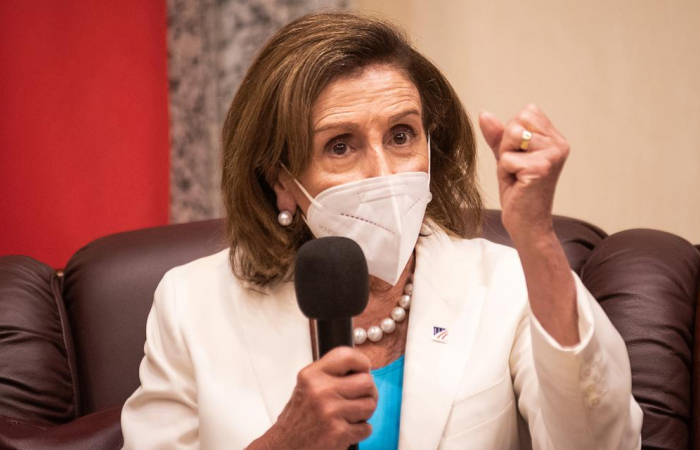
Since February 24, 2022, the international community's focus was concentrated entirely on the war in Ukraine and the growing Russia – West confrontation. It seemed that nothing could change the situation until the end of hostilities in Ukraine. However, on August 2 and 3, almost everyone’s attention shifted from Ukraine to Taiwan. As the Speaker of the US House of Representatives, Nancy Pelosi, stated her intention to visit Taiwan, up to half a million people were watching the trajectory of her plane on air flight tracking sites. The negative reaction of China, including the warning of President Xi during his conversation with President Biden that those who played with fire would be perished by it, created hype around this visit. Many were discussing the possibility of Chinese military jets closing the airspace over Taiwan and preventing Pelosi’s plane from landing in Taiwan, while some enthusiasts were even contemplating the possibility of a US-China direct military clash. As Pelosi landed in Taiwan and met with the Taiwanese President, the global social media was full of amateur assessments about the strategic victory of the US and the confirmation of the US global hegemony. However, as the dust settles down, and information noise and manipulation eventually decreases, a more serious assessment is needed to understand the real consequences of this visit.
Editor's choice
News
Erdogan on important visit to Saudi Arabia. Meets Mohammed bin Salman and gives extensive interview to Asharq al-Awsat

Erdogan on important visit to Saudi Arabia. Meets Mohammed bin Salman and gives extensive interview to Asharq al-Awsat

Turkish president, Recip Tayip Erdogan, on Tuesday (3 February), started an official visit to Saudi Arabia, which is considered of crucial importance in the light of current tensions in the Middle East, and the role that a Turkish-Saudi axis can play in the wider region. Shortly after his arrival in Riyadh, President Erdogan met with Saudi Arabia's Crown Prince and prime minister, Mohammed bin Salman at al Yamamah Palace. President Erdogan gave an extensive interview on his arrival in Riyadh to the Saudi newspaper Asharq al-Awsat in which he discussed bilateral ties with the Kingdom, the situation around Iran, and regional issues: Erdoğan said: “Türkiye and Saudi Arabia are two friendly countries with deep historical ties, strong state traditions, and a shared sense of regional responsibility. We have never viewed this relationship through a narrow lens confined solely to bilateral matters. This is because the valuable friendship between our two countries also carries a strategic significance for the peace, stability, and prosperity of our region as a whole.” On the possibility of the eruption of a war between the US and Iran, president Erdogan said: “Let me begin by stating that experience has proven that scenarios which fail to grasp the values, identity, history, and future of this geography have inflicted far greater suffering on the region than peace. The wounds inflicted by the implementation of such scenarios in Gaza, Iraq, Syria, and Afghanistan remain vivid in our collective memory.” “For this reason, as Türkiye, we categorically oppose a new war or a new wave of destruction in our region,” he declared. (Click the image to read the interview of president Erdogan with Asharq al-Awsat in full)