Will El Salvador recognise South Ossetia?

Latin America continues to provide headaches to the Georgian government. The presence of the leaders of the breakaway regions of Abkhazia and South Ossetia, Rauf Khajimba and Anatoli Bibilov, at the inauguration of the Venezuelan president Nicolas Maduro in Caracas on Thursday, has been very negatively assessed in Tbilisi. Venezuela is one of a handful of countries that have  joined Russia in recognising Abkhazia and South Ossetia as independent states. The rest of the international community still recognise the two territories as part of Georgia. Apart from Venezuela, another Latin American country, Nicaragua, has also extended similar recognition.

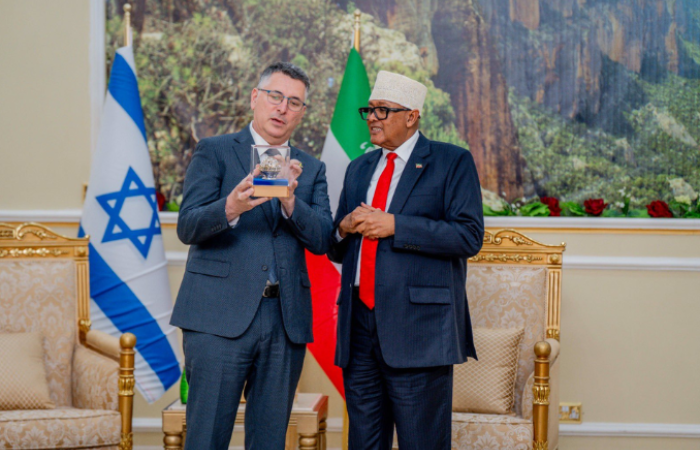
Now a new probelm appears. South Ossetian leader, Anatoli Bibilov, on Thuesday (10 January) met in Caracas with the president of El Salvador, Salvador Sanchez Ceren, who was also attending Maduro's inauguration. A website of the South Ossetia authorities said that the two "exchanged views on topical issues on the international agenda of mutual interest, and discussed the prospects for the establishment of bilateral relations and the potential for mutually beneficial cooperation". Ceren has been in office since 1 June 2014, after winning the 2014 presidential election as the candidate of the left-wing Farabundo Martí National Liberation Front (FMLN). He previously served as Vice President from 2009 to 2014. He was also a guerrilla leader in the Civil War and is the first ex-rebel to serve as president

On Thursday, the Georgian foreign ministry issued a toughly worded statement condemning the presence of the Abkhaz and South Ossetian leaders in Caracas, slamming the human rights record of the Venezulan government, and saying that the presence of the leaders of the separatists entities in Caracas "served the sole purpose of of legitimising the occupation of Abkhazia and Tskhinvali regions and the ethnic cleansing there". The statement said that the international community is united in supporting Georgia's sovereignty, territorial integrity and non-recognition policy of the occupied territories." The statement added that "the States that have any kind of contact with the illegal regimes in the occupied territories of Georgia violate fundamental norms and principles of international law that cause them to be condemned and bitterly criticised by the entire international community."

However the prospect that El Salvador may also be considering the recognition of the two entities, and the very fact that a meeting took place between the South Ossetian leadership and the president of El Salvador, no doubt causes concerns in Tbilisi that Russia may be pushing harder than before for its protectorates in the South Caucasus to gain international recognition. There has been no statement yet by the Georgian government on the meeting between Bibilov and Ceren.

source: Commonspace.eu

photo: The president of the de facto government of South Ossetia met the president of El Salvador in Caracas on 1o January 2019 (picture courtesy of www.mfa-rso.so)
Related articles

Editor's choice
News
Aden under curfew, as problem in Yemen's south deepens

Aden under curfew, as problem in Yemen's south deepens

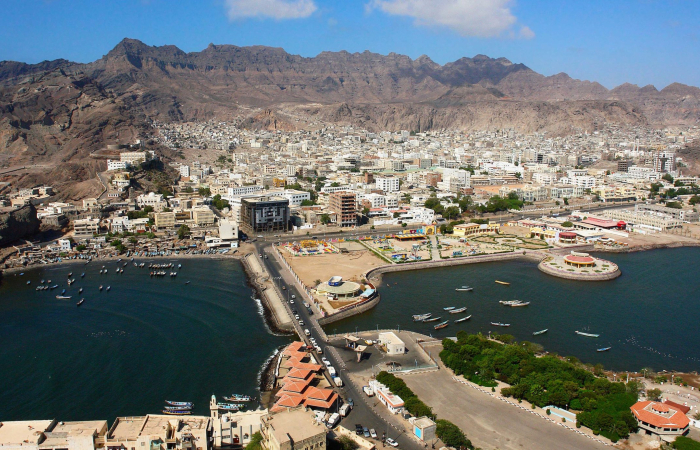
The port city of Aden, in Yemen's south, has been put under curfew, as the rift in the country between  the Saudi led coalition which  backs Yemen's presidential governing council, and the southern forces led by the Southern Transitional Council (STC), deepens. Abdul Rahman al-Mahrami, a member of the Yemeni Presidential Governing Council and commander of the al-Amalik brigades, has ordered a curfew in the temporary capital, Aden, "to maintain security". "A curfew has been imposed throughout Aden Governorate from 9:00 p.m. to 6:00 a.m., in accordance with the instructions of Commander Abdul Rahman al-Mahrami, a member of the Presidential Management Council," the statement said. It states that only security and military personnel, as well as medical and technical teams with approved permits, will be allowed to move in the area during these hours. Yemen's presidential council, which is backed by Saudi Arabia and which already is in a struggle with the Houthi Movement in the north of the country who also occupy the capital Sanaa, two days ago issued an order for the arrest of the head of the Southern Transitional Council (STC),, Aidarous al Zubaidi. The STC have wide support among people in the South, and advocate that South Yemen restores its independence. The coalition warned of further escalation in Aden, long regarded as an STC stronghold, as the Presidential Leadership Council (PLC) chief accused STC leader Aidarous Al Zubaidi of “high treason” and announced the revocation of his membership in the governing body. The moves mark a sharp escalation in tensions within the anti-Houthi camp, despite National Shield Forces, rivals of the STC and former allies, having recently retaken control of Hadhramaut and Mahra from southern fighters. The STC’s takeover of the two regions last month angered Saudi Arabia and contributed to igniting the current internal conflict. (click the picture to read more)

Popular

Editor's choice
News
Aden under curfew, as problem in Yemen's south deepens

Aden under curfew, as problem in Yemen's south deepens

The port city of Aden, in Yemen's south, has been put under curfew, as the rift in the country between  the Saudi led coalition which  backs Yemen's presidential governing council, and the southern forces led by the Southern Transitional Council (STC), deepens. Abdul Rahman al-Mahrami, a member of the Yemeni Presidential Governing Council and commander of the al-Amalik brigades, has ordered a curfew in the temporary capital, Aden, "to maintain security". "A curfew has been imposed throughout Aden Governorate from 9:00 p.m. to 6:00 a.m., in accordance with the instructions of Commander Abdul Rahman al-Mahrami, a member of the Presidential Management Council," the statement said. It states that only security and military personnel, as well as medical and technical teams with approved permits, will be allowed to move in the area during these hours. Yemen's presidential council, which is backed by Saudi Arabia and which already is in a struggle with the Houthi Movement in the north of the country who also occupy the capital Sanaa, two days ago issued an order for the arrest of the head of the Southern Transitional Council (STC),, Aidarous al Zubaidi. The STC have wide support among people in the South, and advocate that South Yemen restores its independence. The coalition warned of further escalation in Aden, long regarded as an STC stronghold, as the Presidential Leadership Council (PLC) chief accused STC leader Aidarous Al Zubaidi of “high treason” and announced the revocation of his membership in the governing body. The moves mark a sharp escalation in tensions within the anti-Houthi camp, despite National Shield Forces, rivals of the STC and former allies, having recently retaken control of Hadhramaut and Mahra from southern fighters. The STC’s takeover of the two regions last month angered Saudi Arabia and contributed to igniting the current internal conflict. (click the picture to read more)