


West Africa's military governments play for time in the face of potential sanctions

Burkina Faso and Guinea have requested additional time to present a plan to hand back power to civilians and reinstate democratic rule following an ultimatum by the Economic Community of West African States (ECOWAS), which had set a deadline for Monday, 25 April.

In Conakry as in Ouagadougou, where the military recently seized power by force, the transitional authorities are asking for more time to pursue consultations, according to an ECOWAS communiqué issued on 27 April.

Last month, ECOWAS leaders told the two countries that they had until 25 April to explain the conditions and dates under which they would return power to civilians pr otherwise face immediate sanctions. The failure to meet this deadline has forced ECOWAS to react. For the time being, the regional institution will send missions to the two countries to prepare for a forthcoming summit of heads of state, at dates not yet specified.

Negotiations are likely to be particularly intense in view of the latest statements by Guinean leaders, with government spokesman Ousmane Goual emphasized that he would not be coerced by anyone while hinting at a possible exit from ECOWAS on 26 April.

In Ouagadougou, the question of the transition has already been decided, according to the Burkinabe government spokesman, Lionel Bilgo, and would last three years. ECOWAS has not directly commented on this timeline.

As regards Guinea, where Colonel Mamady Doumbouya has been in charge since September 2021 after overthrowing Alpha Conde, the financial assets of members of the Guinean junta and their family members had already been frozen after the removal of the former president.

In Burkina Faso, accused of being unable to curb the jihadist violence that has plagued the country for years, President Roch Christian Kaboré was overthrown by colonel Paul-Henri Damiba on 24 January. If transitional authorities do not propose a timeline more acceptable than three years, they could face individual sanctions, according to ECOWAS.

Since January 2022, the toll of ECOWAS economic sanctions on Mali's economy and employment has been so severe that the country has been unable to pay about $180 million in debt repayments. 

Burkina Faso, Guinea, and Mali are all in the throes of political and security crises and have all witnessed military coups since August 2020. ECOWAS is therefore currently trying to put pressure on the military juntas to bring power back into civilian hands.

The potential impact of these sanctions on poor, landlocked countries has caused great concern, but also widespread resentment, beyond Mali, Guinea and Burkina Faso, against regional organisations.

 

Sources: CommonSpace.eu with Al Jazeera (Doha), Reuters (London) and Le Monde (Paris)
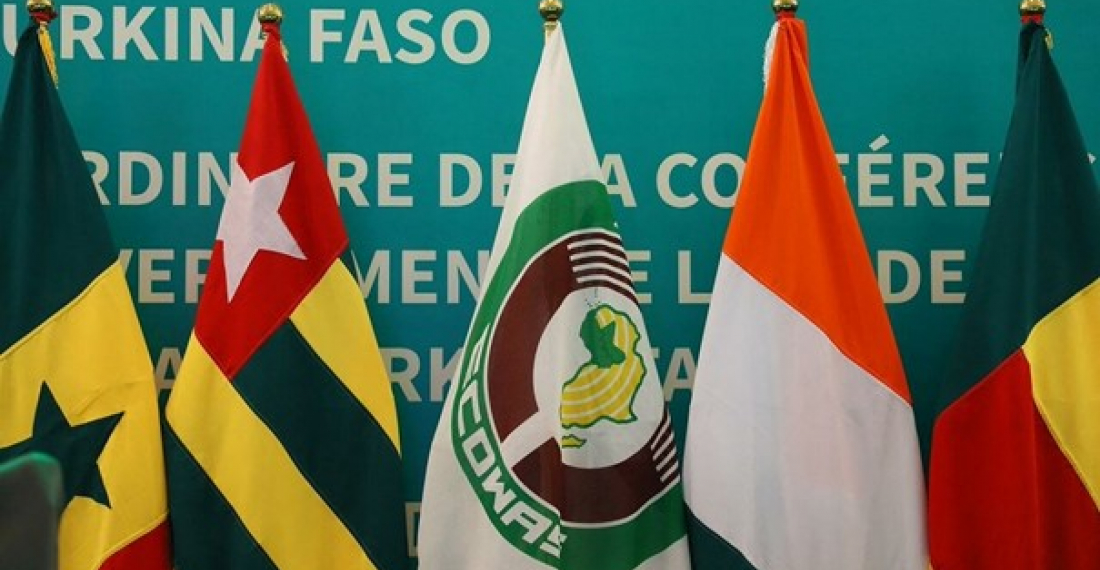
Picture: Flags of some of countries members of the CEDEAO institution; Twitter: @Africapol

Related articles

Editor's choice
News
Borrell tells the European Parliament that the situation in Afghanistan was critical, but the EU will remain engaged

Borrell tells the European Parliament that the situation in Afghanistan was critical, but the EU will remain engaged

Borrell underlined that the European Union will make every effort to support the peace process and to remain a committed partner to the Afghan people. "Of course, we will have to take into account the evolving situation, but disengagement is not an option.  We are clear on that: there is no alternative to a negotiated political settlement, through inclusive peace talks.
Editor's choice
News
Germany accuses Russia of cyberattacks and disinformation campaign

Germany accuses Russia of cyberattacks and disinformation campaign

The German government holds Russia responsible for a cyberattack on German air traffic control, and for targeted disinformation campaigns before the last federal election. According to the German Foreign Office in Berlin, the incidents could be clearly attributed to the Russian military intelligence service, the GRU. In response, the Russian ambassador to Berlin was summoned to the Foreign Ministry. "We have been observing a massive increase in threatening hybrid activities by Russia for some time now," a spokesperson for the Foreign Ministry stated. These range from disinformation campaigns and espionage to cyberattacks and sabotage attempts. The aim is to divide society, sow distrust, and undermine confidence in democratic institutions. The spokesperson added that with these actions, Russia is "very concretely threatening our security, not only through its war of aggression against Ukraine, but also here in Germany."  The Foreign Ministry spokesperson explained that the cyberattack on air traffic control in August 2024 was clearly attributed to the hacker collective "APT28," known as "Fancy Bear," and to the responsibility of the Russian military intelligence service, the GRU. Furthermore, it could now be "conclusively stated" that Russia had attempted "to influence and destabilize both the last Federal election and the ongoing internal affairs of the Federal Republic of Germany." There was "absolutely irrefutable evidence" for this". The so-called "Storm 1516" campaign, which has been running since 2024, is allegedly backed by "reliable information" that the Moscow-based think tank "Center for Geopolitical Expertise" is behind it. The Center is also said to be supported by Russian military intelligence. Its primary aim is to influence democratic elections in the West. (Click the image to read more).

Popular

Editor's choice
News
Germany accuses Russia of cyberattacks and disinformation campaign

Germany accuses Russia of cyberattacks and disinformation campaign

The German government holds Russia responsible for a cyberattack on German air traffic control, and for targeted disinformation campaigns before the last federal election. According to the German Foreign Office in Berlin, the incidents could be clearly attributed to the Russian military intelligence service, the GRU. In response, the Russian ambassador to Berlin was summoned to the Foreign Ministry. "We have been observing a massive increase in threatening hybrid activities by Russia for some time now," a spokesperson for the Foreign Ministry stated. These range from disinformation campaigns and espionage to cyberattacks and sabotage attempts. The aim is to divide society, sow distrust, and undermine confidence in democratic institutions. The spokesperson added that with these actions, Russia is "very concretely threatening our security, not only through its war of aggression against Ukraine, but also here in Germany."  The Foreign Ministry spokesperson explained that the cyberattack on air traffic control in August 2024 was clearly attributed to the hacker collective "APT28," known as "Fancy Bear," and to the responsibility of the Russian military intelligence service, the GRU. Furthermore, it could now be "conclusively stated" that Russia had attempted "to influence and destabilize both the last Federal election and the ongoing internal affairs of the Federal Republic of Germany." There was "absolutely irrefutable evidence" for this". The so-called "Storm 1516" campaign, which has been running since 2024, is allegedly backed by "reliable information" that the Moscow-based think tank "Center for Geopolitical Expertise" is behind it. The Center is also said to be supported by Russian military intelligence. Its primary aim is to influence democratic elections in the West. (Click the image to read more).

