


Editor's choice
News
Armenia-Azerbaijan Strategic Expert Platform: Members emphasise the importance of the present moment for the South Caucasus and call for the momentum to be used for the long-term peace and prosperity of the region

Armenia-Azerbaijan Strategic Expert Platform: Members emphasise the importance of the present moment for the South Caucasus and call for the momentum to be used for the long-term peace and prosperity of the region

On 27 February 2026, the members of the Armenia-Azerbaijan Strategic Expert Platform met in Antwerp, Belgium, to assess developments in the South Caucasus following the initialling of a peace agreement between Armenia and Azerbaijan on 8 August 2025 at the White House. The members described the present moment as one of major importance for the region and its neighbours, urging leaders and societies alike to use the current momentum to secure long-term peace and prosperity. Established in 2024 with the support of LINKS Europe, the Platform provides a space for direct dialogue and joint analysis between Armenian and Azerbaijani experts. The members also reaffirmed the importance of continued international engagement and expressed strong support for LINKS Europe’s ongoing peacebuilding work in the region. (Click on the image above for the full statement.)
Editor's choice
Interview
Thursday Interview: Dr. Anar Valiyev

Thursday Interview: Dr. Anar Valiyev

Dr. Anar Valiyev is an Associate Professor of Urban and Public Affairs at ADA University in Baku, Azerbaijan, with more than 18 years of experience in higher education. His research focuses on public policy, urban development, governance, and post-Soviet regional affairs. He holds a PhD in Urban and Public Affairs from the University of Louisville and has published widely on urbanisation, policy reform, and regional connectivity in the South Caucasus and beyond. This week, commonspace.eu spoke with Dr. Valiyev in Brussels ahead of a roundtable jointly organised by LINKS Europe Foundation and the European Policy Centre. He is taking part in a panel discussion focusing on the Armenia–Azerbaijan peace process, its implications for both countries and the wider region, the involvement of the European Union and the United States, and the challenges that lie ahead. In this interview, he reflects on how his research has evolved over nearly two decades in academia, examines the transformative potential of regional connectivity and trade, discusses the strategic role of energy in Azerbaijan’s foreign policy, and highlights the importance of people-to-people ties through education as a form of long-term soft power. (Read the full interview by clicking on the image above)

True or fake?

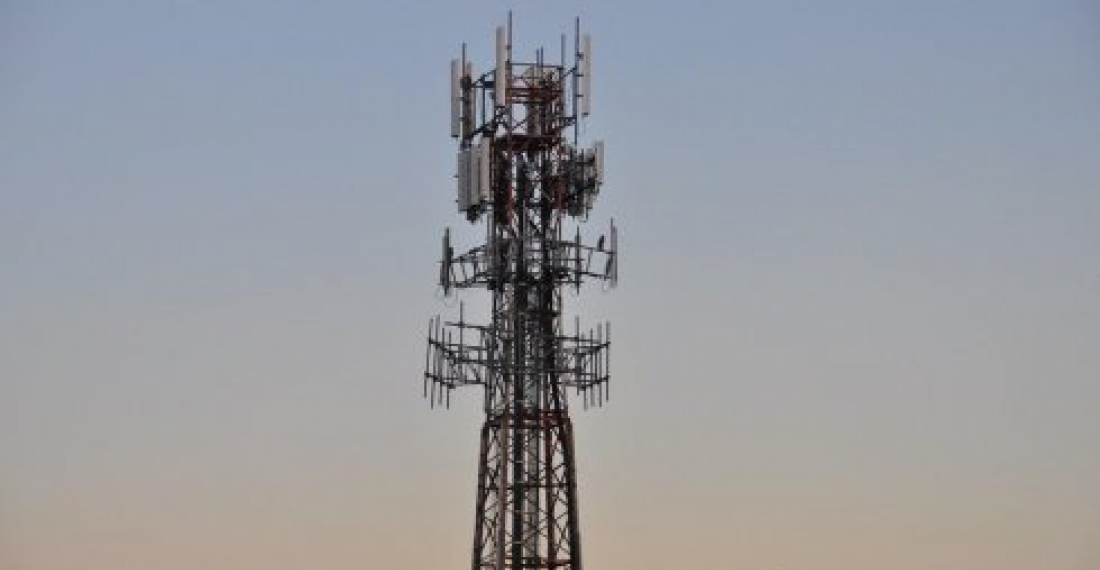
Why are people blaming the current pandemic on 5G mobile networks? Is there any truth to it? William Murray allays fears in this article for commonspace.eu.

Despite continuous reassurances by independent experts and governments, rumours continue to spread regarding a link between the incoming mobile 5G network and the ongoing COVID-19 pandemic. Conspiracy theories connecting the electro-magnetic signals used in telecommunications and bad health are no new thing but are usually consigned to posts by social media trolls and tin-hat conspiracy blogs. With the current heightened level of stress and people eagerly looking for a scapegoat or simple explanation for the COVID-19 pandemic, however, distrust of 5G networks has become mainstream.

What are these rumours and where have they come from?

5G is the fifth generation of mobile broadband, which is claimed to speed up data upload and download speeds up to 100 times that of the current 4G network [1]. The claim is that the technology being used to host the 5G network is really what is responsible for causing and spreading the virus, or in lowering people's immune systems to make them more susceptible to catching the virus [].

Claims about the dangers of mobile broadband technology are no new thing. Similar assertions were made about the H1N1 virus outbreak in 2009 with the roll-out of 4G, and the influenza epidemic with 3G in 1998, with some also reportedly claiming that radio waves were responsible for the Spanish flu in 1918. The current rumour is thought to have started as a hypothesis by a Belgium practitioner in a Dutch-speaking newspaper, who was speaking about the dangers of 5G and entertained the concept that it could be connected to COVID-19 [2]. The rumours have now been picked-up by numerous conspiracy theorists but also mainstream celebrities, such as Wiz Khalifa, who have helped to spread the claims [3].

This specific rumour appears to have been bolstered by the claim that Wuhan, China - where the virus is thought to have originated - was one of the first places that 5G technology was tested [4].

What are the experts saying?

In the post-truth era, it comes as little surprise that people are willing to distrust governments and industry experts, especially when they are seen to be the beneficiaries of the technology that they are claiming to be safe. We are, of course, living in a time where industry leaders and people in power attempt to rubbish very real, well-evidenced concerns regarding climate change in blind defence of profit margins.

But whilst there are some valid concerns about 5G technology and the significant increase of involuntary exposure to radiofrequency electromagnetic fields [5]; there is no evidence to suggest that 5G networks have anything to do with the spreading of the virus. In an article for the BBC, Dr Simon Clarke, Associate Professor in cellular microbiology at the University of Reading, said that the claim that 5G can lower your immune system "doesn't stand up to scrutiny"; whilst Adam Finn, Professor of Paediatrics at the University of Bristol, referred to the virus spreading through radiowaves as impossible - "Viruses and electromagnetic waves that make mobile phones and internet connections work are different things. As different as chalk and cheese." [6]

Times are stressful enough as it is, and although being concerned about new technologies is crucial, we cannot allow ourselves to blindly believe damning but baseless claims which will only exacerbate our anxiety. We must respectfully educate those that are spreading false information, whilst being careful not to alienate them, which only will result in them further entrenching, internalising, and spreading fake news.

Source: William Murray, Project Officer and Coordinator at LINKS Europe, for commonspace.eu

Featured references:

[1] New York Magazine - '5G Is Going to Transform Smartphones - Eventually': https://nymag.com/intelligencer/2019/02/5g-is-going-to-transform-smartphones-eventually.html

[2] The Independent - 'Coronavirus 5g: How a Baseless Conspiracy Theory About Phone Masts And Covid-19 Provoked Panic And Confusion': https://www.independent.co.uk/life-style/gadgets-and-tech/features/5g-coronavirus-conspiracy-theory-china-online-twitter-facebook-a9450001.html

[3] .coda - 'Meet the celebrities pushing 5G coronavirus conspiracies to millions of fans': https://www.codastory.com/waronscience/celebrities-5g-conspiracies/

[4] Fullfact - 'The Wuhan coronavirus has nothing to do with 5G': https://fullfact.org/online/wuhan-5g-coronavirus/

[5] JRS ECO Wireless - 'EU 5G Appeal - Scientists warn of potential serious health effects of 5G': https://www.jrseco.com/european-union-5g-appeal-scientists-warn-of-potential-serious-health-effects-of-5g/

[6] BBC News - 'Coronavirus: Scientists brand 5G claims 'complete rubbish'': https://www.bbc.com/news/52168096


Related articles

Editor's choice
News
Armenia-Azerbaijan Strategic Expert Platform: Members emphasise the importance of the present moment for the South Caucasus and call for the momentum to be used for the long-term peace and prosperity of the region

Armenia-Azerbaijan Strategic Expert Platform: Members emphasise the importance of the present moment for the South Caucasus and call for the momentum to be used for the long-term peace and prosperity of the region

On 27 February 2026, the members of the Armenia-Azerbaijan Strategic Expert Platform met in Antwerp, Belgium, to assess developments in the South Caucasus following the initialling of a peace agreement between Armenia and Azerbaijan on 8 August 2025 at the White House. The members described the present moment as one of major importance for the region and its neighbours, urging leaders and societies alike to use the current momentum to secure long-term peace and prosperity. Established in 2024 with the support of LINKS Europe, the Platform provides a space for direct dialogue and joint analysis between Armenian and Azerbaijani experts. The members also reaffirmed the importance of continued international engagement and expressed strong support for LINKS Europe’s ongoing peacebuilding work in the region. (Click on the image above for the full statement.)

Popular

Editor's choice
Interview
Thursday Interview: Murad Muradov

Thursday Interview: Murad Muradov

Today, commonspace.eu starts a new regular weekly series. THURSDAY INTERVIEW, conducted by Lauri Nikulainen, will host  persons who are thinkers, opinion shapers, and implementors in their countries and spheres. We start the series with an interview with Murad Muradov, a leading person in Azerbaijan's think tank community. He is also the first co-chair of the Action Committee for a new Armenian-Azerbaijani Dialogue. Last September he made history by being the first Azerbaijani civil society activist to visit Armenia after the 44 day war, and the start of the peace process. Speaking about this visit Murad Muradov said: "My experience was largely positive. My negative expectations luckily didn’t play out. The discussions were respectful, the panel format bringing together experts from Armenia, Azerbaijan, and Turkey was particularly valuable during the NATO Rose-Roth Seminar in Yerevan, and media coverage, while varied in tone, remained largely constructive. Some media outlets though attempted to represent me as more of a government mouthpiece than an independent expert, which was totally misleading.  Overall, I see these initiatives as important steps in rebuilding trust and normalising professional engagement. The fact that soon a larger Azerbaijani civil society visits to Armenia followed, reinforces the sense that this process is moving in the right direction." (click the image to read the interview in full)

