


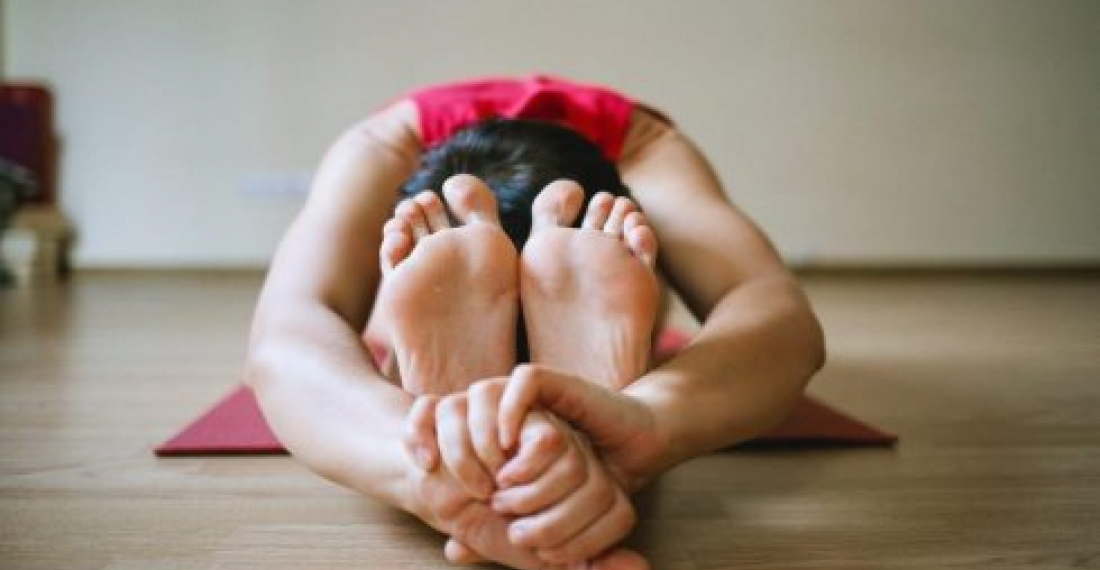
Staying #HealthyAtHome

William Murray looks at the World Health Organisation's COVID-19 twitter campaign in this short article for Commonspace.eu 

The COVID-19 pandemic means spending significantly more time at home and doing less in terms of socialising and day-to-day exercise. In an effort to keep us fit during this time, the World Health Organization (WHO) has challenged us to tell the world what we are doing to stay healthy during isolation. Using the hashtag, #healthyathome, people are urged to share their efforts and suggestions over social media.

In the campaign's twitter video, Dr Tedros Adhanom Ghebreyesus, the WHO Director-General, has given his ideas as to what we all can do:

  • Eat a healthy and Nutritious diet
  • Avoid sugary drinks
  • Not smoke and be physically active
  • Take a walk if we can go outside
  • Do an online workout or Yoga
  • Avoid sitting in the same position for long periods - getting up and moving for at least 3 minutes several times a day helps.

The Director-General also emphasises that we must take care of our mental health, and some ideas as to how to do this:

  • Talk to people you trust through online calling;
  • Listen to music 
  • Read a book
  • Play a game

 Could you be doing more to keep your mind and body healthy during this stressful time? The WHO have provided more information on their website. Why not share your own ideas on twitter through the hashtag #HealthyAtHome

Source: This short article was prepared by William Murray for commonspace.eu. It is part of our series of public service announcements aimed at helping our readers deal with issues related to the coronavirus pandemic and its effects. 

Featured references: 

The WHO Twitter page: https://twitter.com/WHO/status/1245757324519563266

The WHO - #HealthyAtHome: https://www.who.int/news-room/campaigns/connecting-the-world-to-combat-coronavirus/healthyathome


Related articles

Editor's choice
News
Russian attacks on Kyiv and other Ukrainian cities highlights need of strengthening European resolve

Russian attacks on Kyiv and other Ukrainian cities highlights need of strengthening European resolve

Ukrainian President Volodymyr Zelensky condemned the attack, writing on X that it proved that US and European sanctions against Russia should not be weakened. Russia launched more than 700 drones and missiles at Ukraine in multiple waves overnight from Wednesday to Thursday, killing at least 18 people in what local officials said was the deadliest attack in months. Ukraine's air force said on Thursday morning that Russia had launched 659 drones and 44 cruise and ballistic missiles in the prior 24 hours. It said that 636 drones and 31 missiles had been shot down - but there had been direct hits in 26 locations. (click picture to read more)

Popular

Editor's choice
Interview
Thursday Interview: Murad Muradov

Thursday Interview: Murad Muradov

Today, commonspace.eu starts a new regular weekly series. THURSDAY INTERVIEW, conducted by Lauri Nikulainen, will host  persons who are thinkers, opinion shapers, and implementors in their countries and spheres. We start the series with an interview with Murad Muradov, a leading person in Azerbaijan's think tank community. He is also the first co-chair of the Action Committee for a new Armenian-Azerbaijani Dialogue. Last September he made history by being the first Azerbaijani civil society activist to visit Armenia after the 44 day war, and the start of the peace process. Speaking about this visit Murad Muradov said: "My experience was largely positive. My negative expectations luckily didn’t play out. The discussions were respectful, the panel format bringing together experts from Armenia, Azerbaijan, and Turkey was particularly valuable during the NATO Rose-Roth Seminar in Yerevan, and media coverage, while varied in tone, remained largely constructive. Some media outlets though attempted to represent me as more of a government mouthpiece than an independent expert, which was totally misleading.  Overall, I see these initiatives as important steps in rebuilding trust and normalising professional engagement. The fact that soon a larger Azerbaijani civil society visits to Armenia followed, reinforces the sense that this process is moving in the right direction." (click the image to read the interview in full)

