Saudi Arabia and Azerbaijan sign groundbreaking agreements for renewable energy projects in the Caspian Sea worth $300 million

Saudi Arabia and Azerbaijan have signed groundbreaking agreements for $300 million worth of renewable energy projects in the Caspian country.

The Saudi leading energy company, ACWA Power, will develop Azerbaijan’s first wind power development in collaboration with local entities, in three deals that could herald further joint energy projects between the two countries.

At a virtual signing ceremony, Prince Abdul Aziz Bin Salman, Saudi Arabia’s energy minister, said that the collaboration was a further example of the “long-standing diplomatic and economic relationship” between the Kingdom and Azerbaijan. “Saudi Arabia is delighted to be a partner in the future growth and development of Azerbaijan through helping it on its renewable energy journey. I am proud to say that the project has been made possible through Saudi expertise and capabilities,” he said.

“ACWA Power is a Saudi national champion in energy, and it will be leveraging its experience, and its track record in successful renewable projects, to help Azerbaijan deliver this strategically important development,” he added. 

ACWA, which is 50 percent owned by the Public Investment Fund, is one of the main agencies for the Kingdom’s initiatives in domestic and global renewable energy, and high-tech water desalination processes.

Its chairman, Mohammed Abunayyan, said that the agreements were a “milestone and a strong step on the road toward full realization of the potential renewable energy in Azerbaijan.”

Prince Abdul Aziz praised Azerbaijan for its commitment to cuts in oil supply during recent OPEC+ negotiations. “The Kingdom appreciates Azerbaijan’s role in fulfilling its obligations under the declaration of cooperation of OPEC+, and the high level of compliance it has achieved,” he said.

Parviz Shahbazov, Azerbaijan’s energy minister, said the deals were an “indication of confidence in the business climate in Azerbaijan, and will represent the next stage of economic cooperation between our two countries.”

The projects — in the Absheron and Khizi region of Azerbaijan — will help generate one billion KW hours of electricity annually and save 220 cubic meters of gas, as well as reduce emissions by 400 million tons annually, Shahbazov estimated.

“I am confident that other companies from Saudi Arabia will follow the example of ACWA and invest in Azerbaijan,” he added.

Azerbaijan produces just under 600,000 barrels of oil per day under OPEC+ agreements, but has said it would like to follow the example of Russia and some other producers in supporting an OPEC+ increase of a further 500,000 from February.

source: commonspace.eu with Arab News (Jeddah) and agencies

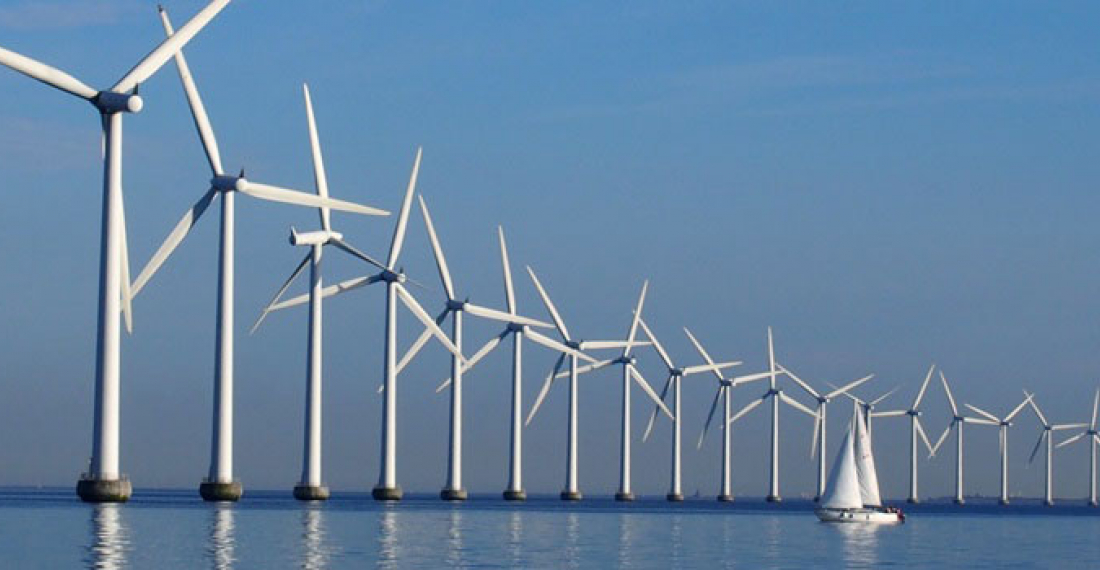
photo: Wind farms (archive picture)

Related articles

Editor's choice
News
Borrell tells the European Parliament that the situation in Afghanistan was critical, but the EU will remain engaged

Borrell tells the European Parliament that the situation in Afghanistan was critical, but the EU will remain engaged

Borrell underlined that the European Union will make every effort to support the peace process and to remain a committed partner to the Afghan people. "Of course, we will have to take into account the evolving situation, but disengagement is not an option.  We are clear on that: there is no alternative to a negotiated political settlement, through inclusive peace talks.
Editor's choice
News
Egypt rejects Israeli "offer" for an exit only Rafah checkpoint in Gaza

Egypt rejects Israeli "offer" for an exit only Rafah checkpoint in Gaza

Egypt has rejected an Israeli "offer" for opening for exit only the Rafah checkpoint in Gaza. According to the Egyptian State Information Service, Egyptian authorities refuted on Wednesday afternoon reports that Israel claims it will open the Rafah crossing, the only lifeline for Gaza to the outside world, but only for those wishing to leave the besieged coastal enclave.  Citing an Egyptian official, the service stated that ''any agreement to open the crossing will cover both entry and exit, in line with US President Donald Trump's plan for humanitarian and political arrangements following the ceasefire.'' Cairo reaffirmed its adherence to the plan and UN Security Council Resolution 2803, including the right of return for Palestinians and maintaining two-way operations at the crossing. Earlier in the day, Israel's Coordinator of Government Activities in the Territories (COGAT) announced that the Rafah crossing would reopen ''within the next few days,'' marking the first such move since February 2025. According to the statement, departures would require prior Israeli security approval and would follow mechanisms previously implemented under EU supervision. Notably, the statement made no mention of the entry of humanitarian aid, which continues to flow through the Kerem Shalom crossing. A Palestinian official also echoed the Egyptian denial of Israel's claim. The announced agreements stress that no Palestinians will be forced to leave Gaza. Those who choose to travel will have the right to return, while humanitarian aid will continue through UN agencies, the International Red Cross and Crescent, and other independent organisations. A European Union official, who requested anonymity and is familiar with the matter, told TNA that the EU has received no official notification from Israel regarding new arrangements, stressing that "no changes exist beyond the January agreements, and we await Israel's formal approval for crossing operations under the Trump plan. "Reopening the crossing will follow mechanisms jointly supervised by the EU and the Palestinian Authority to ensure oversight and transparency, according to the EU official.

Popular

Editor's choice
News
Egypt rejects Israeli "offer" for an exit only Rafah checkpoint in Gaza

Egypt rejects Israeli "offer" for an exit only Rafah checkpoint in Gaza

Egypt has rejected an Israeli "offer" for opening for exit only the Rafah checkpoint in Gaza. According to the Egyptian State Information Service, Egyptian authorities refuted on Wednesday afternoon reports that Israel claims it will open the Rafah crossing, the only lifeline for Gaza to the outside world, but only for those wishing to leave the besieged coastal enclave.  Citing an Egyptian official, the service stated that ''any agreement to open the crossing will cover both entry and exit, in line with US President Donald Trump's plan for humanitarian and political arrangements following the ceasefire.'' Cairo reaffirmed its adherence to the plan and UN Security Council Resolution 2803, including the right of return for Palestinians and maintaining two-way operations at the crossing. Earlier in the day, Israel's Coordinator of Government Activities in the Territories (COGAT) announced that the Rafah crossing would reopen ''within the next few days,'' marking the first such move since February 2025. According to the statement, departures would require prior Israeli security approval and would follow mechanisms previously implemented under EU supervision. Notably, the statement made no mention of the entry of humanitarian aid, which continues to flow through the Kerem Shalom crossing. A Palestinian official also echoed the Egyptian denial of Israel's claim. The announced agreements stress that no Palestinians will be forced to leave Gaza. Those who choose to travel will have the right to return, while humanitarian aid will continue through UN agencies, the International Red Cross and Crescent, and other independent organisations. A European Union official, who requested anonymity and is familiar with the matter, told TNA that the EU has received no official notification from Israel regarding new arrangements, stressing that "no changes exist beyond the January agreements, and we await Israel's formal approval for crossing operations under the Trump plan. "Reopening the crossing will follow mechanisms jointly supervised by the EU and the Palestinian Authority to ensure oversight and transparency, according to the EU official.