Russia postpones the construction of new roads due to lack of money

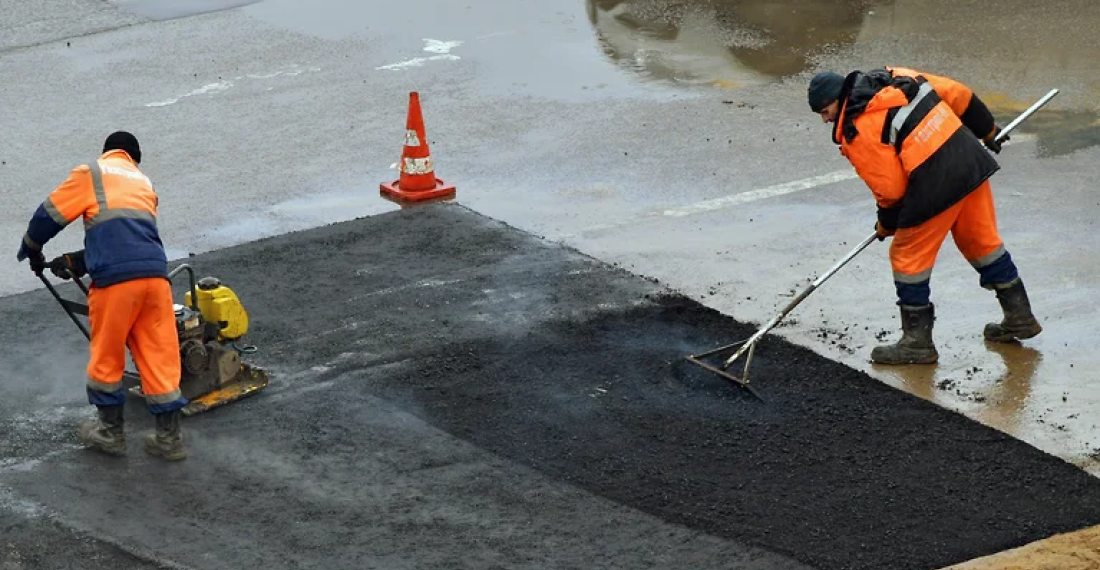
The Russian parliament has postponed the construction of some key roads in the country due to a lack of money, reported Kommersant on Monday (23 January). 

After reviewing the "Highway Operations Plan for 2023-2027", Kommersant found that a number of key road construction projects have been postponed, some to as late as 2027. Many road-building projects that were supposed to commence construction in the coming years have now only had money allocated for their design and planning.

For example, authorities had intended to start allocating money for the construction of the Orekhovo-Zuyevo bypass in the Moscow region in 2025, but now only the design phase will begin as late as 2026. Consequently, its funding has been reduced from 20.5 billion rubles (€275 million) to 1.5 billion rubles (€20.1 million).

The planned southern Krasnodar bypass has suffered a similar fate, with its funding being slashed from 28.9 billion rubles (€387 million) to only 1.5 billion. The future of a second ringroad around Saint Petersburg is also uncertain, with its design phase being pushed back from 2025 to 2027.

The proposed "Meridian" highway stretching from the Kazakh border to the Belarusian border, as well as a proposed road to the south-west linking Yekaterinburg, Samara and Krasnodar, have also been limited to only the planning phase. Their budgets have subsequently been slashed from 15.3 billion rubles (€205 million) to 4 billion rubles (€53.6 million).

The original Kommersant article can be read in Russian here.

source: commonspace.eu with Kommersant
photo: Kommersant, Gleb Shchelkunov
 

Related articles

Editor's choice
News
European leaders set out their plan for Ukraine

European leaders set out their plan for Ukraine

The leaders of Germany, Denmark, Finland, France, Italy, Netherlands, Norway, Poland, Sweden, and United Kingdom, together with the President of the European Council, and the President of the European Commission, o  Monday (15 December) issued a statement, outlining their plan for Ukraine. In their statement, Chancellor Merz, Prime Minister Frederiksen, President Stubb, President Macron, Prime Minister Meloni, Prime Minister Schoof, Prime Minister Støre, Prime Minister Tusk, Prime Minister Kristersson, Prime Minister Starmer, as well as President Costa and President von der Leyen spoke about "Peace for Ukraine". The Leaders welcomed significant progress on President Trump’s efforts to secure a just and lasting peace in Ukraine. They also welcomed the close work between President Zelenskyy’s and President Trump’s teams as well as European teams over the recent days and weeks. They agreed to work together with President Trump and President Zelenskyy to get to a lasting peace which preserves Ukrainian sovereignty and European security. Leaders appreciated the strong convergence between the United States, Ukraine and Europe. Leaders agreed that ensuring the security, sovereignty, and prosperity of Ukraine was integral for wider Euro-Atlantic security. They were clear that Ukraine and its people deserved a prosperous, independent, and sovereign future, free from fear of future Russian aggression. Both the US and European leaders committed to work together to provide robust security guarantees and economic recovery support measures for Ukraine in the context of an agreement on ending the war. This would include commitments to: Provide sustained and significant support to Ukraine to build its armed forces, which should remain at a peacetime level of 800,000 to be able to deter conflict and defend Ukraine’s territory. A European-led ‘multinational force Ukraine’ made up from contributions from willing nations within the framework of the Coalition of the Willing and supported by the US. It will assist in the regeneration of Ukraine’s forces, in securing Ukraine’s skies, and in supporting safer seas, including through operating inside Ukraine. (Click the image to read the statement in full).

Popular