The visit organised by the Azerbaijani Foreign Ministry for diplomats to Nagorno-Karabakh and surrounding regions caused a stir in some quarters in Armenian society, and in turn a reaction in Azerbaijan. The controversy exposed the fragility of the Armenia-Azerbaijan peace process. For the diplomats, whose governments clearly recognise Nagorno-Karabakh as part of Azerbaijan, the controversy is a storm in a tea cup, but for some Armenians the loss of Karabakh remains a raw sensitive issue.
Caught in the eye of the storm has been the initiative "Bridge for Peace" which was set up in October of last year, by the governments of Armenia and Azerbaijan, as an expression of civil society engagement in the peace process between them. The group has already organised several visits across the old conflict divide.
Another visit, involving thirty civil society Azerbaijani representatives to Armenia was due imminently, but according to reports, has now been postponed.
Both sides of "Bridge for Peace" have issued statements, and it is clear that the initiative has encountered its first challnege. Yet observers believe that as long as the two governments keep supporting the initiative, it will survive.
Here are the statements issued in Baku and Yerevan by "Bridge for Peace"
The Azerbaijani view:
The Azerbaijani Initiative Group "Bridge of Peace" expresses deep disappointment over the hostile reaction of the media and the unacceptable tone of public discourse in Armenia regarding the visit of the diplomatic corps to the Karabakh and East Zangezur regions of the Republic of Azerbaijan on September 11-12, 2026.
First of all, the visit of the diplomatic corps to the sovereign territory of the Republic of Azerbaijan should not in itself be a subject of controversy. In particular, verbal attacks against ambassadors and countries for participating in such a visit are disturbing and contradict Armenia's recognition of Azerbaijan's sovereignty and territorial integrity.
Azerbaijan and Armenia are currently in a post-conflict period, and both countries face the difficult task of overcoming decades of conflict. Through peace initiatives, we, as civil society representatives, with the support of the governments of Azerbaijan and Armenia, are taking steps to facilitate the peace process, encourage dialogue, and support confidence-building measures.
The cultural heritage on the territory of the Republic of Azerbaijan belongs to the Azerbaijani people and is under the protection of the state.
To ensure justice, cultural heritage issues must be discussed on the basis of reciprocity and open dialogue. To advance these goals, civil society representatives have created a platform for professional discussion of issues that form an integral part of the peace process agenda between Azerbaijan and Armenia.
The peace process must not be allowed to come under pressure from revanchist forces, as this would seriously jeopardize further progress on the path to peace. We call on Armenian society to demonstrate a responsible approach to this issue and not succumb to the provocations of those with malicious intentions both in Armenia and abroad.
Farhad Mamedov
Kamalya Mamedova
Rusif Huseynov
Dilyara Efendieva
Ramil Iskenderli
The Armenian view:
The members of the Peace Bridge Initiative Armenia express their concern over recent developments related to the presentation of Armenian cultural heritage during the visit of diplomats to the Gandzasar medieval monastic complex and its adjacent museum.
At a time when significant progress has already been made in the Armenia-Azerbaijan peace process, and when both societies are expected to continue moving, after decades of conflict, towards a new culture of relations, public statements and actions matter.
Recent developments deepen mistrust and create additional space for those who argue that dialogue is meaningless and that efforts to achieve peace are futile. Building peace requires difficult and honest conversations, attention to each other’s concerns, and a conscious effort to avoid actions that may reopen wounds or reinforce hostility.
We therefore call on all actors involved in the peace process to act with the responsibility required at this moment and to refrain from statements and actions that may be perceived as unconstructive.
Areg Kochinyan
Naira Sultanyan
Boris Navarsardyan
Narek Minasyan
Samvel Meliksetyan
source: commonspace.eu with agencies
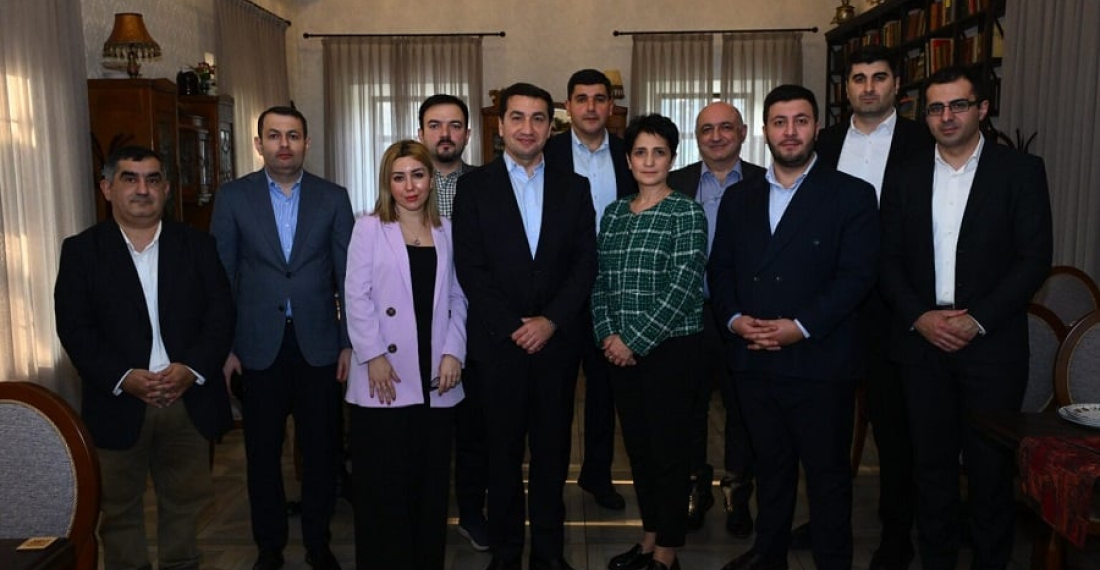
photo: Armenian and Azerbaijani members of Peace Bridge with Azerbaijani presidential advisor, Hikmet Hacijev